Hive Strength Scoring System for Commercial Beekeeping Operations
When your assessment data is only as reliable as whichever employee walked the yard that day, you have a consistency problem. One inspector calls a colony strong at 6.5 frames; another calls the same colony marginal because their mental reference is different. At scale, that inconsistency drives bad decisions: colonies delivered below contract minimums, requeening decisions built on flawed data, and replacement planning that does not reflect actual operational status.
A standardized hive strength scoring system defines what each score level means in specific, observable terms. Once defined and trained across your team, assessments become comparable across employees, yards, and seasons.
Defining Frames of Bees
Frames of bees is the primary strength metric in commercial beekeeping and in most pollination contracts. But it needs a precise definition or different inspectors will produce different numbers on the same colony.
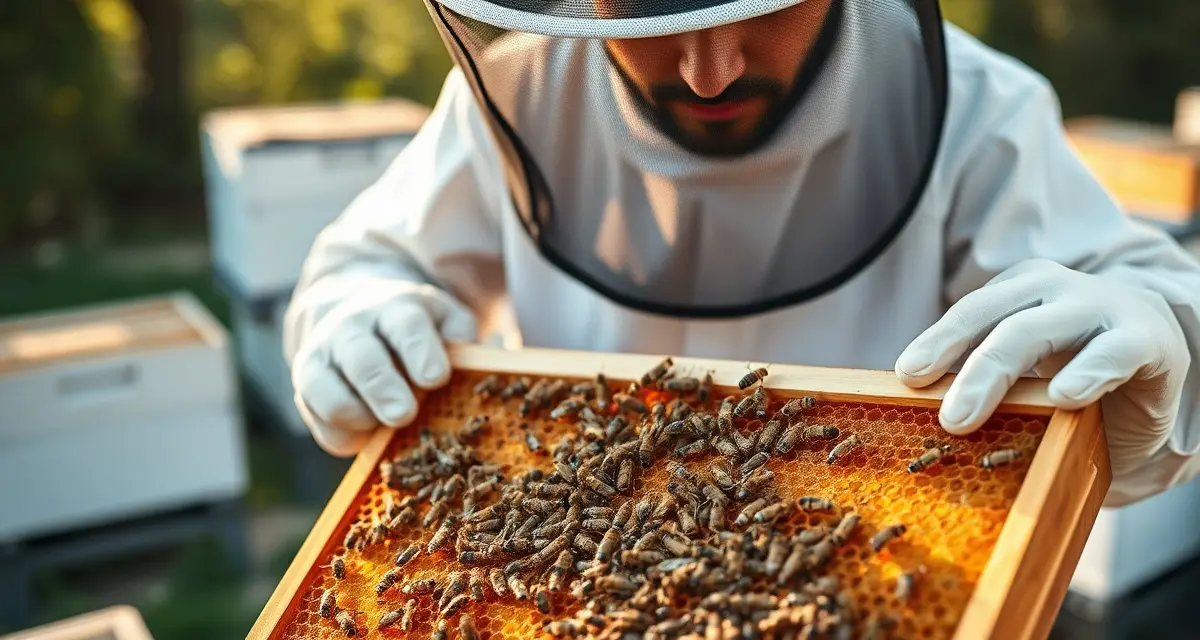
The standard method used in most commercial operations: pull each frame from the brood nest and assess coverage on both faces. A full frame of bees has bees present on roughly 80 to 100% of usable comb surface on both sides. Count with 0.5-frame precision: 6.0, 6.5, 7.0. Do not round to whole numbers since the half-frame increment matters when colonies are near contract thresholds.
Key training points to standardize:
Forager-absent versus forager-present assessments produce different results on the same colony. A colony assessed at midday when foragers are out will appear weaker than the same colony assessed in the evening with foragers returned. Either standardize assessment time or note the condition in the record.
Two-story colonies need a clear definition. Does the frame count include bees in both boxes, or only the brood box? Define this before it becomes an inter-inspector dispute. For pollination contract assessments, the colony-level standard in the contract language should specify.
For pre-delivery assessments under California almond contracts, the methodology referenced by the Almond Board standard is the industry baseline. Your inspectors should practice to that specific method before the season, not just to a general definition.
Brood Pattern Scoring
Population count alone does not capture colony health. A colony with 7 frames of bees on a badly spotted brood pattern is a worse pollination unit than a 7-frame colony with solid brood, because the spotty pattern indicates a potential queen problem, disease pressure, or genetic issue that will affect performance during the contract period.
A functional 4-point brood pattern scale:
Score 4: Solid and consistent. Fewer than 5% of cells skipped within the capped brood area. Clean cell cappings, consistent perimeter.
Score 3: Good with minor scatter. 5 to 15% of cells empty or irregular within brood area. Consistent general shape. Acceptable for most management purposes.
Score 2: Spotty. More than 15% of cells irregular. Brood area lacks consistent shape. Warrants investigation at next inspection.
Score 1: Severely disrupted. Highly irregular distribution, possible disease signs, failing or absent queen. Requires immediate investigation before any other management action on this colony.
Train inspectors to score brood pattern independently of population count. A colony that lost adult bees to a pesticide event may have a score-4 brood pattern from a healthy queen. A colony with high bee population can have a score-1 pattern from American foulbrood or a failing queen. These are different problems with different required responses.
Queen Status Recording
A four-category queen status field captures what matters operationally without requiring inspectors to spend excessive time on queen observation:
Q plus: Queen visually confirmed, seen and identified.
Q: Queen presence confirmed by eggs or larvae younger than 3 days, queen not directly observed.
Q question mark: Queen status uncertain. No eggs or young larvae seen, queen not found.
No queen: No queen evidence. Laying workers present or comb completely empty.
Q-uncertain and no-queen colonies need follow-up within 5 to 7 days. A colony logged as uncertain that is scheduled for a pollination delivery in 10 days needs resolution before loading, not after. PollenOps flags these colonies for follow-up so they do not fall through the cracks between inspection rounds.
The Combined Assessment Record
A complete colony record captures population score, brood pattern score, and queen status together. In PollenOps, this is entered via mobile app during the yard inspection and automatically flags colonies below your defined thresholds.
A yard-level summary generated from these records shows the distribution of scores across the yard, the count of contract-compliant colonies, and the count requiring action. This is the output your operation actually needs to make pre-delivery decisions efficiently, not raw inspection notes.
Setting Threshold Actions
The scoring system only produces value if scores trigger defined actions. Without action thresholds, inspectors record scores that no one acts on, and the system becomes a documentation exercise rather than a management tool.
Practical action thresholds adjusted for your operation and contract standards:
Population below 4 frames in spring buildup triggers a consolidation decision or emergency feed.
Population below contract minimum (6 or 8 frames depending on contract) pre-delivery triggers replacement before loading.
Brood score of 1 or 2 triggers queen evaluation within 7 days.
Queen status uncertain for two consecutive inspections triggers requeen or disposal decision.
Varroa mite count above 2 per 100 bees triggers immediate treatment and flags the colony as ineligible for upcoming delivery.
Documenting these thresholds in your operations manual and in your software means decisions happen systematically rather than by individual inspector judgment on the day. New employees can be trained to trigger the right response reliably, and supervisors can review whether thresholds are being acted on without being present for every inspection.
Training for Consistency
Initial training for new employees involves side-by-side assessment of the same yard. The trainer and trainee independently score the same colonies, then compare. Discuss every discrepancy of more than 0.5 frames or 1 brood point. Repeat this until the new employee's scores consistently fall within 0.5 frames of the experienced inspector's count.
After initial training, run periodic calibration checks. Bring two employees through the same yard and compare records. Consistent divergence between employees indicates either a training gap or an ambiguity in your scoring definitions that needs clarification.
PollenOps timestamps assessments by employee, making it straightforward to identify whether a specific employee is consistently scoring above or below the operation's norm. That visibility supports coaching conversations that improve data quality over time.
Combine your hive strength scoring data with your queen history records and varroa monitoring to build a complete operational picture. Colony performance in the scoring system often traces back to queen age or mite load history; seeing those connections requires that all three data sources are being captured consistently.
Try These Free Tools
Sources
- United States Department of Agriculture
- American Beekeeping Federation
- Project Apis m.
- Bee Informed Partnership