Hive Strength Requirements for Almond Pollination Contracts
You can have a signed contract, a CDFA certificate in your glove box, and your trucks fueled and ready, and still lose the contract if your hives don't pass the strength check when they arrive.
Growers have gotten serious about colony strength requirements. A decade ago, most contracts had loose language about "strong colonies." Today, large almond operations specify exact frame counts, increasingly require third-party verification, and have penalty clauses for understrength hives. Know the standards before you sign anything.
TL;DR
- California almond pollination consumes roughly 80% of the US commercial hive population every February, making it the most supply-constrained pollination market in the country.
- Per-hive rates have held between $185 and $220 for 6-8 frame colonies over recent seasons.
- Contracts are typically signed October through November for the following February season; operators without agreements by December are working from a weak position.
- Hive strength minimums range from 6 to 8 frames of bees depending on the grower, with premium-strength colonies commanding $200-215/hive.
- varroa management, documentation, and logistics coordination in the 6-8 weeks before delivery determine whether almond season is profitable or a breakeven event.
The Standard: What Does "6 Frames" Actually Mean?
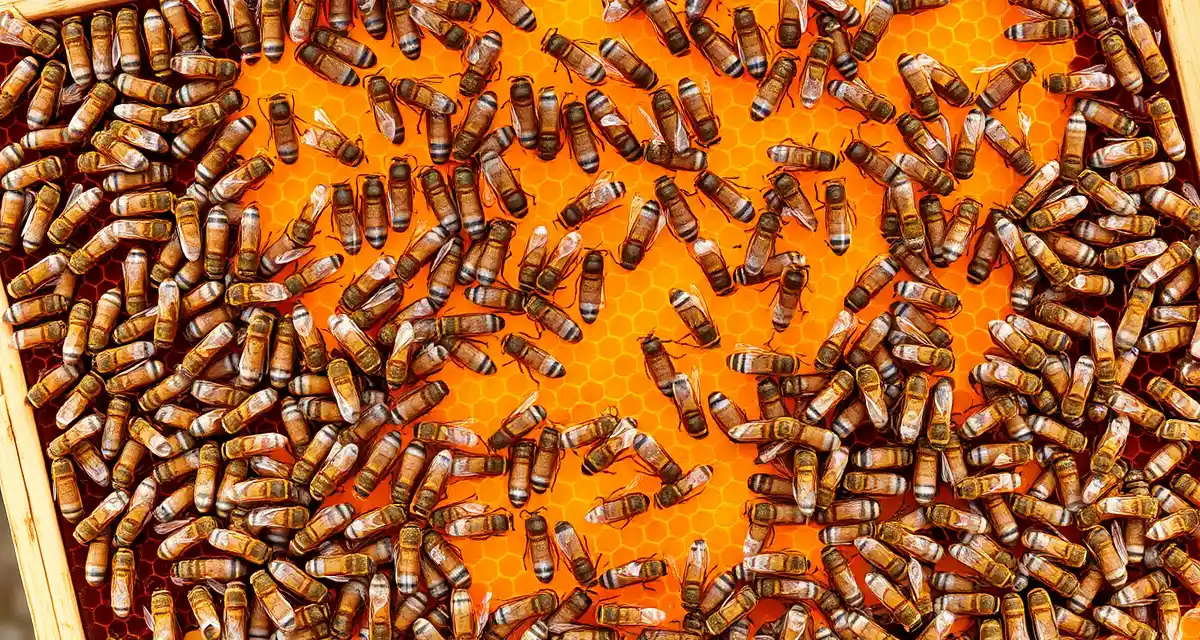
The California Almond Board's recommendation is 6 frames of bees per colony, meaning 6 frame faces covered with adult bees. This is not 6 frames of comb, not 6 frames of brood. It's 6 frames actively covered by worker bees when you open the hive.
In practice:
- A 10-frame Langstroth box with 6 frames covered = meets the 6-frame standard
- A colony in a 10-frame box where bees are clustered on only 4 frames = doesn't meet the standard
- A colony in a 2-box configuration (deep brood box + medium) with 6 frames covered in the bottom box = typically passes
The 8-frame standard: Many premium almond contracts and large corporate growers now specify 8 frames of bees minimum. This is where premium pricing ($200–215/hive) applies. Producing 8-frame colonies for February almond delivery requires a fall and winter buildup plan that starts in October or November.
How growers count: Some growers have experienced consultants who can count frames quickly and accurately. Others use USDA AMS inspectors or private consulting beekeepers. A few large growers have begun using photographic documentation or AI-assisted counting tools. Know what your specific contract specifies for the assessment method.
How to Assess Colony Strength Before Departure
You should know your hive strength numbers before your truck leaves the yard, not when the grower's inspector is standing there.
The Quick Count Method
- Open each hive without smoke (smoke obscures population assessment)
- Pull frames one at a time from the cluster center outward
- Count frame faces with at least 80% bee coverage (those count as "covered")
- Stop when you reach the edge of the cluster
A colony doing 6 frames typically shows dense coverage on the inner 4–5 frames with lighter coverage on frames 6. A colony doing 8 frames has dense coverage across most of a 10-frame box.
For a 1,000-hive operation, you can't open every hive. What you can do:
- Sample 10% of colonies per yard
- Flag any yard where the sample average is below target
- Do a full check on flagged yards
- Track which yards consistently produce strong colonies and which need attention
Winter Cluster Assessment
In December/January, many hive clusters are tight. A colony that shows 4 frames of coverage in a cold January inspection may actually cover 7 frames once temperatures warm to 55°F+. Don't undercount colonies assessed in cold weather.
Standard practice: assess when daytime temperatures are above 55°F, or wait for a warm day if possible. For assessments in the field during cold periods, tent the hive briefly and use a bee brush to coax bees off frames gently for an accurate count.
Alcohol Wash and Varroa Tie-In
A colony can pass a visual frame count and still be mite-compromised in ways that won't manifest until 2–3 weeks into almond rental. Add a mite wash monitoring to your pre-departure assessment:
- Target: below 1 mite per 100 bees for colonies being delivered to almonds
- Colonies with 2+ mites per 100 bees need treatment before movement, even if visual count looks good
- Document mite levels by yard; this protects you if colonies fail mid-contract
Documentation That Growers Actually Accept
More and more contracts require documented strength assessment, not just the beekeeper's verbal assurance. What that documentation should include:
- Yard identifier
- Colony number or location within yard
- Frame count assessed
- Date of assessment
- Assessor name
- Varroa mite count (optional but increasingly requested)
Some operations use paper assessment forms that are photographed and stored digitally. Others use field apps that timestamp and GPS-tag entries. Either works, but the timestamps and traceability matter. A form you filled out the morning before the grower inspection doesn't carry the same weight as a form filled out a week before departure with timestamp metadata.
PollenOps includes structured colony strength assessment tools that generate documented records meeting commercial contract requirements. See the colony strength checklist feature
Building 8-Frame Colonies for February
If your standard colony production targets are 6-frame deliveries and you want to move to 8-frame premium contracts, here's the timeline:
August–September: Queens should be young, healthy, and laying strongly. Requeen any weak-queen colonies. This is the last opportunity for a new queen to establish a strong fall brood cycle.
September–October: Feed aggressively if natural forage is declining. Colonies need full honey stores before winter. Supplement pollen or pollen substitute if fall forage is poor in your yard locations.
October–November: Varroa treatment. Treat with oxalic acid vaporization during the natural low-brood period after fall cooling. Target below 1 mite per 100 bees.
November–January: Minimize disturbance. Keep hives in locations with windbreaks. Some operators add insulation to outer covers for colonies that will be delivered to higher-elevation California yards.
January: Final assessment. Colonies should be showing active brood rearing as February approaches. Supplement with pollen substitute patties if colonies are light on protein.
Strong colonies delivered on time command the best contract rates and the best grower relationships. The return on building 8-frame colonies is $15–25/hive in additional contract rate. On 1,000 hives, that's $15,000–25,000 in additional revenue for the same set of trucks.
What Happens if Hives Fall Below Requirements
Your contract should specify this. Common outcomes:
Substitution: You replace understrength hives with qualifying colonies from staging inventory. This requires having buffer hives available (typically 5–10% above your contracted number) that can be deployed as substitutes.
Price adjustment: Some contracts allow a price reduction for understrength hives rather than replacement. Be careful with this clause. A grower who accepted a discounted rate may still dispute pollination effectiveness later.
Contract breach: If a significant percentage of delivered colonies are below strength and you can't substitute, you may be in breach. The contract should specify what percentage shortfall triggers breach versus allowable variance.
Third-party arbitration: Some larger contracts include dispute resolution procedures for strength disagreements. Know the process before you have a dispute.
Always negotiate the remedies clause in your contract before signing, not after a dispute.
FAQ
What frame count do almond growers require for pollination?
Most almond pollination contracts specify a minimum of 6 frames of covered bees per colony at time of delivery, meaning 6 frame faces with active adult bees. This is the California Almond Board's minimum recommendation for effective pollination. Many commercial growers, particularly larger corporate operations in Kern, Fresno, and Tulare counties, now specify 8 frames minimum and pay $200–215/hive for confirmed 8-frame colonies versus $185–195/hive for 6-frame minimums. Contracts increasingly include third-party or independent inspector verification at delivery. Read your specific contract carefully. "Strong colonies" language without a frame number is different from an explicit 6- or 8-frame requirement.
How do you assess colony strength before delivering to almonds?
Open each hive without smoke on a warm day (55°F+) and count frame faces with at least 80% bee coverage. Count from the center of the cluster outward until coverage drops off. For large operations, sample 10% of colonies per yard and do a full check on any yard where the sample average falls below target. Document the assessment with yard ID, colony location, frame count, date, and assessor name. Add an alcohol wash mite count. Colonies with 2+ mites per 100 bees need treatment before movement even if the visual count meets strength requirements. Build the assessment into your departure preparation timeline, not as an afterthought on loading day.
What happens if hives don't meet strength requirements in almond contracts?
Your contract terms determine the outcome, which is why negotiating remedies clauses before signing matters. Common contractual outcomes: substitution (you replace understrength hives with buffer colonies from staging inventory), price adjustment (reduced rate for hives below minimum strength), or contract breach if shortfall is significant. Most professional operators maintain 5–10% buffer inventory above contracted numbers specifically to cover substitution needs. Document your strength assessments before delivery. If a grower disputes on-site, having timestamped pre-delivery records showing meeting-or-exceeding frame counts shifts the burden of proof.
How early should almond pollination contracts be negotiated?
Large almond growers and broker networks begin securing hive commitments in July and August for the following February season. Written contracts are typically signed October through November. Operators who do not have signed agreements by December are working from a weak position since most quality hive inventory is already committed. Start grower outreach in mid-summer and target signed agreements before Thanksgiving.
What documentation is required for hive delivery to California almonds?
California requires a Certificate of Health for out-of-state colonies, issued by the origin state's apiary inspection program within 30 days of entry. The certificate must certify freedom from American foulbrood, European foulbrood, and Varroa destructor below treatment threshold. Some states require small hive beetle freedom for California entry. In addition, many growers now expect documentation of pre-delivery mite counts confirming colonies are below threshold.
What happens to hives after almond season ends in late March?
Post-almond options include moving north for Pacific Northwest cherry or apple pollination in April-May, routing to Michigan or Maine blueberries in May-July, transitioning to summer honey yards in North Dakota or Montana, or staying in California for splits and rebuilding. The right choice depends on hive strength coming out of almonds and downstream contract commitments. Operators who plan their full-year circuit in advance can optimize both pollination revenue and honey production.
Try These Free Tools
Sources
- USDA Agricultural Research Service
- Bee Informed Partnership
- American Beekeeping Federation (ABF)
- Almond Board of California
- University of California Cooperative Extension
Get Started with PollenOps
Almond season is the revenue event that defines the commercial beekeeping year, and the details -- contract terms, delivery timing, hive strength documentation, and invoicing -- determine whether the season is profitable. PollenOps manages the full almond contract lifecycle from quote to final payment, with yard tracking, crew scheduling, and grower communication built in. See how it works for operations from 200 to 5,000 hives.