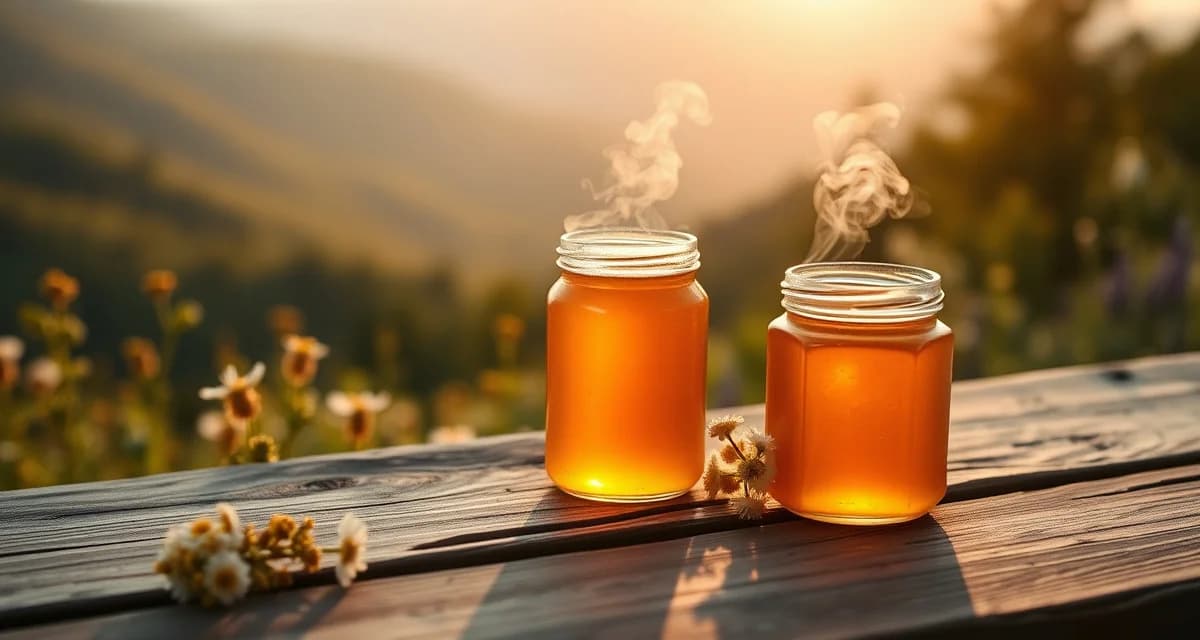
Appalachian Wildflower Honey: Premium Production for Commercial Beekeepers
Appalachian wildflower honey fetches $10-18/lb in specialty retail (4-6x bulk pricing), and Virginia, West Virginia, Tennessee, and North Carolina produce distinctive mountain honey that specialty buyers actively seek. The Appalachian region's exceptional plant diversity, clean landscapes, and romantic regional identity create one of the most compelling honey provenance stories in the US.
TL;DR
- Wholesale honey prices for commercial producers have ranged from $1.50-2.50 per pound for bulk clover honey in recent seasons.
- Varietal honeys (buckwheat, tupelo, sourwood) command $3.00-5.00 per pound or more at wholesale.
- Summer honey production in North Dakota, Montana, and the Pacific Northwest is the primary source of bulk honey revenue for migratory operations.
- Honey production and pollination revenue streams can be combined on the same annual circuit, with most operations capturing both.
- Packing, storage, and distribution requirements for commercial honey production add cost and logistics complexity beyond the extraction stage.
What Makes Appalachian Honey Distinctive
Appalachian Mountain honey reflects the region's extraordinary plant diversity. The southern Appalachians have among the highest plant species density in North America. Honey produced from this flora has a complex character that agricultural clover honey simply can't match.
The primary Appalachian honey flora includes:
Sourwood (Oxydendrum arboreum): The most prized Appalachian honey varietal. Sourwood is a tree of the southern Appalachian understory, blooming in late July through August at elevation. Sourwood honey has a distinctive caramel, anise, and spice character unlike any other American honey. Genuine sourwood commands $15-25/lb in specialty markets. The bloom is short (two to three weeks) and varies by elevation and year.
Black locust (Robinia pseudoacacia): Common throughout Appalachian disturbed land, roadsides, and regrowth forests. Black locust bloom runs late April to mid-May. The honey is water-white, very slow to crystallize, and prized for its delicate floral character. Black locust honey is highly regarded in European specialty markets.
Tulip poplar (Liriodendron tulipifera): Tulip poplar is a major nectar source in Appalachian forest areas. It produces a dark, robust honey with a distinctive flavor, not suited for all buyers, but valued in specialty markets that seek bold honey character.
Mountain wildflower: The combination of hundreds of native Appalachian plant species produces complex wildflower honey that can't be replicated in other regions. This multi-floral character is the foundation of "Appalachian wildflower" as a premium category.
Key Production Regions
Southwest Virginia (Giles, Bland, Smyth, Grayson counties): Mountain terrain with excellent sourwood, black locust, and wildflower forage. Access to both Virginia and Tennessee specialty markets.
West Virginia (Greenbrier, Nicholas, Webster, Randolph counties): The heart of Appalachian mountain honey production. West Virginia has extensive natural land with minimal intensive agriculture, giving it the most authentic mountain honey character in the region.
North Carolina (Avery, Watauga, Ashe, Mitchell counties): North Carolina's Blue Ridge and Black Mountains produce sourwood at elevation, plus diverse wildflower and black locust at lower elevations. Asheville's well-developed specialty food market is a significant asset.
Eastern Tennessee (Unicoi, Carter, Johnson, Sullivan counties): Tennessee mountain counties have good sourwood habitat at elevation and diverse wildflower forage. Nashville provides an accessible large-market outlet for Tennessee mountain honey.
Kentucky highlands (Harlan, Leslie, Perry counties): The Kentucky Appalachian counties produce wildflower and tulip poplar honey with genuine mountain character.
Sourwood Production: The Premium Opportunity
Sourwood honey is commercially important enough to deserve specific attention. It's arguably the most distinctive American varietal honey, and genuine documented sourwood commands prices that justify the operational complexity of mountain beekeeping.
Location requirements: Sourwood grows in the southern Appalachians, primarily above 1,500 feet elevation. You need colonies positioned in areas with significant sourwood density, not just a few trees, but stands or ridges with sufficient population to produce a worthwhile surplus.
Timing: Sourwood blooms after most of summer's other flows, in late July through August. Colonies need to be strong and ready for a late-season push.
Competition: Goldenrod and other late summer wildflowers bloom simultaneously and can mix with sourwood flow in lower-elevation yards. Pure sourwood requires upper-elevation yard positioning.
Documentation: Specialty buyers increasingly want pollen analysis documentation for sourwood claims. Budget for pollen testing if you're positioning sourced honey at premium prices.
Market Channels
Asheville specialty food market: Asheville, NC has an extraordinary specialty food scene relative to its size. The Western North Carolina Farmers Market and downtown Asheville specialty retailers are among the best regional outlets for Appalachian honey.
Charlotte, Nashville, and regional cities: Regional metro specialty food markets are accessible from Appalachian production areas and support premium honey pricing.
Online direct-to-consumer: Appalachian wildflower and sourwood honey sells effectively online at $12-20/lb with the right provenance story and photography. National buyers who know the reputation of Appalachian honey seek it actively.
Specialty food distributors: Distributors serving natural grocery chains in the mid-Atlantic and Southeast can place Appalachian honey in premium retail channels.
Track your mountain yard records, varietal extraction data, and market performance in PollenOps. Commercial honey market trends provides pricing context for Appalachian varietals in specialty channels.
Frequently Asked Questions
How do you produce and market Appalachian wildflower honey?
Appalachian wildflower honey production starts with yard placement in areas with genuine mountain plant diversity: ridges, hollows, and forest edges with sourwood, black locust, tulip poplar, and diverse native wildflowers. Position colonies in late April for black locust, leave them through summer for wildflower accumulation, and if in sourwood territory, stay through August for the late sourwood flow. Extract varietals separately when possible, as sourwood and black locust are worth isolating for premium pricing. Market with specific geographic provenance (county, mountain range, or watershed language) and genuine flavor description. Appalachian honey has an authentic story that markets itself to the right buyers. Your job is documentation and channel access.
What makes Appalachian honey distinct from Plains or Pacific varieties?
Appalachian honey reflects a plant community with extraordinary diversity: hundreds of native species producing complex, layered nectar flows. Plains honey (clover, wildflower) is predominantly from agricultural or grassland species producing clean, mild honey. Pacific honey (coastal wildflower, orchard) reflects a very different plant community with California natives, citrus, and valley crops. Appalachian honey's signature flavors (sourwood's caramel and anise, black locust's delicate water-white character, tulip poplar's dark robustness) come from forest species unique to the southern mountains. The regional identity matters too: "Appalachian" carries a cultural resonance with specialty food buyers that "Midwest wildflower" doesn't.
What direct channels work best for Appalachian wildflower honey sales?
Direct farmers market sales in Asheville and other regional cities are the highest-margin starting point, since you capture the full retail price without distributor cuts. From farmers market presence, expand to restaurant accounts (Asheville's restaurant scene is exceptional) and specialty retail. Online direct-to-consumer is critical for reaching buyers outside your immediate geography. Appalachian honey has a national reputation, and buyers in New York, Chicago, and Los Angeles actively seek authentic mountain honey. Build a website with your story, your yard locations, and your production methods. CSA-style seasonal shares or pre-order programs work well for established producers who can build a loyal following.
How do commercial beekeepers choose summer honey yard locations?
Summer honey yard selection focuses on forage quality, density, and landscape characteristics. North Dakota and Montana white clover and sweetclover flows typically produce 80-150 pounds per colony in good years. The Pacific Northwest offers diverse flows from clover, fireweed, and wildflowers. Proximity to other apiaries reduces forager competition; bee-friendly state lands or rented agricultural properties with forage diversity are preferred. Water availability within 1-2 miles of each yard is a basic requirement.
What is the difference between selling honey as bulk versus packaged retail?
Bulk honey sales to brokers or packers provide simple logistics (55-gallon drums or totes shipped directly from extraction) but yield lower per-pound prices ($1.50-2.50/pound for clover at wholesale). Packaged retail sales through direct channels (farmers markets, online, specialty retailers) yield $6-12 per pound but require labeling, packaging equipment, food safety compliance, and distribution relationships. Most commercial operations rely primarily on bulk sales and use retail as a supplementary channel for premium varieties.
Can honey production records be tracked alongside pollination contract records?
Yes. PollenOps tracks yard assignments and honey production data alongside pollination contracts so the full economic picture of each yard and each season is visible in one system. This matters for operations that use the same yards for honey production in summer and pollination staging in winter and spring, since the value of a yard location depends on both revenue streams.
Try These Free Tools
Sources
- USDA Agricultural Research Service
- Bee Informed Partnership
- American Beekeeping Federation (ABF)
- American Honey Producers Association
- National Honey Board
Get Started with PollenOps
Running honey production alongside pollination contracts requires coordinating two revenue streams on a single annual calendar. PollenOps tracks both in one platform so your circuit planning reflects reality rather than optimistic assumptions.