FDA Honey Packing Requirements for Commercial Beekeepers
FDA food facility registration is required for honey packers, not just large facilities. Any operation that packs honey for sale to the public (not just to brokers in bulk) must register with FDA and comply with federal food safety and labeling requirements. Honey labeling requires net weight, facility address, and country of origin statements at minimum.
TL;DR
- Wholesale honey prices for commercial producers have ranged from $1.50-2.50 per pound for bulk clover honey in recent seasons.
- Varietal honeys (buckwheat, tupelo, sourwood) command $3.00-5.00 per pound or more at wholesale.
- Summer honey production in North Dakota, Montana, and the Pacific Northwest is the primary source of bulk honey revenue for migratory operations.
- Honey production and pollination revenue streams can be combined on the same annual circuit, with most operations capturing both.
- Packing, storage, and distribution requirements for commercial honey production add cost and logistics complexity beyond the extraction stage.
When FDA Requirements Apply
The distinction between selling bulk honey and packing honey for retail determines which regulations apply to you.
Bulk sales to brokers or packers: If you sell honey in 55-gallon drums or large containers to a broker or packer who then reprocesses and labels it, you're operating as a producer, not a packer. FDA food facility registration requirements may not apply, but state apiary registration and state agricultural department requirements do.
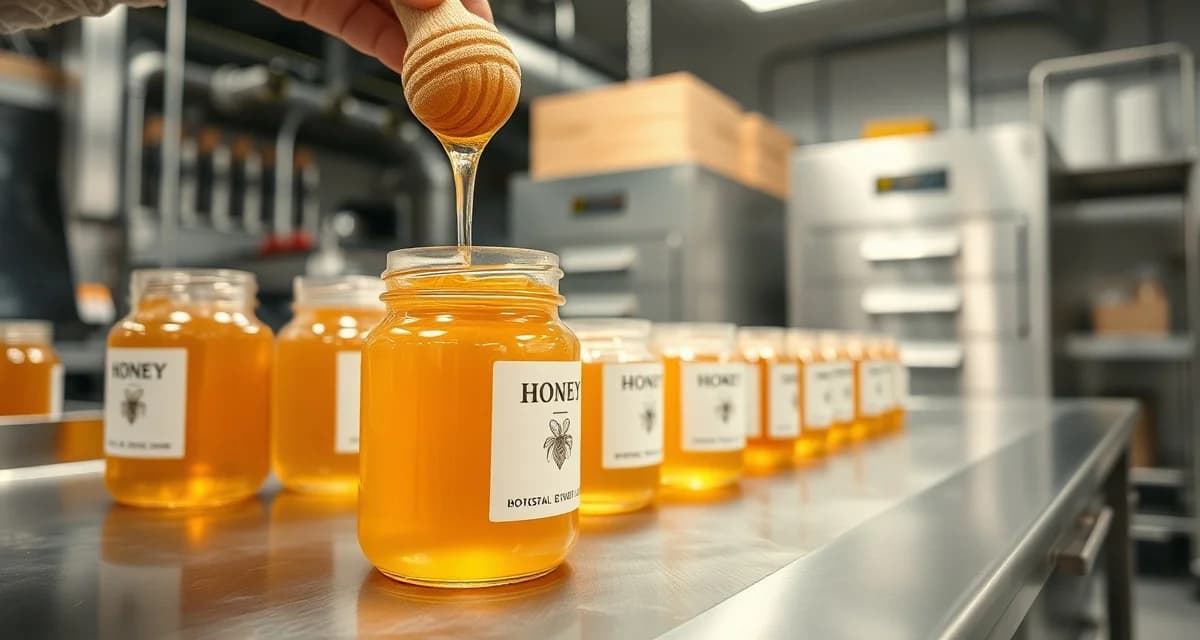
Retail-ready packed honey: If you put honey in labeled jars or containers for retail sale (at farmers markets, in your own retail operation, through grocery stores, or online), you're a honey packer. FDA requirements apply.
The line is clear: labeled retail packaging triggers packer requirements.
FDA Food Facility Registration
Under the Food Safety Modernization Act (FSMA), facilities that manufacture, process, pack, or hold food for human consumption in the US must register with FDA. Honey packing is explicitly included.
Who must register: Any operation that packs honey for retail sale, regardless of volume. There's no small-producer exemption based on revenue or volume for food facility registration itself, though certain farms with low sales to direct consumers have modified requirements.
How to register: Registration occurs through FDA's Unified Registration and Listing System (FURLS) online portal. You'll need your facility address, a responsible individual (facility owner or agent), and a description of the food activities you conduct.
Registration renewal: FDA food facility registrations must be renewed every two years during the October-December renewal window. Missing the renewal window puts you out of compliance.
Cost: Registration is free.
Honey Labeling Requirements
FDA establishes minimum federal labeling requirements for honey sold in interstate commerce. State labeling requirements may be additional.
Required label elements:
- Product name: "Honey" is sufficient. Varietal claims ("Clover Honey," "Wildflower Honey") are permitted but must accurately reflect the dominant pollen source.
- Net weight: Net weight of contents in both US customary and metric units. The net weight statement must appear on the principal display panel.
- Name and address: Your name (or your company name) and address must appear on the label. This is the responsible packer's information.
- Country of origin: For honey sold in retail packages, country of origin labeling is required. US honey must be labeled "Product of USA" or equivalent.
Optional claims: "Raw honey," "unfiltered," "organic," and similar claims are not federally defined for honey in most cases, but they're not prohibited. If you make these claims, be prepared to substantiate them if challenged. Organic certification requires USDA-accredited certifier review.
Varietal label accuracy: If you label honey as "Clover Honey," FDA's interpretation is that the honey should be predominantly from clover. There's no federal standard specifying exact percentages, but misleading labeling is an FDA violation.
FSMA Preventive Controls Requirements
For many small honey packers, FSMA's Preventive Controls for Human Food rule applies. This requires:
Food safety plan: A written food safety plan identifying hazards, preventive controls, and monitoring procedures. For honey packing, the primary hazards to address are typically adulteration and contamination risks.
Who must comply: Operations with more than $1M in annual food sales must comply with full Preventive Controls requirements. Smaller operations may qualify for the Qualified Facility Exemption (QFE), which requires modified requirements and a disclosure statement on labels.
HACCP-style thinking: Even if you qualify for reduced requirements, documenting your sanitation procedures, equipment cleaning practices, and quality checks is good practice and makes regulatory compliance easier.
State Requirements
Most states have their own honey regulations that go beyond federal minimums:
State apiary registration: Almost every state requires commercial beekeepers to register apiaries with the state department of agriculture. Requirements and fees vary.
State labeling requirements: Some states require specific label elements beyond federal minimums. California, for example, has specific labeling requirements for certain food products.
State department of agriculture inspection: Some states inspect commercial honey packing facilities. Check with your state department of agriculture for applicable requirements.
Farmers market rules: Local and state regulations may apply to farmers market sales. Some jurisdictions require permits, inspections, or specific labeling for honey sold at markets.
Practical Compliance Steps
- Register your facility with FDA through the FURLS portal.
- Review your label against federal and state minimum requirements. Get a sample label reviewed by your state department of agriculture if you're uncertain.
- Document your food safety procedures, even informally. If FDA requests inspection, documented practices are your evidence of compliance.
- Renew your FDA registration in October-December every two years.
- Check state department of agriculture requirements annually, as they can change.
Commercial honey distribution channels covers how retail channels work once you have compliant packaging.
Frequently Asked Questions
What FDA registration is required for commercial honey packing?
Any operation packing honey for retail sale must register with FDA as a food facility under the Food Safety Modernization Act. Registration is done through FDA's FURLS online portal and is free. You'll register the physical facility where packing occurs, identify a responsible individual, and describe your food activities. Registration must be renewed every two years during the October-December renewal window. Operations that sell only bulk honey to brokers or packers may qualify for farm exemptions, but consult FDA guidance or an agricultural attorney to confirm your specific situation before assuming you're exempt.
What information must appear on commercial honey labels?
Federal minimum honey label requirements include: the product name (at minimum "Honey"), net weight in both US customary and metric units on the principal display panel, name and address of the responsible packer, and country of origin ("Product of USA" for domestically produced honey). Varietal claims ("Clover Honey," "Wildflower Honey") are permitted but should accurately reflect the honey's primary pollen source. Voluntary claims like "raw" or "unfiltered" aren't federally prohibited but should be substantiated. State requirements may add elements beyond federal minimums. Verify with your state department of agriculture.
Do you need a HACCP plan for honey packing?
Formal HACCP plans are required by specific regulations (primarily for meat and seafood) but not explicitly for honey packing under federal law. However, FSMA's Preventive Controls for Human Food rule requires a food safety plan with similar elements (hazard analysis, preventive controls, and monitoring) for operations above $1M in annual food sales. Smaller operations may qualify for the Qualified Facility Exemption with modified requirements. Even for exempt operations, documenting sanitation procedures and quality checks is good practice. If you're ever inspected, documented procedures demonstrate good faith compliance. Consult a food safety consultant or your state extension service if you're uncertain which requirements apply to your operation.
How do commercial beekeepers choose summer honey yard locations?
Summer honey yard selection focuses on forage quality, density, and landscape characteristics. North Dakota and Montana white clover and sweetclover flows typically produce 80-150 pounds per colony in good years. The Pacific Northwest offers diverse flows from clover, fireweed, and wildflowers. Proximity to other apiaries reduces forager competition; bee-friendly state lands or rented agricultural properties with forage diversity are preferred. Water availability within 1-2 miles of each yard is a basic requirement.
What is the difference between selling honey as bulk versus packaged retail?
Bulk honey sales to brokers or packers provide simple logistics (55-gallon drums or totes shipped directly from extraction) but yield lower per-pound prices ($1.50-2.50/pound for clover at wholesale). Packaged retail sales through direct channels (farmers markets, online, specialty retailers) yield $6-12 per pound but require labeling, packaging equipment, food safety compliance, and distribution relationships. Most commercial operations rely primarily on bulk sales and use retail as a supplementary channel for premium varieties.
Can honey production records be tracked alongside pollination contract records?
Yes. PollenOps tracks yard assignments and honey production data alongside pollination contracts so the full economic picture of each yard and each season is visible in one system. This matters for operations that use the same yards for honey production in summer and pollination staging in winter and spring, since the value of a yard location depends on both revenue streams.
Try These Free Tools
Sources
- USDA Agricultural Research Service
- Bee Informed Partnership
- American Beekeeping Federation (ABF)
- American Honey Producers Association
- National Honey Board
Get Started with PollenOps
Running honey production alongside pollination contracts requires coordinating two revenue streams on a single annual calendar. PollenOps tracks both in one platform so your circuit planning reflects reality rather than optimistic assumptions.