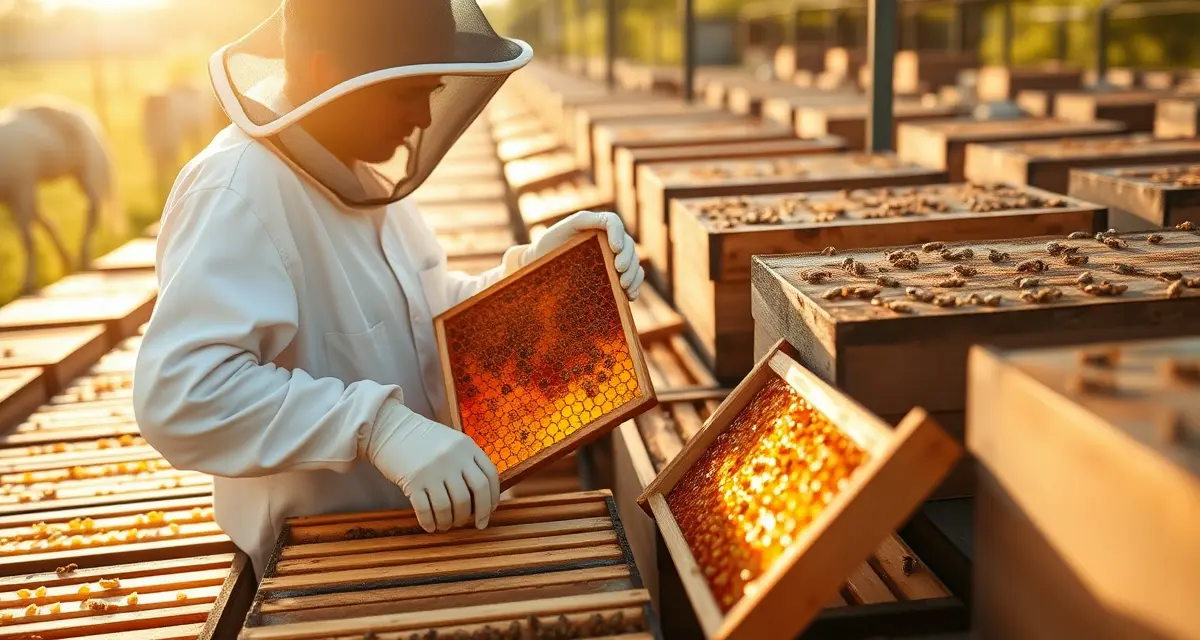
Honey Production Alongside Pollination: Managing Dual Income Streams
Pollination and honey production can generate $400-600 per hive per year when strategically combined. That's not a theoretical ceiling. It's what well-run operations moving 1,000+ hives through a circuit that combines California almonds, Pacific Northwest berry pollination, and Northern Plains clover honey actually produce. But achieving it requires treating honey production as a deliberately scheduled income stream, not a byproduct of whatever happens between pollination contracts.
California almond honey is a premium product. Light amber, distinctive floral character, well-regarded by buyers who pay for traceable American honey. The problem: your colonies are on pollination contracts in orchards that use pesticides during and after bloom. The window for running supers during almonds is real but narrow, and it requires communication with growers that most beekeepers don't do proactively.
TL;DR
- Wholesale honey prices for commercial producers have ranged from $1.50-2.50 per pound for bulk clover honey in recent seasons.
- Varietal honeys (buckwheat, tupelo, sourwood) command $3.00-5.00 per pound or more at wholesale.
- Summer honey production in North Dakota, Montana, and the Pacific Northwest is the primary source of bulk honey revenue for migratory operations.
- Honey production and pollination revenue streams can be combined on the same annual circuit, with most operations capturing both.
- Packing, storage, and distribution requirements for commercial honey production add cost and logistics complexity beyond the extraction stage.
The Dual Income Model
Most commercial migratory operations generate income from two sources:
- Pollination contracts: $70-220/hive depending on crop, typically paid on delivery or in 30/60-day terms
- Honey sales: Bulk or packed, ranging from $1.80-3.50/lb wholesale to $8-15/lb retail
An operation running California almonds ($200/hive), Pacific Northwest blueberries ($80/hive), and North Dakota clover honey (averaging 80-100 lbs/hive at $2.20/lb wholesale) generates roughly:
- Almonds: $200 per hive
- Blueberries: $80 per hive
- Clover honey: $176-220 per hive (80 lbs × $2.20)
- Total: ~$456-500 per hive annually
That's before accounting for any supers run during almond or berry seasons, premium honey sales channels, or honey produced at other stops on the circuit. The point is that the dual-income model generates substantially more per hive than running a single-use honey operation or a single-service pollination operation.
Can You Run Honey Supers During Almond Pollination?
Yes, but with conditions. The almond honey window is real, and some operators capture it successfully. The constraints:
Pesticide timing: Almond orchards receive fungicide, herbicide, and insecticide applications that can contaminate honey. Fungicides (applied heavily during bloom for hull rot and brown rot prevention) can end up in honey at trace levels. For conventional honey sales, trace pesticide residue is a food safety and buyer concern. For organic honey certification, it's disqualifying. Know what's being sprayed and when before you run supers.
grower communication: Ask every grower whose orchard you're placing in: what applications are planned during and after bloom? What's the re-entry interval? This conversation isn't awkward. It's professional. Growers who work with organized operators have this information and will share it. Growers who haven't thought about it will think about it once you ask.
Super timing: Supers added just before full bloom and pulled before post-bloom pesticide applications gives you 10-20 days of honey collection depending on bloom timing. That's not a full flow, but in an almond orchard with 2 million blooms per acre, a 10-day window can produce 10-20 lbs per super. On 200 supers, that's 2,000-4,000 lbs of almond blossom honey, worth $3,600-7,200 at $1.80/lb wholesale or significantly more if you're selling direct.
Timing Honey Production Around the Circuit
The real honey money for most migratory operations isn't California. It's the Northern Plains or Pacific Northwest summer flows. Planning your pollination circuit to position colonies in high-quality honey flows after contract obligations end is the strategic play.
Typical circuit flow for combined income:
- January-February: Deliver to California almonds. Colonies working hard, no supers if pesticide risk is high. Some operators super late-bloom varieties.
- March: Move California or Oregon colonies to cherry or apple pollination if contracted. Limited honey opportunity.
- April-May: Pacific Northwest berry pollination (blueberries, cranberries). Contract income, limited honey; blueberry honey is distinctive but yield is modest.
- June: Move colonies out of berry contracts. Position for summer honey flows. Operations in the Pacific Northwest may have access to early fireweed or blackberry flows.
- July-August: Primary honey production window. North Dakota, South Dakota, Montana offer large-scale clover, sweet clover, alfalfa, and canola flows. Average honey yields in peak North Dakota yards: 80-150 lbs per colony depending on the year.
- August: Extract honey in the Dakotas. Treat for varroa simultaneously. The August treatment window is critical.
- September-October: Move colonies back south for winter. Some operations pick up late pollination contracts (cranberries finish by October, some fall tree fruit).
The column that makes this circuit profitable is the summer honey production. Almond pollination covers a large fixed cost chunk. Summer honey provides the margin.
Extraction Logistics at Scale
A 1,000-hive operation producing 80 lbs per hive generates 80,000 lbs (40 tons) of honey annually from the summer flow alone. You need extraction infrastructure that matches this volume.
Options:
Own extractory: A commercial extractory capable of processing 40 tons per season requires a significant equipment investment: $100,000-300,000 for extraction lines, uncapping, settling tanks, pumps, and storage. Operating costs include utilities, sanitation, and labor. This capital investment makes sense for operations at 500+ hives that plan to stay in the honey business long-term.
Co-pack at another operation: Many large honey producers run extraction as a service during the North Dakota season, processing colonies for smaller operations at a per-pound fee ($0.08-0.15/lb is typical). This eliminates capital investment but requires coordinating your extraction timing with the co-packer's schedule.
Sell supers in place: Some operators sell honey-filled supers to bulk buyers who handle extraction. Prices are lower ($0.80-1.20/lb equivalent) but eliminate extraction logistics entirely. This works for operations that want pollination income and honey income without investing in extraction infrastructure.
Honey on Berry Pollination Contracts
Blueberry honey is real honey with commercial demand, but it's less profitable than most operators expect per hive because yield is modest. Blueberries bloom in late April-May in Michigan and the Pacific Northwest, and colonies actively forage on them. A typical yield is 15-30 lbs per colony depending on yard location and colony strength.
The pesticide issue is more significant here than in almonds. Commercial blueberry production uses fungicides, herbicides, and in some cases insecticides during the crop cycle. Blueberry-specific insecticides applied post-bloom for spotted wing drosophila are a contamination risk for late-season honey supers. Pull supers before post-bloom applications or confirm with growers that no insecticides will be applied.
Blueberry honey has a distinctive flavor (dark amber, strong, slightly tart) and is sought by specialty buyers. If you can position blueberry honey as premium varietal product with clear provenance, it commands $3.50-5.00/lb wholesale versus $1.80-2.20 for generic mixed wildflower.
The Most Profitable Crop to Run Honey Alongside Pollination
For most migratory operations, the crop that best supports honey production alongside pollination is apple, specifically in the Mid-Atlantic and Northeast, where blooms in May coincide with dandelion and early tree fruit flows. Apple orchards use fewer post-bloom pesticides than almonds, colonies placed in apple orchards in May often sit within range of mixed spring forage, and the contract rates ($80-100/hive) supplement meaningful honey production in the surrounding landscape.
Clover seed pollination in Idaho, Wyoming, and Oregon is another high-value combination, offering contract income of $60-80/hive plus proximity to irrigated alfalfa and clover honey flows that can produce 60-100 lbs/colony. Operators who run clover seed contracts often position their extraction infrastructure near these locations for the late July-August pull.
Managing Honey Packing and Distribution for the Commercial Circuit
Once you're producing 40-100 tons of honey per year, the question isn't whether to pack. It's how. Bulk honey sales to packers and processors are the path of least resistance: you pull honey, truck it to a bulk buyer, get paid within 30 days. Simple, but you're capturing $1.80-2.20/lb instead of $8-15 for packed retail.
The premium channel is direct relationships with regional grocers, food service buyers, or direct-to-consumer sales of your premium varietal honeys. Almond blossom, wildflower, and single-source varietal honeys command real premiums when you have the story and provenance documentation to support them. Getting there requires organic honey certification if you're targeting natural and organic retailers, and it requires marketing infrastructure that most commercial beekeeping operations don't build until they're past 500 hives.
FAQ
Can you run honey supers during almond pollination?
Yes, but you need to manage the pesticide risk carefully. Ask your growers what applications are planned during and after bloom, and time super addition and removal around the spray schedule. The almond blossom honey window is roughly 10-20 days depending on bloom progression. Some operators run supers successfully, others decide the pesticide risk is too high for their buyer requirements. Organic honey production is incompatible with conventional almond orchard inputs. Don't attempt organic certification on almond honey without full documentation of spray-free management.
How do you time honey extraction around pollination contract movements?
The summer honey flow in the Northern Plains (North Dakota, South Dakota, Montana) peaks in July-August and sits naturally between the June departure from Pacific Northwest berry contracts and the fall return south. This timing window (mid-July to mid-August) is the primary extraction period for most operations on the California-Northwest-Dakota circuit. Extraction infrastructure in the Dakotas, varroa treatment, and colony assessment all happen in this same window before the fall move south.
What is the most profitable crop to run honey alongside pollination?
Summer clover and sweet clover flows in the Northern Plains are the highest-yielding single honey opportunity for most migratory operations, often generating 80-150 lbs per colony in good years at $2.00-2.50/lb wholesale. As a combined pollination-plus-honey play, alfalfa seed and clover seed pollination contracts in Idaho and Oregon position colonies near productive late-summer honey flows while generating $60-80/hive in contract income. The combined yield per hive from seed pollination plus adjacent honey production can reach $250-350, making it one of the more efficient stops on a migratory circuit.
How do commercial beekeepers choose summer honey yard locations?
Summer honey yard selection focuses on forage quality, density, and landscape characteristics. North Dakota and Montana white clover and sweetclover flows typically produce 80-150 pounds per colony in good years. The Pacific Northwest offers diverse flows from clover, fireweed, and wildflowers. Proximity to other apiaries reduces forager competition; bee-friendly state lands or rented agricultural properties with forage diversity are preferred. Water availability within 1-2 miles of each yard is a basic requirement.
What is the difference between selling honey as bulk versus packaged retail?
Bulk honey sales to brokers or packers provide simple logistics (55-gallon drums or totes shipped directly from extraction) but yield lower per-pound prices ($1.50-2.50/pound for clover at wholesale). Packaged retail sales through direct channels (farmers markets, online, specialty retailers) yield $6-12 per pound but require labeling, packaging equipment, food safety compliance, and distribution relationships. Most commercial operations rely primarily on bulk sales and use retail as a supplementary channel for premium varieties.
Can honey production records be tracked alongside pollination contract records?
Yes. PollenOps tracks yard assignments and honey production data alongside pollination contracts so the full economic picture of each yard and each season is visible in one system. This matters for operations that use the same yards for honey production in summer and pollination staging in winter and spring, since the value of a yard location depends on both revenue streams.
Try These Free Tools
Sources
- USDA Agricultural Research Service
- Bee Informed Partnership
- American Beekeeping Federation (ABF)
- American Honey Producers Association
- National Honey Board
Get Started with PollenOps
Running honey production alongside pollination contracts requires coordinating two revenue streams on a single annual calendar. PollenOps tracks both in one platform so your circuit planning reflects reality rather than optimistic assumptions.