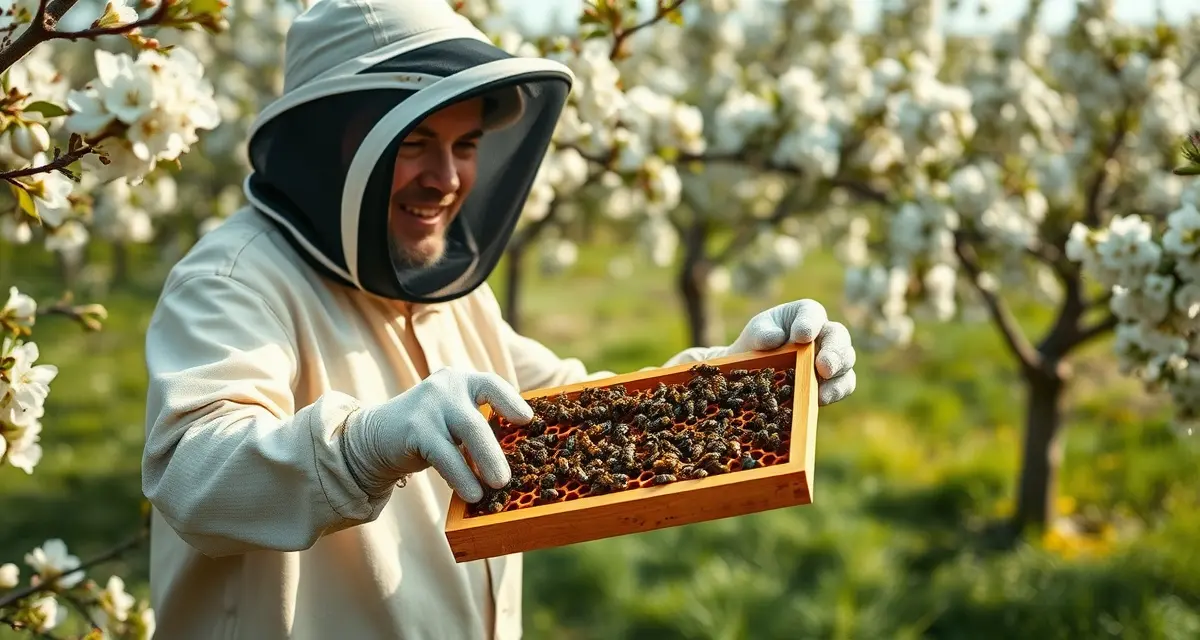
Apple Pollination in Michigan: Contracts Timing and Logistics
Michigan produces over 20 million bushels of apples annually and ranks among the top apple-producing states in the country. Commercial apple pollination in Michigan runs from late April through mid-May, overlapping with the state's cherry and blueberry seasons and creating a multi-crop spring circuit opportunity in the same general region of the northwestern and southwestern Lower Peninsula.
For operators working the Great Lakes circuit, Michigan apple is often combined with Michigan cherry (which blooms slightly before apples) or Michigan blueberry (which follows apples) to maximize revenue per truck per spring season.
TL;DR
- Michigan's primary commercial beekeeping role is shaped by its crop mix, climate, and position on the national pollination circuit.
- Pollination rates in Michigan range $65-220/hive depending on crop depending on crop and colony strength requirements.
- Out-of-state operators entering Michigan for pollination contracts must register with the state agricultural authority and obtain a Certificate of Health.
- Michigan functions as either a primary pollination destination, a seasonal honey production location, or a transitional stop depending on the circuit.
- Tracking permit status, registration documents, and yard records for Michigan operations requires organized record-keeping before the season opens.
Michigan Apple Production Geography
Michigan's commercial apple production is concentrated in two main regions:
Southwestern Lower Peninsula (Van Buren, Berrien, Kent counties): The Lake Michigan shoreline's moderating influence extends the growing season and reduces spring frost risk. This region produces a mix of varieties including Honeycrisp, Gala, Fuji, and cider apples.
Northwestern Lower Peninsula (Grand Traverse, Leelanau, Benzie, and Antrim counties): The "Traverse Bay" apple region around Traverse City is one of Michigan's most established and productive apple growing areas.
Both regions are in the same general northwest Lower Peninsula geography as Michigan's cherry production, which makes multi-crop circuit planning practical.
Bloom Timing
Michigan apple bloom runs late April through mid-May. The southwestern lake shore counties bloom slightly earlier, typically late April. The northwestern Traverse Bay area blooms early to mid-May. This progression creates a potential sequential placement opportunity within Michigan, though the geographic spread means truck repositioning is involved.
The same lake effect that moderates the climate also makes bloom timing variable year to year. Late cold snaps can delay bloom by a week or more. Operators should maintain contact with growers through April for updated bloom forecasts.
For the Great Lakes cherry and blueberry circuit, apple fits as a bridge crop between cherry (mid-April to early May) and blueberry (early to late May).
Colony Requirements and Rates
Michigan apple growers typically require 6 to 8 frames of bees at placement. Apple orchards have tighter colony strength requirements than some other fruit crops because inadequate pollination directly reduces harvest yield and fruit set uniformity.
Michigan apple pollination rates have typically run $90 to $120 per hive, depending on colony strength requirements, grower relationship history, and overall demand in the season.
For Michigan apiary registration and compliance, out-of-state operators must register with the Michigan Department of Agriculture and Rural Development and provide health certificates for incoming colonies.
Building Michigan Apple Relationships
Most Michigan apple contracts are held by repeat contractors. Growers value consistency, reliable delivery timing, and colony strength that meets contract specifications. Breaking into established Michigan apple contracts requires outreach to growers who've had contractor problems or are expanding operations, combined with a track record that supports your pitch.
Contact Michigan apple growers in the fall, by October, for the following spring season. Michigan State University Extension in apple-producing counties is a networking resource for grower introductions.
Frequently Asked Questions
How do you get apple pollination contracts in Michigan?
Contact apple growers in the southwestern lake shore counties (Berrien, Van Buren, Kent) and the northwestern Traverse Bay region (Grand Traverse, Leelanau) in fall for the following spring season. Michigan State University Extension's horticultural programs serve apple producers in both regions and can provide introductions. The Michigan Apple Committee is another industry contact. Operators who already work Michigan cherry or blueberry are well-positioned to add apple contracts from the same grower community through referrals and established relationships.
When is apple pollination season in Michigan?
Michigan apple bloom runs from late April in the southwestern lake shore counties to mid-May in the northwestern Traverse Bay region. The lake effect moderates temperatures and can push bloom timing later than continental locations at the same latitude. Year-to-year variation based on winter chill hours and spring temperatures can shift bloom by 1 to 2 weeks. Operators should plan to have colonies in position by late April for the earliest southwestern counties, with the ability to hold through mid-May for the later-blooming northern regions.
What colony strength do Michigan apple growers require?
Michigan apple growers typically require 6 to 8 frames of bees at time of placement. The standard 6-frame minimum is common across standard commercial contracts. Premium orchard operations and growers who have tested pollination efficiency improvements from stronger colonies may specify 8 frames. Colony condition at late April reflects winter survival quality and spring management through March and April. Operators coming from California almonds with 6 to 8 weeks of post-almond recovery should arrive in Michigan with adequate colony populations if winter survival was strong and mite management was current.
What is the process for registering an out-of-state apiary in a new state?
Most states require out-of-state operators to register with the state department of agriculture apiary program before placing colonies. The process typically involves submitting a registration application (online or paper), paying a fee (usually $10-50 per location), and providing contact information for the operation. Some states also require the registration to be renewed annually. Contact the destination state's department of agriculture apiary program at least 60 days before your planned arrival to confirm current requirements.
What documentation do state apiary inspectors typically review?
State apiary inspectors review health certificates for out-of-state colonies, registration documentation, and colony inspection records during apiary visits. Inspectors check for signs of American foulbrood, European foulbrood, and other regulated pests and diseases. Operations with organized digital records that include treatment history and mite counts typically have faster, less complicated inspections than operations without documentation. Some state inspectors also verify that varroa mite loads are below state entry thresholds.
What triggers a state apiary inspection?
State apiary inspections can be triggered by routine inspection schedules (most states inspect a percentage of registered apiaries annually), neighbor or landowner complaints, disease reports from nearby operations, or inspection requirements tied to state entry permits. California, in particular, has the right to inspect incoming loads at port of entry for commercial beekeeping operations. Maintaining current registration and organized records makes required inspections faster and less disruptive.
Try These Free Tools
Sources
- USDA Agricultural Research Service
- Bee Informed Partnership
- American Beekeeping Federation (ABF)
- Michigan Department of Agriculture
- Project Apis m.
Get Started with PollenOps
Commercial operations working in Michigan face the same registration, permit, and documentation requirements as any state on the national circuit -- plus Michigan's specific regulatory requirements. PollenOps tracks your Michigan yard records, contract assignments, and permit documentation alongside your full operation, so entering a new state doesn't add a separate administrative burden. See how the platform fits operations working across multiple states.