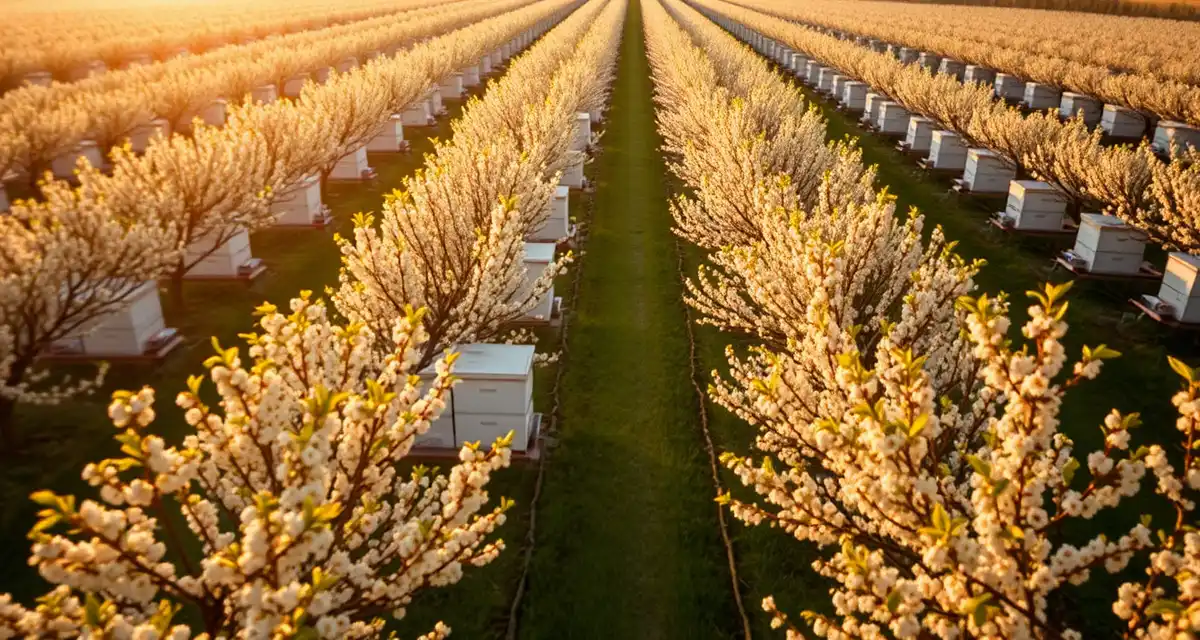
Cherry Pollination in Michigan: Contracts Timing and Logistics
Michigan produces over 75% of US tart cherries, with significant sweet cherry acreage also concentrated in the northwestern Lower Peninsula and the Old Mission and Leelanau peninsulas near Traverse City. This production concentration creates a meaningful commercial pollination market that sits in a strategically useful timing window: Michigan cherry bloom runs mid-April to early May, between California almond exit and blueberry season.
An operator who exits California almonds in late February, positions colonies for 6 to 8 weeks of recovery, and arrives in northern Michigan in late April can cover cherry season and then transition directly to blueberry contracts in early May. The geographic overlap between Michigan cherry country and blueberry country in the northwestern Lower Peninsula makes sequential placement realistic without major repositioning moves.
TL;DR
- Michigan's primary commercial beekeeping role is shaped by its crop mix, climate, and position on the national pollination circuit.
- Pollination rates in Michigan range $65-220/hive depending on crop depending on crop and colony strength requirements.
- Out-of-state operators entering Michigan for pollination contracts must register with the state agricultural authority and obtain a Certificate of Health.
- Michigan functions as either a primary pollination destination, a seasonal honey production location, or a transitional stop depending on the circuit.
- Tracking permit status, registration documents, and yard records for Michigan operations requires organized record-keeping before the season opens.
The Cherry Season Calendar
Tart cherry bloom in Michigan's Grand Traverse, Leelanau, and Benzie county production areas typically runs from mid-April through early May, with the exact dates varying year to year based on spring temperature accumulation. Sweet cherry bloom follows a similar calendar.
The Old Mission and Leelanau peninsulas extending into Lake Michigan have a moderated microclimate due to the lake's thermal mass. This can push cherry bloom timing later than inland areas, providing additional flexibility in the placement window.
Michigan cherry pollination precedes blueberry pollination by 2 to 3 weeks in the same general region, which is precisely what makes the cherry-to-blueberry sequential circuit attractive. Operators already working blueberry pollination in Michigan should evaluate whether cherry contracts from the same grower community can be added.
What Cherry Growers Require
Cherry growers typically specify 6 to 8 frames of bees at time of placement. Tart cherry orchards follow a different spacing and management model than almonds, with tree rows that may require different pallet placement configurations.
Some cherry growers work with the same beekeepers who service their blueberry operations or neighboring blueberry farms, creating natural dual-season contract opportunities. Relationships built on reliable cherry service often extend to blueberry referrals, and vice versa.
Contact cherry growers in the fall, by October at the latest. Many Michigan cherry growers have their pollination contracted before November. Cold-calling in April when bloom is two weeks away puts you in competition for whatever positions are unfilled, which are usually the less desirable ones.
Contract Rates and Structure
Michigan cherry pollination rates have typically run $75 to $110 per hive, with sweet cherry contracts sometimes at the higher end of that range. Contracts specify delivery timing, colony strength at delivery, number of hives, yard locations, and pickup after bloom.
For operators also working cherry pollination contracts in Washington or Oregon, Michigan provides an Eastern circuit equivalent with comparable rates and an important geographic position in the Northeast-to-Midwest migratory route.
Logistics and Regulations
Michigan requires a certificate of health for colonies entering from out of state. Register your Michigan yard locations with the Michigan Department of Agriculture and Rural Development before placing hives. For operators coming from California, getting your California-origin health certificate arranged in March, after almonds and during the recovery window, sets up the paperwork for April Michigan arrival.
Cherry country in the Grand Traverse region has good road access, and the peninsula geography means yard locations are typically in visible, accessible agricultural land. Scouting yard locations in advance is still important, as some orchard approaches have tight turn-around constraints for loaded trucks.
Frequently Asked Questions
How do you get cherry pollination contracts in Michigan?
Contact tart and sweet cherry growers in the Traverse City area, Old Mission Peninsula, and Leelanau Peninsula in fall for the following spring season. The cherry grower community in northwestern Michigan is tightly networked. A strong reference from a Michigan blueberry grower or another Michigan cherry beekeeper is valuable for making introductions. The Northwest Michigan Horticultural Research Center and cherry grower cooperatives in the region are additional networking resources. Come prepared with your colony count, strength standards, and references from other spring pollination work.
What colony strength do Michigan cherry growers require?
Michigan cherry growers typically require 6 to 8 frames of bees at time of placement. The specification varies by grower and contract type. Sweet cherry growers with premium orchards may specify 8 frames. Standard tart cherry contracts more often call for 6 frames. Colony condition at mid-April reflects your winter survival and early spring management quality. Operations that exit California almonds in good shape and spend 6 to 8 weeks on post-almond mite management and nutrition typically arrive in Michigan with adequate colony populations.
How does Michigan cherry pollination connect to the blueberry season?
Michigan cherry bloom runs mid-April through early May in the northwestern Lower Peninsula. Michigan blueberry bloom starts in early May in the southern lakeshore counties. The geographic proximity of cherry production in the Traverse City area and blueberry production in Van Buren and Allegan counties means operators can move from cherry to blueberry in a single truck run. The 1 to 3 week gap between cherry pickup and blueberry placement provides some recovery time for colonies between the two contracts. Operators who work both crops in Michigan from the same base of operations minimize repositioning costs and maximize revenue per truck per spring season.
What is the process for registering an out-of-state apiary in a new state?
Most states require out-of-state operators to register with the state department of agriculture apiary program before placing colonies. The process typically involves submitting a registration application (online or paper), paying a fee (usually $10-50 per location), and providing contact information for the operation. Some states also require the registration to be renewed annually. Contact the destination state's department of agriculture apiary program at least 60 days before your planned arrival to confirm current requirements.
What documentation do state apiary inspectors typically review?
State apiary inspectors review health certificates for out-of-state colonies, registration documentation, and colony inspection records during apiary visits. Inspectors check for signs of American foulbrood, European foulbrood, and other regulated pests and diseases. Operations with organized digital records that include treatment history and mite counts typically have faster, less complicated inspections than operations without documentation. Some state inspectors also verify that varroa mite loads are below state entry thresholds.
What triggers a state apiary inspection?
State apiary inspections can be triggered by routine inspection schedules (most states inspect a percentage of registered apiaries annually), neighbor or landowner complaints, disease reports from nearby operations, or inspection requirements tied to state entry permits. California, in particular, has the right to inspect incoming loads at port of entry for commercial beekeeping operations. Maintaining current registration and organized records makes required inspections faster and less disruptive.
Try These Free Tools
Sources
- USDA Agricultural Research Service
- Bee Informed Partnership
- American Beekeeping Federation (ABF)
- Michigan Department of Agriculture
- Project Apis m.
Get Started with PollenOps
Commercial operations working in Michigan face the same registration, permit, and documentation requirements as any state on the national circuit -- plus Michigan's specific regulatory requirements. PollenOps tracks your Michigan yard records, contract assignments, and permit documentation alongside your full operation, so entering a new state doesn't add a separate administrative burden. See how the platform fits operations working across multiple states.