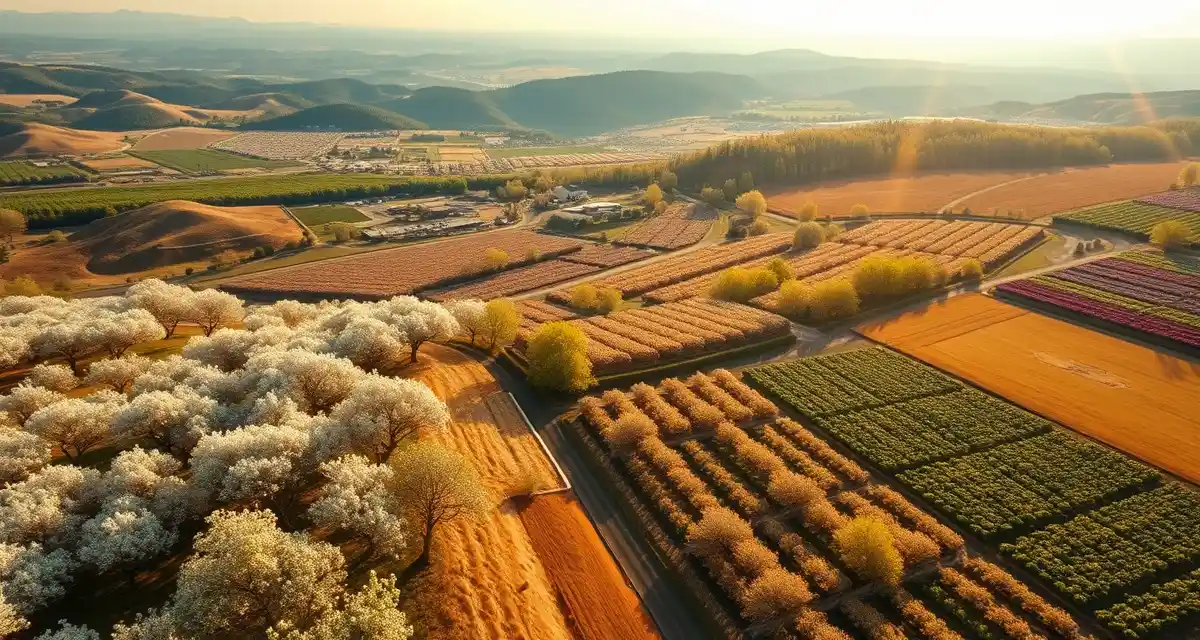
Bloom Timing by Region for US Pollination Beekeepers
Bloom timing varies by as much as 6 weeks between northern and southern growing regions for the same crop. That's not a small variation. It's the difference between February almonds in Bakersfield and March almonds near Sacramento. It's the difference between late April cherry bloom in the lower Yakima Valley and mid-May cherry bloom in the Wenatchee uplands.
For a migratory operation building a season-long route, understanding regional bloom timing isn't just useful. It's the foundation of every move decision you make.
This guide covers bloom timing by major growing region and crop, based on historical averages and how PollenOps uses regional data to generate planning forecasts.
TL;DR
- Commercial beekeeping operations face two primary management challenges: operational logistics (hive health, transport, placement) and administrative coordination (contracts, payments, documentation).
- Most disputes and revenue losses in commercial beekeeping are preventable with better documentation and clearer contract terms.
- The operations that run most profitably are those with disciplined systems for tracking hive health, contract status, and fleet logistics in one place.
- PollenOps is built specifically for the operational complexity of commercial-scale pollination services, not adapted from a hobbyist tool.
- The most important management decisions (treatment timing, contract renewal, hive allocation) require accurate current data to make well.
How to Read Regional Bloom Data
Regional bloom timing represents the average expected date for that region based on historical weather patterns. In any given year, actual bloom may be 1-3 weeks earlier or later depending on winter chilling and spring temperature accumulation.
Use regional averages for initial season planning: building your contract calendar, setting service periods, and mapping your truck routes. Then update your specific move timing based on in-season alerts as bloom approaches.
The two-stage approach, plan on averages, execute on alerts, is how experienced migratory beekeepers avoid the twin failures of committing too rigidly to a calendar date and reacting too late when conditions shift.
California: The Anchor of US Pollination Season
California's almond season defines the start of the US commercial pollination year, and everything downstream in the season is planned around it.
Southern San Joaquin Valley (Bakersfield, Delano area): Almond bloom typically starts February 5-15 in a normal year. Early variety Kings blanket begins first, with Nonpareil following approximately 7-10 days later.
Central San Joaquin Valley (Fresno, Madera): Almond bloom typically starts February 10-20 for most of the main commercial block. This is the heart of the production region.
Northern San Joaquin Valley and Sacramento Valley: Bloom typically starts February 15-28, with some northern Sacramento Valley orchards blooming into early March in cool years.
How early does almond bloom start in the San Joaquin Valley vs Fresno? The southern valley (Bakersfield area) typically runs 7-10 days ahead of the Fresno area, which in turn runs 5-7 days ahead of the northern Sacramento Valley. In an early year, the spread compresses. In a cool, late year, it widens.
California cherry (primarily in Gilroy, Brentwood, and Lodi areas) follows almond in late March through April.
Pacific Northwest: The Spring Crown Jewel
The Pacific Northwest represents the most geographically complex bloom sequence in the US, with cherry, pear, apple, and berry crops cascading from lower elevation to higher elevation over an 8-10 week window.
Lower Yakima Valley cherries (700-900 ft): Bloom start late March to early April in normal years. Sweet cherry is the primary variety; Bing and Rainier are the main commercial types.
Wenatchee/Columbia Basin orchards (800-1200 ft): Cherry bloom start early to mid-April. Apple bloom follows approximately 7-10 days after cherry at comparable elevations.
Mid-slope Yakima and Chelan areas (1200-2000 ft): Cherry bloom mid-to-late April. Higher elevation apple blocks bloom into May.
Willamette Valley, Oregon (pear, cherry, berry): Pear bloom starts late March to early April. Sweet cherry bloom follows in mid-April. Highbush blueberry bloom runs late April through May.
Which regions have the earliest cherry bloom in the US? The lower Yakima Valley floor and Brentwood, California cherry orchards are typically the earliest US cherry bloom regions, often starting in late March. The difference from the latest US cherry regions (higher elevation Pacific Northwest) can be 4-6 weeks.
Pacific Northwest Berry Season
Oregon and Washington berries extend the Pacific Northwest season through June and into July.
Oregon Willamette Valley highbush blueberry: Late April through May, with peak bloom in May for most varieties.
Washington western lowlands (Skagit, Puget Sound area): May through early June for highbush blueberry.
Oregon/Washington raspberry and strawberry: Late May through June for strawberry placements. Raspberry contracts are less common because raspberry is largely self-fruitful, but some growers still contract bees for increased set.
Midwest: The Blueberry and Fruit Belt
The Midwest represents significant commercial blueberry pollination volume and substantial apple and cherry contracts.
Michigan highbush blueberry (Van Buren, Allegan counties): Main season varieties bloom mid-to-late May in a typical year. Early varieties may start late April.
Michigan tart cherry (Traverse City area): Bloom typically starts early to mid-May, running 3-4 weeks after Washington sweet cherry.
Michigan apple (primarily western Michigan): Late April to mid-May, overlapping with blueberry in many operations.
Minnesota and Wisconsin fruit: Apple bloom in Minnesota runs mid-to-late May. Cranberry bloom in central Wisconsin runs late June to early July.
Northeast: Apple and Cranberry Country
Hudson Valley and Central New York apple: Bloom typically runs late April through mid-May, with McIntosh starting before Cortland and Honeycrisp.
Massachusetts cranberry (Cape Cod): Bloom mid-June through early July.
New Jersey highbush blueberry (southern NJ): Late April through May.
How do I adjust my seasonal plan for regional bloom variation? The answer is building your contract calendar around regional averages first, then updating as you get within 3-4 weeks of each crop's expected bloom date. PollenOps shows your contracts and bloom timing forecasts together, so you can see where your planned delivery dates align with projected bloom windows and where they don't.
Southeast: Early Season and Citrus
Florida blueberry (Highlands, Alachua counties): Late March to mid-April for most commercial varieties. Florida blueberry is among the earliest commercial blueberry bloom in the US.
Florida citrus (Indian River, Central Florida): March through April for commercial pollination placements.
Georgia blueberry (Bacon, Ware counties): Mid-March to mid-April for rabbiteye varieties. Rabbitey blueberry bloom runs 3-4 weeks ahead of Midwest highbush.
North Carolina blueberry (Columbus, Bladen counties): Late March through April for rabbiteye and highbush varieties.
Northern Plains: Summer Seed Crops
After spring pollination season, the Northern Plains offer summer contract opportunities:
North Dakota sunflower: July through August for oilseed and confection varieties.
Idaho alfalfa seed (primarily Magic Valley): July through August for certified seed production contracts.
Pacific Northwest clover seed: June through July in Oregon and Washington.
These summer seed crops provide income after the spring pollination rush and before operations return south for winter.
Building a Full-Season Route from Regional Data
The most profitable migratory operations build their annual route around the regional bloom sequence, starting with California almonds in February and cascading north and east as the season progresses.
A typical efficient migratory route connects:
- California almonds (February-March)
- Pacific Northwest cherries and pears (April)
- Pacific Northwest apples (April-May)
- Pacific Northwest or Midwest blueberries (May-June)
- Northern Plains seed crops (July-August)
- Return south for winter buildup (September-October)
PollenOps bloom timing alerts combined with the bloom alert system by crop let you plan this full-season route around regional data, then execute each move with precise timing from in-season alerts.
Frequently Asked Questions
How early does almond bloom start in the San Joaquin Valley vs Fresno?
The southern San Joaquin Valley (Bakersfield area) typically sees almond bloom start 7-10 days before the Fresno area, which in turn runs 5-7 days ahead of the northern Sacramento Valley. In a warm year, these gaps compress. In a cool year, they widen. PollenOps generates specific bloom timing estimates for each monitored district rather than a single Valley-wide date.
Which regions have the earliest cherry bloom in the US?
The lower Yakima Valley in Washington (700-900 ft elevation) and the Brentwood, California area are typically the earliest commercial sweet cherry bloom regions in the country, usually starting in late March. The spread between these early regions and the latest US cherry regions (higher elevation Pacific Northwest orchards) can be 4-6 weeks.
How do I adjust my seasonal plan for regional bloom variation?
Build your initial contract calendar and route plan using regional average bloom dates. Within 3-4 weeks of each crop's expected bloom, shift to in-season data from PollenOps bloom alerts, which track actual weather-driven conditions for your specific yard locations. Adjust planned move dates based on how actual conditions compare to the seasonal average.
What is the difference between commercial and hobby beekeeping?
Commercial beekeeping is distinguished by scale (typically 100+ hives, often 500-5,000+), revenue source (pollination contracts and bulk honey sales rather than local honey retail), and management approach (systematic protocols applied across yards rather than individual colony attention). Commercial operators manage bees as an agricultural enterprise, with the administrative, regulatory, and logistical complexity that entails. Most commercial operators derive the majority of their income from pollination services; honey production is a supplementary revenue stream.
How many hives are needed to make commercial beekeeping a full-time income?
Most beekeeping economists put the full-time commercial threshold at 500-800 hives, assuming efficient operations management and a combination of pollination and honey revenue. At 500 hives and $200/hive for almond pollination, almond season alone generates $100,000 in gross revenue before expenses. Net margins depend on operational efficiency, but well-run operations can achieve 30-50% net margins on pollination revenue. Additional crops and honey production improve per-hive economics but require additional management capacity.
What is the annual revenue potential for a 1,000-hive commercial operation?
A 1,000-hive operation running an almond season ($200/hive) plus blueberry or apple contracts ($80-100/hive) plus summer honey production ($25-40/hive after extraction costs) can generate $300,000-360,000 in annual gross revenue. Net margins after transport, crew, equipment, and hive replacement costs typically run 25-40% for well-managed operations, putting net income at $75,000-145,000 annually. The specific number depends heavily on circuit efficiency, loss rates, and contract quality.
Try These Free Tools
Sources
- USDA Agricultural Research Service
- Bee Informed Partnership
- American Beekeeping Federation (ABF)
- American Honey Producers Association
- Project Apis m.
Get Started with PollenOps
Managing a commercial beekeeping operation involves more data, more deadlines, and more moving parts than any general-purpose tool was designed to handle. PollenOps brings contracts, yard records, health documentation, and fleet logistics together in one platform built for the realities of commercial-scale beekeeping.