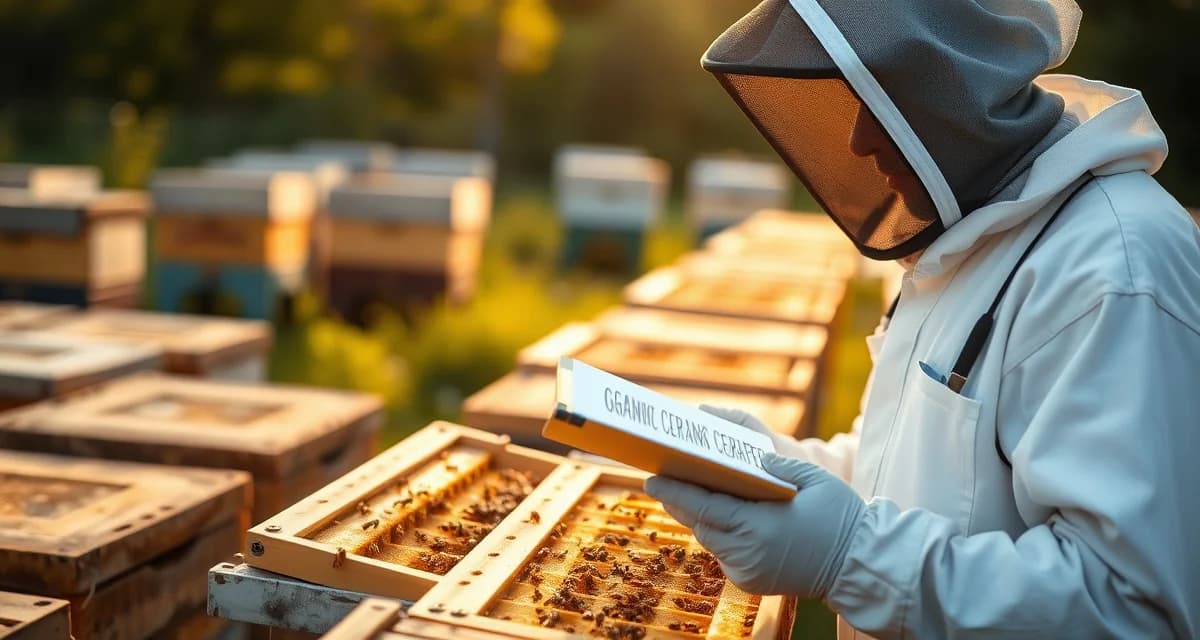
Organic Pollination Contract Management
Demand for organic pollination services is growing 22 percent annually as organic acreage expands across California, Michigan, and the Pacific Northwest. Organic certified growers have additional documentation requirements beyond what standard commercial growers specify, and beekeepers who can meet those requirements position themselves for a market segment that commands premium rates and lower competition than the conventional pollination market.
Managing organic contracts requires tracking not just hive count and delivery timing, but also your colonies' pesticide exposure history, your apiary's organic certification status (if applicable), and the grower's audit trail requirements for their certifier. Doing this in a general-purpose spreadsheet works poorly; doing it in a system built to connect pesticide history to contract compliance works.
TL;DR
- A well-written pollination contract covers hive strength requirements, payment terms, delivery/removal windows, pesticide liability, and dispute resolution.
- Standard payment structure is 50% on delivery and 50% on removal; push for no longer than 14-day net on the back half.
- Hive strength disputes are the most common source of non-payment; third-party inspection at delivery is the cleanest resolution.
- Pesticide kill provisions should require grower notification 24-48 hours before any application within foraging range of placed hives.
- Contracts signed by November have stronger pricing leverage than those negotiated in December or January.
What Organic Growers Require from Beekeepers
Organic growers need to document their entire production system for annual certification by a USDA-accredited certifying agency. The documentation covers inputs, practices, and any non-organic materials that entered the production system. Bees are not an input in the same sense as fertilizer or pest control, but any pesticide or chemical treatment your colonies received that could create contamination exposure to the crop or the production environment is a documentation issue.
Common requirements from organic growers:
Pesticide exposure history: A record of any pesticide treatments applied to your colonies in the prior 12 months or more, including treatment type, date, and reason. Organic certifiers want to know if your colonies were treated with Apivar (amitraz), coumaphos, or other synthetic treatments that could leave residues. Colonies treated with only Oxalic acid, Hopguard, and other treatments approved for organic systems present fewer documentation challenges.
Apiary location history: Where your colonies have been in the prior season and whether they were placed at sites with pesticide application histories. A colony that spent February in a conventional California almond operation was exposed to fungicide, herbicide, and potential insecticide applications. Whether the grower's certifier considers this disqualifying depends on the certifier and the grower's certification standard, but you need to be able to document the history.
Feed and supplement documentation: What supplemental feed (syrup, pollen substitute) you provided your colonies, and whether those inputs were organic-approved. High fructose corn syrup from conventional sources, for example, is not USDA organic compliant as a bee feed. Beekeepers aiming for organic compliance use organic-certified cane sugar syrup and organic pollen substitute.
Written attestation: Many organic growers require a signed statement from their beekeeper attesting to compliance with specified management practices during the contract period.
Managing Organic Compliance Records in PollenOps
PollenOps organic compliance log tracks pesticide-free yard history and grower certification status for each contract. For each colony in your operation, you can record treatment history with dates and products, which populates the treatment history report that organic growers and their certifiers may request.
Yard location history in PollenOps shows where your hives have been placed across all your contracts, so when an organic grower asks whether your hives were placed at a conventional pesticide-intensive operation in the prior six months, you have a GPS-verified answer rather than a memory-based one.
The compliance log exports as a formatted document that you can share with a grower for their certifier's audit file. Rather than assembling this documentation from handwritten notes and email threads at the grower's request, you run a report export.
For contract compliance documentation across all contract types, see contract compliance documentation. For the full platform, see pollination contract software.
Pricing Organic Pollination Contracts
Organic pollination contracts typically run 15 to 30 percent above conventional rates in the same market, reflecting both the additional documentation burden on the beekeeper and the higher value of organic-certified crops that create premium return for the grower.
California organic almond pollination runs $220 to $275 per hive, compared to $180 to $235 for conventional. Michigan organic highbush blueberry runs $105 to $150 per hive, compared to $90 to $130 for conventional. These premiums more than compensate for the additional time required to maintain and report compliance documentation when the reporting system is organized.
The key to organic pollination pricing is demonstrating that your documentation system actually meets certifier requirements rather than just claiming that you follow organic practices. A PollenOps compliance report showing your treatment history and yard location history is more convincing to a skeptical organic grower than an informal assurance.
Certifying Your Own Operation
Some beekeepers choose to certify their entire operation as USDA organic, which allows them to market their honey and beeswax as organic and positions them specifically for the organic pollination market. Organic beekeeping certification requires:
- Maintaining colonies on forage sources free from prohibited substances within the bees' foraging range (a practical challenge in conventional agricultural areas)
- Using only approved treatments (oxalic acid, thymol-based products, and other approved options)
- Using organic-compliant feed when supplemental feeding is needed
- Maintaining records of all inputs and practices for annual certifier review
Full organic certification is a significant management commitment and is not necessary to serve organic growers as a pollination service provider. Organic growers need beekeepers who can document their practices and meet their certifier's requirements. They don't necessarily require that the beekeeper be USDA certified organic themselves. Clarify what the specific grower and certifier require before investing in full certification.
Frequently Asked Questions
What are the unique requirements of an organic pollination contract?
Organic pollination contracts add documentation requirements not present in conventional contracts. Typically these include: a treatment history record for your colonies covering the prior 12 to 24 months specifying all chemical inputs and their organic certification status, a yard location history showing where your hives have been placed and what types of operations (conventional vs. organic) they were exposed to, documentation of any supplemental feed provided and its organic certification status, and a signed beekeeper attestation of compliance with specified practices during the contract period. Some certifiers also require an on-site visit or specific recordkeeping format. Ask the grower for their certifier's specific beekeeper documentation requirements before writing the contract so you know what you're committing to deliver.
How do I document that my hives are suitable for organic certified orchards?
Prepare a beekeeper compliance package that includes: a treatment history report from PollenOps showing all colony treatments in the prior 12 to 24 months with product names and application dates, a yard location history showing your colonies' prior placements (so the grower and certifier can evaluate pesticide exposure history), and a description of your feed inputs and their certification status. Present this package proactively when pursuing organic contracts rather than waiting for the grower to ask. Growers evaluating an organic-compliant beekeeper want to see documented evidence, not just a verbal claim. If you've been managing colonies with only oxalic acid and organic-approved treatments for two or more seasons, your treatment history report is strong evidence for organic suitability.
What pesticide exposure records do organic growers require from beekeepers?
Organic growers and their certifiers typically want a complete treatment history for your contracted colonies covering a minimum of 12 months prior to the contract period, specifying each chemical product used, the date of application, and the reason for treatment. Synthetic treatments including amitraz (Apivar), coumaphos (CheckMite), and fluvalinate (Apistan) are the main concern for organic certifiers because these compounds can leave residues in wax that persist across colony generations. If your colonies were treated with any of these synthetic treatments, the grower and their certifier will evaluate whether that disqualifies the colonies for their organic certification program. Some certifiers allow treated colonies if the treatment occurred more than 12 months before the contract; others require a clean history for longer periods. Know the specific certifier's standard before committing to serve an organic grower.
What are the most common clauses in a commercial pollination contract?
A standard commercial pollination contract covers: hive strength minimums at delivery, payment terms (typically 50% on delivery, 50% on removal), delivery and removal dates, pesticide notification requirements, liability provisions for colony losses, truck access and yard location details, and dispute resolution procedures. Force majeure clauses addressing crop failure and operator inability to deliver the full hive count are also standard in well-written contracts.
How should pesticide liability be addressed in pollination contracts?
The contract should require growers to notify operators at least 24-48 hours before any pesticide application within foraging range (2-3 miles), specify the operator's right to remove hives immediately upon notification, and define liability for documented colony losses attributable to pesticide exposure. Without this clause, recovering compensation for pesticide kills requires proving causation after the fact, which requires lab testing, communication records, and timestamped photos of dead bees collected before cleanup.
What is a typical contract renewal strategy for commercial beekeepers?
Most successful commercial operators begin renewal conversations with existing growers in July, confirming the coming season's hive count and rate before new grower outreach. Existing grower relationships command better pricing stability than new contracts and require less pre-season sales effort. Sending growers a season-end report documenting hive placements and colony performance reinforces the relationship and creates a natural opening for renewal discussion.
Try These Free Tools
Sources
- USDA Agricultural Research Service
- Bee Informed Partnership
- American Beekeeping Federation (ABF)
- American Honey Producers Association
- Project Apis m.
Get Started with PollenOps
Managing pollination contracts across multiple growers and crops is where most commercial operations have the most to gain from better systems. PollenOps centralizes contract lifecycle management from initial quote through signed agreement, delivery documentation, and final invoice. Try it for your next season.