How to Price Pollination Contracts
Beekeepers who use documented hive strength data in pricing negotiations achieve 15-22% higher contract rates on average. That gap represents real money: on a 200-hive almond contract at $200/hive, an 18% premium is $7,200. On a 1,000-hive season, it's $36,000.
Pricing isn't guesswork. It's a calculation, and the inputs are your costs, your market data, and your hive quality documentation.
TL;DR
- A well-written pollination contracts covers hive strength requirements, payment terms, delivery/removal windows, pesticide liability, and dispute resolution.
- Standard payment structure is 50% on delivery and 50% on removal; push for no longer than 14-day net on the back half.
- Hive strength disputes are the most common source of non-payment; third-party inspection at delivery is the cleanest resolution.
- Pesticide kill provisions should require grower notification 24-48 hours before any application within foraging range of placed hives.
- Contracts signed by November have stronger pricing leverage than those negotiated in December or January.
The Three Inputs to Pollination Contract Pricing
1. Your True Cost Per Hive
Most beekeepers underestimate their true cost per hive for pollination services. The real cost includes:
Variable costs (specific to the contract):
- Fuel for the truck run to deliver and pick up
- Driver wages for the delivery
- Pre-move inspection labor
- Any feeding or treatment specific to this placement
- Health certificate fees if crossing state lines
Overhead allocation per hive:
- Truck depreciation and insurance
- Equipment costs (pallets, transport straps, smoker, etc.)
- PollenOps subscription or other software costs
- Business insurance
- Your own time for contract management and communication
Colony costs:
- Winter management and feeding to bring colonies to spring strength
- Varroa treatment costs
- Queen replacement rate (colonies that fail need replacing)
Adding these up honestly gives you a minimum viable rate below which you're subsidizing the grower's operation with your own capital. Many beekeepers discover their true cost-floor is higher than they thought.
2. Regional Market Benchmarks
Once you know your cost floor, you need to know what the market is actually paying. Regional rate benchmarks vary by crop and year. For 2025 reference points:
- California almonds: $180-$230 per hive
- Pacific Northwest cherry: $95-$130 per hive
- Michigan highbush blueberry: $70-$90 per hive
- Pacific Northwest apple: $50-$80 per hive
- Northeast cranberry: $60-$90 per hive
- North Dakota sunflower seed: $40-$70 per hive
These are ranges, not fixed prices. Where you land within the range depends on your hive quality and your relationship with the grower.
PollenOps per-hive rate calculation provides regional benchmark data from the PollenOps network to help you calibrate your quote against current market conditions.
3. Your Hive Quality Premium (or Discount)
Colony strength directly affects your bargaining position. Here's why this matters:
A grower paying $200/hive for 8-frame colonies is getting a better deal than a grower paying $180/hive for 6-frame colonies in some scenarios, because the 8-frame colonies provide more forager activity and potentially better fruit set. Growers who understand this pay the premium willingly.
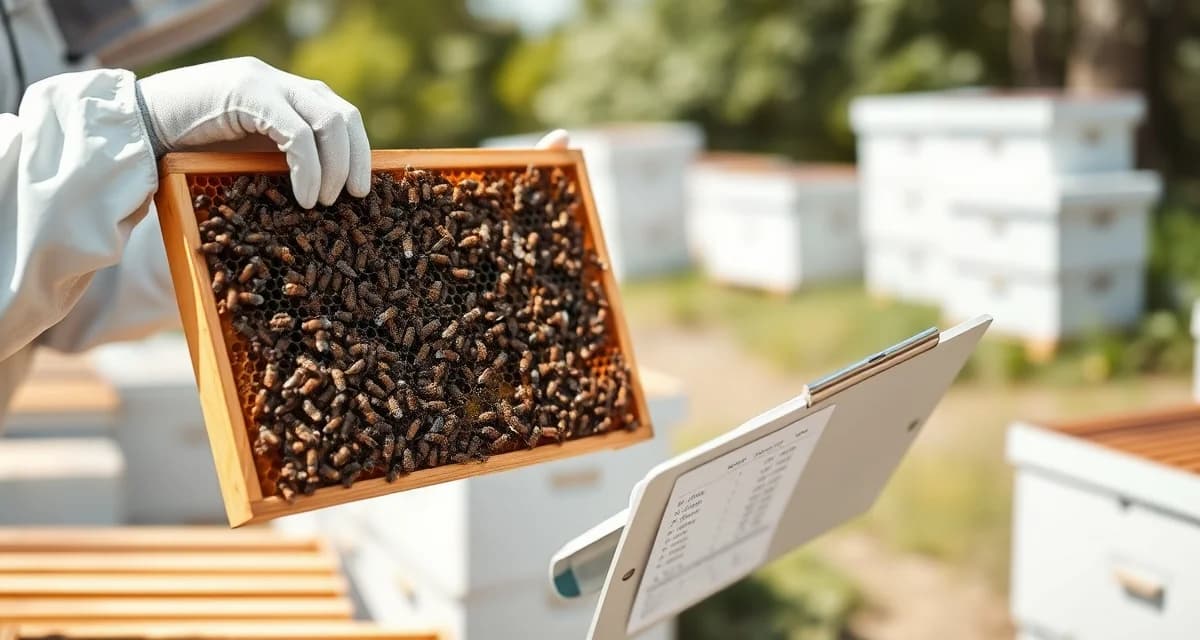
Your documented pre-move strength assessments are what makes the premium argument credible. Saying "my bees are strong" is a claim any beekeeper makes. Showing a strength assessment report with an average of 7.8 frames of bees across your 200-hive fleet is evidence.
PollenOps pre-move strength assessments generate a summary report for each yard showing the distribution of strength scores. This report, shared with a grower during your rate discussion, is the documentation that justifies a premium.
How Do I Calculate the True Cost of Providing Pollination Services?
Work through this exercise before you quote your next contract:
Step 1: Calculate your fuel cost for the delivery and pickup.
- Round trip miles from your yard to the contract site
- Your truck's fuel consumption (gallons per mile)
- Current diesel price
- Result: direct fuel cost for this contract
Step 2: Calculate driver wages for delivery and pickup.
- Hours for each trip
- Your wage rate for driving (your own time, or employee wages)
- Result: labor cost for transport
Step 3: Calculate inspection labor.
- Hours to assess the hive fleet before delivery
- Wage rate for inspection work
- Result: pre-move assessment labor cost
Step 4: Calculate overhead allocation.
- Divide your annual overhead (truck depreciation, insurance, software, etc.) by your total annual contracted hives
- Result: overhead cost per hive
Step 5: Add colony cost allocation.
- Your total annual cost to maintain colonies (winter feed, treatments, queen replacement) divided by your hive count
- Result: colony cost per hive
Step 6: Sum the above.
- This is your cost floor per hive for this specific contract
Your target rate is your cost floor plus a margin that reflects your market position and hive quality. A reasonable margin for a commercial operation is 25-40% above true cost.
What Factors Affect the Going Rate in Your Area?
Local supply relative to demand: In areas with more beekeepers than growers need, rates compress. In areas where demand exceeds supply, rates rise. Know whether your market is supply-constrained or grower-constrained.
Grower sophistication: Growers who understand what strong hives are worth will pay for documented quality. Growers who view bee rentals as a commodity will push toward the lowest number they can get.
Relationship history: Long-term relationships command a slight premium because the grower values reliability. Growers don't want to train a new beekeeper on their operation every season.
Contract timing: Contracts signed early (fall before almond season, for example) typically command a premium because the grower values price certainty. Late-signed contracts often go at a slight discount because the grower is negotiating from a position of urgency.
Your documentation and reputation: Beekeepers with verifiable delivery histories, clean dispute records, and professional documentation are worth more to a grower than an unknown operator. This is a market fact that compounds over time.
Should I Charge More for Hives With Higher Strength Scores?
Yes, and here's how to structure it:
Tiered pricing by strength:
- Standard tier: 6 frames of bees minimum, $X per hive
- Premium tier: 8 frames of bees minimum, verified by pre-move assessment, $X+15-30 per hive
The premium tier requires actual documentation. You can't price premium and then deliver average colonies. Your pre-move assessment report is the contract between your pricing promise and your delivery.
For growers who ask why they should pay more for premium-tier colonies, the answer is direct: more foragers per hive means more pollination activity during bloom. A colony with 8 frames of bees has 30-40% more foragers available than a colony with 6 frames. For a grower trying to maximize fruit set in a 400-acre almond orchard, that difference is real money.
Frequently Asked Questions
How do I calculate the true cost of providing pollination services?
Calculate variable contract costs (fuel, driver wages, inspection labor) plus an overhead allocation per hive (annualized truck, insurance, software costs divided by total contracted hives) plus colony maintenance costs per hive (winter feed, treatments, queen replacement). Your cost floor is the sum of these. Target a 25-40% margin above cost floor as your quote, then adjust based on market benchmarks and your hive quality premium.
What factors affect the going rate for pollination contracts in my area?
Local supply and demand balance, grower sophistication regarding hive quality, relationship history with specific growers, timing of contract signing (early signers often command a premium), and your documented track record. PollenOps regional benchmark data provides current market rate ranges for each major crop by region, giving you context to calibrate your quote.
Should I charge more for hives with higher strength scores?
Yes. A tiered pricing structure with a documented premium for above-minimum strength is a legitimate and increasingly common approach in commercial pollination markets. The premium is only sustainable if you can document it with pre-move assessment reports. PollenOps generates assessment summary reports for each yard that show the distribution of strength scores across your fleet, providing the documentation growers need to justify paying a quality premium.
What are the most common clauses in a commercial pollination contract?
A standard commercial pollination contract covers: hive strength minimums at delivery, payment terms (typically 50% on delivery, 50% on removal), delivery and removal dates, pesticide notification requirements, liability provisions for colony losses, truck access and yard location details, and dispute resolution procedures. Force majeure clauses addressing crop failure and operator inability to deliver the full hive count are also standard in well-written contracts.
How should pesticide liability be addressed in pollination contracts?
The contract should require growers to notify operators at least 24-48 hours before any pesticide application within foraging range (2-3 miles), specify the operator's right to remove hives immediately upon notification, and define liability for documented colony losses attributable to pesticide exposure. Without this clause, recovering compensation for pesticide kills requires proving causation after the fact, which requires lab testing, communication records, and timestamped photos of dead bees collected before cleanup.
What is a typical contract renewal strategy for commercial beekeepers?
Most successful commercial operators begin renewal conversations with existing growers in July, confirming the coming season's hive count and rate before new grower outreach. Existing grower relationships command better pricing stability than new contracts and require less pre-season sales effort. Sending growers a season-end report documenting hive placements and colony performance reinforces the relationship and creates a natural opening for renewal discussion.
Try These Free Tools
Sources
- USDA Agricultural Research Service
- Bee Informed Partnership
- American Beekeeping Federation (ABF)
- American Honey Producers Association
- Project Apis m.
Get Started with PollenOps
Managing pollination contracts across multiple growers and crops is where most commercial operations have the most to gain from better systems. PollenOps centralizes contract lifecycle management from initial quote through signed agreement, delivery documentation, and final invoice. Try it for your next season.