Pollination Contract A-Terms and Definitions
Terminology confusion is cited in 30 percent of all pollination contract disputes as a contributing factor. When a beekeeper's "frames of bees" and a grower's "frames of bees" mean different things, the contract that both parties signed doesn't actually create shared expectations. Clarifying definitions before signing is faster and cheaper than resolving misunderstandings after the season.
PollenOps uses standardized terminology in its contract templates, and the definitions below reflect that standardization. When you use these terms in your contracts and explain them to growers during negotiation, you're reducing the ambiguity that turns into disputes.
TL;DR
- A well-written pollination contracts covers hive strength requirements, payment terms, delivery/removal windows, pesticide liability, and dispute resolution.
- Standard payment structure is 50% on delivery and 50% on removal; push for no longer than 14-day net on the back half.
- Hive strength disputes are the most common source of non-payment; third-party inspection at delivery is the cleanest resolution.
- Pesticide kill provisions should require grower notification 24-48 hours before any application within foraging range of placed hives.
- Contracts signed by November have stronger pricing leverage than those negotiated in December or January.
Core Contract Terms
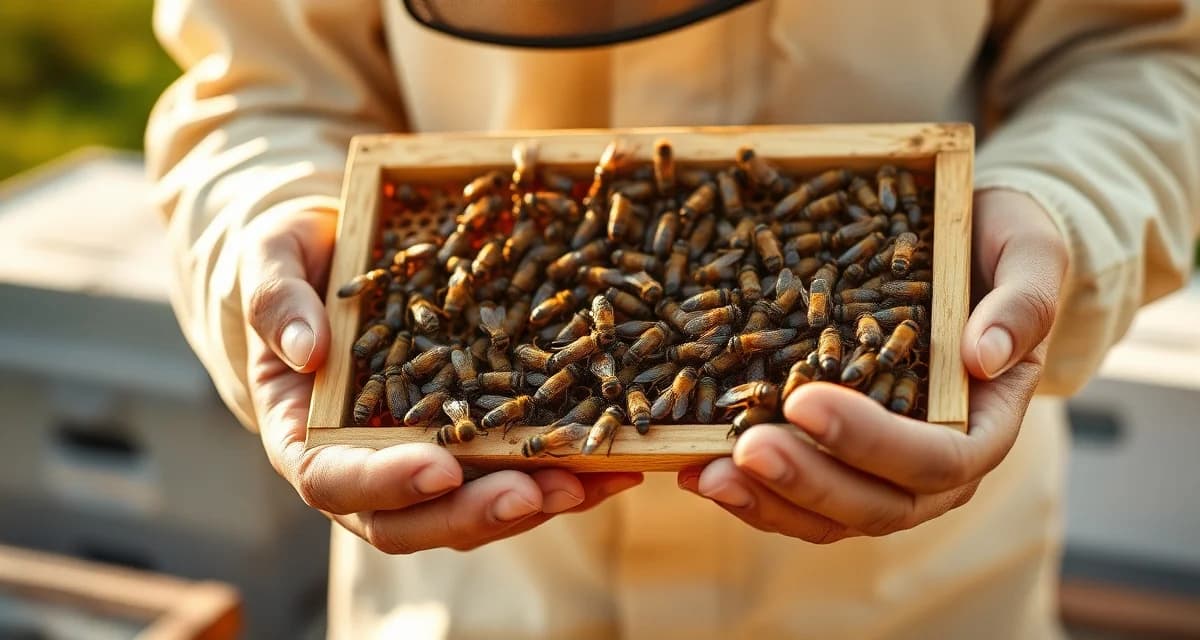
Frames of Bees: The number of hive frames that have bees covering at least one face of the frame. The industry standard is to count frames where bees are present, not frames of comb or frames of brood. A colony with 8 frames of bees has bees covering at least one face of 8 frames. This is the primary colony strength metric in pollination contracts.
Frames of Brood: The number of frames containing any of eggs, larvae, or capped brood. Some contracts specify both a frames-of-bees minimum and a frames-of-brood minimum, since brood-heavy colonies produce strong emerging workers during the bloom period. "4 frames of brood" means 4 frames with visible brood in at least some portion of the frame.
Colony Strength: A general term for the overall condition of a hive at delivery, typically expressed as frames of bees. Some contracts add qualitative requirements beyond frame count, such as "a laying queen," "solid brood pattern," or "adequate food stores."
Hive Count: The total number of individual hive units delivered under a contract. Distinct from colony strength: a hive count tells you how many boxes were delivered; colony strength tells you the condition of each.
Hive Density: The number of hives placed per acre of crop. Expressed as "hives per acre," this term appears in contracts where the grower has specified a density requirement rather than (or in addition to) a total hive count.
Timing and Delivery Terms
Placement Date: The agreed date or date range for hive delivery to the orchard or field. Some contracts specify a fixed date; others specify a bloom-stage trigger (e.g., "10 percent bloom" or "first open flowers"). Bloom-stage triggers are more agronomically appropriate because they account for year-to-year variation in timing.
Bloom Stage: The phenological stage of the crop's flowering at the time of hive placement. Common bloom stage specifications include: "pre-bloom" (delivery before any flowers are open), "at 10 percent bloom" (10 percent of flowers have opened), or "full bloom" (majority of flowers open). Each crop has standard bloom stage conventions.
Delivery Window: The date range within which delivery is considered on-time. A delivery window of "February 10 to 20" means any delivery within that period is contractually compliant; delivery before February 10 or after February 20 may trigger penalty provisions.
Removal Date: The agreed date by which hives must be picked up from the orchard or field after bloom completion. Growers with spray programs or other post-pollination operations need hives out by a specific date; leaving hives past the removal date may expose your colonies to pesticide risk and violates the contract.
Financial Terms
Per-Hive Rate: The contract payment expressed per individual hive unit. The most common payment structure in US pollination contracts. A $180 per-hive rate for 100 hives generates a $18,000 contract.
Deposit: The payment due at contract signing, typically 25 to 30 percent of the total contract value. Deposits secure the beekeeper's commitment and provide working capital for delivery preparation.
Balance Due: The remaining payment after the deposit, typically due within 30 days of delivery completion or at a specific date tied to bloom.
Cure Period: A period after delivery during which the grower may request inspection and the beekeeper may correct any deficiencies (understrength colonies, incorrect placement) without penalty. A 48 to 72 hour cure period is standard in professionally drafted pollination contracts. Understanding the cure period eliminates situations where a grower's first response to a discovered deficiency is a dispute rather than a remedy request.
Compliance Terms
Hive Count Tolerance: A specified acceptable variance between the contracted hive count and the delivered hive count. A tolerance clause of plus or minus 5 percent means delivery of 95 to 105 hives on a 100-hive contract is within compliance. Without a tolerance clause, any shortfall from contracted count is technically a breach.
Hive Count Tolerance Clause: The specific contract provision establishing the acceptable variance range. Every professionally drafted pollination contract should have this clause to prevent good-faith delivery shortfalls from becoming disputes.
Certificate of Inspection: A document issued by a licensed apiary inspector certifying that the delivered colonies were inspected and found to meet specified health and strength requirements. Some large almond contracts require certificates of inspection rather than relying on self-certification by the beekeeper.
Health Certificate: A state-issued document certifying that honey bee colonies meet health requirements for interstate movement. Required for moving hives across state lines in most states. Different from a certificate of inspection in that it focuses on disease absence rather than colony strength.
Frequently Asked Questions
What is a cure period in a pollination contract?
A cure period is a window of time after delivery during which the grower may inspect the delivered hives and request corrections to any deficiencies, and during which the beekeeper has the right to remedy those deficiencies without penalty. A typical cure period is 48 to 72 hours. If a grower discovers that 5 of 100 delivered hives are below the contracted strength threshold during the cure period, they notify the beekeeper, who replaces the substandard hives within the cure period window. Without a cure period clause, a discovered deficiency may immediately trigger penalty provisions with no opportunity to correct.
What does frames of bees mean in a pollination contract?
Frames of bees refers to the count of hive frames covered by bees on at least one face of the frame. It's the primary measure of colony population strength in pollination contracts. A contract specifying "8 frames of bees" means the delivered colony must have bees covering at least one face of 8 frames. This is distinct from frames of comb (empty frames with drawn wax), frames of brood (frames containing eggs, larvae, or capped brood), and frames of food (honey or pollen). Some contracts specify multiple metrics simultaneously, such as "8 frames of bees with a minimum of 4 frames of brood."
What is a hive count tolerance clause?
A hive count tolerance clause is a contract provision that establishes an acceptable variance range between the contracted hive count and the delivered hive count. For example, a 5 percent tolerance on a 200-hive contract means delivery of 190 to 210 hives is contractually compliant. Without this clause, any shortfall from the exact contracted number is technically a breach of contract. The PollenOps contract template includes a standard tolerance clause that can be adjusted to reflect what you and your grower agree is reasonable, typically 3 to 5 percent for large contracts.
What are the most common clauses in a commercial pollination contract?
A standard commercial pollination contract covers: hive strength minimums at delivery, payment terms (typically 50% on delivery, 50% on removal), delivery and removal dates, pesticide notification requirements, liability provisions for colony losses, truck access and yard location details, and dispute resolution procedures. Force majeure clauses addressing crop failure and operator inability to deliver the full hive count are also standard in well-written contracts.
How should pesticide liability be addressed in pollination contracts?
The contract should require growers to notify operators at least 24-48 hours before any pesticide application within foraging range (2-3 miles), specify the operator's right to remove hives immediately upon notification, and define liability for documented colony losses attributable to pesticide exposure. Without this clause, recovering compensation for pesticide kills requires proving causation after the fact, which requires lab testing, communication records, and timestamped photos of dead bees collected before cleanup.
What is a typical contract renewal strategy for commercial beekeepers?
Most successful commercial operators begin renewal conversations with existing growers in July, confirming the coming season's hive count and rate before new grower outreach. Existing grower relationships command better pricing stability than new contracts and require less pre-season sales effort. Sending growers a season-end report documenting hive placements and colony performance reinforces the relationship and creates a natural opening for renewal discussion.
Try These Free Tools
Sources
- USDA Agricultural Research Service
- Bee Informed Partnership
- American Beekeeping Federation (ABF)
- American Honey Producers Association
- Project Apis m.
Get Started with PollenOps
Managing pollination contracts across multiple growers and crops is where most commercial operations have the most to gain from better systems. PollenOps centralizes contract lifecycle management from initial quote through signed agreement, delivery documentation, and final invoice. Try it for your next season.