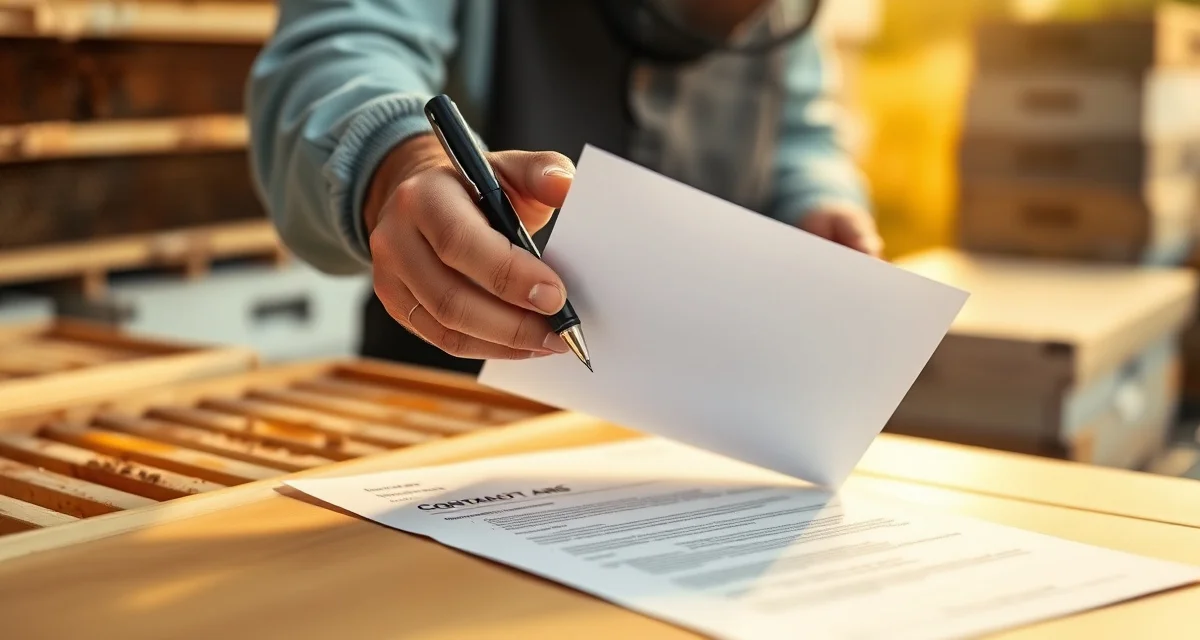
Almond Pollination Payment Terms: Industry Standards and Best Practices
Unpaid pollination invoices average $15,000-$40,000 per dispute event for mid-size operators. That's not a minor administrative problem. For a 500-hive operation with 10 contracts, a single non-paying grower can wipe out the margin on your entire season.
Payment terms aren't just a financial formality. They're the legal and operational structure that determines when you get paid, how you get paid, and what happens when you don't.
TL;DR
- California almond pollination consumes roughly 80% of the US commercial hive population every February, making it the most supply-constrained pollination market in the country.
- Per-hive rates have held between $185 and $220 for 6-8 frame colonies over recent seasons.
- Contracts are typically signed October through November for the following February season; operators without agreements by December are working from a weak position.
- Hive strength minimums range from 6 to 8 frames of bees depending on the grower, with premium-strength colonies commanding $200-215/hive.
- varroa management, documentation, and logistics coordination in the 6-8 weeks before delivery determine whether almond season is profitable or a breakeven event.
The Standard California Almond Payment Structure
The industry standard for California almond pollination is a 50% deposit at delivery, with the remaining 50% due within 30 days of bloom completion (service period end).
In practice, this looks like:
Deposit (50%): Due at or before hive delivery. Most professional operators require the deposit before the truck is loaded, not after bees are on site. A grower who hasn't paid the deposit before you deliver has less incentive to pay the balance.
Balance (50%): Due within 30-45 days after your service period ends, typically by March 15-April 1 for most almond contracts.
This structure protects the beekeeper against full non-payment: even if the balance is disputed or delayed, you've collected half the contract value before leaving the site.
How Do You Collect a Deposit for Almond Pollination Contracts?
The deposit collection process starts with the contract. Your written agreement should specify:
- The deposit amount (typically 50% of total contract value)
- The deposit due date (before delivery, or a specific date in January)
- The acceptable payment methods
- What happens if the deposit isn't received by the due date (right to cancel the contract or delay delivery)
Payment methods that work for pollination contracts deposits:
- Wire transfer: Fastest, most reliable for large amounts
- ACH bank transfer: Slower (2-3 business days) but electronic
- Check: Common for established relationships, but requires clearance time
- Credit card: Some operators accept cards through payment processors; fees apply
Include explicit follow-up in your process: if a deposit isn't received by the due date, contact the grower immediately. A delayed deposit conversation is much better than a delivered-bees conversation about payment.
PollenOps payment tracking records each payment received against each contract, so your outstanding deposit status is visible in your contract dashboard alongside your delivery schedule.
What Is the Standard Payment Structure for Almond Pollination?
Beyond the 50/50 deposit-balance split, other structures exist:
Full payment at delivery: Some smaller growers or direct-relationship operations pay the full contract amount when bees are delivered. This is ideal for the beekeeper but uncommon with larger commercial growers who have their own accounts payable processes.
Full payment post-bloom: Some growers pay the entire contract amount after the service period ends. This is the least protective structure for beekeepers and should be avoided without a very strong relationship and credit history with the grower.
Three-payment structure: Some large contracts use a three-payment structure: deposit at signing, payment at delivery, balance post-bloom. This provides additional cash flow support for both parties during the pre-delivery period.
For new grower relationships, the standard 50% deposit/50% balance structure is the right starting point. For long-term clients with clean payment history, some flexibility on timing is reasonable.
Protecting Against Non-Payment
Non-payment situations typically fall into several categories:
Grower claims hive count was short: Your GPS delivery record with timestamped hive count is your evidence. If the count matches the contract, the invoice stands.
Grower claims hive strength was inadequate: Your pre-move strength assessment report, showing each hive met the contracted minimum, is your evidence.
Grower claims late delivery: Your GPS delivery timestamp versus the contracted deadline is the factual record.
Grower financial difficulty: This is harder. A grower who can't pay because of business problems requires different resolution approaches.
For the dispute categories based on service claims, complete documentation prevents most of them from becoming real disputes. When your records clearly show what was delivered, when, and at what strength, the factual basis for withholding payment is limited.
PollenOps contract compliance documentation stores all your delivery records, assessment reports, and invoices in one place with the contract, creating the complete documentation chain you need for dispute resolution.
Late Payment Provisions
Your contract should include a late payment provision: an interest rate on overdue balances (typically 1.5-2% per month, which is 18-24% annually) and a notice of default period after which you can pursue remedies.
State laws govern what late payment fees are enforceable, and California has specific rules about commercial credit terms. Consult with an attorney when setting your late payment language if you're operating in California.
The practical function of a late payment clause isn't primarily to collect interest. It's to give growers a financial incentive to pay on time and to give you a contractual basis for escalation if they don't.
How Do You Handle a Grower Who Refuses to Pay After Pollination?
If a grower refuses to pay a legitimate invoice:
Step 1: Direct communication. Call and email to understand the specific objection. Many "non-payments" are actually disputes about a specific contract term, hive count, or delivery date that can be resolved with documentation.
Step 2: Provide documentation. Send your GPS delivery record, strength assessment report, and any other relevant documentation that directly addresses their stated objection.
Step 3: Formal demand letter. If direct communication doesn't resolve the issue, a written demand letter from you or your attorney puts the dispute on a formal timeline and often prompts payment.
Step 4: Legal remedies. Agricultural service providers have specific remedies available in most states, including agricultural service liens in some jurisdictions. An attorney familiar with agricultural contracts in the relevant state is the right resource.
Step 5: Small claims or civil court. For amounts under $10,000-$25,000 (varies by state), small claims court is accessible without full legal representation. For larger amounts, civil litigation may be necessary.
The most effective prevention is documentation that makes dispute arguments difficult to sustain. Beekeepers with complete GPS records, strength assessments, and professional delivery reports resolve payment disputes faster and more favorably than those without.
Frequently Asked Questions
What is the standard payment structure for almond pollination?
The industry standard is 50% deposit at or before delivery, with the remaining 50% due within 30-45 days of service period completion. Most professional operators require the deposit before loading trucks. Some smaller growers or established relationships pay full payment at delivery. Full payment post-bloom with no deposit is the least protective structure for beekeepers.
How do you collect a deposit for almond pollination contracts?
Specify deposit amount, due date, and payment method in your written contract. Acceptable methods include wire transfer, ACH bank transfer, and check. Follow up immediately if a deposit isn't received by the due date. PollenOps payment tracking shows outstanding deposit status alongside your delivery schedule so you can see at a glance which contracts are waiting on deposit payment before delivery.
How do you handle a grower who refuses to pay after pollination?
Start with direct communication to understand the specific objection. Provide your documentation, including GPS delivery records, strength assessment reports, and timestamped arrival notifications, to address the stated objection factually. If direct resolution fails, send a formal demand letter. For persistent non-payment, consult an attorney familiar with agricultural contracts in the relevant state. Agricultural service liens and small claims or civil court are available remedies depending on the amount and jurisdiction.
How early should almond pollination contracts be negotiated?
Large almond growers and broker networks begin securing hive commitments in July and August for the following February season. Written contracts are typically signed October through November. Operators who do not have signed agreements by December are working from a weak position since most quality hive inventory is already committed. Start grower outreach in mid-summer and target signed agreements before Thanksgiving.
What documentation is required for hive delivery to California almonds?
California requires a Certificate of Health for out-of-state colonies, issued by the origin state's apiary inspection program within 30 days of entry. The certificate must certify freedom from American foulbrood, European foulbrood, and Varroa destructor below treatment threshold. Some states require small hive beetle freedom for California entry. In addition, many growers now expect documentation of pre-delivery mite counts confirming colonies are below threshold.
What happens to hives after almond season ends in late March?
Post-almond options include moving north for Pacific Northwest cherry or apple pollination in April-May, routing to Michigan or Maine blueberries in May-July, transitioning to summer honey yards in North Dakota or Montana, or staying in California for splits and rebuilding. The right choice depends on hive strength coming out of almonds and downstream contract commitments. Operators who plan their full-year circuit in advance can optimize both pollination revenue and honey production.
Try These Free Tools
Sources
- USDA Agricultural Research Service
- Bee Informed Partnership
- American Beekeeping Federation (ABF)
- Almond Board of California
- University of California Cooperative Extension
Get Started with PollenOps
Almond season is the revenue event that defines the commercial beekeeping year, and the details -- contract terms, delivery timing, hive strength documentation, and invoicing -- determine whether the season is profitable. PollenOps manages the full almond contract lifecycle from quote to final payment, with yard tracking, crew scheduling, and grower communication built in. See how it works for operations from 200 to 5,000 hives.