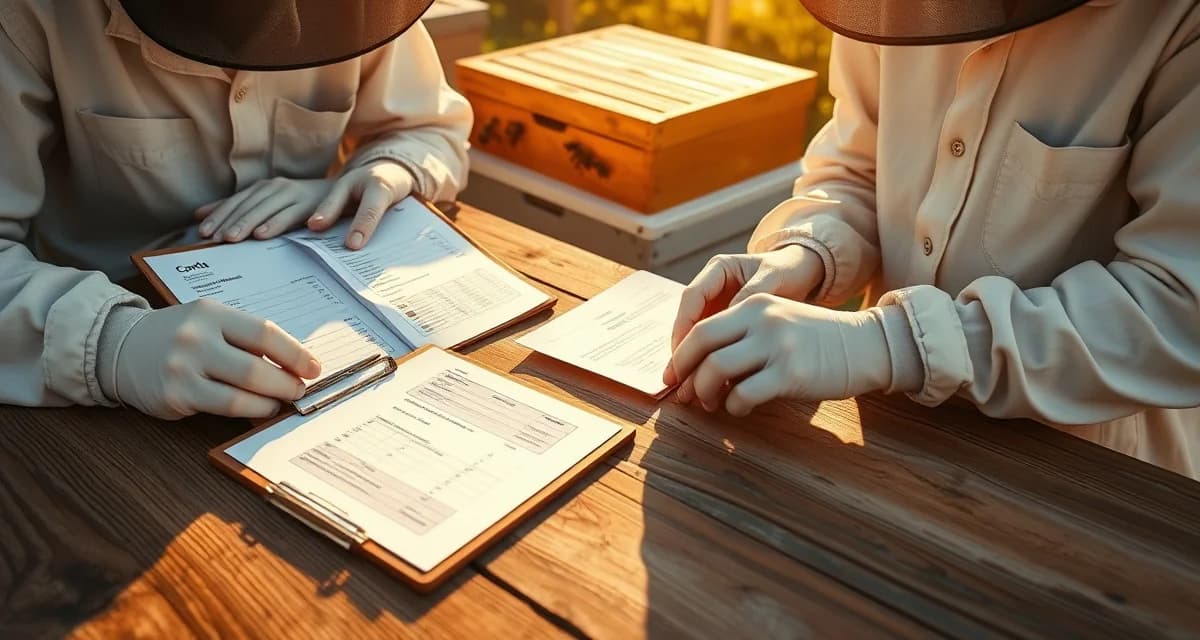
Handling Pollination Contract Disputes: Best Practices for Beekeepers
Hive strength disputes are the most common cause of pollination contracts litigation. Documented delivery records and colony assessments resolve 80% of strength disputes without litigation. The other 20% reflect situations where documentation is absent or contradictory, and that's where the real cost happens.
The cost of a dispute isn't just the potential withheld payment. It's the time spent managing it, the relationship damage with a grower who might otherwise have been a repeat customer, and the reputational risk if the dispute becomes visible in the beekeeping-agriculture community.
TL;DR
- A well-written pollination contract covers hive strength requirements, payment terms, delivery/removal windows, pesticide liability, and dispute resolution.
- Standard payment structure is 50% on delivery and 50% on removal; push for no longer than 14-day net on the back half.
- Hive strength disputes are the most common source of non-payment; third-party inspection at delivery is the cleanest resolution.
- Pesticide kill provisions should require grower notification 24-48 hours before any application within foraging range of placed hives.
- Contracts signed by November have stronger pricing leverage than those negotiated in December or January.
The Most Common Pollination Contract Disputes
Hive strength disputes: The grower or their inspector claims delivered colonies were below the contracted minimum. This is the most common dispute by far. The beekeeper believes colonies met minimums; the grower disputes it based on their own assessment.
Colony count disputes: Grower claims fewer colonies were delivered than contracted. Can also arise when colonies are combined before delivery and the resulting colony count is fewer than the original contract specified.
Late delivery disputes: Grower claims delivery was late enough to miss the critical bloom window, causing reduced nut set or fruit yield. Beekeeper may dispute the actual impact or the timeline.
Pesticide kill disputes: Beekeeper claims grower's spraying killed or weakened colonies during the contract period. Grower denies responsibility or claims the kill didn't occur.
Colony condition at pickup disputes: Grower claims colonies were weakened or damaged during the contract period from causes the beekeeper was responsible for. Beekeeper disputes the cause.
Prevention: The Documentation Foundation
The best dispute resolution happens before any dispute exists. Here's the documentation standard that prevents most disputes:
Pre-delivery:
- Signed written contract with clear colony count, minimum strength, delivery date, and payment terms
- Pre-delivery colony assessment with timestamped records by colony
- Photos of representative colonies showing strength at assessment
- PollenOps delivery record showing yard, date, colony count, and average strength
At delivery:
- Colony count confirmed on the delivery manifest
- GPS-timestamped arrival record
- Delivery confirmation signed by grower or grower's authorized representative
- Notation of any colonies below minimum (and how they're handled per your contract terms)
During contract period:
- Record of any grower communications about colony health
- Documentation of any spray notifications received (if grower notified per MP3 requirements)
- Documentation of any pesticide events if they occur
At pickup:
- Colony count at exit
- Notes on colony condition changes during the contract period
- Any disputes about colony condition noted in writing at pickup, not after
With this documentation in place, most disputes resolve themselves: either your records clearly show what was delivered, or there's a genuine factual disagreement that mediation can resolve based on competing evidence.
Resolving Hive Strength Disputes
When a grower's inspector disputes your delivered colony strength, the process:
Step 1: Immediate written response. Contact the grower in writing (email) within 24 hours of being notified of the dispute. Reference your pre-delivery assessment documentation: "Our records show a pre-delivery assessment on [date] with average colony strength of [X frames]. I'm attaching those records now."
Step 2: Request specifics. Ask the grower to specify which colonies they're disputing and their inspector's assessment. Vague claims ("several colonies were below minimum") are harder to address than specific colony-by-colony assessments.
Step 3: Offer re-inspection. If the dispute is within the first 48 hours of delivery, offer a joint re-inspection with the grower present or with an agreed-upon third party. This resolves most disputes. Colonies that were transported and recently placed may present slightly weaker than at your home yard due to transport stress (bees clustering tightly, not active on frames). A re-inspection 48 hours after placement often shows full strength recovery.
Step 4: Review your contract's dispute clause. Most well-written contracts specify how strength disputes are resolved, typically by independent third-party inspection agreed to by both parties. Invoke this clause and propose an independent inspector both parties agree on (your county's state apiarist, an independent commercial beekeeper, or similar).
Step 5: Partial payment resolution. If a limited number of colonies genuinely didn't meet minimum at delivery, a partial payment adjustment proportional to the shortfall is typically the most practical resolution. Document this agreement in writing.
Resolving Payment Disputes
When a grower is withholding payment without a formal dispute about delivery quality:
Document your delivery. A complete delivery record (GPS-timestamped, signed delivery confirmation, invoiced amount) establishes your legal position.
Formal demand letter. After 30 days past due with no response to reminder communications, send a formal demand letter citing your contract terms, invoice date, due date, and the total outstanding. Certified mail or email with read receipt.
Agricultural mediation. Most states with significant agricultural economies offer agricultural mediation services, often through state departments of agriculture or farm bureau programs. These are low-cost alternatives to litigation for contract disputes. California's Office of the Agricultural Labor Commissioner, USDA mediation programs, and state-level programs exist in most major agricultural states.
Small claims court. For amounts under the state's small claims limit ($10,000-25,000 depending on state), small claims court is efficient and doesn't require legal representation. Your documentation (signed contract, delivery confirmation, invoice) makes for a straightforward case.
Civil litigation. For larger amounts, an agricultural attorney specializing in farm contract law can evaluate your case. Document everything and consult before filing, as some situations that seem clear-cut legally have complications that experienced attorneys recognize.
Managing the Grower Relationship Through Disputes
The goal of dispute resolution is ideally a fair outcome that preserves the grower relationship. Escalating to litigation for a small payment dispute damages a relationship that might otherwise generate $100,000+ in repeat business over the next decade.
Be direct, professional, and solution-oriented in your approach. Acknowledge when your delivery genuinely fell short of committed strength. Partial adjustment is better than a protracted dispute and a lost relationship. Document everything, but don't be combative in your tone.
The growers who know you'll make things right when there's a shortfall, and who trust your documentation when you claim performance, are the ones who renew contracts at full rate year after year.
FAQ
How do you document hive delivery for dispute prevention?
Document with GPS-timestamped delivery records showing colony count and average strength, a delivery confirmation signed by the grower or their authorized representative at the time of delivery, and pre-delivery assessment records (timestamped colony-by-colony frame counts with photos of threshold colonies) completed 24-48 hours before loading. PollenOps links pre-delivery assessments directly to delivery records, creating a complete chain of documentation. The documentation exists before any dispute arises and is objectively timestamped.
What are the most common pollination contract disputes?
Hive strength disputes are the most frequent: a grower or their inspector claims delivered colonies were below the contracted frame minimum. Colony count disputes (fewer colonies than contracted) are second. Late delivery disputes arise when timing is ambiguous and growers claim reduced yield from delayed placement. Payment disputes (grower withholding payment without specific quality complaint) are common in casual contract relationships without written agreements. Written contracts with clear delivery documentation prevent the majority of these disputes.
How do you resolve a payment dispute with a grower?
Start with reminder communications at 5, 15, and 30 days past due. Send a formal demand letter at 30 days past due citing contract terms and outstanding amount. Propose agricultural mediation before litigation; most states offer low-cost mediation services for agricultural contract disputes. For amounts under state small claims limits, small claims court is efficient and documentation-dependent. Consult an agricultural attorney before filing any civil litigation for larger amounts.
How should pesticide liability be addressed in pollination contracts?
The contract should require growers to notify operators at least 24-48 hours before any pesticide application within foraging range (2-3 miles), specify the operator's right to remove hives immediately upon notification, and define liability for documented colony losses attributable to pesticide exposure. Without this clause, recovering compensation for pesticide kills requires proving causation after the fact, which requires lab testing, communication records, and timestamped photos of dead bees collected before cleanup.
What is a typical contract renewal strategy for commercial beekeepers?
Most successful commercial operators begin renewal conversations with existing growers in July, confirming the coming season's hive count and rate before new grower outreach. Existing grower relationships command better pricing stability than new contracts and require less pre-season sales effort. Sending growers a season-end report documenting hive placements and colony performance reinforces the relationship and creates a natural opening for renewal discussion.
What is the difference between commercial and hobby beekeeping?
Commercial beekeeping is distinguished by scale (typically 100+ hives, often 500-5,000+), revenue source (pollination contracts and bulk honey sales rather than local honey retail), and management approach (systematic protocols applied across yards rather than individual colony attention). Commercial operators manage bees as an agricultural enterprise, with the administrative, regulatory, and logistical complexity that entails. Most commercial operators derive the majority of their income from pollination services; honey production is a supplementary revenue stream.
Try These Free Tools
Sources
- USDA Agricultural Research Service
- Bee Informed Partnership
- American Beekeeping Federation (ABF)
- American Honey Producers Association
- Project Apis m.
Get Started with PollenOps
Managing pollination contracts across multiple growers and crops is where most commercial operations have the most to gain from better systems. PollenOps centralizes contract lifecycle management from initial quote through signed agreement, delivery documentation, and final invoice. Try it for your next season.