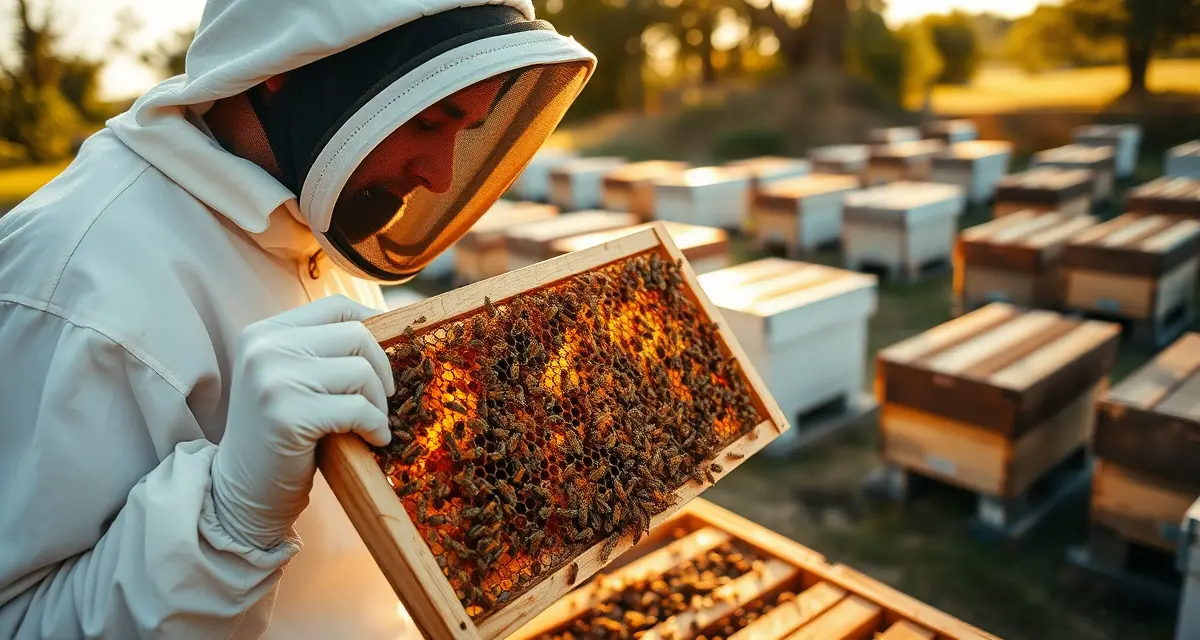
Hive Health Monitoring in Commercial Beekeeping
At 1,000 hives spread across 15 yards, you can't personally inspect every colony every week. You need systems that give you early warning of health problems before they become contract failures or significant losses.
The commercial beekeeper who finds a queenless yard on delivery day has already lost. The one who caught the issue 3 weeks earlier had time to fix it.
TL;DR
- Colony health monitoring at commercial scale requires a statistical sampling approach; individual assessment of every hive is not practical.
- Queen loss, varroa stress, and pre-swarm states all produce detectable signals before colonies reach the point of irreversible decline.
- Early detection of colony problems -- within days rather than weeks -- dramatically reduces recovery costs and lost contract value.
- Health records tied to yard assignments and contract status allow operators to make dispatch decisions based on data rather than fixed rotation schedules.
- Acoustic monitoring, weight sensors, and visual inspection each serve different functions; no single approach replaces the others.
The Commercial Inspection Challenge
Hobbyist inspection logic (open every hive, check every frame, log every detail) doesn't scale to commercial operations. A crew of 3 people doing 15 yards at 200 hives each can physically inspect maybe 30–40 colonies per day in depth. At 1,000 hives, a full-detail inspection of every colony takes 25–33 crew-days. You'd be in continuous inspection mode.
Commercial operations need tiered inspection protocols:
Tier 1: Quick yard assessment (every visit). External observation. Are foragers actively returning? Is there washboarding activity at entrances? Any dead colonies? This takes 10–15 minutes per yard and catches immediate problems.
Tier 2: Sample inspection (every 2–4 weeks). Open 10–15% of colonies in each yard. Check brood pattern, queen presence indicators, mite load on a sample, honey stores, and population estimate. Flags yards that need attention without opening every box.
Tier 3: Full yard inspection (pre-movement, problem resolution, season transitions). Every colony in a yard. Done before major moves (almond delivery, blueberry circuit), after a disease detection, or when Tier 1/2 indicators suggest problems.
Acoustic Colony Health Monitoring
The most significant technology advance in commercial colony health monitoring in recent years is acoustic analysis. Colonies produce distinct sound signatures at different states:
Normal queenright colony: Consistent background hum with forager traffic patterns
Queen loss: Audible roar increases within 24–48 hours of queen loss as the colony responds to the loss of queen pheromones
Swarming preparation: Pre-swarm piping is audible and distinctive
Laying workers: Sound profile changes as colony population declines
PollenOps' acoustic AI monitoring analyzes colony sound patterns and flags health anomalies without requiring physical sensor hardware on every hive. The system provides yard-level health alerts: when acoustic patterns in Yard 12 shift toward queen-loss signatures, you get a notification before your next scheduled visit.
For commercial operations, acoustic monitoring changes the inspection calculus significantly. Instead of scheduling physical visits on a fixed calendar, you can prioritize yards based on health alerts, sending crews to yards that need attention rather than yards that are next on the rotation.
Key Health Indicators to Track
Queen presence and quality:
- Consistent brood pattern (solid capped brood in a tight pattern)
- Eggs visible in cells
- No laying worker symptoms (scattered brood, multiple eggs per cell)
- Worker population growing appropriately for season
A queenless colony in July won't bounce back to 6-frame strength by February almond delivery unless you catch it by August and requeen.
Varroa mite levels:
- Alcohol wash or sugar roll monitoring, 10% per yard
- Threshold: 2 mites/100 bees triggers treatment; 3+ is immediate action
- DWV (deformed wing virus) presence in adult bees is a visible indicator of high mite load
Population and food stores:
- Frame coverage estimate on each inspected colony
- Honey store depth (required before winter or before moving to a forage-poor yard)
- Pollen stores (critical for brood rearing; deficiency shows up as failing brood)
Disease signs:
- AFB: foul smell, ropy test with a matchstick in discolored brood
- EFB: twisted larvae in unsealed cells, sometimes with odor
- Chalkbrood: white/gray mummified larvae, often found at hive entrance
- SHB (small hive beetle): adults and larvae in weak colonies, particularly in warm/humid conditions
Pesticide kill:
- Sudden high adult bee mortality in front of hives
- Dead foragers in field, dead bees at yard entrance
- Documenting these events is critical for contract dispute resolution
Building a Yard Health Record System
Every yard visit should generate a documented record. Minimum useful fields:
- Yard ID
- Visit date
- Crew member(s)
- Total colonies in yard
- Colonies inspected (count)
- Average frame coverage estimate
- Varroa wash results (colonies washed, mite counts)
- Queen issues found (number of colonies, specific issues)
- Disease signs (type, colonies affected)
- Store assessment
- Action items (treatment, requeening, split, remove)
This record serves multiple purposes: operational tracking, contract documentation for grower strength verification, compliance documentation for state inspection, and historical data for identifying chronic problem yards.
Paper field forms work but create a data entry bottleneck when you're managing 20 yards. Field apps that allow direct entry from a phone or tablet, with automatic GPS tagging and timestamp, are significantly more efficient. PollenOps' mobile app is designed for field yard inspections at commercial scale. Inspectors log data in the field, records sync to the platform, and management has real-time visibility across all yards without waiting for someone to transfer paper forms.
Seasonal Health Management Calendar
January–February (pre-almond):
- Final strength assessment for all almond-bound colonies
- Confirm varroa wash results below 1 mite/100
- Assess queen quality; any colonies with marginal queens need replacement before delivery
- Verify food stores for transport and early almond period
March–April (post-almond, spring buildup):
- Assess post-almond condition (transport stress, nutritional depletion)
- Varroa check on all yards coming out of almond
- Begin protein supplementation if spring forage is limited
- Identify and resolve queen problems from winter
May–July (spring pollination/early summer):
- Swarm prevention in building colonies
- Monthly varroa checks
- Summer disease assessment (SHB management in warm states, nosema in cool/wet conditions)
August (critical pre-fall):
- Most important varroa assessment of the year
- Treatment decisions that will determine winter success
- Begin fall nutrition supplementation
September–November:
- Fall varroa treatment
- Winter population and store assessment
- Combine weak colonies rather than overwintering understrength
- Document colonies unsuitable for almond season; replace or build up
December:
- Final pre-almond mite wash monitoring
- Strength verification for contracted hive count
- Certificate of Health preparation
When to Combine vs. Treat vs. Replace
Not every weak colony is worth treating and wintering. The decision matrix:
Combine: Queenless colony with good population → unite with weak queenright colony. Queenless + small population → combine with strong colony, don't waste resources on a doomed split.
Treat: Strong colony with high mite load and good queen → treat, build up, include in almond circuit. Worth the investment.
Replace: Colony with failing queen, small population, AND high mite load → this colony is not recoverable to almond-worthy strength before February. Cull the queen, combine the bees into a productive colony, and replace the unit with a package or split next spring.
The mistake commercial operators make: trying to save everything. A 3-frame colony in October that you treat and feed through the winter costs the same inputs as a strong colony but delivers nothing by February. Combine the bees, recoup the box, and put resources into building strong colonies.
FAQ
How do you detect colony health problems early in a large operation?
Early detection in large commercial operations combines three approaches: acoustic monitoring for real-time alerts between physical visits, systematic visual yard assessments (external hive observation) at every yard visit to catch obvious problems, and statistical sample inspections (10–15% of colonies per yard) on a scheduled rotation to identify health trends before they become widespread. Acoustic AI monitoring (PollenOps' colony health system is one example) provides the earliest warning layer by detecting queen loss, swarm preparation, and population anomalies from sound signatures before they're visible on inspection. For commercial operations where each yard visit requires significant crew time and travel, acoustic early warning systems allow prioritized responses rather than reactive crisis management.
What causes sudden colony loss in commercial beekeeping?
Sudden colony loss in commercial beekeeping has several common causes: varroa mite collapse (colonies that appeared adequate collapse rapidly when winter cluster size drops below viable threshold), pesticide kill (sudden high adult bee mortality after chemical application nearby), queen failure (laying worker conditions or queenlessness left unaddressed until population is non-viable), starvation (colonies that ran out of stores, especially during transport or early spring before forage), and AFB (progresses rapidly in untreated colonies, destroying all brood). Varroa-related collapse is by far the most common cause of significant commercial losses. Operations with systematic fall treatment protocols and winter strength verification have dramatically lower sudden-loss rates than those treating reactively.
How do you manage colony health across multiple remote yards?
Remote yard health management requires delegation and documentation systems. Crew leaders who can conduct Tier 1 and Tier 2 assessments independently, with clear protocols for what triggers escalation to management, allow multi-yard operations to function without the owner physically visiting every yard on every cycle. Satellite communication devices (Garmin inReach, SPOT) allow field communication from yards without cell coverage. Acoustic monitoring platforms provide remote health alerts without crew visits. Crew visit records, photographically documented and GPS-tagged, give management visibility between physical visits. The combination of trained crew, field technology, and remote monitoring creates a health management system that scales beyond what any single operator could maintain through personal inspection alone.
What are the early warning signs of a queenless colony?
Early signs of queen loss include increasing worker agitation during inspection, scattered or absent brood in colonies that previously had solid laying patterns, and the presence of emergency queen cells (often built on the face of comb, not at the bottom) within 24-72 hours of queen loss. Within 1-2 weeks, population begins declining as no new workers emerge, and the colony may show a characteristic 'roaring' sound when the hive is approached. Acoustic monitoring can detect this sound signature within 24-48 hours of queen loss.
How do you prioritize inspection visits across a large number of yards?
Prioritization should be based on available data signals: acoustic alerts, recent treatment history, colonies known to have been in poor condition at last visit, and contract delivery proximity. Operations that inspect on a fixed rotation schedule (every 2-3 weeks per yard regardless of condition) are less efficient than those that allocate inspection time based on which yards most need attention. Management software that surfaces flagged yards based on health data or contract timelines supports data-driven scheduling.
What is the difference between colony strength and colony health?
Colony strength refers to population size, typically measured in frames of bees. Colony health refers to the biological condition of the colony: queen viability, disease and pest burden (especially varroa), nutritional status, and behavioral normality. A colony can be large but unhealthy (high population maintained through resistance or temporary forage despite high mite loads), or small but healthy (recently split, low mite load, young queen). Contracts specify strength; health affects whether the colony can maintain that strength through the contract period.
Try These Free Tools
Sources
- USDA Agricultural Research Service
- Bee Informed Partnership
- American Beekeeping Federation (ABF)
- Project Apis m.
- Pennsylvania State University Apiculture Program
Get Started with PollenOps
Early detection of colony problems is one of the highest-leverage actions a commercial beekeeper can take. PollenOps health monitoring tools connect acoustic alerts, inspection records, and treatment logs to your contract and crew management so every flagged issue has a clear response path.