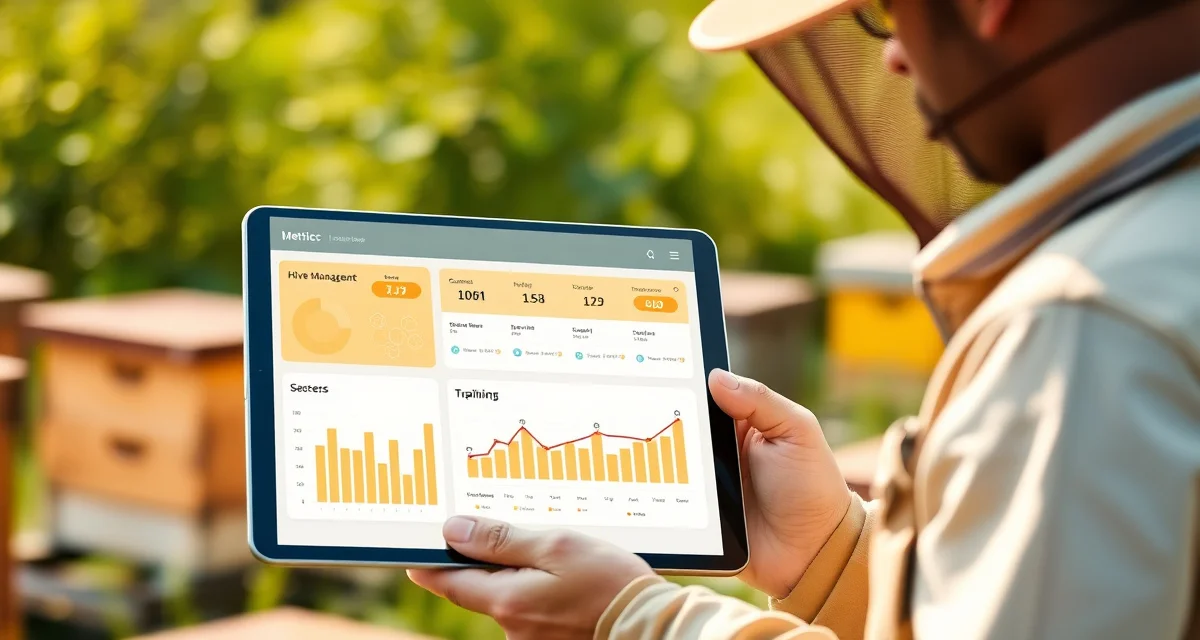
Beekeeping Operations Software: A Complete Overview
The commercial beekeeping software market is growing at 28% annually as operations scale and formalize. That growth rate reflects a sector moving from informal, paper-based management toward data-driven operations. But the market is fragmented: most beekeepers using software are stitching together three to five tools to cover different parts of their operation.
PollenOps is the only platform that covers all six beekeeping software categories in a single subscription. This overview explains what each category does, why it matters, and how the tools interact when they're in the same platform versus scattered across multiple systems.
TL;DR
- Commercial beekeeping operations that manage contracts on spreadsheets and phone calls spend 5-10 hours per week on administrative tasks that software handles automatically.
- Purpose-built beekeeping software centralizes contract lifecycle management, yard records, health documentation, and fleet logistics in one platform.
- The primary ROI drivers for operations software are fewer contract disputes, faster invoicing, and reduced time spent on administrative coordination.
- PollenOps is built specifically for commercial-scale pollination operations; it is not a hobbyist platform adapted for commercial use.
- Moving from spreadsheets to dedicated software typically pays for itself within one season in time savings and dispute prevention.
The Six Software Categories Commercial Beekeepers Need
1. Pollination Contract Management
This is the financial core of a commercial pollination operation. Contract management software handles:
- Contract creation, templates, and e-signature
- Grower communication and relationship records
- Delivery tracking and compliance documentation
- Invoice generation from delivery records
- Payment tracking and collections management
Without contract management software, beekeepers handle all of this through a combination of Word documents, phone calls, paper files, and memory. The average paper-based operation spends 11 hours per week on tasks this category automates.
The key differentiator in contract management software for beekeeping is whether it was designed for pollination contracts specifically, or adapted from a general-purpose CRM. Pollination contracts have unique elements (strength minimums, bloom timing dependencies, GPS placement requirements) that generic CRM tools don't handle well.
2. GPS Fleet and Yard Management
Migratory commercial beekeeping is a logistics operation. You're moving hundreds or thousands of colonies across multiple states, to dozens of yards, on a schedule tied to bloom timing windows that can shift by days.
GPS and fleet management software handles:
- Yard location mapping and management
- hive placement GPS tracking
- Truck routing and movement planning
- Fleet scheduling for multi-truck operations
- Mileage and fuel tracking
Without this category, beekeepers rely on verbal directions, handwritten notes about yard locations, and memory for placement positions. Disputes about where hives were placed, and how many, are impossible to resolve without documented GPS records.
3. Colony Health Monitoring
Colony health software tracks the biological condition of your hive inventory. It covers:
- Individual hive inspection records with standardized scoring
- Varroa mite monitoring and treatment records
- Disease detection and alert systems
- Treatment documentation for organic compliance
- Colony loss tracking and analysis
Some platforms extend this to acoustic monitoring using in-hive sensors that detect abnormal colony sounds (associated with disease stress, queenlessness, or swarm preparation) before they're visible in a manual inspection.
Acoustic AI detects health issues 2-3 weeks earlier than monthly visual inspection schedules. That early warning is what prevents a health problem from becoming a contract breach.
4. Bloom Timing and Alert Systems
Bloom timing software gives you early warning before a crop enters its pollination window. It uses:
- NOAA weather data and growing degree day models
- USDA crop reporting data
- Regional calibration for specific crop varieties and microclimates
The value is simple: a 3-day delay in hive placement during peak almond bloom can reduce nut set by up to 15%. Being late to a crop window is costly for both you and your grower. Bloom alerts eliminate the information gap between "I think bloom is coming" and "bloom started yesterday."
5. Honey Production Records
For operations that produce honey alongside or instead of pollination services, honey production software tracks:
- Harvest records by yard, hive, and date
- Honey type and quality grades
- Extract dates and drum inventory
- Sales records and bulk pricing
- Certification documentation (organic, varietal, origin)
This category connects to financial management for operations that need to calculate per-yard profitability or track honey inventory against sales.
6. Regulatory and Compliance Documentation
Commercial beekeeping involves state registrations, interstate movement permits, health certificates, and county-level permits. Compliance software:
- Tracks expiration dates for permits and registrations by state
- Stores certificate documentation
- Manages pesticide exposure reporting
- Maintains treatment records for organic compliance
- Generates reports for state apiarists and inspectors
Compliance documentation is often the least exciting category but the most consequential when something goes wrong. If you're placing hives in five states, managing 10-15 different permit and registration requirements simultaneously, tracking them in software prevents the missed renewal that grounds your truck at a state line.
The Problem with Using Five Separate Tools
Most commercial beekeepers who are using software at all are using it in fragments. They have:
- A separate GPS tracking app for fleet management
- A spreadsheet for contracts
- Another app for colony health records
- Calendar reminders for bloom timing
- Paper permits in a truck folder
The fragmentation creates gaps. Your contract data doesn't connect to your health records. Your GPS placement data isn't attached to your contract delivery record. Your bloom timing alert isn't linked to the contract that the alert affects.
When a grower disputes a delivery, you're pulling data from three different places and manually compiling a case. When a colony health problem shows up three weeks before your contract delivery, there's no automatic flag connecting the health alert to your contract risk.
What Integration Adds
When all six categories operate in a single platform, the relationships between them create value that separate tools can't.
Health-to-contract connection: If a colony health alert fires for a yard that's contracted for almond delivery in three weeks, PollenOps flags the contract as at-risk. You know about the risk before delivery day, when you still have time to address it.
Delivery-to-invoice automation: When you record a delivery in the GPS module, the hive count and contract rate are already in the system. The invoice generates in one click rather than requiring manual calculation.
Bloom alert-to-contract linking: When a bloom alert fires for a crop, it's linked to the contracts for that crop and region. You see which specific contracts are affected and what action you need to take.
Compliance-to-contract coordination: When a state permit is expiring, the alert shows up in the context of the contracts it affects so you know which upcoming deliveries are at risk.
None of these connections happen when your tools are separate. Each connection requires a manual step that takes time and creates error risk.
The Full-Platform Case
PollenOps covers all six categories in a single subscription. The best commercial beekeeping software comparison article covers how the market stacks up in detail, but the short version is: no other platform covers the full range.
Competing tools cover one or two categories well. ApisProtect covers colony health monitoring only, at $3/hive/month. Typical CRM tools cover contracts but not health, not bloom timing, not GPS. Spreadsheets cover none of these categories in a meaningful way.
The pollination contract software in PollenOps is the most developed category in the platform and the starting point for most new users. But the value compounds significantly when you add health monitoring, GPS management, and bloom alerts in the same system.
Category Deep Dives
For more detail on each software category:
- Contract management: How PollenOps handles the full contract lifecycle from quote to invoice
- GPS fleet management: Truck routing and yard location management for migratory operations
- Colony health monitoring: Acoustic AI and manual assessment tools in PollenOps
- Bloom timing: Data sources and alert configuration
- Honey production records: Harvest logging and inventory management
- Compliance documentation: State registration and permit tracking
Each of these categories has dedicated documentation in the PollenOps help center and in the platform's feature-specific pages.
Who Needs Full-Platform Coverage
The answer is any commercial operation above 200 hives with more than one or two growers. Below that threshold, spreadsheets and paper can be managed by a single person who knows everything in their head. Above it, the complexity exceeds one person's mental management capacity.
The operations that get the most from PollenOps are 300-10,000 hives with:
- Multiple grower relationships (5 or more)
- Multi-state operations requiring permit tracking
- Multiple crew members who need shared access to records
- Revenue above $50,000/year where documentation directly affects collections
At this level, the cost of fragmented or missing software is real and quantifiable. The subscription cost of a full-platform tool like PollenOps is typically recovered in the first dispute prevented or the first invoice that generates automatically instead of taking two hours.
Frequently Asked Questions
What types of software do commercial beekeepers use?
Commercial beekeepers use software across six functional categories: contract management (contracts, invoicing, grower communication), GPS fleet and yard management (hive placement tracking, truck routing), colony health monitoring (inspection records, varroa tracking, disease alerts), bloom timing alerts (crop-specific timing notifications), honey production records (harvest logs, inventory, sales), and compliance documentation (permits, registrations, health certificates). Most operations use separate tools for each category, which creates data silos and manual work connecting information across systems. Platforms like PollenOps combine multiple categories in a single subscription.
Can one platform replace all my beekeeping management tools?
Yes, for the categories covered by PollenOps. The platform covers contract management, GPS yard management, colony health monitoring, bloom timing alerts, and compliance documentation in a single subscription. Operations that were previously using a CRM for contracts, a separate GPS app for fleet tracking, a health logging app for colony records, and calendar reminders for bloom timing can consolidate all of these into PollenOps. The only common beekeeping software category not natively covered by PollenOps is general accounting (QuickBooks or similar), though PollenOps exports invoice data in formats compatible with accounting software.
What is the difference between beekeeping hobby apps and commercial operations software?
Hobby beekeeping apps (like HiveTracks or Beekeeper's Companion) are designed for small-scale beekeepers managing 1-20 hives. They focus on inspection logs, note-taking, and basic health reminders. They don't handle contracts, GPS fleet management, grower portals, compliance documentation, or multi-user team access. Commercial operations software is built around the business of beekeeping: contracts, invoicing, compliance, fleet logistics, and professional grower relationships. The distinction matters for any beekeeper running more than 50 hives or generating more than $20,000 per year from their operation, because hobby apps create manual work at commercial scale rather than reducing it.
What does purpose-built commercial beekeeping software do that a spreadsheet cannot?
Dedicated software connects data across your operation in ways spreadsheets cannot: a contract record links to the specific hives assigned to it, which links to the yard location, which links to health inspection records and treatment logs. When a grower calls to dispute a hive count, you can pull the delivery record, timestamped photos, and GPS-confirmed location in 30 seconds rather than searching three spreadsheets and an email thread. This integration is where the time savings and dispute-prevention value comes from.
How long does it take to migrate from spreadsheets to beekeeping software?
Most commercial operators complete the core migration in 2-4 weeks, starting with current contract records and active yard locations. Historical data (past seasons' inspection records, old contracts) can be migrated over time rather than all at once. The practical recommendation is to start with the current season's live data and add historical records as time allows. The operational improvement from having current data in the system is immediate; the historical data adds analytical depth over subsequent seasons.
Is there a free trial available for PollenOps?
Contact PollenOps directly to confirm current trial and demo options. Most commercial operators benefit from a walkthrough of the contract management and yard tracking modules against their own operation's data before committing, since the fit between the platform and your specific circuit and crop mix is the most important evaluation factor.
Try These Free Tools
Sources
- USDA Agricultural Research Service
- Bee Informed Partnership
- American Beekeeping Federation (ABF)
- American Honey Producers Association
- Project Apis m.
Get Started with PollenOps
Commercial beekeeping operations that move from spreadsheets to purpose-built software consistently report fewer disputes, faster invoicing, and less time on administrative work during peak season. PollenOps is built specifically for commercial-scale pollination operations. See how the platform fits your operation.