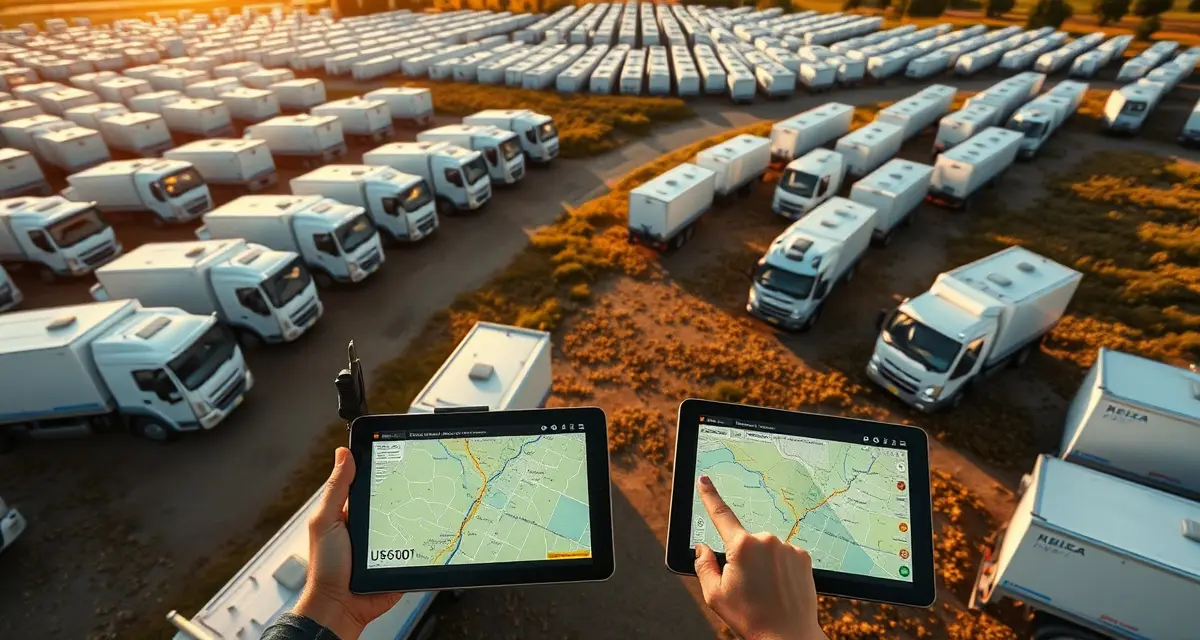
Hive Fleet Logistics for Migratory Beekeepers: Routes Schedules and Crews
Running 2,000 hives across 15 yards in 3 states isn't a beekeeping problem. It's a logistics problem that happens to involve bees.
The bees don't care how you route the trucks. They care whether they're in the right place with enough forage. But your margin and your sanity depend on whether the trucks run efficiently, the crew shows up at the right yard at the right time, and the compliance documentation is in order before the truck crosses a state line.
This guide covers the operational mechanics of commercial migratory fleet logistics, drawing not from a textbook but from the reality of running a large-scale operation where a routing mistake costs $5,000 in diesel and a missed permit costs you a load at the border.
TL;DR
- Moving 1,000 hives to almonds requires 2-3 truck loads, with fuel costs of $3,500-5,000 per run at current California diesel prices.
- Loading at night when bees are clustered inside reduces escape and minimizes defensive behavior during transport.
- GPS-confirmed yard coordinates, not just addresses, should be in every contract to prevent access failures on delivery night.
- Load planning that sequences multiple drops on a single truck run reduces total miles driven per hive.
- Fleet logistics coordination -- vehicle assignments, load manifests, and crew scheduling -- requires a structured system at 500+ hives.
What Fleet Logistics Actually Involves
When beekeepers talk about fleet logistics, they mean the coordination of several moving parts:
Trucks and trailers: An 18-wheeler with a 48-foot flatbed carries 400–500 hives depending on palletization. Some operators use shorter trucks for yard access. Managing a fleet of 2–5 trucks means knowing which truck is where, what it's carrying, and what it needs to do next.
Yard locations: A 2,000-hive operation might run 15–20 active yards simultaneously. Each yard has a GPS location, an access method (gate code, key, contact number), a hive count, and a status (active, staging, being built up, being pulled).
Crews: Large operations run 2–4 field crews simultaneously. Each crew is assigned to specific yards on specific days. Coordinating crews who are often days away from your home base, working without cell service, requires clear advance assignment and documentation.
Compliance documents: Each state entry requires health certificates, which must be current and specific to the load. Some states require inspection appointments. Interstate movement without proper documentation means loads turned back at the border, a several-thousand-dollar problem.
Timing windows: Every crop has a delivery window. Miss it and you've either lost the contract payment or caused the grower real economic harm. Deliver too early and your hives burn stores waiting for bloom.
Getting all of this right simultaneously (during almond season when you're placing 2,000 hives across 3 days) is the hardest operational challenge in commercial beekeeping.
Planning Your Annual Circuit
Most large commercial operations run a defined annual circuit. The specific routing varies by operation, but a common California-centric circuit looks like this:
November–January: Hives in southern staging areas (Florida, Texas, Arizona, or California wintering yards). Varroa treatment. spring buildup nutrition. Equipment prep.
February–March: California almonds. Maximum revenue density per hive at $200+/hive for 3–5 weeks.
Late March–April: Exit California. Options: Pacific Northwest tree fruit (cherries starting late April), California orange blossom honey, or move to summer honey yards.
April–May: Washington/Oregon cherries and apples. Or blueberries in Michigan (May–June) or Maine (July).
June–August: Summer honey production in North Dakota, Montana, Minnesota, or the Pacific Northwest. Alfalfa seed, clover, wildflower.
September–October: Pull honey supers. Assess hive condition. Begin fall nutrition and treatment before moving to winter locations.
November: Return to winter staging areas. Cycle repeats.
The key planning question: how many hives can you realistically move through each leg of this circuit? The bottleneck is usually trucks and crew, not hive count. A 2-truck operation can move roughly 800–1,000 hives per day with a solid crew. A 5-truck operation can run multiple simultaneous legs.
Truck Operations: The Numbers
An 18-wheeler at current rates costs $4.50–5.50/gallon diesel, approximately $0.65–0.80/mile in fuel alone (18-wheelers average 6–8 mpg fully loaded with hives). Add driver wages ($25–35/hour), insurance, maintenance, and per diem, and a California-to-Michigan haul runs $5,000–8,000 in total truck operating cost one way.
At $200/hive on 500 hives in that truck, the gross revenue is $100,000. The truck run is 5–8% of gross on that load. That's manageable.
At $80/hive (cherry/apple rates) on 500 hives, gross is $40,000. The truck run is now 12–20% of gross. Route optimization (minimizing empty miles and multi-stop routing) becomes much more material to margin.
Practical truck logistics:
- Load at night when bees are clustered inside
- Secure entrances with foam plugs or screen mesh
- Use ventilation boards between pallet layers for stacked hives
- Drive overnight when temperatures are cool, as bees overheat in a parked truck
- Plan fuel stops in advance; not all truck stops have diesel at commercial volumes
DOT compliance: Commercial beekeeping trucks crossing state lines are subject to Federal Motor Carrier Safety Administration (FMCSA) regulations. Depending on your operation size, you may need a DOT number, regular driver log compliance (ELD), and vehicle inspections. Some small operations operate under agricultural exemptions. Know whether your operation qualifies and document accordingly.
Yard Scouting and Site Selection
A bad yard costs you money in ways you might not track directly. Yards with:
- Limited forage within 2 miles: hives don't build well and may cannibalize stores
- Poor truck access: adds time and labor to every yard visit and can prevent access entirely after rain
- High pesticide exposure: unexpected losses mid-contract
- Competitor hives nearby: forager competition reduces colony productivity
Good yard scouting requires physically visiting sites before committing. Check:
- Truck access route: Drive the route in a pickup. If there are tight turns or low-clearance bridges, can an 18-wheeler make it?
- Water source: Bees need water within 1/4 mile, ideally closer
- Forage assessment: What's blooming within 2 miles? When? Can the hives support themselves?
- Landowner relationship: If the yard is on rented property, get a written agreement covering duration, access, and liability
- County permit requirements: Some counties require apiary permits for new yard sites
For existing yards you use annually, document the GPS coordinates, access codes, and any changes to the access route after each season. The gate code that worked last February may be different next February.
Crew Management
A commercial beekeeping crew needs:
- Experienced crew leader who can make judgment calls independently
- 2–3 workers who can load, unload, and assess hive condition
- A vehicle large enough to carry equipment for the day's work
- Communication method (satellite phone or radio for remote yards without cell coverage)
Scheduling: Crews need advance notice of which yards they're working, in what order, with what expected hive counts. A crew leader showing up at a yard to find 40 more hives than expected (because a contract was modified and nobody updated the yard assignment) loses productive hours.
Safety: Commercial beekeeping has real injury risk. Lifting heavy boxes repeatedly, working with tens of thousands of bees, operating forklifts, and driving in remote locations all create hazard exposure. Required: proper protective equipment, bee sting protocols, and first aid training. OSHA general industry standards apply to beekeeping crews regardless of agricultural exemptions.
Seasonal labor: Many commercial operations use seasonal workers (sometimes H-2A agricultural visa workers) for peak seasons. Managing H-2A workers involves significant compliance requirements around housing, wages, and documentation. Factor this into operational planning if you're using seasonal labor.
Interstate Movement Compliance
Each state has its own apiary inspection requirements for incoming bees. The major ones:
California: Certificate of Health from home state within 30 days. Must certify freedom from AFB, EFB, and Varroa below treatment threshold. SHB scrutiny for southeastern state hives.
Florida: Certificate of Health from origin state. Florida has its own inspection station requirements for incoming bees, particularly from states with small hive beetle prevalence differences.
Texas: Entry permit from Texas Apiary Inspection Service (TAIS). Certificate of health required.
Oregon: Certificate of Health from a recognized inspection authority. Oregon State Department of Agriculture performs inspections.
Washington: Certificate of Health from state apiary inspector. Washington has strict SHB and AFB requirements.
North Dakota: Certificate of Health required for imported bees. North Dakota Department of Agriculture issues permits.
Missing any of these at a state border checkpoint means the load doesn't cross. In some cases, trucks are turned around entirely. In others, USDA or state inspectors may hold your load pending documentation.
Practical approach: Maintain a compliance calendar with all certificate renewal dates for every state you enter in the season. Get certificates from your home state apiary inspector well in advance of departure. Carry physical copies in the truck cab. Don't rely on digital-only documentation at a border stop.
Technology for Fleet Coordination
Running fleet logistics on a whiteboard or group text creates constant information gaps. Crew leaders don't know which hives went where. Contract assignments don't update when trucks are rerouted. Compliance documents aren't linked to the right loads.
PollenOps connects fleet logistics directly to contract management and yard records. Each yard has a GPS location, contract assignment, current hive count, and crew history. Truck routes are optimized against actual yard locations, not estimated distances. Permit and compliance documents attach to the relevant load records.
When a grower calls to ask which hives are in their north block versus south block, you have the answer in seconds. When a truck is delayed, you know which contract is affected and can communicate proactively.
For operations with 10+ active yards, that real-time coordination replaces hours of daily communication overhead. See how it works
Common Fleet Logistics Mistakes
Not confirming yard access before dispatch: Gate codes change. Roads wash out. Growers change their minds about which field entrance to use. Confirm access details 48–72 hours before every yard visit.
Overloading trucks: A truck carrying 525 hives instead of 500 is a DOT violation and a colony damage risk if hives are overcrowded. Know your truck's legal payload and don't exceed it.
Routing by highway distance instead of truck time: A route that looks shorter on a map may take longer with a loaded truck because of low-clearance roads, weight-restricted bridges, or poor road surface on the back route. Always route plan for an 18-wheeler specifically.
No buffer in delivery schedules: One breakdown, one delay at a weigh station, one unexpected hive health issue at loading can cascade through an entire delivery sequence. Build 12-hour buffers into multi-day delivery windows.
Mixing loads without clear documentation: If a load of 200 hives from three different yard sources gets mixed during loading, reconciling hive assignments afterward is a nightmare. Keep load manifests that track which hives from which yard go into which truck position.
FAQ
How do you coordinate hive truck routes across multiple states?
Multi-state route coordination starts with a master schedule that maps each load, departure point, destination yard, and delivery window. For each state crossing, confirm compliance documents are current (typically within 30 days) before the truck leaves. Plan fuel stops in advance for commercial vehicles. Use GPS tracking on trucks so you have real-time visibility on load location. Pre-confirm access at every destination yard, gate codes, entry roads, unloading areas. When multiple loads are running simultaneously, assign each crew a specific truck and sequence of yards so there's no ambiguity about who goes where.
What is the best way to schedule yard visits for large operations?
Yard visit scheduling should be driven by colony health status and contract requirements, not convenience. Assign visit frequency by yard type: yards with weak colonies or under active contracts need more frequent checks than established honey yards in peak season. For a 20-yard operation, create a rolling 2-week visit schedule with crew assignments. Confirm yard access before every visit. For remote yards, send crews in pairs and ensure crew leaders have emergency communication capability. PollenOps' yard management tools allow you to track visit history, schedule upcoming visits, and assign crews at the yard level, replacing the whiteboard system most operations use.
How do you manage crew assignments for migratory beekeeping?
Effective crew management for migratory beekeeping requires advance scheduling (crews should know their assignments 1–2 weeks ahead), clear yard-level documentation (what work is expected at each yard: placement, removal, inspection, treatment), and reliable communication protocols (satellite devices for remote yards without cell coverage). Pay structure should account for the demanding nature of the work. Crews that move hives in the field all day in July in North Dakota need competitive wages or you'll have high turnover. Track crew hours by yard so you can calculate true per-yard labor costs and optimize routing and scheduling over time.
What is the standard approach for loading hives for overnight transport?
Load at night when bees are clustered inside, after temperatures have dropped below 60 degrees Fahrenheit. Secure entrances with foam or screened netting to prevent bee escape during transit. Use ventilation boards between layers for stacked hives to prevent heat buildup. Drive overnight to take advantage of cooler temperatures, which reduces stress on colonies during transport. Confirm GPS coordinates and truck access routes for every delivery yard before departure.
How do you track fleet movements and hive assignments across multiple delivery stops?
The practical requirement is a system that connects each truck assignment to specific hive pallets, which connect to specific yard locations, which connect to specific grower contracts. Paper manifests and phone calls work for a single delivery, but a 20-yard almond placement across 10 growers and 3 trucks requires digital coordination. PollenOps fleet module tracks load assignments, delivery sequencing, and yard confirmation in the same system as your contracts and health records.
What DOT requirements apply to commercial beekeeping trucks?
Commercial beekeeping vehicles hauling hives are subject to DOT regulations for commercial motor vehicles, including driver hours of service requirements, commercial driver license requirements for vehicles over 26,001 pounds GVWR, and vehicle inspection requirements. Some states have additional agricultural exception provisions that may apply to beekeeping operations. Consult with a transportation compliance specialist familiar with agricultural operations before your first large-scale move.
Try These Free Tools
Sources
- USDA Agricultural Research Service
- Bee Informed Partnership
- American Beekeeping Federation (ABF)
- USDA Animal and Plant Health Inspection Service (APHIS)
- American Honey Producers Association
Get Started with PollenOps
Moving hundreds of hives across multiple counties or states requires logistics coordination that goes beyond what a spreadsheet can manage reliably. PollenOps handles load planning, route scheduling, and crew assignments alongside your contract and yard records so your fleet operations are organized before the truck rolls.