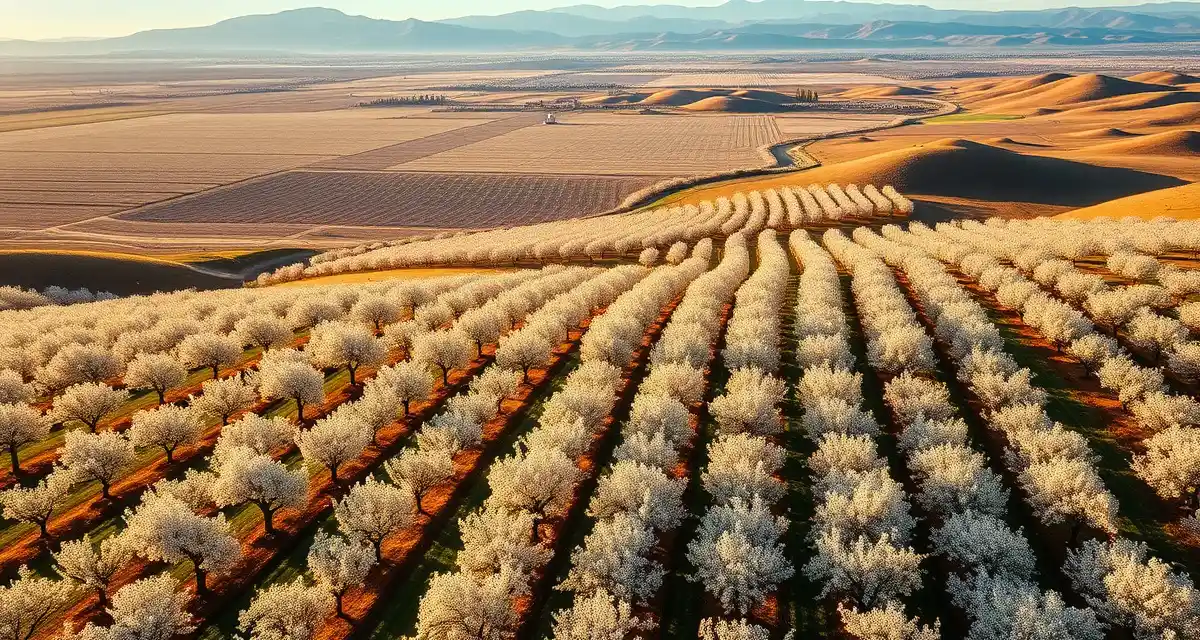
Cherry Pollination Software for the Yakima Valley
Yakima Valley produces over 35 percent of US sweet cherries by volume, making it the country's most important commercial cherry region. Yakima's elevation range from 800 to 3,200 feet creates a 10 to 14 day bloom spread across valley floor and benchland orchards, requiring separate bloom alerts for different elevation zones rather than a single regional timing estimate.
PollenOps Yakima Valley cherry software provides elevation-adjusted bloom timing alerts that account for this geographic complexity. An alert calibrated for a Prosser area valley floor orchard at 800 feet fires significantly earlier than an alert for a Naches Heights benchland orchard at 2,500 feet, reflecting the biological reality that these orchards bloom in sequence rather than simultaneously.
TL;DR
- Sweet cherry pollination windows in Washington's Yakima Valley typically run 5-10 days in late April to early May, leaving no margin for late delivery.
- Cherry pollination rates range from $80-130 per hive depending on colony strength and demand in a given year.
- Washington State produces over 60% of US sweet cherry volume, making the Yakima-Columbia Basin corridor the center of the commercial cherry pollination market.
- Hive strength requirements for cherry contracts typically specify 6-8 frames of bees.
- Timing coordination with apple pollination season requires careful scheduling since the two crops overlap in some regions.
Yakima Valley Cherry Geography
The Yakima Valley's cherry production is distributed across an elevation gradient from the Yakima River canyon floor to the high benchlands and mesa areas that characterize much of the valley's orchard geography:
Lower Yakima Valley floor (800 to 1,200 feet): The Wapato, Sunnyside, and lower Prosser areas. Earliest blooming orchards in the valley, often opening in late March to early April.
Mid-valley benches (1,200 to 1,800 feet): The main Yakima and Selah corridor benchlands. Mid-April bloom timing in most years.
Upper valley and Naches area (1,800 to 2,400 feet): Higher elevation orchards with later bloom timing, typically mid to late April.
Rattlesnake Hills and higher benchlands (2,000 to 3,200 feet): The latest-blooming areas, sometimes not reaching full bloom until late April or early May.
Understanding this elevation gradient allows you to build a delivery sequence that serves lower orchards first and transitions to higher orchards as bloom progresses upward, using the same hive pool sequentially across elevation zones rather than simultaneous flat-valley delivery.
Elevation-Adjusted Bloom Alerts
PollenOps Yakima Valley bloom alerts use each contracted orchard's GPS elevation data alongside local weather station temperature accumulation to calculate bloom timing at that specific site's elevation, not a valley-floor average.
The practical result is that your Wapato orchard at 900 feet fires its alert 8 to 12 days before your Naches Heights orchard at 2,400 feet. Your delivery schedule sequences naturally from valley floor to bench to high elevation rather than trying to serve all sites simultaneously on a single calendar date.
For operators managing 30 to 50 Yakima Valley cherry contracts across multiple elevation zones, this sequencing is the difference between a chaotic delivery window and a systematic progression through the valley's geography.
Staging Deliveries Across Elevations
The typical Yakima cherry delivery sequence for a well-organized operation:
Week 1 of delivery window: Lower valley floor orchards (Sunnyside, Prosser, Wapato area)
Week 2: Mid-valley benchlands (Yakima, Selah, Naches)
Week 2-3: Higher elevation orchards (upper Naches, Tieton, higher benchlands)
This sequential approach allows a fleet that can't serve all sites simultaneously to cover the full range of contracted sites in a single delivery window. The key is that hives removed from lower-elevation orchards as bloom completes become available for upper-elevation deliveries before those orchards have peaked.
Contract removal dates for lower-elevation orchards need to be coordinated with upper-elevation delivery timing. If your Prosser contracts specify removal 14 days after bloom, and Naches Heights doesn't peak until 12 days after Prosser, you have a tight window for transitioning hives. Build this logistics reality into your contract terms and delivery scheduling before the season begins.
Hive Density and Strength for Yakima Cherry
Washington State cherry growers typically require 1 to 2 hives per acre, with some premium Rainier cherry operations requesting 2 hives per acre for the higher value crop. Colony strength at delivery is typically 6 to 8 frames of bees with a laying queen.
Coming off California almond season in late February and early March, your colonies should be building toward peak strength by the time Yakima's valley floor orchards bloom in early April. The transition from almond to cherry is one of the cleanest seasonal circuit connections: colonies that were peak-strength at almond completion typically remain strong through the 5 to 6 weeks to Yakima cherry.
Monitor your colony condition during the almond-to-cherry transition period. Colonies that were strong at almond completion but then sat in a holding yard without productive forage for 5 weeks may have reduced population by the time cherry placements begin. Either feed them in the holding period or position them on early spring forage to maintain condition.
Yakima Valley Cherry Market Rates
Yakima Valley cherry rates in 2026 run $150 to $200 per hive for valley floor and mid-valley orchards. High-elevation orchards with more challenging access sometimes carry modest logistics premiums. Rainier cherry, which commands higher prices as a crop, is sometimes contracted at the higher end of the rate range.
For operators running the full Pacific Northwest tree fruit circuit (pear in March, cherry in April, apple in May), Yakima cherry is the financial anchor of the spring season. Cherry rates are the strongest per-hive rate in the PNW circuit, and the geographic efficiency of running multiple elevation zones in sequential delivery means a well-organized Yakima operation generates substantial contract revenue per truck deployment.
Frequently Asked Questions
How does cherry bloom timing vary by elevation in the Yakima Valley?
Yakima Valley cherry bloom spans approximately 10 to 14 days from the lowest valley floor orchards to the highest benchland sites. Lower valley orchards at 800 to 1,000 feet typically bloom in late March to early April. Mid-valley benches at 1,200 to 1,800 feet follow in early to mid-April. Higher elevation orchards at 2,000 to 3,200 feet bloom mid to late April. PollenOps elevation-adjusted bloom alerts account for each contracted orchard's specific elevation rather than applying a single valley average, so your delivery alerts fire in sequence with the actual bloom progression.
How many hives per acre do Yakima cherry growers require?
Washington Yakima Valley cherry growers typically require 1 to 2 hives per acre. Standard commercial Bing orchards often specify 1 hive per acre. Rainier cherry operations, which produce a higher-value crop with more exacting fruit set requirements, frequently specify 2 hives per acre. Confirm the density requirement in each contract since individual grower standards vary. At 2 hives per acre, a 100-acre Yakima cherry orchard generates $30,000 to $40,000 in contract revenue at current rates.
How do I stage contract deliveries across different elevations in Yakima?
Sequence your deliveries from lowest to highest elevation, using the natural bloom progression to guide timing. Serve lower valley floor orchards in the first week of your delivery window, transition to mid-valley benches in the second week, and complete higher elevation orchards in the second and third weeks. Coordinate removal dates for lower-elevation orchards with delivery timing for higher orchards to maximize the percentage of your fleet cycling from completed to pending placements rather than sitting idle. PollenOps elevation-adjusted alerts show you the expected delivery windows for each elevation zone simultaneously, allowing pre-season scheduling rather than reactive day-by-day decisions.
How tight is the pollination window for sweet cherries?
Sweet cherry bloom is notoriously narrow, typically lasting 5-10 days under normal weather conditions. Rain, cold temperatures, or wind during bloom can compress the effective pollination window further. Late-arriving hives or hives that need several days to orient after transport may miss a significant portion of the receptive bloom window. Delivery 1-2 days before anticipated bloom opening is the standard target for cherry contracts.
What are the hive strength requirements for cherry pollination?
Commercial cherry contracts typically require 6-8 frames of bees at delivery. Strong colonies forage more aggressively in cherry orchards and have better cold-weather foraging capability, which matters given that Pacific Northwest cherry bloom can occur in marginal temperature conditions. Premium cherry contracts at the higher end of the rate range typically specify 8-frame minimum colonies.
How does cherry pollination coordinate with apple pollination in Washington State?
Washington sweet cherry bloom typically runs April 20 to May 10 in the Yakima Valley and Columbia Basin, while apple bloom runs May 1 to May 20 at lower elevations. The overlap means operators working both crops need to sequence deliveries carefully, since some hives will need to move from cherry to apple within the same 2-week window. Staging yards between the Yakima Valley and the north Cascades fruit growing districts facilitate these moves.
Try These Free Tools
Sources
- USDA Agricultural Research Service
- Bee Informed Partnership
- American Beekeeping Federation (ABF)
- Washington State University Extension
- Northwest Cherry Growers
Get Started with PollenOps
Cherry pollination leaves no margin for scheduling errors when the bloom window runs 5-10 days. PollenOps keeps your contract terms, hive assignments, and fleet logistics in one system so every piece of the operation is aligned before the window opens.