Iowa Clover Honey Production: Commercial Beekeeping Guide
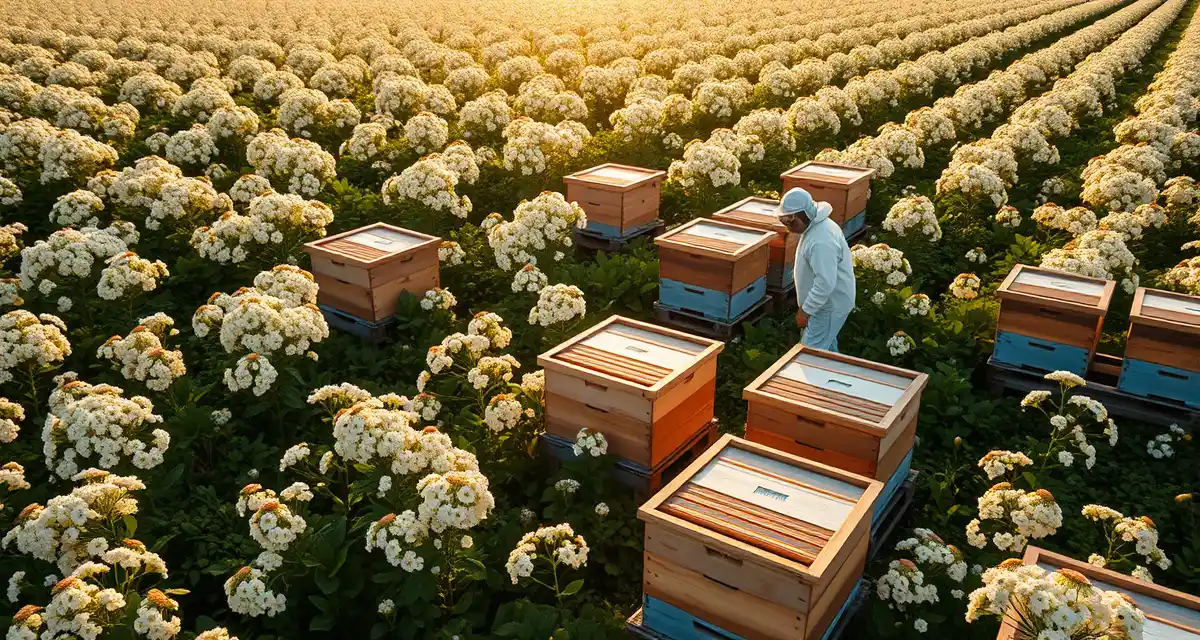
Iowa produces quality white clover honey from its extensive agricultural landscape, and Iowa honey operations benefit from accessible markets in Chicago and the Midwest. White clover is Iowa's primary honey forage, supported by the state's extensive roadsides, conservation set-asides, and farm fields where clover grows in rotation.
TL;DR
- Iowa's primary commercial beekeeping role is shaped by its crop mix, climate, and position on the national pollination circuit.
- Pollination rates in Iowa range $65-220/hive depending on crop depending on crop and colony strength requirements.
- Out-of-state operators entering Iowa for pollination contracts must register with the state agricultural authority and obtain a Certificate of Health.
- Iowa functions as either a primary pollination destination, a seasonal honey production location, or a transitional stop depending on the circuit.
- Tracking permit status, registration documents, and yard records for Iowa operations requires organized record-keeping before the season opens.
Iowa's Honey Production Landscape
Iowa's agricultural dominance (the state is one of the top corn and soybean producers in the US) creates a specific honey production environment. The primary forage sources are:
White clover: Iowa's roadside rights-of-way and Conservation Reserve Program (CRP) acres provide extensive white clover stands. The clover bloom runs from late May through July in central and northern Iowa.
Sweet clover: Less common than white clover but present in older fence rows and conservation areas.
Alfalfa: Hay production areas in central and northeast Iowa produce alfalfa honey as a secondary varietal.
Wildflower: Iowa's residual prairie and wetland areas, along with diverse wildflower plantings in conservation programs, produce multi-floral honey components.
Agricultural row crops: Iowa's corn and soybean-dominated landscape doesn't provide significant honey forage directly, but the non-crop areas within agricultural landscapes (road edges, field margins, CRP blocks) are the primary forage sources.
Iowa honey production season runs from late May through August. A well-positioned Iowa operation produces 40-65 lbs per hive in good years, though the state's intensive agricultural character makes finding productive yard locations more work than in forage-rich states like North Dakota or Minnesota.
Production Challenges in Iowa
Iowa's highly intensified agricultural landscape creates challenges for commercial honey production that less-intensified states don't face to the same degree:
Limited native forage: Iowa has less native prairie and natural land than Kansas or the Sandhills states. The primary forage is agricultural-associated clover.
pesticide exposure risk: Iowa's intensive row crop agriculture means higher pesticide application frequency. Operations need to vet yard locations for proximity to frequently treated fields.
Competitive yard access: Iowa has more resident beekeepers relative to available forage than some neighboring states.
Despite these challenges, experienced Iowa-based operators produce quality honey by focusing on areas with good CRP and conservation land access.
Iowa's Market Advantage
What Iowa lacks in forage density it makes up in market access:
Chicago metropolitan market: Iowa honey producers have direct access to one of the best specialty food markets in North America. Chicago's natural grocery chains, specialty food retailers, and restaurant community provide premium market access that many other honey-producing states can't match.
Midwest specialty food network: Iowa's position in the Midwest gives producers access to buyers across Wisconsin, Illinois, Minnesota, and Missouri.
Iowa's local food movement: Iowa has a strong local food identity that creates consumer demand for Iowa-branded honey. Specialty food retailers in Des Moines, Iowa City, and Cedar Rapids support direct market channels.
Frequently Asked Questions
How do you build a commercial honey production operation in Iowa?
Iowa commercial honey operations work best for beekeepers already based in the state or Midwest, using Iowa as a summer production location within a broader circuit. Focus yard access on CRP land, conservation areas, and agricultural borders with good clover forage. Connect with local farm bureau networks and conservation district contacts to find landowners with suitable CRP properties. The Iowa Honey Producers Association is a resource for connecting with Iowa honey buyers and understanding the state's production landscape.
What honey varieties are produced in Iowa?
Iowa's primary honey variety is white clover, a mild, light honey valued for its clean flavor. Sweet clover honey from older agricultural areas adds a similar but slightly more complex varietal option. Alfalfa honey from hay production areas supplements clover production. Iowa doesn't have a distinctive premium varietal comparable to Minnesota basswood or Appalachian wildflower; its market strength is in the quality of its clover and the proximity to major Midwest food markets.
How do you sell Iowa honey to Midwest markets?
Iowa honey reaches Midwest buyers most efficiently through three channels: direct-to-consumer at Des Moines, Iowa City, and Cedar Rapids farmers markets and specialty retailers; regional food brokers serving Chicago, Minneapolis, and Kansas City who distribute Iowa honey to natural grocery chains; and bulk honey sales to Midwest packers and processors. Chicago is the highest-value market for Iowa honey and is the primary target for operations that can build direct buyer relationships. Online direct sales support premium pricing for Iowa-branded clover and wildflower honey beyond the regional market.
What is the process for registering an out-of-state apiary in a new state?
Most states require out-of-state operators to register with the state department of agriculture apiary program before placing colonies. The process typically involves submitting a registration application (online or paper), paying a fee (usually $10-50 per location), and providing contact information for the operation. Some states also require the registration to be renewed annually. Contact the destination state's department of agriculture apiary program at least 60 days before your planned arrival to confirm current requirements.
What documentation do state apiary inspectors typically review?
State apiary inspectors review health certificates for out-of-state colonies, registration documentation, and colony inspection records during apiary visits. Inspectors check for signs of American foulbrood, European foulbrood, and other regulated pests and diseases. Operations with organized digital records that include treatment history and mite counts typically have faster, less complicated inspections than operations without documentation. Some state inspectors also verify that varroa mite loads are below state entry thresholds.
What triggers a state apiary inspection?
State apiary inspections can be triggered by routine inspection schedules (most states inspect a percentage of registered apiaries annually), neighbor or landowner complaints, disease reports from nearby operations, or inspection requirements tied to state entry permits. California, in particular, has the right to inspect incoming loads at port of entry for commercial beekeeping operations. Maintaining current registration and organized records makes required inspections faster and less disruptive.
Try These Free Tools
Sources
- USDA Agricultural Research Service
- Bee Informed Partnership
- American Beekeeping Federation (ABF)
- Iowa Department of Agriculture
- Project Apis m.
Get Started with PollenOps
Commercial operations working in Iowa face the same registration, permit, and documentation requirements as any state on the national circuit -- plus Iowa's specific regulatory requirements. PollenOps tracks your Iowa yard records, contract assignments, and permit documentation alongside your full operation, so entering a new state doesn't add a separate administrative burden. See how the platform fits operations working across multiple states.