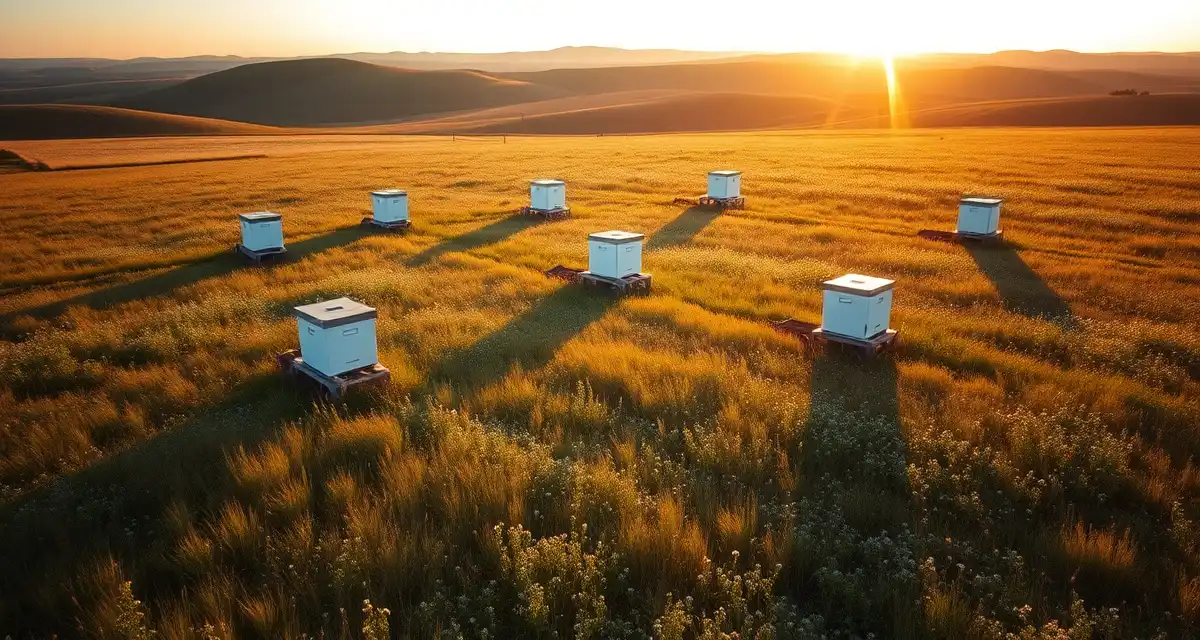
Kansas Commercial Honey Production: Plains Wildflower and Clover
Kansas produces a diverse wildflower honey from its varied plains and prairie vegetation, and Kansas honey operations benefit from affordable land and good clover forage in the south. The Flint Hills' tallgrass prairie in the eastern part of the state is particularly distinctive as a honey forage environment.
TL;DR
- Kansas's primary commercial beekeeping role is shaped by its crop mix, climate, and position on the national pollination circuit.
- Pollination rates in Kansas range $65-220/hive depending on crop depending on crop and colony strength requirements.
- Out-of-state operators entering Kansas for pollination contracts must register with the state agricultural authority and obtain a Certificate of Health.
- Kansas functions as either a primary pollination destination, a seasonal honey production location, or a transitional stop depending on the circuit.
- Tracking permit status, registration documents, and yard records for Kansas operations requires organized record-keeping before the season opens.
Kansas Honey Production Geography
Flint Hills (Chase, Morris, Geary counties): The Flint Hills tallgrass prairie is one of the last large intact tallgrass prairie ecosystems in North America. The native prairie wildflowers (including numerous native legumes, composites, and other forbs) produce a distinctive multi-floral honey. The Flint Hills honey is arguably Kansas's most premium varietal, with a complex floral character that reflects the prairie ecosystem.
Central Kansas (Saline, Dickinson, McPherson counties): The agricultural wheat belt produces sweetclover, alfalfa, and wildflower honey from the mix of crop and native vegetation.
South-central Kansas (Sedgwick, Harper, Kingman counties): Good clover and alfalfa forage in the agricultural south. Wichita provides market access.
Western Kansas Panhandle: More arid with limited honey production potential compared to eastern Kansas.
Kansas honey production benefits from the state's affordability (land rental for yard access is lower than in many neighboring states) and from the state's position in the center of the continental US, which provides reasonable access to Midwest, Texas, and Mountain West markets.
The Tallgrass Prairie Advantage
The Flint Hills tallgrass prairie creates an unusual commercial beekeeping opportunity. The native plant diversity produces multi-floral honey that can't be replicated in agricultural landscapes. Specialty food buyers who value terroir and provenance are increasingly willing to pay premium prices for honey tied to specific ecosystems.
"Kansas Flint Hills prairie honey" or "tallgrass prairie honey" is a compelling story for specialty markets. This isn't a marketing claim; it's an accurate description of a genuinely distinctive product.
Production Season
Kansas honey production runs from late May through August:
- Late May-June: Sweet clover begins, wildflowers active in the Flint Hills
- June-July: Peak clover and wildflower production
- July-August: Late clover, goldenrod beginning in northeast Kansas
A well-positioned Kansas operation produces 50-80 lbs per hive in productive years.
Market Access
Wichita specialty food market: Kansas's largest city has a growing natural foods and specialty food scene that provides accessible premium market access for Kansas honey.
Kansas City market (including Missouri side): One of the most accessible mid-size specialty food markets in the country. Kansas and Missouri specialty food buyers actively seek regional honey.
Midwest food brokers: Brokers serving Chicago, St. Louis, and Kansas City distribute Kansas honey to natural grocery retailers across the region.
Direct online: Flint Hills prairie honey with its provenance story supports $10-16/lb direct-to-consumer pricing through online channels.
Bulk sales: Volume production sells to Midwest honey brokers at $1.80-$2.80/lb for mixed wildflower and clover honey.
Frequently Asked Questions
How do you build a commercial honey production operation in Kansas?
Kansas commercial honey operations work best as part of a Midwest summer circuit or as a standalone operation for beekeepers based in the region. The Flint Hills and south-central Kansas agricultural areas offer the best forage. Identify yard access through landowner agreements. Kansas's agricultural community is generally accessible to beekeepers who approach landowners directly. The state's central position and affordable access costs make it a practical circuit stop for operations based in Nebraska, Oklahoma, Missouri, or Colorado. A summer Kansas honey circuit runs late May through August before colonies need to move north or return to winter staging.
What honey varieties are produced in Kansas?
Kansas produces white clover honey (mild, light, and widely marketable), sweet clover honey (similar to white clover with prairie character), alfalfa honey from irrigated areas, and Flint Hills tallgrass prairie wildflower honey, Kansas's most distinctive and premium varietal. The prairie wildflower honey reflects the native plant diversity of the Flint Hills ecosystem and is genuinely distinctive from agricultural honey produced in the same state.
How do you market Kansas wildflower honey?
Kansas wildflower honey markets well through its regional provenance story, particularly for Flint Hills tallgrass prairie honey. Position it with specific place-of-origin language ("Flint Hills wildflower," "Kansas Tallgrass Prairie honey") for specialty buyers who value provenance. The Kansas City specialty food market is the highest-value accessible channel; Wichita is secondary. Online direct-to-consumer through specialty honey platforms and your own website reaches national buyers who value prairie honey's distinctive character. Bulk sales to Midwest honey brokers provide a reliable outlet for volume production at commodity rates.
What is the process for registering an out-of-state apiary in a new state?
Most states require out-of-state operators to register with the state department of agriculture apiary program before placing colonies. The process typically involves submitting a registration application (online or paper), paying a fee (usually $10-50 per location), and providing contact information for the operation. Some states also require the registration to be renewed annually. Contact the destination state's department of agriculture apiary program at least 60 days before your planned arrival to confirm current requirements.
What documentation do state apiary inspectors typically review?
State apiary inspectors review health certificates for out-of-state colonies, registration documentation, and colony inspection records during apiary visits. Inspectors check for signs of American foulbrood, European foulbrood, and other regulated pests and diseases. Operations with organized digital records that include treatment history and mite counts typically have faster, less complicated inspections than operations without documentation. Some state inspectors also verify that varroa mite loads are below state entry thresholds.
What triggers a state apiary inspection?
State apiary inspections can be triggered by routine inspection schedules (most states inspect a percentage of registered apiaries annually), neighbor or landowner complaints, disease reports from nearby operations, or inspection requirements tied to state entry permits. California, in particular, has the right to inspect incoming loads at port of entry for commercial beekeeping operations. Maintaining current registration and organized records makes required inspections faster and less disruptive.
Try These Free Tools
Sources
- USDA Agricultural Research Service
- Bee Informed Partnership
- American Beekeeping Federation (ABF)
- Kansas Department of Agriculture
- Project Apis m.
Get Started with PollenOps
Commercial operations working in Kansas face the same registration, permit, and documentation requirements as any state on the national circuit -- plus Kansas's specific regulatory requirements. PollenOps tracks your Kansas yard records, contract assignments, and permit documentation alongside your full operation, so entering a new state doesn't add a separate administrative burden. See how the platform fits operations working across multiple states.