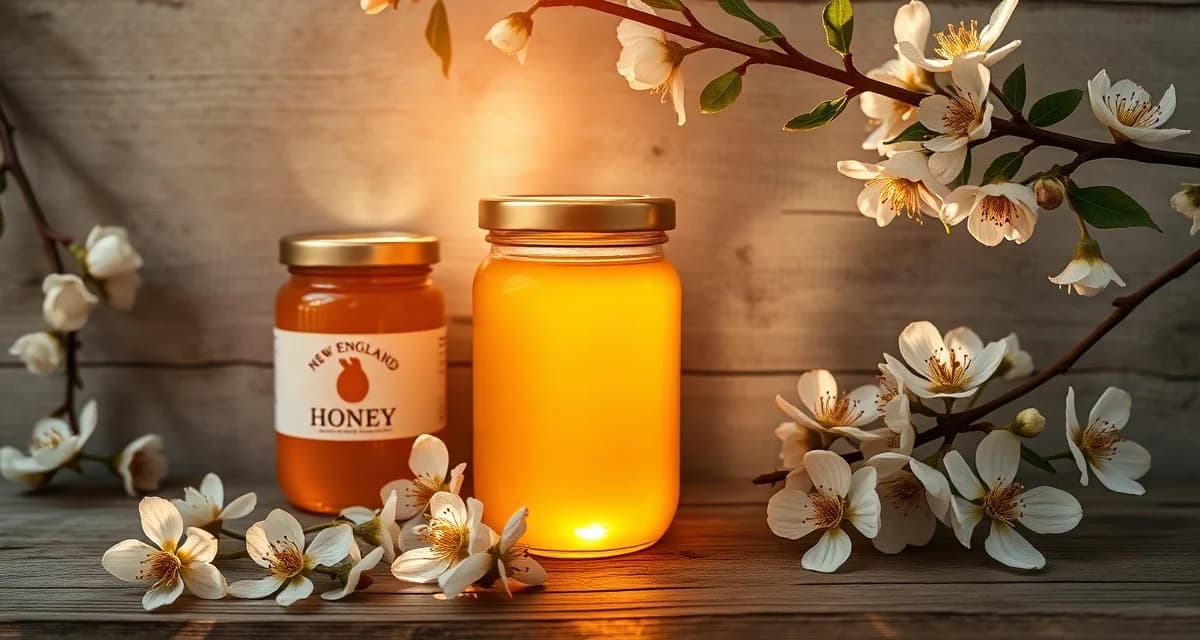
New England Honey Production: Wildflower Basswood and Orchard Honey
New England direct-to-consumer honey sales can yield $12-20/lb vs $2-3/lb bulk, and New England honey commands premium prices because the region's diverse flora produces wildflower, basswood, and orchard honey varietals that specialty buyers actively seek. The combination of small-scale premium production and sophisticated regional consumers makes New England one of the highest-value honey markets in the US on a per-pound basis.
TL;DR
- Wholesale honey prices for commercial producers have ranged from $1.50-2.50 per pound for bulk clover honey in recent seasons.
- Varietal honeys (buckwheat, tupelo, sourwood) command $3.00-5.00 per pound or more at wholesale.
- Summer honey production in North Dakota, Montana, and the Pacific Northwest is the primary source of bulk honey revenue for migratory operations.
- Honey production and pollination revenue streams can be combined on the same annual circuit, with most operations capturing both.
- Packing, storage, and distribution requirements for commercial honey production add cost and logistics complexity beyond the extraction stage.
New England's Honey Production Environment
New England's landscape is radically different from Plains or California honey production. The region is predominantly forested, with agricultural land concentrated in river valleys and coastal areas. This creates a honey production environment characterized by:
Diverse floral sources: New England's forests, farmland, and coastal areas produce honey from basswood, black locust, apple and other orchard blossoms, tupelo (limited), diverse wildflowers, and late-season goldenrod and aster. No single crop dominates.
Shorter seasons: New England's honey season runs May through September, shorter than Southern or Plains operations. Production volumes per hive are typically 40-80 lbs, with varietal honey requiring careful timing.
Premium pricing environment: New England consumers have some of the highest per-capita income and specialty food spending in the country. Boston, Portland, Burlington, and Hartford all have well-developed specialty food markets that pay premium prices for local, provenance-specific honey.
Small-scale operations: Commercial beekeeping in New England tends toward smaller scale (200-800 hives) compared to Plains or California operations. The forage density doesn't support large-scale operations the way North Dakota or the San Joaquin Valley does.
New England's Honey Varieties by Region
Maine (York, Cumberland, Sagadahoc counties): Maine's honey is influenced by blueberry blossoms, orchard bloom, diverse wildflowers, and some basswood components. Maine honey has a strong regional identity through the state's food culture.
Vermont (Addison, Chittenden, Washington counties): Vermont's dairy and agricultural landscape produces white clover and alfalfa honey from farmland, plus wildflower from the state's abundant natural areas. Vermont honey benefits enormously from the Vermont brand. The state's food identity is among the strongest in the US.
New Hampshire (Merrimack, Hillsborough, Grafton counties): Mixed agricultural and forest wildflower. New Hampshire honey production is modest but quality.
Massachusetts (Worcester, Hampshire, Franklin counties): The Connecticut River Valley and western Massachusetts produce good wildflower and orchard honey. Massachusetts has strong market access through Boston's specialty food scene.
Connecticut (Hartford, Tolland, Windham counties): Connecticut's agricultural areas and forest cover produce clover, wildflower, and orchard honey. Hartford and the Connecticut shoreline communities provide market access.
Rhode Island: Smallest state by area, with limited commercial production, but strong market access through Providence's sophisticated food scene.
Premium Varietal Opportunities
Basswood: Limited basswood populations in New England's forests produce small quantities of premium basswood honey. New England basswood is less abundant than Midwest basswood, but what exists commands premium pricing in local markets.
Black locust: Black locust (Robinia pseudoacacia) grows throughout New England's disturbed lands and roadsides. The bloom runs two to three weeks in late May and produces water-white, slow-to-crystallize honey that's prized as a table honey. The window is limited. Daily monitoring helps capture the bloom.
Orchard honey: Apple, pear, cherry, and other orchard blossoms in late April through May produce spring orchard honey. Delicate and light, with floral character. Isolation requires pre-positioned colonies in orchard areas.
Goldenrod and aster: Late-season goldenrod and aster produce autumn honey that's darker and more strongly flavored than spring and summer varietals. Goldenrod honey crystallizes quickly and is popular with certain specialty buyers.
Mixed wildflower: New England wildflower honey reflects the region's plant diversity. Well-positioned operations produce honey with maple, clover, wildflower, and forest components that create complex flavor profiles.
Market Access
Boston specialty food market: Boston has one of the strongest specialty food markets in the US. Farmers markets (South End Farmers Market, Copley Square Farmers Market, Cambridge farmers markets) are active and well-attended. Specialty retailers and high-end restaurants provide additional premium channels.
Portland ME food scene: Portland, Maine has developed an extraordinary specialty food culture for its size. Local honey with Maine provenance sells at premium prices in Portland's retail and restaurant market.
Vermont farmers market network: Vermont's farmers markets are among the most productive in the country for food-brand producers. Burlington, Montpelier, Middlebury, and Brattleboro markets support premium honey sales at $12-18/lb.
New England regional specialty retailers: Whole Foods regional office in New England, local co-ops, and independent specialty food shops across the region actively source New England honey.
Online direct-to-consumer: New England honey with specific provenance commands $12-18/lb online, reaching buyers who specifically seek regional honey.
Commercial honey market trends provides pricing benchmarks across direct and wholesale channels.
For operations managing multiple honey yards and varietals, PollenOps honey production logs track extraction by yard, date, and varietal to support premium positioning documentation.
Frequently Asked Questions
How do you produce premium varietal honey in New England?
Premium varietal production in New England requires pre-positioned colonies and tight timing. For black locust, identify locust stands and position colonies one week before expected bloom. The window is narrow and varies by two to three weeks with weather. For orchard honey, contract with orchardists for spring placement; single-orchard honey is more pure than multi-source wildflower. For basswood, identify basswood trees and position colonies for the late June-July bloom. Keep extraction equipment clean and extract promptly after each varietal bloom to avoid mixing with subsequent flows. Label with specific geographic provenance. Buyers pay premium for "Maine black locust" or "Vermont basswood" rather than generic "wildflower."
What honey varieties can New England operators produce?
New England's primary commercial honey varieties are mixed wildflower (the most accessible and highest-volume), black locust (late May, premium and slow-crystallizing), spring orchard honey (apple/cherry/pear bloom, delicate and light), basswood (limited availability, premium), goldenrod/aster (late summer, strong flavor, some markets prefer), and blueberry (Maine primarily, delicate spring varietal). Vermont clover is well-regarded as a premium regional clover. The most commercially distinctive New England honey for specialty markets is black locust. Its specific flavor profile and slow crystallization make it a popular restaurant and gift honey commanding $15-22/lb in specialty channels.
What direct-to-consumer channels work best for New England honey?
Farmers markets are the most effective direct-to-consumer entry point in New England. Boston, Portland, Burlington, and Hartford all have active markets with customers willing to pay $12-18/lb for authentically produced local honey. From farmers market relationships, expand to restaurant accounts (particularly in Boston and Portland where chefs value local provenance) and specialty retail. Online direct-to-consumer reaches buyers outside your local market area. New England provenance commands premium prices from buyers who know the region's honey reputation. CSA-style honey subscriptions (seasonal shares) work well for established producers with loyal customer bases and create predictable revenue.
How do commercial beekeepers choose summer honey yard locations?
Summer honey yard selection focuses on forage quality, density, and landscape characteristics. North Dakota and Montana white clover and sweetclover flows typically produce 80-150 pounds per colony in good years. The Pacific Northwest offers diverse flows from clover, fireweed, and wildflowers. Proximity to other apiaries reduces forager competition; bee-friendly state lands or rented agricultural properties with forage diversity are preferred. Water availability within 1-2 miles of each yard is a basic requirement.
What is the difference between selling honey as bulk versus packaged retail?
Bulk honey sales to brokers or packers provide simple logistics (55-gallon drums or totes shipped directly from extraction) but yield lower per-pound prices ($1.50-2.50/pound for clover at wholesale). Packaged retail sales through direct channels (farmers markets, online, specialty retailers) yield $6-12 per pound but require labeling, packaging equipment, food safety compliance, and distribution relationships. Most commercial operations rely primarily on bulk sales and use retail as a supplementary channel for premium varieties.
Can honey production records be tracked alongside pollination contract records?
Yes. PollenOps tracks yard assignments and honey production data alongside pollination contracts so the full economic picture of each yard and each season is visible in one system. This matters for operations that use the same yards for honey production in summer and pollination staging in winter and spring, since the value of a yard location depends on both revenue streams.
Try These Free Tools
Sources
- USDA Agricultural Research Service
- Bee Informed Partnership
- American Beekeeping Federation (ABF)
- American Honey Producers Association
- National Honey Board
Get Started with PollenOps
Running honey production alongside pollination contracts requires coordinating two revenue streams on a single annual calendar. PollenOps tracks both in one platform so your circuit planning reflects reality rather than optimistic assumptions.