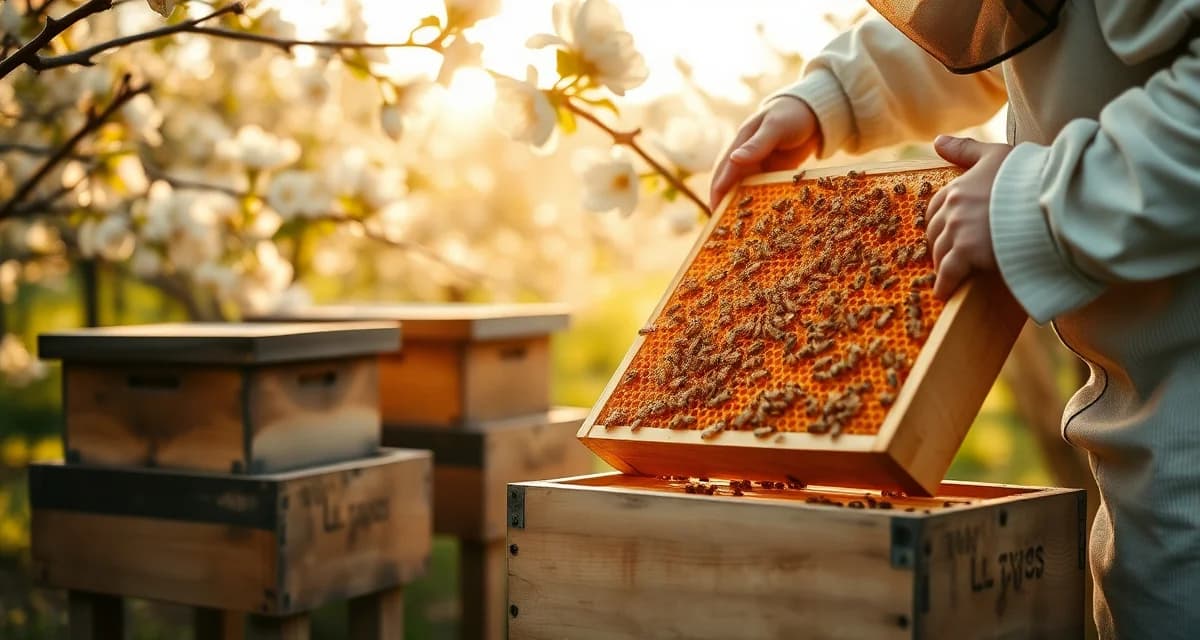
Apple Pollination in New York: Hudson Valley and Lake Country
New York produces over 30 million bushels of apples annually, making it the second-largest apple producing state in the US after Washington. Commercial apple pollination demand is distributed across two distinct production regions: the Hudson Valley in the southeast and the Lake Ontario fruit belt in the northwest near Rochester and Niagara Falls.
New York apple bloom runs late April through mid-May, fitting naturally into the Northeast spring pollination circuit between Virginia apple season in mid-April and May, and New England cranberry and blueberry in June.
TL;DR
- New York's primary commercial beekeeping role is shaped by its crop mix, climate, and position on the national pollination circuit.
- Pollination rates in New York range $65-220/hive depending on crop depending on crop and colony strength requirements.
- Out-of-state operators entering New York for pollination contracts must register with the state agricultural authority and obtain a Certificate of Health.
- New York functions as either a primary pollination destination, a seasonal honey production location, or a transitional stop depending on the circuit.
- Tracking permit status, registration documents, and yard records for New York operations requires organized record-keeping before the season opens.
New York Apple Production Regions
Hudson Valley (Ulster, Columbia, Dutchess, Orange counties): One of the oldest apple-producing regions in the US, with established orchards, diverse variety production, and strong connections to direct market and premium retail. The Hudson Valley's moderate climate produces high-quality apples for fresh market and cider.
Lake Ontario Fruit Belt (Monroe, Orleans, Niagara, Wayne counties): Western New York's lake shore counties benefit from Lake Ontario's thermal moderation, extending the growing season and reducing spring frost risk. This region has significant commercial apple acreage alongside cherry and other tree fruits.
Finger Lakes region (Ontario, Seneca, Yates counties): Smaller commercial apple acreage in the Finger Lakes corridor, more oriented toward premium varieties and direct market than large-scale commercial production.
Timing
New York apple bloom runs late April through mid-May in both major regions. The Hudson Valley typically blooms in the first two weeks of May. The lake shore counties in western New York bloom in early to mid-May. The proximity to Lake Ontario in the western region can push bloom timing later than inland locations.
For operators working the Northeast apple circuit, New York's timing coordinates with Pennsylvania (mid-April through early May) and Virginia (mid-April through early May) to create a multi-state sequential circuit.
Colony Requirements and Rates
New York apple growers typically require 6 to 8 frames of bees. The Hudson Valley and Finger Lakes regions have strong direct market orientations that sometimes translate into premium pollination requirements. Organic apple growers in New York may have additional requirements related to treatment history documentation.
New York apple pollination rates have typically run $90 to $125 per hive. Hudson Valley premium orchard contracts may command toward the upper end of this range.
For New York apiary registration and compliance, out-of-state operators must register with the New York State Department of Agriculture and Markets and provide health certificates for incoming colonies.
Getting New York Apple Contracts
The Hudson Valley grower community is well-organized through the New York Apple Association and local farm bureaus. Western New York apple producers connect through the Lake Ontario Fruit Growers Association and Ontario County agricultural networks.
Outreach in fall for the following spring season is the standard approach. New York's apple industry has established beekeeper relationships that are sticky because growers prefer predictability over price shopping. Breaking in requires demonstrating a track record that justifies displacing an incumbent contractor.
Frequently Asked Questions
How do you get apple pollination contracts in New York?
Contact Hudson Valley apple growers in Ulster, Columbia, and Dutchess counties and Lake Ontario fruit belt growers in Monroe, Orleans, and Niagara counties in fall for the following spring season. The New York Apple Association and Cornell Cooperative Extension in apple-producing counties are industry networking resources. Operators who work Pennsylvania or Virginia apple season have geographic proximity to add New York, and references from those markets carry weight in New York. Come prepared with colony strength standards, previous spring pollination references, and a clear delivery timeline for the late April to mid-May window.
When is apple pollination season in New York?
New York apple bloom runs late April through mid-May. Hudson Valley orchards typically bloom in the first two weeks of May. Lake Ontario fruit belt orchards bloom early to mid-May. Bloom timing shifts year to year based on winter chill accumulation and spring temperatures. Late spring cold snaps can delay bloom by a week or more, a real risk in upstate New York. Operators should plan for potential bloom delays and communicate proactively with growers if weather suggests delivery timing adjustments are needed.
What colony strength do New York apple growers require?
New York apple growers typically require colonies at 6 to 8 frames of bees at placement. Standard commercial contracts specify 6 frames. Premium and organic orchard contracts may specify 8 frames. Hudson Valley premium market orchards with organic certifications may also ask for treatment documentation that demonstrates organic-compliant management in the 90 to 120 days before placement. Plan colony buildup through March and April with late April New York delivery requirements in mind.
What is the process for registering an out-of-state apiary in a new state?
Most states require out-of-state operators to register with the state department of agriculture apiary program before placing colonies. The process typically involves submitting a registration application (online or paper), paying a fee (usually $10-50 per location), and providing contact information for the operation. Some states also require the registration to be renewed annually. Contact the destination state's department of agriculture apiary program at least 60 days before your planned arrival to confirm current requirements.
What documentation do state apiary inspectors typically review?
State apiary inspectors review health certificates for out-of-state colonies, registration documentation, and colony inspection records during apiary visits. Inspectors check for signs of American foulbrood, European foulbrood, and other regulated pests and diseases. Operations with organized digital records that include treatment history and mite counts typically have faster, less complicated inspections than operations without documentation. Some state inspectors also verify that varroa mite loads are below state entry thresholds.
What triggers a state apiary inspection?
State apiary inspections can be triggered by routine inspection schedules (most states inspect a percentage of registered apiaries annually), neighbor or landowner complaints, disease reports from nearby operations, or inspection requirements tied to state entry permits. California, in particular, has the right to inspect incoming loads at port of entry for commercial beekeeping operations. Maintaining current registration and organized records makes required inspections faster and less disruptive.
Try These Free Tools
Sources
- USDA Agricultural Research Service
- Bee Informed Partnership
- American Beekeeping Federation (ABF)
- New York Department of Agriculture
- Project Apis m.
Get Started with PollenOps
Commercial operations working in New York face the same registration, permit, and documentation requirements as any state on the national circuit -- plus New York's specific regulatory requirements. PollenOps tracks your New York yard records, contract assignments, and permit documentation alongside your full operation, so entering a new state doesn't add a separate administrative burden. See how the platform fits operations working across multiple states.