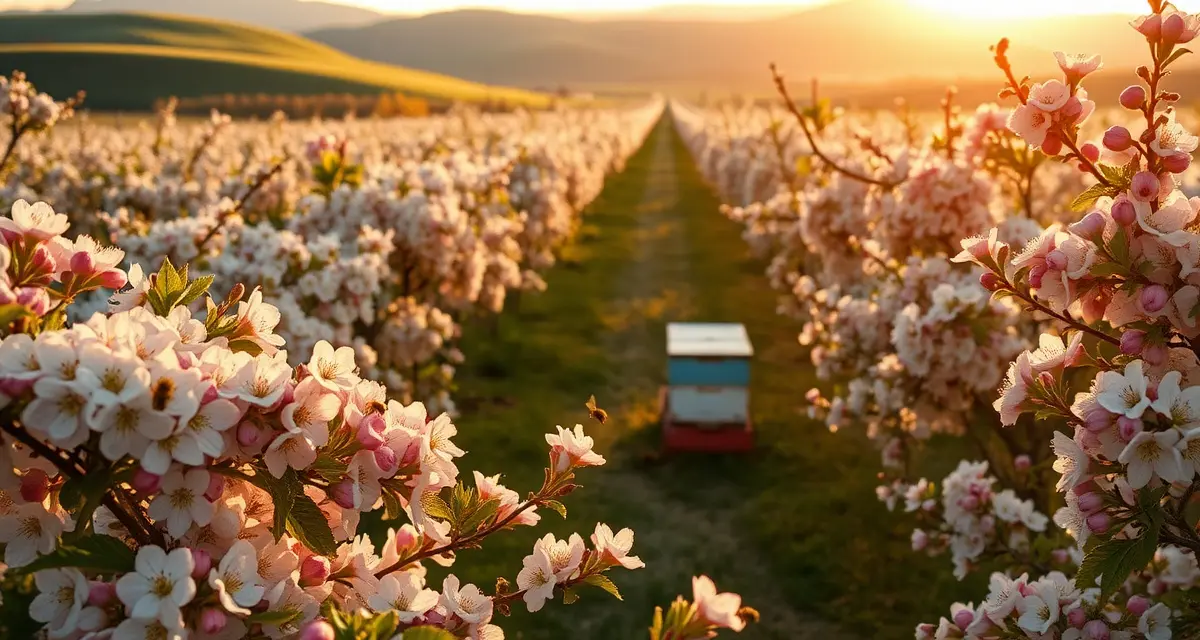
Apple Pollination in the Northeast: New York, Michigan, and Pennsylvania
New York is the second-largest US apple producing state with 50,000 or more bearing acres. Add Michigan's apple acreage and Pennsylvania's commercial orchards, and the Northeast offers a legitimate spring pollination circuit that many Eastern operators run without ever going near California.
Northeast apple bloom runs mid-April through mid-May, later than Pacific Northwest bloom, which creates a useful timing option. If you're running an East Coast circuit, Pennsylvania and New York apples can follow Maine or precede it, depending on how you structure your calendar.
TL;DR
- Apple pollination is one of the most geographically distributed pollination markets, with significant demand in Washington, Michigan, New York, Pennsylvania, and New England.
- Bloom timing varies by 3-6 weeks between the Pacific Northwest and Northeast, enabling migratory operators to extend their apple season.
- Hive strength requirements for apple contracts typically range from 4-6 frames depending on the grower and orchard density.
- Washington State accounts for roughly 60% of US apple production, making it the dominant commercial apple pollination market.
- Cross-pollination variety requirements mean orchard layout significantly affects how many hives are needed and where they should be placed.
The Northeast as a Multi-State Apple Circuit
No single Northeast state has the concentration of California's almond market or Washington's apple production. But the Northeast as a region (with New York, Michigan, and Pennsylvania as its pillars) offers meaningful contract volume spread across a broader geography.
The strategic advantage of the Northeast circuit is that no single competitor addresses the multi-state Northeast circuit that many Eastern operators run. Most large California-focused migratory operators don't bother with New York apples. That means less competition from national-scale beekeepers and more opportunity for regional operators with established relationships.
Northeast Apple States at a Glance
New York: 50,000+ bearing acres. Hudson Valley, Lake Ontario shore (Wayne and Orleans counties), and Champlain Valley are the major production regions. Large commercial operations mix with many family-scale orchards.
Michigan: Major apple production in the southwest Lake Michigan shore counties (Allegan, Van Buren, Berrien). Michigan's lake-effect climate moderates temperatures and extends bloom. Michigan also has blueberry and cherry acreage, making it a multi-crop state.
Pennsylvania: Adams County in the south-central part of the state has the most concentrated apple production (Gettysburg area). Other orchards are scattered across the state.
Northeast Apple Bloom Timing
Northeast apple bloom runs later than Pacific Northwest bloom. Key timing data:
Pennsylvania (Adams County): Bloom typically early to mid-April. Often the earliest in the Northeast due to more southern latitude.
New York (Hudson Valley, Wayne County): Bloom typically late April to early May. Wayne County orchards near Lake Ontario may bloom slightly later than Hudson Valley.
New York (Champlain Valley): Late April to mid-May, depending on season.
Michigan (southwest lakeshore): Bloom typically late April to mid-May. Lake Michigan moderates temperatures and can either delay or extend bloom depending on spring patterns.
This timing means Northeast apple pollination fits cleanly after or concurrent with early Pennsylvania bloom, and potentially before Maine blueberry season in late May.
How Do You Set Up a Northeast Apple Pollination Circuit?
Running a multi-state Northeast circuit requires advance planning that most operators don't do until they're already trying to execute it.
Route Planning
The most efficient Northeast circuits typically flow:
Option A (North to South then East): Start with Pennsylvania apples in early April, move to New York Hudson Valley or Wayne County in late April, then to Michigan apples in early May, then to Maine blueberry in late May.
Option B (West to East): Start Michigan in late April, cross to New York in early May, then Maine in late May.
Route efficiency matters when you're moving hundreds of hives across four states. Plan truck routes so you're not crossing states twice or paying for empty backhauls.
State-by-State Permit Planning
Every state crossing requires a current inspection certificate and compliance with entry requirements. The Northeast is particularly complex because you may cross state lines multiple times in a 4 to 6 week window.
Research entry requirements for New York, Michigan, and Pennsylvania well before your first season. Requirements change, and document formats differ by state. Getting a shipment held at the state line because your certificate is expired or in the wrong format is an operational and financial disaster.
Grower Development
Northeast apple growers range from large commercial operations farming 500+ acres to small family orchards of 20 to 100 acres. Contract economics and professionalism expectations vary accordingly.
Large commercial orchards in New York's Wayne County or Michigan's Berrien County have sophisticated pollination management programs. They want documented colony strength, professional contracts, and reliable delivery timing.
Smaller orchards may operate more informally but are often excellent long-term relationships because you're a known, trusted supplier in a market where finding reliable beekeepers is genuinely difficult.
What Apple Pollination Rates Are Typical in New York?
New York apple pollination rates typically run $75 to $120 per hive, with variation based on orchard scale, operator reliability reputation, and seasonal demand.
Rates in New York have historically run lower than California almonds, reflecting the different crop economics. But New York apple pollination can be very profitable for operators who run the circuit efficiently. The per-hive rate is lower, but so is the competition and the complexity of getting contracts.
Michigan rates for apple pollination run similarly: $70 to $110 per hive depending on scale and relationship.
What State Permits Are Required for a Northeast Hive Circuit?
Each state has its own requirements. Here's the overview. Always verify with each state's department of agriculture before your first season, as requirements change.
New York
New York requires an inspection certificate from the state of origin, dated within 30 days of movement. The certificate must confirm freedom from American foulbrood and European foulbrood. Apiaries in New York must be registered with the New York State Department of Agriculture and Markets.
Out-of-state operators bringing colonies into New York for pollination need to register their yards with the state.
Michigan
Michigan requires an inspection certificate from the state of origin. Michigan has had periods of heightened entry requirements due to small hive beetle and other pest concerns. Check current requirements with the Michigan Department of Agriculture and Rural Development before each season.
Pennsylvania
Pennsylvania requires a certificate of inspection from the state of origin, confirming freedom from AFB and other regulated pests. The Pennsylvania Department of Agriculture regulates apiary movement within and into the state.
Interstate Movement Planning
For a full Northeast circuit, you may need inspection certificates from each state you're coming from as you move between states. If you're moving from Michigan to New York, New York wants a Michigan inspection certificate. If you're moving from New York to Maine, Maine wants a New York inspection certificate.
Plan your inspection schedule and permit timing accordingly. Don't try to get a certificate in a state you're already leaving. Coordinate inspections to coincide with your departure timing.
Apple Pollination Contracts in the Northeast: What to Expect
Northeast apple growers approach contracts differently from California almond growers. A few things to know:
Many Northeast apple growers prefer multi-year relationships. In a market where reliable beekeepers are genuinely scarce, growers who find a beekeeper they trust tend to stick with them. Price-shopping is less common than in California's more commoditized market.
Colony strength documentation matters. Even smaller growers are increasingly aware of colony strength differences and want some assurance they're getting what they pay for.
Communication responsiveness is highly valued. Northeast orchards are often smaller businesses with owner-operators who are accessible and expect the same in return. Build relationships, return calls, and show up when you say you will.
FAQ
How do you set up a Northeast apple pollination circuit?
Start by identifying the states you want to operate in and the growers or contract sources in each. Plan your route to minimize truck movement between states. Secure all required state inspection certificates and entry permits well before your first move. Build grower relationships in the off-season through direct outreach, agricultural network referrals, and state beekeeping association contacts. The first Northeast season is primarily about establishing relationships for future years.
What apple pollination rates are typical in New York?
New York apple pollination contracts typically run $75 to $120 per hive, with variation based on colony strength guarantees, operator reliability, and grower scale. Operators with strong reputations and documented colony strength can command the higher end of that range. Rates in upstate New York tend to be somewhat lower than Hudson Valley rates, reflecting local supply and demand dynamics.
What state permits are required for a Northeast hive circuit?
Every state requires a certificate of inspection from the state of origin, confirming freedom from American foulbrood and other regulated diseases. New York requires registration of apiary yard locations. Michigan may have specific entry requirements depending on current pest concerns. Pennsylvania requires state inspection certificates. Each state's certificate requirements, formats, and timing windows differ. Verify current requirements with each state's department of agriculture at least 60 days before your first planned move.
What are the hive strength requirements for apple pollination contracts?
Apple pollination contracts typically specify 4-6 frames of bees at delivery, though requirements vary by grower. Large corporate orchard operations in Washington State often specify 6 frames minimum. Smaller independent orchards may accept 4-5 frame colonies. The practical consideration is that apple bloom timing can be cold and variable, and stronger colonies forage more effectively in marginal weather conditions.
How does apple pollination timing differ across the US?
Apple pollination timing runs approximately 3-5 weeks in most regions, starting in late March in the mid-Atlantic, April in the Midwest and Pacific Northwest lowlands, and May in New England and higher elevations. Washington State's diverse geography means bloom timing varies 2-3 weeks between the Columbia Basin and the higher-elevation orchards in Chelan County. Migratory operators can extend their apple season by following bloom north and east.
What is the relationship between apple variety and pollinator requirements?
Most commercial apple varieties require cross-pollination between compatible varieties, which means orchard layout -- where pollinizer rows are planted relative to the primary variety -- directly affects how many hives are needed and where they should be placed. Orchards with good pollinizer distribution require fewer hives per acre than orchards with poor pollinizer coverage. Understanding the orchard's variety layout helps operators advise growers on optimal hive placement.
Try These Free Tools
Sources
- USDA Agricultural Research Service
- Bee Informed Partnership
- American Beekeeping Federation (ABF)
- Washington Tree Fruit Research Commission
- Cornell University Cooperative Extension
Get Started with PollenOps
Apple pollination season spreads across multiple regions and bloom timing windows, giving migratory operators a 6-8 week window to sequence deliveries and maximize hive utilization. PollenOps coordinates contract management, delivery scheduling, and health documentation across your full apple circuit so you can focus on execution rather than administration.