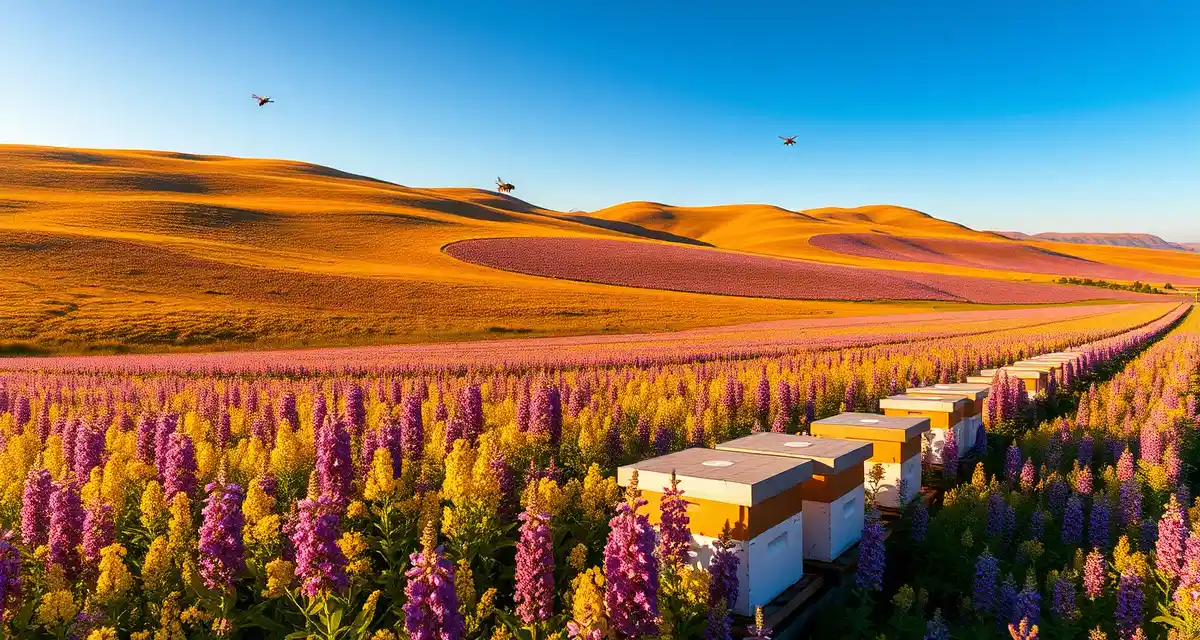
Wyoming Commercial Honey Production: Sweetclover and Wildflower Guide
Wyoming's vast sweetclover areas in the Bighorn Basin produce exceptional honey, and Wyoming wildflower and sweetclover honey commands premium prices in specialty markets. For operators running Northern Plains circuits, Wyoming's July-August sweetclover season fills a productive window between June seed crop contracts and fall preparations.
TL;DR
- Wyoming's primary commercial beekeeping role is shaped by its crop mix, climate, and position on the national pollination circuit.
- Pollination rates in Wyoming range $65-220/hive depending on crop depending on crop and colony strength requirements.
- Out-of-state operators entering Wyoming for pollination contracts must register with the state agricultural authority and obtain a Certificate of Health.
- Wyoming functions as either a primary pollination destination, a seasonal honey production location, or a transitional stop depending on the circuit.
- Tracking permit status, registration documents, and yard records for Wyoming operations requires organized record-keeping before the season opens.
Wyoming's Honey Production Geography
Wyoming's honey production centers on a few distinctive forage areas:
Bighorn Basin (Park and Washakie counties): The Bighorn Basin in north-central Wyoming is the state's most productive honey region. The basin's irrigated agricultural areas and surrounding native rangeland produce a mix of sweetclover, alfalfa, and mountain wildflower honey. Cody and Worland are the commercial centers of this region.
Sheridan and Campbell counties: The Powder River Basin and foothills east of the Bighorn Mountains support sweetclover and mixed wildflower honey production. Good access from I-90 makes this region accessible from the Northern Plains circuit.
Laramie County and southeastern Wyoming: More limited but accessible from the Denver/Front Range area.
Mountain honey production: Wyoming's high country provides summer forage for operations comfortable working in mountain terrain, producing distinctive multi-floral honey from alpine and subalpine flowers.
The Sweetclover Opportunity
Sweetclover (Melilotus officinalis and M. alba) is one of the highest-yielding honey plants in North America. Wyoming's native and naturalized sweetclover stands, combined with the Bighorn Basin's agricultural plantings, create a honey flow in July that can be exceptional in good years.
Sweetclover honey is mild, light cream to white in color when crystallized, and widely valued in bulk and specialty markets. Wyoming sweetclover is often blended with alfalfa honey from adjacent areas, producing a light, clean varietal marketed as "Plains honey" or "Mountain Clover."
A well-positioned colony in Wyoming sweetclover during peak bloom can produce 80-120 lbs per hive in outstanding years. More typically, 50-80 lbs is a reliable production estimate in normal conditions.
Circuit Integration
Wyoming's honey season integrates well with several circuit frameworks:
Post-Idaho circuit: Operations finishing Idaho cherry and clover seed contracts in June-July can move to Wyoming for sweetclover honey production in July-August.
Northern Plains honey circuit: After Wyoming sweetclover in July, operations can move to North Dakota for August sunflower honey, creating a long summer honey production season.
Mountain circuit: Operators based in Colorado or Utah can build a Colorado/Wyoming/Montana summer honey circuit that capitalizes on mountain forage in July and August.
For migratory route planning for multi-state circuits, PollenOps handles route optimization, permit tracking, and honey production records for Wyoming alongside your pollination contract management.
Wyoming Permit Requirements
Wyoming requires:
- Certificate of health from your home state apiarist for out-of-state colonies
- Wyoming Department of Agriculture apiary registration
- Landowner agreements for yard placement (most critical, as public land access on federal land requires permits from BLM or Forest Service)
Market Access for Wyoming Honey
Wyoming honey's premium market positioning:
Regional specialty retailers: Colorado's Front Range specialty grocery market (Whole Foods, Natural Grocers, independent co-ops) is the most accessible premium market for Wyoming honey. Denver and Fort Collins buyers actively seek Rocky Mountain varietal honey.
Outdoor recreation and tourism: Wyoming's tourism infrastructure (Yellowstone gateway communities, Jackson Hole) creates retail demand for premium local honey in gift shops, restaurants, and specialty stores.
Online direct-to-consumer: Wyoming wildflower honey's regional provenance and distinctive character supports $12-18/lb pricing in direct online channels.
Bulk honey brokers: Volume production sells to Northern Plains bulk honey brokers at $2.00-$3.50/lb for light clover varietals.
Frequently Asked Questions
How do you build a commercial honey operation in Wyoming?
Start by identifying yard access in the Bighorn Basin or Powder River Basin through landowner relationships and BLM/Forest Service allotment permits if applicable. The Bighorn Basin's mix of irrigated alfalfa, native sweetclover, and mountain forage offers the most consistent production potential. Wyoming operations are typically structured as summer honey production stops on a larger circuit, not as year-round home-base operations. Connect with Wyoming Beekeepers Association for local knowledge on productive forage areas and landowner networks.
What forage produces Wyoming's best honey varieties?
Sweetclover from the Bighorn Basin and Powder River Basin produces Wyoming's most sought-after varietal honey: mild, light-colored, and clean in flavor. Mountain wildflower honey from Wyoming's high-country meadows is distinctive and commands premium specialty market pricing for its complex floral character. Alfalfa honey from irrigated valleys supplements the sweetclover flow and blends naturally to produce clean light honey. The combination of agricultural and native forage in Wyoming produces diverse honey types that suit both bulk and specialty market positioning.
How do you market Wyoming wildflower honey?
Wyoming wildflower honey markets best through its regional story and provenance. Position it as "Rocky Mountain wildflower" or "Bighorn Basin honey" for specialty buyers who value terroir in food products. Direct channels in Colorado, Utah, and Wyoming through natural grocery retailers and farmers markets yield $12-18/lb. Yellowstone and Grand Teton gateway communities (Cody, Jackson) have gift retail demand for premium local honey. Online direct-to-consumer through farm websites or specialty honey marketplaces provides national access for distinctive mountain honey varietals.
What is the process for registering an out-of-state apiary in a new state?
Most states require out-of-state operators to register with the state department of agriculture apiary program before placing colonies. The process typically involves submitting a registration application (online or paper), paying a fee (usually $10-50 per location), and providing contact information for the operation. Some states also require the registration to be renewed annually. Contact the destination state's department of agriculture apiary program at least 60 days before your planned arrival to confirm current requirements.
What documentation do state apiary inspectors typically review?
State apiary inspectors review health certificates for out-of-state colonies, registration documentation, and colony inspection records during apiary visits. Inspectors check for signs of American foulbrood, European foulbrood, and other regulated pests and diseases. Operations with organized digital records that include treatment history and mite counts typically have faster, less complicated inspections than operations without documentation. Some state inspectors also verify that varroa mite loads are below state entry thresholds.
What triggers a state apiary inspection?
State apiary inspections can be triggered by routine inspection schedules (most states inspect a percentage of registered apiaries annually), neighbor or landowner complaints, disease reports from nearby operations, or inspection requirements tied to state entry permits. California, in particular, has the right to inspect incoming loads at port of entry for commercial beekeeping operations. Maintaining current registration and organized records makes required inspections faster and less disruptive.
Try These Free Tools
Sources
- USDA Agricultural Research Service
- Bee Informed Partnership
- American Beekeeping Federation (ABF)
- Wyoming Department of Agriculture
- Project Apis m.
Get Started with PollenOps
Commercial operations working in Wyoming face the same registration, permit, and documentation requirements as any state on the national circuit -- plus Wyoming's specific regulatory requirements. PollenOps tracks your Wyoming yard records, contract assignments, and permit documentation alongside your full operation, so entering a new state doesn't add a separate administrative burden. See how the platform fits operations working across multiple states.