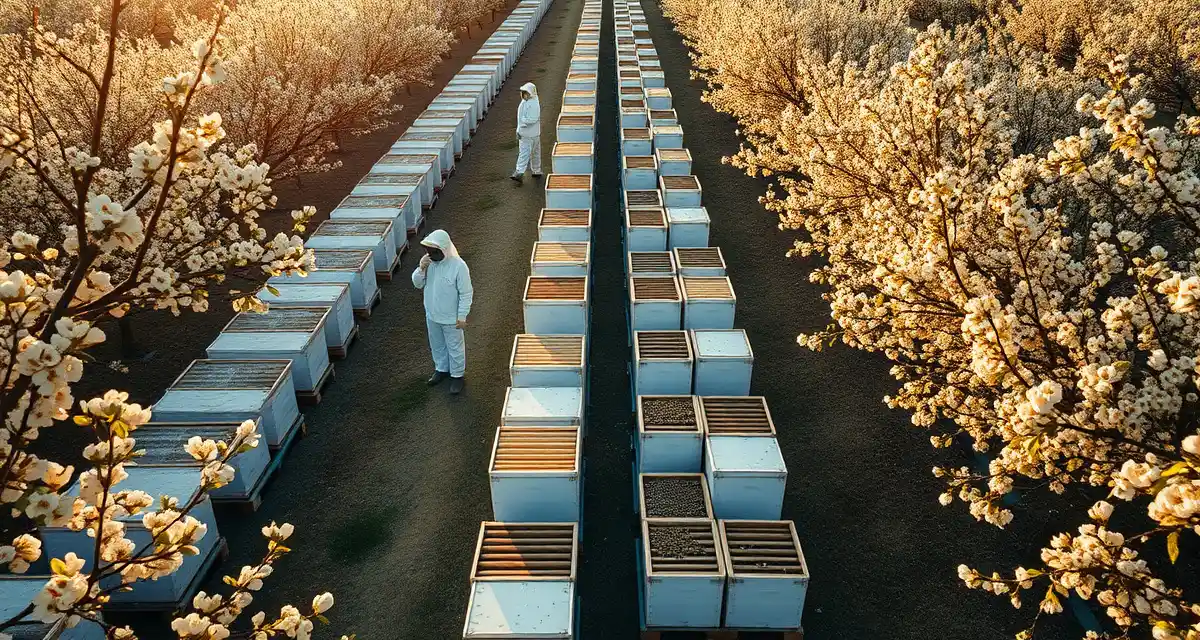
Case Study: Managing 25 Almond Contracts with PollenOps
Twenty-five simultaneous almond contracts across 2,000 hives generates roughly $400,000 in a single bloom season. It also generates 25 growers who each want confirmation of delivery, 25 deposit transactions to track, 25 strength documentation requirements, 25 delivery windows that have to be coordinated without overlap, and 25 invoices at season end.
That's not a workload you manage with a spreadsheet and good intentions. This case study covers how a California-focused 2,000-hive operation used PollenOps to make 25 simultaneous contracts manageable.
TL;DR
- California almond pollination consumes roughly 80% of the US commercial hive population every February, making it the most supply-constrained pollination market in the country.
- Per-hive rates have held between $185 and $220 for 6-8 frame colonies over recent seasons.
- Contracts are typically signed October through November for the following February season; operators without agreements by December are working from a weak position.
- Hive strength minimums range from 6 to 8 frames of bees depending on the grower, with premium-strength colonies commanding $200-215/hive.
- varroa management, documentation, and logistics coordination in the 6-8 weeks before delivery determine whether almond season is profitable or a breakeven event.
The Scale of Multi-Contract Almond Season
A single almond contract might cover 80-120 hives placed across 40-60 acres with a single grower. Multiply that by 25 and you're talking about:
- 25 different landowners or farming entities, each with their own communication preferences
- 25 separate delivery windows spread across a 3-week bloom period (you can't deliver all 2,000 hives on the same day)
- 25 pre-move strength assessments that have to be documented and available
- 3-5 truck crews operating simultaneously, each responsible for different delivery sequences
- 25 deposit transactions in January-February, some via wire, some check, some ACH
- Bloom timing variables: the Central Valley has temperature gradients from the Sacramento Delta to Fresno that shift bloom timing by 7-10 days across your contract portfolio
Managing this manually is how contracts get missed, deliveries get confused, deposits get lost in inboxes, and growers end up calling you in February to ask where their bees are.
Contract Organization Before the Season
The operator's pre-season workflow in PollenOps starts in October:
Renewal outreach and contract generation: Returning growers from the prior season get an early outreach and contract renewal offer. New contracts are entered into PollenOps as each grower commits. By November 1, the operator has a clear picture of how many contracts are locked and how much capacity is still available to allocate.
Delivery sequence planning: With all 25 contracts in the platform, the delivery calendar shows the full February bloom window with each contract's target delivery date. Contracts at higher elevation or northern locations (where bloom runs 5-7 days later) are scheduled toward the end of the delivery window. Lower-elevation and earlier-bloom orchards go first.
Deposit tracking from the start: Every contract in PollenOps has a payment record attached. When January arrives and deposit invoices go out, the dashboard immediately shows which deposits have come in and which are outstanding. In prior seasons, this tracking lived in an email folder and occasional spreadsheet updates. With PollenOps, the operator checks the dashboard daily and follows up on outstanding deposits without hunting through email.
Truck crew assignment: Each of the three truck crews is assigned a specific subset of contracts for delivery. PollenOps shows each crew's delivery schedule and the GPS locations for their assigned orchards.
During Almond Season: Managing 25 Active Placements
Once deliveries start, the platform becomes the real-time status board for the entire operation:
Delivery confirmation: When a crew completes a delivery, they do a yard check-in in PollenOps - GPS pin confirmed, hive count entered, strength assessment recorded. That check-in automatically generates a delivery report that goes to the grower within 2 hours. The operator can see in real time which deliveries are complete and which are still pending.
Bloom timing alerts: PollenOps bloom timing alerts, calibrated to Central Valley conditions and the specific location of each orchard, fire 5-7 days before 10% bloom at each site. With contracts spread from the Sacramento Valley to Fresno, bloom timing alerts at different orchard locations let the operator adjust delivery sequencing if one area is tracking ahead of or behind typical timing.
Grower communication at scale: When a weather event threatens to change timing, the operator can send updates to all 25 growers in a single action through PollenOps rather than making 25 individual calls or emails. Mass communication with personalized contract details is faster and more professional than doing it individually.
Tracking outstanding deposits against delivery dates: No deposit, no bees. The platform's dashboard view shows, alongside each contract's scheduled delivery date, whether the deposit has been received. Contracts with outstanding deposits trigger an automatic follow-up reminder 10 days before scheduled delivery.
End-of-Season Invoicing: From Days to Hours
In the spreadsheet era, the operator's post-season invoicing process for 25 contracts took 3-4 days:
- Pull up the contract spreadsheet
- For each contract, verify the delivery record (in email or a separate tracking document)
- Calculate the balance due (total contract minus deposit already collected)
- Create an invoice in a word processor
- Email or mail the invoice
With 25 contracts, that's 25 iterations of a manual process, with multiple places where errors can enter.
In PollenOps, the invoicing process for all 25 contracts takes one afternoon. The platform generates invoices from the contract records (which already contain the rate and hive count) and the delivery records (which already contain the delivery date and actual hive count). The balance due calculates automatically against the deposit already recorded. The operator reviews, approves, and sends all 25 invoices in a single session.
The first season using PollenOps for almond invoicing, the operator discovered three contracts where the actual delivered hive count differed slightly from the contracted count - a natural result of last-minute strength assessments that required substituting a few hives. In the old system, these discrepancies might have created invoice disputes because the documentation was unclear. In PollenOps, the delivery record showed exactly what was delivered, the invoice reflected the actual count, and the discrepancy was noted transparently with no dispute.
The Revenue Impact of Better Contract Management
The operator estimates 10-15% revenue protection from error reduction since moving to PollenOps. This comes from:
Fewer missed deposits: The prior season, two growers paid their full contract balance post-bloom rather than the 50% deposit structure because the deposit invoices got lost in email. PollenOps automated reminders ensure deposit invoices get followed up consistently.
Accurate invoicing: Correctly invoicing the actual delivered hive count (rather than the contracted count, which sometimes differed slightly at delivery) avoids disputes and occasionally captures additional revenue where the delivered count exceeded the contracted minimum.
Faster collections: Post-season invoices sent earlier (because generation is faster) collect faster. Average days-to-payment improved by about 12 days in the first year, which has meaningful cash flow implications when you're waiting on $200,000+ in almond balance payments while paying for Pacific Northwest contracts.
Frequently Asked Questions
How do you manage 25 simultaneous almond contracts?
The key is having all 25 contracts in a single platform where you can see delivery schedule, payment status, and bloom timing alerts in one view rather than across multiple spreadsheets and email threads. PollenOps lets the operator manage delivery sequencing based on bloom timing and truck crew availability, track deposit status for all contracts in real time, and generate delivery confirmations to all 25 growers without 25 individual communications. Scale doesn't work without systems.
What features does PollenOps use for multi-contract almond season management?
The primary features for multi-contract almond management are the contract calendar (showing all delivery dates in a single view), payment tracking (deposit and balance status for each contract), GPS yard check-in with automated delivery report generation, bloom timing alerts calibrated to specific orchard locations, and bulk invoice generation at season end. Together these features replace the combination of spreadsheets, email folders, and manual documentation that multi-contract operations otherwise rely on.
How did PollenOps change the end-of-season invoicing process?
Invoicing 25 contracts went from a 3-4 day manual process to a single afternoon session. Invoices generate from the contract and delivery records already in the platform - the operator reviews and sends rather than building each invoice from scratch. The first year, the operator also caught discrepancies between contracted and delivered hive counts that in prior seasons might have generated disputes. Transparent documentation at delivery means invoices reflect reality, not assumptions.
How early should almond pollination contracts be negotiated?
Large almond growers and broker networks begin securing hive commitments in July and August for the following February season. Written contracts are typically signed October through November. Operators who do not have signed agreements by December are working from a weak position since most quality hive inventory is already committed. Start grower outreach in mid-summer and target signed agreements before Thanksgiving.
What documentation is required for hive delivery to California almonds?
California requires a Certificate of Health for out-of-state colonies, issued by the origin state's apiary inspection program within 30 days of entry. The certificate must certify freedom from American foulbrood, European foulbrood, and Varroa destructor below treatment threshold. Some states require small hive beetle freedom for California entry. In addition, many growers now expect documentation of pre-delivery mite counts confirming colonies are below threshold.
What happens to hives after almond season ends in late March?
Post-almond options include moving north for Pacific Northwest cherry or apple pollination in April-May, routing to Michigan or Maine blueberries in May-July, transitioning to summer honey yards in North Dakota or Montana, or staying in California for splits and rebuilding. The right choice depends on hive strength coming out of almonds and downstream contract commitments. Operators who plan their full-year circuit in advance can optimize both pollination revenue and honey production.
Try These Free Tools
Sources
- USDA Agricultural Research Service
- Bee Informed Partnership
- American Beekeeping Federation (ABF)
- Almond Board of California
- University of California Cooperative Extension
Get Started with PollenOps
Almond season is the revenue event that defines the commercial beekeeping year, and the details -- contract terms, delivery timing, hive strength documentation, and invoicing -- determine whether the season is profitable. PollenOps manages the full almond contract lifecycle from quote to final payment, with yard tracking, crew scheduling, and grower communication built in. See how it works for operations from 200 to 5,000 hives.