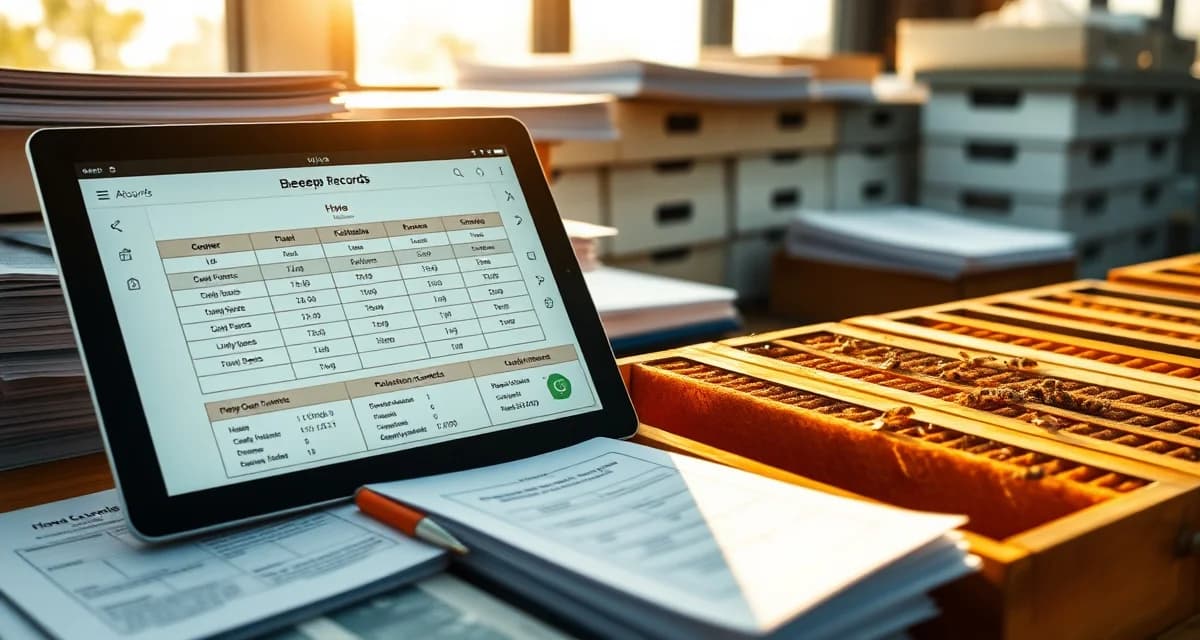
Building a Pollination Contract Database: Grower Records and History
A grower database built over 10 seasons becomes a competitive moat. It's the most valuable business asset in commercial pollination. Operators with documented grower history win renewal contracts at 40% higher rates than those working from memory.
This guide covers what to track, how to structure your grower database, and how PollenOps serves as both a contract management platform and a grower CRM.
TL;DR
- A well-written pollination contract covers hive strength requirements, payment terms, delivery/removal windows, pesticide liability, and dispute resolution.
- Standard payment structure is 50% on delivery and 50% on removal; push for no longer than 14-day net on the back half.
- Hive strength disputes are the most common source of non-payment; third-party inspection at delivery is the cleanest resolution.
- Pesticide kill provisions should require grower notification 24-48 hours before any application within foraging range of placed hives.
- Contracts signed by November have stronger pricing leverage than those negotiated in December or January.
What Belongs in a Grower Database
A pollination grower database is more than a contact list. It's a multi-season record of every dimension of your relationship with each grower.
Contact and business information:
- Grower legal name and business entity
- Mailing address and billing contact
- Primary contact phone (cell and office)
- Email address
- Secondary contacts (spouse, ranch manager, agronomist)
Property information:
- Orchard or field GPS coordinates
- Total acreage and pollination-relevant acreage
- Crop varieties planted (almond varieties, blueberry types, etc.)
- Water source locations near potential yard sites
- Road access details and weight restrictions
- Gate codes and access procedures
Contract history:
- Year-by-year contracts with hive count, rate, and payment terms
- Delivery dates and bloom timing for each season
- Strength documentation for each delivery
- Payment history (paid on time, late, partial disputes)
- Any issues or notes from each season
Grower preferences and relationship notes:
- Communication preferences (phone vs email vs portal)
- What matters most to this grower (timing precision, documentation, low disruption)
- Their crop management style (intensive, conventional, organic, transitional)
- Their relationship with other beekeepers (do they use multiple operators?)
Competitive intelligence:
- Which beekeepers also serve this grower
- What rate you believe competitors are charging
- Whether this grower shops their contract around or maintains loyal relationships
Why This Data Wins Renewals
When you sit down for a renewal conversation with a grower who has 3-4 contract seasons recorded in your database, you bring something competitors don't have: institutional knowledge.
You know that Smith Ranch always has late-season rain events in the second week of February that can compress the delivery window. You know that the Peterson operation pays on time but always starts at a low offer that's 10% below their actual budget. You know that Gonzalez Farms added a new 200-acre block this year and hasn't contracted pollination for it yet.
That knowledge is worth money. It makes you a partner in the grower's operation, not a vendor they could replace with whoever's cheapest this year.
An operator with 5+ seasons of data on a grower has insight that a competing beekeeper approaching that grower cold simply can't replicate. The database is the moat.
Using PollenOps as a Grower CRM
PollenOps doesn't call itself a CRM, but its grower records function as one for pollination operations.
What PollenOps stores for each grower:
- All active and historical contracts with full term records
- Delivery records for every season, timestamped and GPS-tagged
- Strength assessment records for every delivery
- Payment history against each contract
- Portal access logs (when they reviewed their data)
- In-platform communications
This creates a grower history that accumulates automatically with normal PollenOps use. You don't need to manually maintain a separate grower database. The records that result from running your business in PollenOps are the database.
What to add manually:
PollenOps's grower records are strong on transactional data (contracts, deliveries, payments) and less complete on relationship context. Use the notes field in each grower record to add:
- Grower preferences and communication style
- Important personal details (family operation, key decision makers)
- Observations from renewal conversations
- Information about their operation that doesn't fit standard contract fields
Building the Database Strategically
A grower database that took 10 seasons to build can't be recreated quickly, but it can be started at any time. The key is capturing every season's data while you're in it.
Year 1 priorities:
- Enter accurate contact and property information for every grower
- Document every contract with full terms
- Record every delivery with timestamps and assessment data
- Note any issues or standout moments in the season
Years 2-5:
- Each season adds a layer of historical context
- Trends become visible: which growers grow their acreage, which downsize, which always negotiate, which always pay fast
- You start predicting grower behavior rather than reacting to it
Year 5+:
- You have a multi-season record that genuinely informs your strategy
- Renewal conversations are grounded in specific data from specific seasons
- Grower loyalty is higher because you demonstrate you know their operation
For pollination contract renewal strategies and how historical contract data supports stronger renewal negotiations, PollenOps provides the contract management platform that makes the database a byproduct of your normal workflow.
Frequently Asked Questions
What information should be in a pollination grower database?
A complete pollination grower database covers four categories: contact and business information (legal name, addresses, phones, email, decision makers), property information (GPS coordinates, acreage, variety plantings, road access, water sources), contract history (multi-season records of hive counts, rates, delivery dates, payment history, any disputes), and relationship notes (communication preferences, what matters to this grower, competitive intelligence). The property and contract history sections are most directly valuable for renewal negotiations. The relationship notes are most valuable for building the kind of rapport that produces above-market renewal rates.
How do you use past contract data to improve renewal negotiations?
Past contract data provides the factual foundation for renewal negotiations. If your records show you delivered 6% above minimum strength on average over three seasons, you can cite that number when justifying a rate increase. If a grower always pays within 15 days, you can offer a slight discount for early payment with confidence they'll take it. If a season had an unusual weather event that compressed your delivery window, the documented bloom timing from that year explains why your delivery date differed from the contract's historical average. Data transforms negotiations from two people with different memories of the same events into two people looking at the same documented facts.
How does PollenOps serve as a grower database and CRM?
Get Started with PollenOps
Managing pollination contracts across multiple growers and crops is where most commercial operations have the most to gain from better systems. PollenOps centralizes contract lifecycle management from initial quote through signed agreement, delivery documentation, and final invoice. Try it for your next season.
What are the most common clauses in a commercial pollination contract?
A standard commercial pollination contract covers: hive strength minimums at delivery, payment terms (typically 50% on delivery, 50% on removal), delivery and removal dates, pesticide notification requirements, liability provisions for colony losses, truck access and yard location details, and dispute resolution procedures. Force majeure clauses addressing crop failure and operator inability to deliver the full hive count are also standard in well-written contracts.
How should pesticide liability be addressed in pollination contracts?
The contract should require growers to notify operators at least 24-48 hours before any pesticide application within foraging range (2-3 miles), specify the operator's right to remove hives immediately upon notification, and define liability for documented colony losses attributable to pesticide exposure. Without this clause, recovering compensation for pesticide kills requires proving causation after the fact, which requires lab testing, communication records, and timestamped photos of dead bees collected before cleanup.
What is a typical contract renewal strategy for commercial beekeepers?
Most successful commercial operators begin renewal conversations with existing growers in July, confirming the coming season's hive count and rate before new grower outreach. Existing grower relationships command better pricing stability than new contracts and require less pre-season sales effort. Sending growers a season-end report documenting hive placements and colony performance reinforces the relationship and creates a natural opening for renewal discussion.
Try These Free Tools
Sources
- USDA Agricultural Research Service
- Bee Informed Partnership
- American Beekeeping Federation (ABF)
- American Honey Producers Association
- Project Apis m.