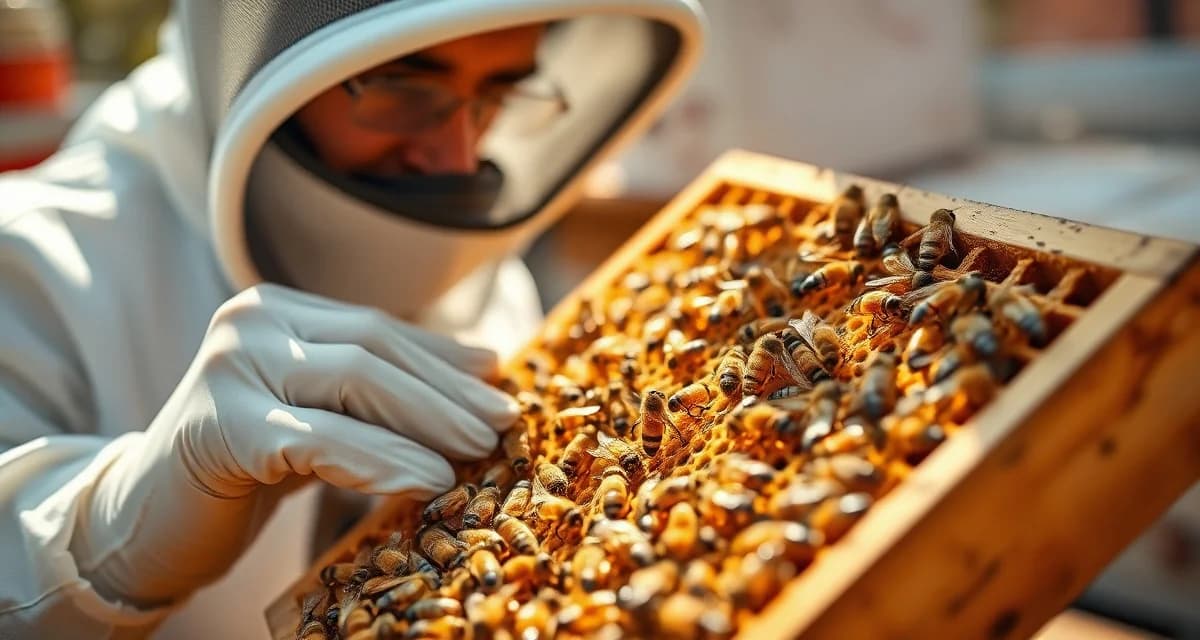
Africanized Honey Bees: What Commercial Beekeepers in the Southwest Need to Know
Africanized honey bees (AHB) have established a permanent presence across much of the Southwest and are an ongoing management reality for any commercial beekeeper operating in Arizona, New Mexico, Texas, and parts of California. Arizona has strict regulations on queen sources and colony genetics in its Africanized zones. Understanding how AHB regulations work, how they affect your queen sourcing decisions, and how to document compliance is essential for Southwest operations.
AHB are not a rare edge-case concern. Feral swarms in Arizona, southern California, New Mexico, and southern Texas have high rates of Africanized genetics. Commercial colonies that requeen naturally in these zones frequently incorporate AHB genetics. The regulatory environment exists because Africanized colonies can be dangerous, and commercial beekeepers bear responsibility for managing their colonies' genetics actively.
TL;DR
- Commercial beekeeping operations face two primary management challenges: operational logistics (hive health, transport, placement) and administrative coordination (contracts, payments, documentation).
- Most disputes and revenue losses in commercial beekeeping are preventable with better documentation and clearer contract terms.
- The operations that run most profitably are those with disciplined systems for tracking hive health, contract status, and fleet logistics in one place.
- PollenOps is built specifically for the operational complexity of commercial-scale pollination services, not adapted from a hobbyist tool.
- The most important management decisions (treatment timing, contract renewal, hive allocation) require accurate current data to make well.
Which States Have AHB Regulations
Arizona has the most developed AHB regulatory framework for commercial operations. The AHB zone covers most of the state south of the Mogollon Rim, including all major agricultural areas. Arizona's Department of Agriculture has specific requirements for queen sourcing documentation and may evaluate colony temperament during inspections.
California has confirmed AHB presence in Imperial County and parts of San Bernardino and Riverside counties in the southern California desert. The California Department of Food and Agriculture monitors AHB spread and has colony management protocols that apply to operations in affected areas.
New Mexico has AHB across the southern portion of the state and in the Rio Grande Valley. The New Mexico Department of Agriculture tracks AHB and requires commercial operators to be aware of their management responsibilities in confirmed AHB counties.
Texas has one of the largest AHB distributions in the country, covering most of the southern half of the state. Texas's decentralized apiary regulation means AHB management falls largely on individual operators rather than a state inspection program, but destination states may ask about whether colonies spent time in Texas AHB zones.
For state-specific regulatory requirements, see the individual state regulation guides for Arizona and state apiary registration.
How AHB Zones Affect Queen Sourcing
The most direct commercial impact of AHB zones is on queen sourcing decisions. Commercial operations working the Southwest should source queens from certified queen producers in non-AHB areas or from producers with documented genetics testing programs.
Practical queen sourcing approaches for Southwest operators include:
- Sourcing from Hawaii, which is varroa-free and AHB-free, providing clean genetics that can command premium performance
- Working with certified queen producers in California's Central Valley or Pacific Northwest who test colony genetics
- Maintaining queen rearing programs that use breeder queens from verified non-AHB stock
The cost difference between generic queens and AHB-free certified queens is real but manageable at commercial scale. The cost of an AHB incident, including liability exposure, regulatory response, and public relations damage, is far higher.
Requeening Programs in AHB Zones
Annual or semi-annual requeening is the practical management response to AHB zone operations. A colony that loses its queen in an AHB zone and raises a replacement from whatever local drones are available will often Africanize within one to two generations. Systematic requeening with known-genetics queens prevents this.
For a 500-hive operation running the Southwest circuit, this means a requeening budget and schedule that accounts for the higher frequency required in AHB zones versus northern states where natural requeening risk is lower.
Tracking queen installation dates and source documentation in your commercial hive health management system gives you the records to demonstrate AHB compliance when a state inspector asks.
Documenting AHB Compliance
Arizona and California apiary inspectors may ask for documentation of queen source and installation history when inspecting operations in AHB zones. Having records that show queen purchase receipts, installation dates, and source producer information demonstrates that you're actively managing genetics.
Your documentation should include:
- Queen purchase invoices with producer identification
- Queen introduction records by hive
- Requeening dates
- Any colony temperament assessments
If you operate in multiple states, this documentation also helps you demonstrate to destination states that colonies which spent time in AHB zones were properly managed and are not AHB-genetics colonies.
Frequently Asked Questions
What states have Africanized honey bee regulations for commercial operations?
Arizona has the most developed AHB regulatory framework, covering most of the state south of the Mogollon Rim. California has AHB regulations for confirmed AHB counties in the southern desert region. New Mexico and Texas also have AHB presence, though Texas's decentralized apiary system means state-level AHB regulations are less developed. Hawaii bans all bee imports partly to protect its AHB-free status. Operators working any of these states should contact the relevant state agriculture department to understand current AHB-related requirements for commercial operations.
How do Africanized bee zones affect queen sourcing for commercial beekeepers?
Working in AHB zones essentially requires that you source queens from certified non-AHB producers and maintain an active requeening schedule to prevent natural requeening from incorporating local feral AHB genetics. This increases your queen cost and requires more systematic colony management than operations in non-AHB states. Many Southwest commercial operators source queens from Hawaii or Pacific Northwest producers and requeen annually or semi-annually. Some operations maintain their own queen rearing programs using vetted breeder stock to control genetics costs.
How do you ensure compliance with AHB regulations in the Southwest?
The core of AHB compliance is demonstrated genetics management: sourcing queens from verified non-AHB producers, documenting queen purchases and installations by hive, and maintaining regular requeening schedules. Keep purchase receipts, queen introduction records, and any genetics testing documentation. Make these records available if an Arizona or California inspector asks. Actively monitor your colonies for temperament changes, which can indicate requeening with AHB genetics has occurred. When in doubt about whether a colony has become Africanized, requeen it before it creates a problem at a yard site.
What is the difference between commercial and hobby beekeeping?
Commercial beekeeping is distinguished by scale (typically 100+ hives, often 500-5,000+), revenue source (pollination contracts and bulk honey sales rather than local honey retail), and management approach (systematic protocols applied across yards rather than individual colony attention). Commercial operators manage bees as an agricultural enterprise, with the administrative, regulatory, and logistical complexity that entails. Most commercial operators derive the majority of their income from pollination services; honey production is a supplementary revenue stream.
How many hives are needed to make commercial beekeeping a full-time income?
Most beekeeping economists put the full-time commercial threshold at 500-800 hives, assuming efficient operations management and a combination of pollination and honey revenue. At 500 hives and $200/hive for almond pollination, almond season alone generates $100,000 in gross revenue before expenses. Net margins depend on operational efficiency, but well-run operations can achieve 30-50% net margins on pollination revenue. Additional crops and honey production improve per-hive economics but require additional management capacity.
What is the annual revenue potential for a 1,000-hive commercial operation?
A 1,000-hive operation running an almond season ($200/hive) plus blueberry or apple contracts ($80-100/hive) plus summer honey production ($25-40/hive after extraction costs) can generate $300,000-360,000 in annual gross revenue. Net margins after transport, crew, equipment, and hive replacement costs typically run 25-40% for well-managed operations, putting net income at $75,000-145,000 annually. The specific number depends heavily on circuit efficiency, loss rates, and contract quality.
Try These Free Tools
Sources
- USDA Agricultural Research Service
- Bee Informed Partnership
- American Beekeeping Federation (ABF)
- American Honey Producers Association
- Project Apis m.
Get Started with PollenOps
Managing a commercial beekeeping operation involves more data, more deadlines, and more moving parts than any general-purpose tool was designed to handle. PollenOps brings contracts, yard records, health documentation, and fleet logistics together in one platform built for the realities of commercial-scale beekeeping.