How to Assess Hive Strength for Pollination Contracts
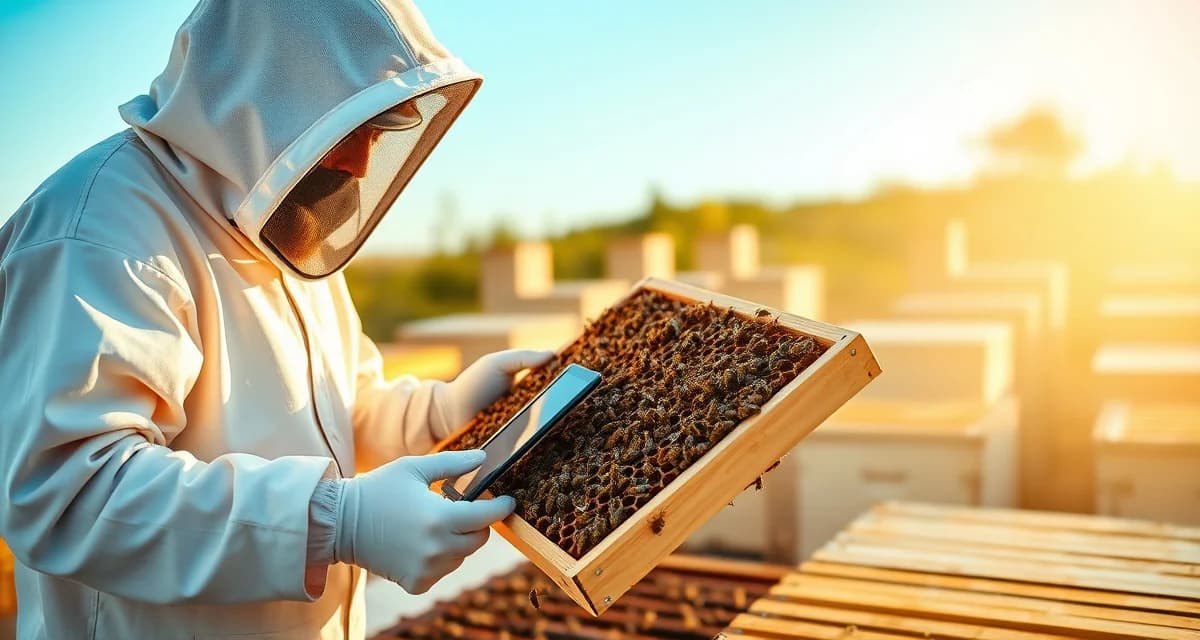
A trained inspector can assess 50 hives per hour using PollenOps's guided checklist on a tablet. That's the throughput you need to evaluate a full yard before a major delivery without it becoming a multi-day project.
Getting there requires both a consistent assessment methodology and a documentation system that turns field observations into a contract-compliant report. This guide covers both.
TL;DR
- A well-written pollination contracts covers hive strength requirements, payment terms, delivery/removal windows, pesticide liability, and dispute resolution.
- Standard payment structure is 50% on delivery and 50% on removal; push for no longer than 14-day net on the back half.
- Hive strength disputes are the most common source of non-payment; third-party inspection at delivery is the cleanest resolution.
- Pesticide kill provisions should require grower notification 24-48 hours before any application within foraging range of placed hives.
- Contracts signed by November have stronger pricing leverage than those negotiated in December or January.
Why Pre-Move Assessment Is Non-Negotiable
Growers who specify minimum hive strength in contracts see 25% better crop set outcomes. Growers know this, which is why strength specifications have become standard in commercial pollination contracts.
When a grower specifies 7 frames of bees minimum and you show up with hives averaging 5.5 frames, two things happen: the grower's crop is underserved, and you have a contract dispute on your hands. Moving understrength hives is the leading cause of contract dispute claims in commercial pollination.
The pre-move assessment prevents this by flagging non-compliant hives before they're loaded, not after the grower has seen them at the site.
What Frames Should I Count for a Hive Strength Assessment?
Frames of bees: The primary metric in most commercial contracts. Open the hive and assess each frame individually.
For each frame:
- Estimate the percentage of the frame faces covered with bees (0%, 25%, 50%, 75%, 100%)
- Convert to frame equivalents: both faces 100% covered = 1 full frame; one face covered = 0.5; etc.
- Sum across all frames in the box
The result is a decimal number (e.g., 7.2 frames of bees) that you record for that hive.
Frames of brood: The secondary metric that indicates colony health trajectory. Count frames with any brood (eggs, larvae, or capped brood visible on either face) and separately estimate the quality (solid pattern vs. spotty).
Frames of brood matter because a colony with 7 frames of bees but only 1 frame of brood is declining, which means it will be below your contract minimum before the service period is complete. A colony with 6 frames of bees and 5 frames of capped brood is building, meaning it will be stronger by the end of the contract than it is today.
Step-by-Step Pre-Move Assessment Process
Before opening the first hive:
Log into PollenOps and navigate to the pre-move assessment for the specific yard and contract. The hive strength assessment checklist is pre-loaded with your contract's minimum strength specification so you can see immediately whether each hive clears the bar.
For each hive:
- Light your smoker appropriately (enough to work calmly, not to drive bees out of the box)
- Open the hive and work through the frames systematically, outer to inner
- For each frame, note coverage percentage on each face
- Count brood frames and note the quality of the brood pattern
- Note any red flags: no visible eggs, no queen signs, unusual mortality, signs of disease
- Log the assessment in PollenOps before moving to the next hive
The mobile checklist guides you through each observation category and records the data in real time. You're not writing notes on a pad and transcribing later; the assessment record exists in the platform as you complete each hive.
When you've completed the yard:
PollenOps generates a strength assessment summary showing:
- Average frames of bees across all assessed hives
- Distribution of strength scores (how many hives at 8+, 7-7.9, 6-6.9, below 6)
- How many hives meet your contract's minimum specification
- Which specific hives are below minimum and need attention
This summary is the report you share with your grower if they request strength documentation, or that you reference when deciding which hives to load.
What Is the Difference Between Total Frames of Bees and Frames of Brood?
This question comes up frequently, and the distinction matters.
Total frames of bees: The current adult bee population. This is what directly determines how many foragers will be working the crop during the contract period. It's the metric most contracts specify.
Frames of brood: The colony's growth trajectory indicator. Brood frames tell you whether the colony is expanding (lots of healthy brood = more bees coming), stable, or declining (little brood = fewer bees in 3 weeks than today).
You need both numbers for a complete picture:
| Scenario | Frames of Bees | Frames of Brood | Interpretation |
|---|---|---|---|
| Building | 6 | 6 | Will be 7-8 by end of contract |
| Stable | 7 | 4-5 | Will hold through the contract |
| Declining | 7 | 1-2 | May drop to 5-6 by end of contract |
| Failing | 8 | 0 | Queen problem; will crash |
A colony at "7 frames of bees" can mean very different things depending on the brood frame count.
How Do I Document Hive Strength for a Grower or Contract Inspector?
Your assessment documentation needs to show:
- The date and yard location of the assessment
- The individual strength score for each assessed hive
- The summary statistics (average, distribution, percentage meeting minimum)
- The name of the person who performed the assessment
- Whether each hive meets the contracted minimum specification
The PollenOps assessment report includes all of these in an exportable PDF format. You can share the report directly from the platform as a PDF attachment or as a shareable link.
For growers who require formal documentation before releasing payment, this report is the document they need. For growers who ask informally whether your bees are strong, it's the evidence that makes your answer credible.
Handling Hives That Don't Meet the Minimum
When your assessment reveals hives below the contracted minimum, you have options:
Leave the understrength hives behind: Load only the hives that meet the minimum. If you have 120 hives assessed and 8 are below the minimum, you deliver 112 instead of the contracted 120. Notify your grower immediately and discuss how to address the shortfall.
Combine understrength hives: Combining a 5-frame colony with another 5-frame colony gives you one 10-frame colony. Depending on your total hive count target and the degree of understrength, combining can help you meet your delivery commitment.
Delay the understrength hives: For early-season assessments where bloom is still 2-3 weeks out, understrength hives have time to build. Re-assess those specific hives before delivery.
Renegotiate the contract quantity: If a significant portion of your fleet is below minimum and won't recover in time, the honest conversation with your grower about adjusting the contracted count is better than delivering understrength hives and creating a performance dispute later.
Frequently Asked Questions
What frames should I count for a hive strength assessment?
Count frames of bees (the primary metric: decimal estimate of adult bee coverage across all frames, summed to get total frames of bees) and frames of brood (the secondary metric: how many frames contain eggs, larvae, or capped brood, indicating colony growth trajectory). Most commercial contracts specify a minimum number of frames of bees. Frames of brood tells you whether that strength level will hold through the service period.
How do I document hive strength for a grower or contract inspector?
PollenOps assessment reports include the assessment date and yard location, individual strength score for each assessed hive, summary statistics (average, distribution, percentage meeting the contracted minimum), the name of the assessor, and compliance status against the contract specification. Reports export as PDF for sharing with growers or contract inspectors. The report is generated from your mobile field checklist completion, not assembled manually afterward.
What is the difference between total frames of bees and frames of brood?
Frames of bees measures the current adult forager workforce. Frames of brood measures colony growth trajectory. A colony with 7 frames of bees and 5 frames of healthy brood is building toward 8-9 frames. A colony with 7 frames of bees and 1 frame of spotty brood is declining toward 5-6 frames. For pollination contracts, both numbers matter: frames of bees tells you what you have today, frames of brood tells you what you'll have at the end of the service period.
What are the most common clauses in a commercial pollination contract?
A standard commercial pollination contract covers: hive strength minimums at delivery, payment terms (typically 50% on delivery, 50% on removal), delivery and removal dates, pesticide notification requirements, liability provisions for colony losses, truck access and yard location details, and dispute resolution procedures. Force majeure clauses addressing crop failure and operator inability to deliver the full hive count are also standard in well-written contracts.
How should pesticide liability be addressed in pollination contracts?
The contract should require growers to notify operators at least 24-48 hours before any pesticide application within foraging range (2-3 miles), specify the operator's right to remove hives immediately upon notification, and define liability for documented colony losses attributable to pesticide exposure. Without this clause, recovering compensation for pesticide kills requires proving causation after the fact, which requires lab testing, communication records, and timestamped photos of dead bees collected before cleanup.
What is a typical contract renewal strategy for commercial beekeepers?
Most successful commercial operators begin renewal conversations with existing growers in July, confirming the coming season's hive count and rate before new grower outreach. Existing grower relationships command better pricing stability than new contracts and require less pre-season sales effort. Sending growers a season-end report documenting hive placements and colony performance reinforces the relationship and creates a natural opening for renewal discussion.
Try These Free Tools
Sources
- USDA Agricultural Research Service
- Bee Informed Partnership
- American Beekeeping Federation (ABF)
- American Honey Producers Association
- Project Apis m.
Get Started with PollenOps
Managing pollination contracts across multiple growers and crops is where most commercial operations have the most to gain from better systems. PollenOps centralizes contract lifecycle management from initial quote through signed agreement, delivery documentation, and final invoice. Try it for your next season.