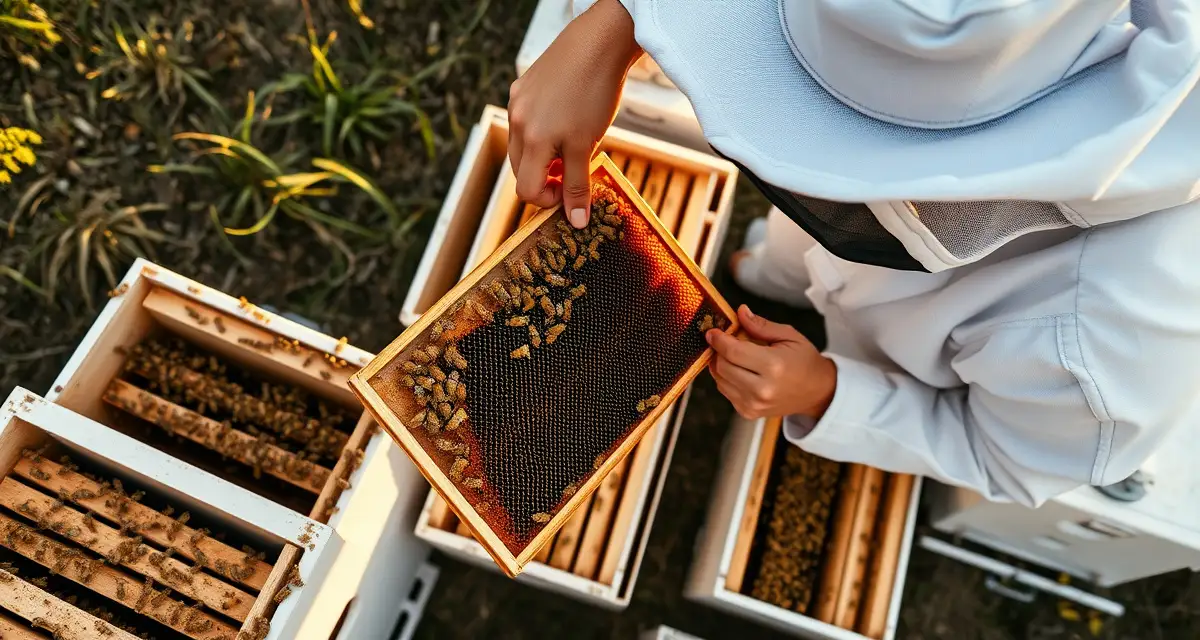
Varroa Management at Commercial Scale
Managing Varroa destructor in a hobbyist's apiary and managing it across a commercial operation of 500 to 5,000 colonies are fundamentally different problems. The biology is the same. The logistics, the economics, and the decision-making process are not. Commercial Varroa management requires treating mite pressure as an operational constraint that has to be scheduled around revenue commitments, worker capacity, and the seasonal calendar.
Why Scale Changes Everything
When a small-scale beekeeper misses a treatment window, a few colonies take a hit. When a commercial beekeeper misses a treatment window across 30 yards and 1,500 colonies, the losses can be financially catastrophic. Varroa doesn't wait. In high mite-pressure conditions, a colony can collapse in six to eight weeks. At scale, that's not a beekeeping problem; it's a business problem.
The other complicating factor is that commercial operations often have contractual obligations that restrict treatment timing. Pollination contracts frequently prohibit miticide application while bees are in the orchard. Formic acid and oxalic acid volatilize and can affect brood, and some products have explicit pre-bloom restrictions. If you have 800 colonies committed to almonds starting February 10, your treatment window before those colonies hit the road closes hard in late January.
Treatment Timing Around Pollination Contracts
The single most important concept in commercial Varroa management is working backward from your pollination commitment dates to establish treatment windows. This requires knowing your contract calendar months in advance and scheduling treatments by yard based on when those yards' colonies are moving.
A typical approach for an almond pollination operation:
After the previous season's pollination removal (typically early March), treat colonies coming out of almonds before they move to their summer yards. This post-almond treatment targets the phoretic mite population that built up during the treatment blackout period in the orchard.
Summer monitoring determines when the next intervention is needed. Most operations monitor by yard at 30 to 45 day intervals. When a yard hits the treatment threshold (commonly 2% to 3% mite infestation by alcohol wash), it gets treated. Summer treatments typically run July through September depending on location and mite pressure.
The pre-almond treatment window is the most critical. This treatment happens before colonies are loaded for California, typically October through early December. The goal is to knock mite populations down hard before the spring buildup when reproductive rates accelerate. Oxalic acid dribble or vaporization is widely used here because it's effective on phoretic mites and has no honey contamination concerns.
Batch Treating by Yard
Treating 1,500 colonies individually based on each colony's specific mite count is operationally impossible. Commercial operations use yard-level decision making: sample a representative subset of colonies in a yard, and if the yard-level average exceeds threshold, treat the entire yard.
This approach accepts that some colonies will be treated when they might not need it yet, and that's the right tradeoff. The labor cost of selective treatment at commercial scale exceeds the cost of treating all colonies in a non-threshold yard. It also simplifies record keeping and scheduling considerably.
Assign yards to treatment crews by geography and sequence the work to minimize truck miles. A crew treating yards in a cluster is more efficient than one zigzagging across the state. When treating with formic acid pads or oxalic acid vaporizers, you need each yard visit to be productive because the equipment setup time is fixed per yard regardless of colony count.
Treatment Product Selection at Scale
Commercial beekeepers typically work with a limited toolkit of approved miticides. Each product has tradeoffs around efficacy, temperature requirements, honey contamination risk, and labor intensity.
Formic acid (Mite-Away Quick Strips or generic equivalents) requires temperatures within a specific range (50 to 85 degrees F for most protocols) and has a significant brood kill risk at higher temperatures. It works through sealed brood and is one of the few treatments that reaches mites in capped cells. At commercial scale, formic acid is most practical in cooler conditions, fall and spring, when temperature windows are predictable. It's not a summer treatment in most of the US.
Oxalic acid is highly effective against phoretic mites but has limited efficacy when significant capped brood is present. The vaporization method (using an oxalic sublimator) is practical at commercial scale because one person can treat a yard quickly. Dribble application is slower and requires opening each colony. Fall and winter treatment during broodless periods or near-broodless periods is the ideal use case.
Amitraz (Apivar strips) has the advantage of working regardless of temperature and being effective through the brood cycle when used for the full 8-week recommended period. It requires two strip visits per treatment course (one to place, one to remove) and resistance concerns are real in some regions. It's a viable backbone treatment for operations that need reliable efficacy across variable temperature conditions.
Record Keeping for Compliance and Planning
Federal and state regulations require pesticide application records for commercial operations. Your treatment log for every yard needs to capture the product name and EPA registration number, the application date, the method, the applicator's name and any required license number, the colony count treated, and the pre-harvest interval.
Beyond compliance, treatment records are operational data. When you can look at three years of treatment history by yard, patterns emerge. Yards that consistently spike in August, yards where treatments seem less effective, yards that maintain low mite loads without aggressive intervention. This data informs your annual treatment calendar and helps you prioritize monitoring resources.
Connect your treatment records to your varroa mite monitoring commercial scale data so you can evaluate how well each treatment performed by comparing pre- and post-treatment mite loads. And connect both to your pollination contract management calendar so treatment blackout windows are visible when you're building the season's schedule.
Strong commercial beekeeping record keeping practices make all of this manageable. The data is only useful if it's captured consistently and organized so you can act on it.
Try These Free Tools
Sources
- United States Department of Agriculture
- National Honey Board
- American Beekeeping Federation
- Apiary Inspectors of America