Record Keeping for Commercial Beekeeping Operations
Running a commercial beekeeping operation without solid records is like flying blind. When you're managing 500, 1,000, or 5,000 colonies across multiple yards and states, memory doesn't cut it. You need systems that tell you exactly where every colony stands, what's been done to it, and what it needs next.
What Commercial Beekeepers Actually Need to Track
The data requirements for a commercial operation are fundamentally different from a hobbyist keeping a few hives in the backyard. At scale, you're tracking assets worth hundreds of thousands of dollars, navigating federal and state pesticide regulations, and fulfilling contractual obligations to growers who are counting on your bees.
Colony Inventory and Status
Every colony in your operation needs a unique identifier tied to its current location, equipment, and status. That means knowing which yard it's in, which beeyard within that location, and what box configuration it's running. Colony status should reflect current strength, whether it's a full production colony, a nucleus, or a colony being built up after a rough season.
Frame counts matter enormously in commercial work. When you're delivering bees for almond pollination and your contract specifies 8 frames of bees per colony, you need documented counts at delivery and again at pickup to handle disputes. Those frame counts need to be timestamped and tied to the specific inspector who made them.
Queen Tracking
Queen age directly affects colony productivity and temperament. A commercial operation should know the approximate age or introduction date of every queen in the yard. This tells you when to expect requeening needs, helps you anticipate spring buildup timing, and gives you a tool to manage defensive behavior in hives near populated areas.
Requeening records should include the source of the queen (your own rearing program or purchased), the date introduced, and confirmation of acceptance. When you're requeening 200 colonies in a week, having that data organized by yard and date lets you follow up efficiently on potential failures.
Honey Production by Yard and Season
Production records tied to specific yards let you evaluate locations over time. Some yards consistently outperform others due to forage quality, water access, or microclimate. Without multi-year production data, you're guessing when deciding where to winter bees or which new locations are worth developing.
Track extracted weights by extracting run, note which yards the supers came from, and record moisture content at extraction. This data feeds into your profitability analysis by location and helps you make decisions about which yards to keep and which to abandon.
Treatment Records and Pesticide Logs
Federal law requires pesticide application records for commercial operations, and many states have additional requirements. Your treatment log needs to capture the product name and EPA registration number, the colonies treated (or the yard if treating all), the date and method of application, the applicator's name, and pre-harvest intervals where applicable.
Treatment records also inform your varroa management commercial planning. When you can look back and see that a particular yard consistently needed emergency treatments in August, you know to prioritize monitoring there the following year.
Equipment Inventory
Commercial equipment management is its own challenge. Boxes, frames, feeders, and extracting equipment represent significant capital. Tracking equipment by condition and location helps you plan purchases, identify yards where equipment is deteriorating faster than expected (sometimes a sign of robbing pressure or excessive moisture), and account for losses at the end of each season.
Inspection Records
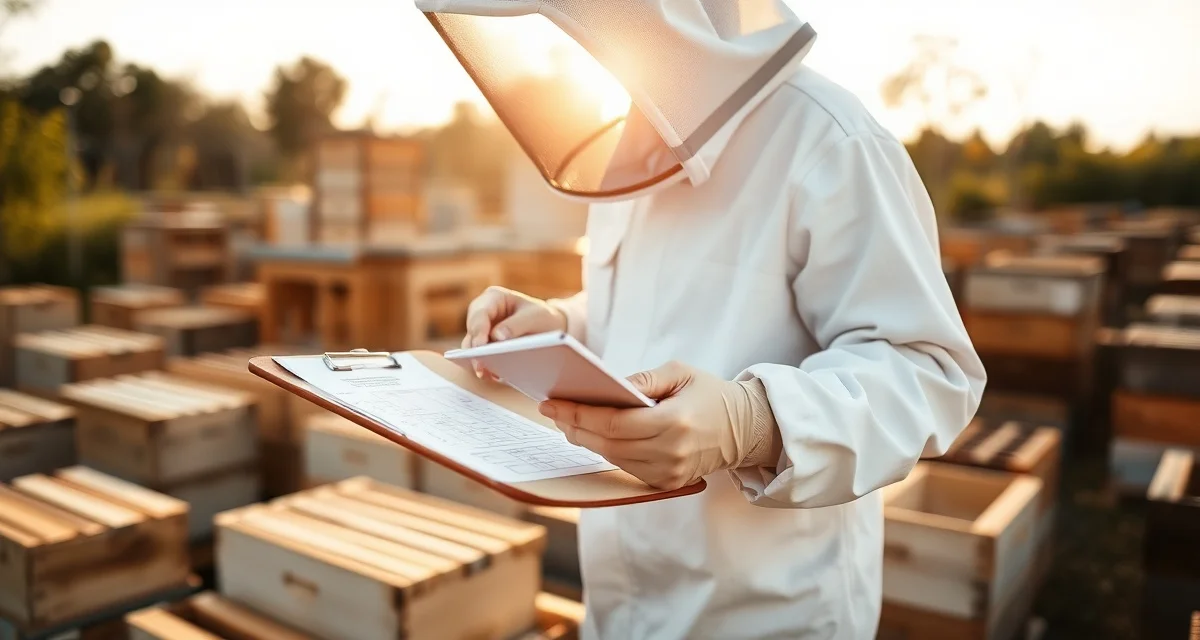
Every hive inspection should generate a record. For a commercial operation working at scale, that doesn't mean writing a paragraph about each colony. It means capturing structured data points: brood pattern quality, population estimate, queen presence (seen, eggs, or assumed), food stores, and any pest or disease observations.
Structured inspection data is useful. Narrative notes are not, at least not for trend analysis. When you need to identify all colonies across your operation that showed spotty brood in the last 60 days, you need searchable fields, not paragraphs in a notebook.
Tie inspection records to your varroa mite monitoring commercial scale data so you can correlate mite loads with colony performance metrics.
Yard Location Records
Your yard database should include more than just GPS coordinates. Document the landowner's contact information and any agreements about access or timing. Note forage resources within foraging range, typical bloom times, and any history of pesticide incidents. Record water source availability and any site-specific hazards.
Location history matters when you're making decisions about seasonal movement. A yard that's excellent for spring buildup but has poor summer forage should be scheduled accordingly, and that knowledge lives in your records, not in one person's head.
The Business Case for Better Records
Commercial beekeeping operates on thin margins. Bees die, contracts get disputed, regulatory inspectors show up. In all three situations, your records either protect you or expose you.
When a grower claims your colonies weren't up to contract strength at delivery, documented frame counts with timestamps and inspector names are the difference between getting paid and absorbing a loss. When a state apiarist asks about your varroa treatment history, a complete treatment log shows professionalism and keeps you out of compliance trouble.
The operations that survive and grow are the ones that treat record keeping as a core business function, not an afterthought. Pair your records with solid pollination contract management practices and you have documentation that protects your business from every angle.
Software built for commercial beekeeping makes consistent record keeping achievable at scale. When inspectors can log data from their phones in the yard and have it synced to a central database before they drive to the next location, the records actually get kept.
Try These Free Tools
Sources
- United States Department of Agriculture
- American Beekeeping Federation
- National Honey Board
- Association of Official Seed Certifying Agencies