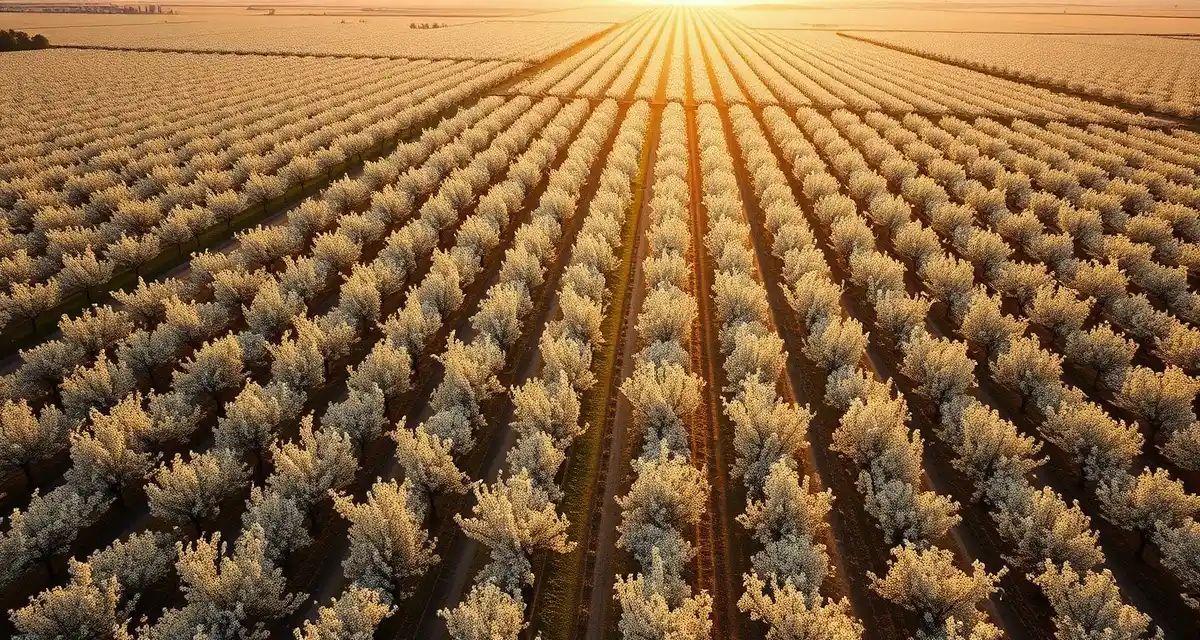
Almond Pollination Software for Kern County Beekeepers
Kern County hosts over 130,000 acres of almonds and is one of the earliest almond regions in the state, with bloom frequently starting 2 to 4 days earlier than standard Central Valley alerts in warm years. Kern County alerts in PollenOps fire on county-specific conditions rather than a valley-wide average, which means your delivery scheduling reflects Kern's warmer winters and earlier bloom onset rather than being tied to a Fresno or Sacramento average that doesn't fit.
The difference of 2 to 4 days in a crop that blooms for 14 to 21 days is not trivial. Arriving at Kern County orchards 2 days after peak bloom instead of 2 days before peak bloom is a 4-day effective positioning error that affects both your pollination outcome and your contract compliance if the grower's inspector counts colony deployment dates.
TL;DR
- California almond pollination consumes roughly 80% of the US commercial hive population every February, making it the most supply-constrained pollination market in the country.
- Per-hive rates have held between $185 and $220 for 6-8 frame colonies over recent seasons.
- Contracts are typically signed October through November for the following February season; operators without agreements by December are working from a weak position.
- Hive strength minimums range from 6 to 8 frames of bees depending on the grower, with premium-strength colonies commanding $200-215/hive.
- varroa management, documentation, and logistics coordination in the 6-8 weeks before delivery determine whether almond season is profitable or a breakeven event.
Kern County Almond Geography
Kern County almond production extends from the valley floor west of Bakersfield eastward to the foothills approaching the Tehachapi Mountains, and northward to the Delano and McFarland areas where Kern's production transitions to Tulare County.
The main Kern County production zones:
Bakersfield west and Shafter area: The concentrated production west of Bakersfield through the Shafter and Wasco corridor. Flat valley floor with excellent road access. Some of the highest-density almond production in Kern County.
McFarland and Delano corridor: Northern Kern County production approaching the Tulare County border. Transition zone between Kern's warmer conditions and the somewhat cooler mid-valley climate of Tulare.
Arvin and Lamont area: Southern Kern County production at higher elevation approaching the Tehachapi foothills. This higher-elevation area can actually bloom later than valley floor Kern County sites despite being in the same county.
Why Kern County Blooms First
Kern County's position at the southern end of the San Joaquin Valley means it accumulates winter heat units faster than northern valley counties. The southern valley's climate is influenced by warm air patterns from the Mojave Desert to the southeast, which moderates winter temperatures and accelerates the growing degree day accumulation that triggers almond bloom.
In a warm February year, Kern County's valley floor orchards may be at 10 percent bloom when Fresno County is at 2 to 3 percent bloom and Sacramento Valley almonds are still fully dormant. This creates both opportunity and challenge: operators who can stage early deliveries to Kern before moving north to serve Fresno and then Sacramento Valley operations capture the full valley bloom progression efficiently.
For operators staging across both Kern and Fresno counties, the typical delivery sequence is Kern first, then northern San Joaquin, then Sacramento Valley counties, with the full sequence often spread across 10 to 18 days as the bloom progresses northward.
Staging Contracts Across Kern and Fresno
Managing delivery sequences that cross county lines requires knowing your Kern and Fresno contracts' specific bloom windows simultaneously. An operator with 25 Kern County contracts and 30 Fresno County contracts needs a system that shows which Kern contracts need service first and when the Fresno contracts' bloom windows are opening.
PollenOps bloom alerts fire for each contract based on its local county conditions. When Kern County alerts start firing for your southernmost contracts, you can see simultaneously that your Fresno County alerts are still a few days away. This visibility allows you to sequence driver deployment: first delivery trucks to Kern, then a staged transition north to Fresno as the northern contracts' alerts fire.
The Central Valley almond software overview covers the broader management approach. For operators with contracts in both southern and northern San Joaquin counties, the staggered alert system across all contracted locations provides a real-time delivery prioritization view that no manual calendar system can replicate.
Kern County Market Rates and Contract Terms
Kern County almond rates in 2026 run $200 to $235 per hive for premium contracts, with standard commercial contracts at $190 to $220. The higher end of the range reflects both the early-season premium that Kern County growers sometimes pay for operators who can reliably deliver at the earliest bloom and the overall strong rate environment for documented certified-strength delivery.
Standard contract terms for Kern County are similar to other California almond markets: 8-frame minimum at delivery, bloom-stage trigger for placement timing, 30-day payment terms after delivery, and a cure period of 48 to 72 hours for colony replacement if below-threshold hives are identified at delivery inspection.
Kern County Grower Expectations
Kern County has large-scale commercial almond operations with professional management programs, including large farming companies and corporate growers who manage thousands of acres and contract for hundreds to thousands of hives per season. These growers expect the same professional documentation standards as Fresno County's commercial market.
New suppliers entering the Kern County market face competition from established operators with multi-year grower relationships. The path to Kern County contracts typically runs through: a strong referral from an existing grower, a demonstrated track record in adjacent counties, or a professional proposal with PollenOps documentation credentials that clearly distinguishes you from informal competitors.
Frequently Asked Questions
When does almond bloom start in Kern County compared to Fresno?
Kern County valley floor almonds typically bloom 2 to 4 days before Fresno County in warm years, and the gap can be up to 5 to 7 days in years with strong southern heat accumulation. In cold, even-temperature years, the difference may narrow to 1 to 2 days. The Kern-to-Fresno timing offset creates the basis for a staged delivery sequence where operators serve Kern contracts first and transition north to Fresno as the northern county's bloom window opens.
How do I stage contracts across both Kern and Fresno counties?
Treat Kern and Fresno as separate delivery phases rather than a single valley delivery. Kern contracts are your first delivery priority; Fresno contracts follow as Kern deliveries complete and the Fresno bloom alerts fire. PollenOps bloom alerts for each county's contracts fire on local conditions rather than a single valley average, so you see in real time which county's contracts need immediate service and which have more time. Driver team deployment follows the alert sequence: Kern-first trucks, then transition to Fresno as bloom progresses north.
What are the typical strength requirements for Kern County almond contracts?
Kern County almond contracts typically specify 8 frames of bees at delivery, consistent with the southern San Joaquin Valley commercial standard. Premium contracts and large corporate growers may require third-party inspection certificates or signed beekeeper certification of colony strength at delivery. Some contracts specify both frames of bees (population) and frames of brood (a more demanding standard that ensures the colony is actively rearing workers, not just maintaining an aging population). Confirm your specific contracted threshold in each Kern County contract before your pre-move assessment.
How early should almond pollination contracts be negotiated?
Large almond growers and broker networks begin securing hive commitments in July and August for the following February season. Written contracts are typically signed October through November. Operators who do not have signed agreements by December are working from a weak position since most quality hive inventory is already committed. Start grower outreach in mid-summer and target signed agreements before Thanksgiving.
What documentation is required for hive delivery to California almonds?
California requires a Certificate of Health for out-of-state colonies, issued by the origin state's apiary inspection program within 30 days of entry. The certificate must certify freedom from American foulbrood, European foulbrood, and Varroa destructor below treatment threshold. Some states require small hive beetle freedom for California entry. In addition, many growers now expect documentation of pre-delivery mite counts confirming colonies are below threshold.
What happens to hives after almond season ends in late March?
Post-almond options include moving north for Pacific Northwest cherry or apple pollination in April-May, routing to Michigan or Maine blueberries in May-July, transitioning to summer honey yards in North Dakota or Montana, or staying in California for splits and rebuilding. The right choice depends on hive strength coming out of almonds and downstream contract commitments. Operators who plan their full-year circuit in advance can optimize both pollination revenue and honey production.
Try These Free Tools
Sources
- USDA Agricultural Research Service
- Bee Informed Partnership
- American Beekeeping Federation (ABF)
- Almond Board of California
- University of California Cooperative Extension
Get Started with PollenOps
Almond season is the revenue event that defines the commercial beekeeping year, and the details -- contract terms, delivery timing, hive strength documentation, and invoicing -- determine whether the season is profitable. PollenOps manages the full almond contract lifecycle from quote to final payment, with yard tracking, crew scheduling, and grower communication built in. See how it works for operations from 200 to 5,000 hives.