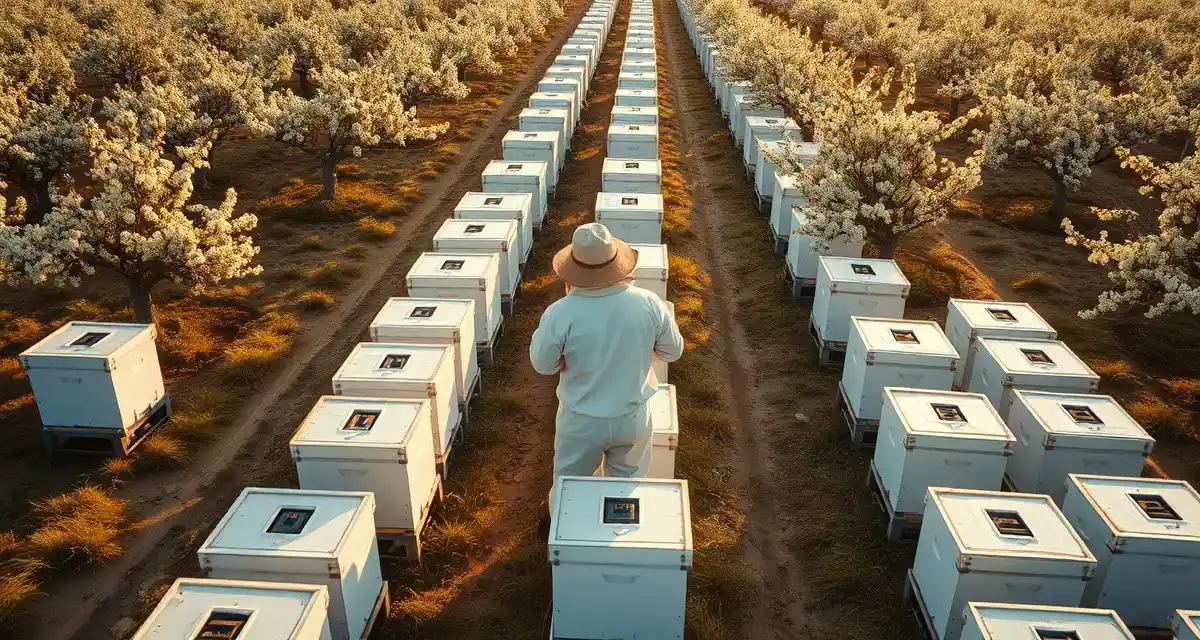
Almond Pollination in Fresno County: The Heart of California Almond Country
Fresno County holds more almond acreage than any other county in the United States. That single fact defines the logistics reality for commercial beekeepers during February. When you're placing hives for California almond pollination, Fresno County is often the core of the operation, the county where your largest contracts are, where your trucks spend the most time, and where the margin for logistical error is smallest given the density of competing operations.
The county requires more than 200,000 hives placed in February each year across its almond blocks. Every major commercial beekeeping operation in the country has at least considered Fresno County, and most of the large migratory operators have yards there. Understanding how this market works is essential for any beekeeper looking to build or grow a California almond contract portfolio.
TL;DR
- California almond pollination consumes roughly 80% of the US commercial hive population every February, making it the most supply-constrained pollination market in the country.
- Per-hive rates have held between $185 and $220 for 6-8 frame colonies over recent seasons.
- Contracts are typically signed October through November for the following February season; operators without agreements by December are working from a weak position.
- Hive strength minimums range from 6 to 8 frames of bees depending on the grower, with premium-strength colonies commanding $200-215/hive.
- varroa management, documentation, and logistics coordination in the 6-8 weeks before delivery determine whether almond season is profitable or a breakeven event.
The Scale of the Market
Fresno County's almond acreage is concentrated in the central and western portions of the county, running through areas like Reedley, Sanger, Kerman, and the west side corridor. Growers range from small family operations to corporate orchards covering thousands of acres.
For a commercial beekeeper, this diversity means contract opportunities across a wide range of sizes. A 500-hive operator can find growers who need exactly that many hives. A 5,000-hive operation can often fill the whole load from a single Fresno County grower network. The county is large enough that you can build an entire California almond season around it.
Understanding how almond pollination contracts are structured in the San Joaquin Valley is the foundation for negotiating well in Fresno County specifically.
Yard Placement Logistics
The competition for good Fresno County yard locations is intense. Orchards with easy truck access, road shoulders wide enough for turning a loaded semi, and cooperative landowners are spoken for quickly. New operators entering the Fresno market often find themselves working with less convenient yard access in their first seasons.
Standard pallet placement runs 60 to 80 hives per acre in the orchard. Your delivery trucks need to access individual blocks, which often means driving through multiple orchards to reach the right block. Know the road conditions before you commit to a placement schedule.
Growers typically want hives placed 7 to 10 days before anticipated full bloom. In Fresno County, full bloom usually falls between February 12 and February 22, depending on weather and variety. You'll be delivering into a window when every other commercial beekeeper in the country is also trying to place hives.
Contract Rates and Terms
Fresno County almond pollination rates have ranged from $150 to $225 per hive in recent seasons, with premium rates going to operators who consistently deliver strong colonies with reliable placement timing. The rate spread reflects real differences in what growers are willing to pay for a known, trusted contractor versus an unknown quantity.
Payment terms in Fresno County contracts typically run 30 to 60 days post-placement, with some larger growers on net-90 terms. Make sure your contract specifies payment timing, hive count verification procedures, and what happens if colonies don't meet strength standards at delivery.
Managing the financial side of Fresno County contracts, which can represent hundreds of thousands of dollars in a single season, requires organized invoicing and contract documentation that holds up if a payment dispute arises.
Building Grower Relationships in Fresno County
Fresno County growers have seen enough beekeepers over the years to know who delivers and who doesn't. Operators who are on time, meet colony strength standards, communicate proactively about any issues, and clean up after themselves build reputations that lead to multi-year contract renewals and referrals.
New operators need to start with smaller contracts and build up. Taking on more hive commitments than you can reliably deliver in your first Fresno County season will damage relationships that take years to repair. Under-promise and over-deliver in year one.
Competition and Coordination
During almond bloom, the Fresno County road network is busy with beekeeping trucks. Coordinate your delivery schedule carefully with growers and be realistic about how many deliveries you can make per day given traffic, road conditions, and loading time.
Fuel, overnight accommodations, and truck maintenance logistics for a Fresno County operation all need to be planned in advance. Having established relationships with local mechanics and knowing where your drivers can park a loaded truck overnight makes the operation run smoother.
Frequently Asked Questions
How do you secure yard locations in Fresno County for almond pollination?
Yard locations in Fresno County are secured through direct grower relationships, established long-term contracts, and sometimes through brokers who connect beekeepers with growers needing hives. Most good yard locations are committed to repeat contractors by fall. New operators looking to enter the Fresno market should start outreach in August through October, attend almond grower association events, and come with a clear pitch about their operation's size, colony strength standards, and track record. Cold calls in January rarely result in good placement locations.
What contracts are available in Fresno County for commercial beekeepers?
Fresno County has contracts ranging from small family orchards needing 50 to 200 hives up to large corporate operations requiring 1,000+ hives per placement. Growers range from independent owners to investment-managed orchards managed by agricultural management companies. The full spectrum of almond grower types is represented in Fresno County. Operators should identify which grower segment best matches their operation size and develop a targeted outreach approach for that segment rather than spreading cold calls broadly.
How do you manage the logistics of Fresno County almond placement?
Fresno County almond placement logistics require pre-planned delivery routes, confirmed road access for every yard location, and realistic delivery schedules. Map each yard location before the season and know which roads your trucks can handle. Confirm access with growers before you commit to a delivery window. Have a backup plan if a road is flooded or blocked. The scale of the Fresno County operation means that small logistical mistakes compound quickly. Operators who pre-plan obsessively have fewer problems during the peak delivery window than those who improvise.
How early should almond pollination contracts be negotiated?
Large almond growers and broker networks begin securing hive commitments in July and August for the following February season. Written contracts are typically signed October through November. Operators who do not have signed agreements by December are working from a weak position since most quality hive inventory is already committed. Start grower outreach in mid-summer and target signed agreements before Thanksgiving.
What documentation is required for hive delivery to California almonds?
California requires a Certificate of Health for out-of-state colonies, issued by the origin state's apiary inspection program within 30 days of entry. The certificate must certify freedom from American foulbrood, European foulbrood, and Varroa destructor below treatment threshold. Some states require small hive beetle freedom for California entry. In addition, many growers now expect documentation of pre-delivery mite counts confirming colonies are below threshold.
What happens to hives after almond season ends in late March?
Post-almond options include moving north for Pacific Northwest cherry or apple pollination in April-May, routing to Michigan or Maine blueberries in May-July, transitioning to summer honey yards in North Dakota or Montana, or staying in California for splits and rebuilding. The right choice depends on hive strength coming out of almonds and downstream contract commitments. Operators who plan their full-year circuit in advance can optimize both pollination revenue and honey production.
Try These Free Tools
Sources
- USDA Agricultural Research Service
- Bee Informed Partnership
- American Beekeeping Federation (ABF)
- Almond Board of California
- University of California Cooperative Extension
Get Started with PollenOps
Almond season is the revenue event that defines the commercial beekeeping year, and the details -- contract terms, delivery timing, hive strength documentation, and invoicing -- determine whether the season is profitable. PollenOps manages the full almond contract lifecycle from quote to final payment, with yard tracking, crew scheduling, and grower communication built in. See how it works for operations from 200 to 5,000 hives.