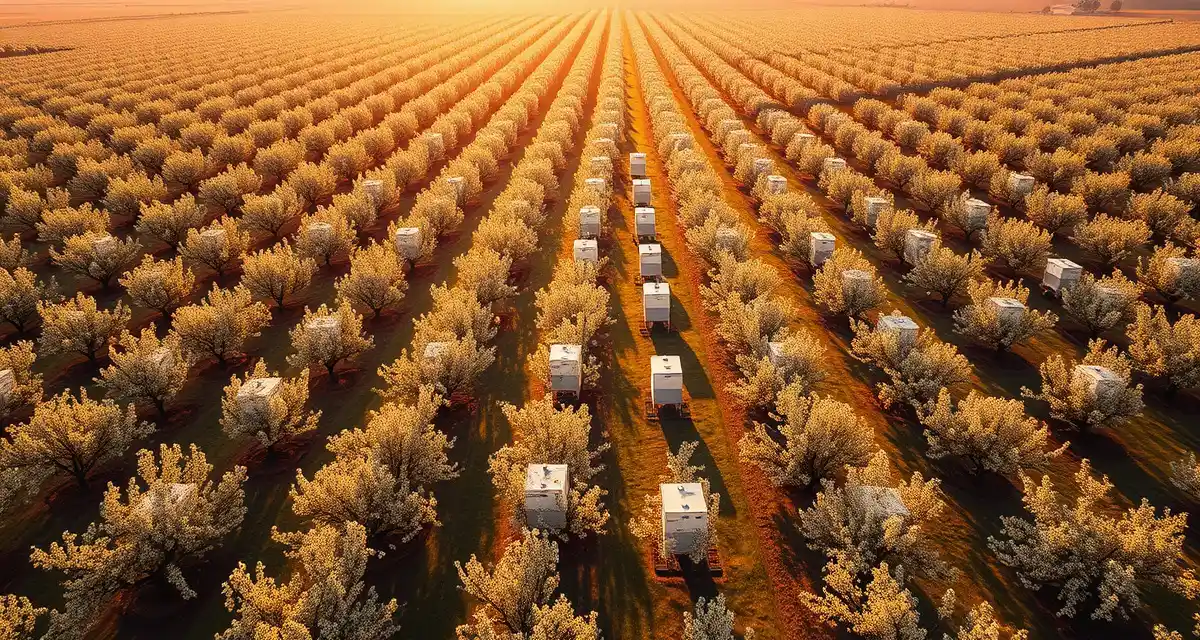
Almond Pollination in Kern County: Southern San Joaquin Valley Guide
Kern County sits at the southern end of the San Joaquin Valley, and its almond acreage has grown substantially as growers have expanded into new ground over the past two decades. What was once primarily known for oil and citrus now has significant almond production, and the county represents a real opportunity for commercial beekeepers looking to diversify their California contract portfolio beyond the traditionally dominant Fresno and Stanislaus county markets.
The key timing difference that defines Kern County: almonds in the southern San Joaquin Valley bloom 7 to 10 days earlier than northern counties. This matters for circuit planning. Operators who can place hives in Kern County during early bloom and then move north to cover Fresno or Stanislaus bloom in the same season can maximize their California placement revenue without needing more hives.
TL;DR
- California almond pollination consumes roughly 80% of the US commercial hive population every February, making it the most supply-constrained pollination market in the country.
- Per-hive rates have held between $185 and $220 for 6-8 frame colonies over recent seasons.
- Contracts are typically signed October through November for the following February season; operators without agreements by December are working from a weak position.
- Hive strength minimums range from 6 to 8 frames of bees depending on the grower, with premium-strength colonies commanding $200-215/hive.
- varroa management, documentation, and logistics coordination in the 6-8 weeks before delivery determine whether almond season is profitable or a breakeven event.
Why the Early Bloom Timing Matters
Southern San Joaquin Valley almonds typically reach full bloom between February 8 and February 15 in a normal year. Northern San Joaquin Valley almonds don't hit full bloom until February 15 to February 22. That 7 to 10 day spread is enough to run a sequential placement strategy if you have the trucks and the logistics to pull it off.
Operators who've figured out the sequential placement game in California can effectively double their placement revenue per hive across an almond season. This requires precise contract timing, reliable colony strength at each delivery, and a logistics operation that can move hives efficiently between placements.
Understanding the regional timing differences within the San Joaquin Valley almond market is the starting point for designing a California circuit that takes advantage of this spread.
Kern County Almond Acreage
Kern County's almond acreage is concentrated in the western and southwestern portions of the county, particularly in the Shafter, Wasco, and Lost Hills areas. The Wonderful Company and other large agricultural operations have substantial almond holdings in the county alongside many independent growers.
Large corporate orchards in Kern County can require significant hive counts from a single location, making them attractive for operators who want to minimize placement stops. However, corporate operations often have more rigorous colony strength verification than smaller family growers.
Contract Opportunities and Rates
Kern County almond pollination rates generally track closely with broader San Joaquin Valley market rates, typically falling in the $150 to $220 per hive range in recent seasons. Because the southern valley blooms earlier, some operators who can work both timing windows can negotiate premium positioning with growers who need early-season placement certainty.
Growers in Kern County range from the very large corporate operations to mid-size family farms. Mid-size operations are often the best targets for new contract relationships, as they need enough hives to make a commercial relationship worthwhile but have decision-making structures that are more accessible than large corporate agricultural companies.
For operators building their California almond contract portfolio, adding Kern County as a complement to northern valley contracts gives you timing flexibility and diversified grower relationships.
Logistics and Access
Kern County's road network in almond country is generally good, with the main growing areas accessible via Highway 99 and the network of county roads through the western valley. The terrain is flatter than the foothills areas, which makes truck access straightforward in most locations.
Be aware that the western Kern County growing areas can experience heavy fog during February, the same Tule fog that affects the whole San Joaquin Valley in winter. Fog doesn't stop almond bloom, but it can complicate driving conditions significantly. Build extra travel time into your delivery schedule and don't push tired drivers through dense fog on deadline.
Regulations and Entry Requirements
California's apiary entry requirements apply to all out-of-state operators bringing colonies into Kern County. You need a valid California apiary registration and current health documentation. The California Department of Food and Agriculture oversees commercial apiary operations, and compliance is non-negotiable for operators who want to work in the state.
Frequently Asked Questions
What is the almond pollination opportunity in Kern County?
Kern County offers a meaningful almond pollination market with growing acreage, a mix of large corporate and independent grower operations, and an early bloom timing that makes it useful for sequential placement strategies across the San Joaquin Valley. The county has seen consistent acreage growth, meaning demand for commercial hives has increased. For operators currently focused only on the northern and central valley, Kern County is worth evaluating as an addition to or replacement for more contested northern placements.
How does Kern County compare to Fresno County for almond contracts?
Fresno County has more total almond acreage and more total contract volume, but it also has more competition from established beekeeping operations. Kern County may be easier to break into for operators without existing Fresno County relationships. The early bloom timing in Kern County is a genuine differentiator that doesn't exist in Fresno County. Operators who can service both counties in sequence during a single California season have an advantage over those who only work one county at a time.
When does almond bloom start in Kern County?
In a typical year, Kern County almonds begin to show bloom in late January to early February, with full bloom arriving between February 8 and February 15 depending on variety and specific location within the county. Warmer southern valley temperatures drive earlier bloom than the central and northern parts of the San Joaquin Valley. Bloom timing shifts year to year based on winter chill hours and spring temperatures. Operators should monitor weather data and stay in contact with their Kern County growers starting in January to refine delivery timing as the season approaches.
How early should almond pollination contracts be negotiated?
Large almond growers and broker networks begin securing hive commitments in July and August for the following February season. Written contracts are typically signed October through November. Operators who do not have signed agreements by December are working from a weak position since most quality hive inventory is already committed. Start grower outreach in mid-summer and target signed agreements before Thanksgiving.
What documentation is required for hive delivery to California almonds?
California requires a Certificate of Health for out-of-state colonies, issued by the origin state's apiary inspection program within 30 days of entry. The certificate must certify freedom from American foulbrood, European foulbrood, and Varroa destructor below treatment threshold. Some states require small hive beetle freedom for California entry. In addition, many growers now expect documentation of pre-delivery mite counts confirming colonies are below threshold.
What happens to hives after almond season ends in late March?
Post-almond options include moving north for Pacific Northwest cherry or apple pollination in April-May, routing to Michigan or Maine blueberries in May-July, transitioning to summer honey yards in North Dakota or Montana, or staying in California for splits and rebuilding. The right choice depends on hive strength coming out of almonds and downstream contract commitments. Operators who plan their full-year circuit in advance can optimize both pollination revenue and honey production.
Try These Free Tools
Sources
- USDA Agricultural Research Service
- Bee Informed Partnership
- American Beekeeping Federation (ABF)
- Almond Board of California
- University of California Cooperative Extension
Get Started with PollenOps
Almond season is the revenue event that defines the commercial beekeeping year, and the details -- contract terms, delivery timing, hive strength documentation, and invoicing -- determine whether the season is profitable. PollenOps manages the full almond contract lifecycle from quote to final payment, with yard tracking, crew scheduling, and grower communication built in. See how it works for operations from 200 to 5,000 hives.