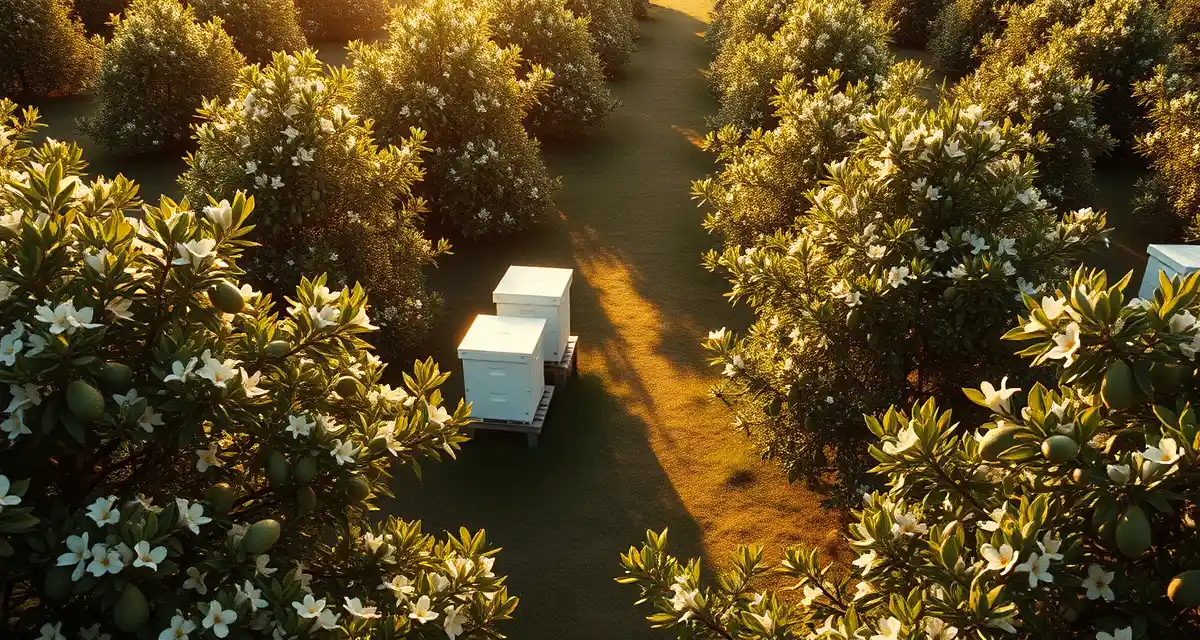
Avocado Pollination Management Software
California avocado growers spent an estimated $25 million on commercial pollination in 2024, and the market is growing as more growers recognize that managed bee placement materially improves fruit set in both Type A and Type B flower cycles. Avocado bloom alerts in PollenOps separately track Type A and Type B flower opening to optimize placement timing, which is the feature that distinguishes avocado-specific software from generic contract management tools.
Avocado is one of the most biologically complex commercial pollination crops. The A/B flower synchrony requirement, the variety interaction dynamics, and the coastal microclimate variability of California's primary growing counties all create contract management challenges that standard approaches handle poorly.
TL;DR
- Commercial avocado production in California is concentrated in San Diego, Ventura, and Santa Barbara counties.
- Avocado pollination is unusual because the crop is a self-pollinator that still benefits significantly from bee activity for yield.
- Bloom timing for California avocado runs February through May depending on variety and location, overlapping with almond season.
- Avocado orchards often present challenging terrain for truck access; hive placement logistics require advance scouting.
- Pollination rates for avocado typically run $80-120 per hive, lower than almond but with potentially better post-delivery conditions.
Understanding Avocado A/B Flower Synchrony
Avocado trees are protogynous dichogamous, meaning each flower goes through two functional phases. The flower opens first as female (receptive stigma, no pollen release) for several hours, then closes, then reopens as male (shedding pollen) for several hours.
Type A avocado varieties (Hass, Gwen, Lamb Hass) open female in the morning and male in the afternoon on different days. Type B varieties (Fuerte, Zutano, Bacon) have the opposite timing: female in the afternoon, male in the morning.
Cross-pollination between Type A and Type B trees, enabled by bee foraging throughout the day, provides more consistent fruit set than self-pollination from a single type. Growers with mixed A and B plantings rely on bees to move pollen across the type boundary at the appropriate times of day.
For the beekeeper, this means colony foraging activity throughout the full daylight hours is important, not just morning or afternoon activity. Strong, actively foraging colonies with high worker population provide coverage across the full daily flower cycle that weaker colonies don't.
Avocado Bloom Alert Architecture in PollenOps
PollenOps avocado bloom alerts use local temperature data to track the growing degree day accumulation that drives avocado bloom progression. The alert system accounts for:
Variety type: Hass (Type A) dominant orchards have a different optimal placement window than Fuerte (Type B) dominant or mixed-type orchards.
Coastal vs. inland microclimate: San Diego County's coastal inland valleys (Fallbrook, Valley Center) experience meaningfully different temperature patterns than Ventura County's inland Ojai Valley. Both differ from the hotter, drier conditions of Riverside County's inland avocado areas.
Elevation and aspect: Coastal avocado orchards on south-facing slopes warm faster than north-facing hillside orchards, affecting bloom timing by days within the same county.
The alert fires when temperature accumulation indicates bloom is approaching, with the trigger stage calibrated to the variety mix and microclimate at each contracted orchard location. An alert for a coastal Fallbrook Hass orchard fires on different conditions than an alert for an inland Ojai Fuerte orchard, even if they're under contract for the same bloom-stage trigger.
Managing Avocado Contracts Alongside Almond
The most significant operational challenge for avocado pollinators is the February-to-April overlap with California almond season. California's 50,000-plus avocado acres concentrate in San Diego and Ventura counties while almond is in the Central Valley, and the geographic separation makes simultaneous management feasible for large operations with adequate fleet size.
For the California avocado pollination guide, the timing overlap is addressed by fleet allocation strategy: assign your almond-committed hives and your avocado-committed hives as distinct pools before the season begins, with no overlap in commitment. Trying to sequence the same hives from almond to avocado within the overlapping window is technically feasible at the edges (late Kern County almond to early Ventura County avocado in March) but risky because almond removal timing is bloom-dependent and avocado placement timing is also bloom-dependent.
PollenOps contract management shows your available hive inventory against all active contract obligations simultaneously. Before signing an avocado contract, you can see exactly how many committed versus available colonies you have for the proposed delivery window, preventing over-commitment across the almond-avocado overlap period.
Hive Strength for Avocado Pollination
California avocado growers typically require 6 to 8 frames of bees at delivery. The A/B synchrony requirement for active cross-pollination throughout the full day means foraging drive and worker population are more important for avocado than for some other crops.
Coastal California avocado bloom can occur in cool, foggy morning conditions that reduce early flight activity. Type B varieties' morning female phase (which needs pollen from Type A males) happens during these potentially foggy, cool mornings. Strong colonies tolerate the reduced flight conditions better and begin foraging earlier in the day as temperatures rise than weaker colonies.
The pre-move strength assessment in PollenOps is particularly important for avocado contracts that require foraging activity in cool coastal mornings. Colonies at 6 frames may provide adequate coverage in warm, clear conditions; they may underperform during the foggy spring mornings common in coastal San Diego and Ventura counties during February and March.
California Avocado Market by County
San Diego County: Largest California avocado county by acreage. North County inland production in Fallbrook, Valley Center, Escondido, and Ramona is the heart of the San Diego market. Rates: $130 to $180 per hive.
Ventura County: Second-largest California county. Production in Santa Paula, Fillmore, and Ojai Valley inland areas. Bloom often starts 1 to 2 weeks earlier than San Diego inland sites. Rates: $130 to $175 per hive.
Riverside County: Inland growing areas around Temecula and Murrieta. Hotter, drier conditions than coastal counties. Rates: $120 to $165 per hive.
Florida Avocado: South Florida avocado production in Miami-Dade County is a smaller market with different variety management requirements. Florida avocado varieties are primarily Type B, with different bloom timing than California Hass. Florida avocado bloom runs January through March.
Grower Portal Access for Avocado Clients
Avocado growers who receive automated delivery reports and grower portal access report higher satisfaction with their beekeeper relationships than those managing via phone and email. The coastal California avocado market has a significant number of small and mid-size family operations who appreciate professional service documentation but haven't always received it from informal beekeeper arrangements.
The avocado pollination timing reference explains the bloom biology in detail for growers who want to understand why your placement timing recommendations are what they are. Sharing this context with your grower contacts builds the credibility that supports premium pricing.
Frequently Asked Questions
What is avocado A/B flower synchrony and why does it matter for pollination?
Avocado trees have flowers that go through two functional phases: first female (receptive), then male (shedding pollen). Type A varieties open female in the morning and male in the afternoon on staggered days; Type B varieties do the opposite. Cross-pollination between Type A and Type B trees provides more consistent fruit set than self-pollination. Bees moving between Type A and Type B trees throughout the full day carry pollen from the male-phase flowers to the female-phase flowers across variety types, which is what effective managed bee placement enables.
How many hives per acre do California avocado growers need?
California avocado growers typically place 1 to 2 hives per acre. Most commercial contracts specify 1 hive per acre as the standard density, with high-value premium variety blocks or orchards with known poor cross-pollination history requesting 1.5 to 2 hives per acre. Individual grower contracts vary based on orchard history and the grower's experience with prior pollination outcomes. Colony strength at the contracted density matters more than density alone; 1 hive per acre of 8-frame colonies outperforms 2 hives per acre of 5-frame colonies.
When is the best time to place bees in a coastal California avocado grove?
The optimal placement timing for coastal California avocado is at 5 to 10 percent bloom, when some flowers have opened on each variety type but before peak bloom. This ensures foragers are establishing on avocado flowers before the main bloom flush rather than arriving during it. For Ventura County's typically earlier bloom, late February is a common placement window. San Diego County's North County inland sites often bloom in March. PollenOps bloom alerts calibrated for your specific orchard location and variety mix provide 48-hour advance notice of the target placement window based on current-year temperature data.
What is the difference between commercial and hobby beekeeping?
Commercial beekeeping is distinguished by scale (typically 100+ hives, often 500-5,000+), revenue source (pollination contracts and bulk honey sales rather than local honey retail), and management approach (systematic protocols applied across yards rather than individual colony attention). Commercial operators manage bees as an agricultural enterprise, with the administrative, regulatory, and logistical complexity that entails. Most commercial operators derive the majority of their income from pollination services; honey production is a supplementary revenue stream.
How many hives are needed to make commercial beekeeping a full-time income?
Most beekeeping economists put the full-time commercial threshold at 500-800 hives, assuming efficient operations management and a combination of pollination and honey revenue. At 500 hives and $200/hive for almond pollination, almond season alone generates $100,000 in gross revenue before expenses. Net margins depend on operational efficiency, but well-run operations can achieve 30-50% net margins on pollination revenue. Additional crops and honey production improve per-hive economics but require additional management capacity.
What is the annual revenue potential for a 1,000-hive commercial operation?
A 1,000-hive operation running an almond season ($200/hive) plus blueberry or apple contracts ($80-100/hive) plus summer honey production ($25-40/hive after extraction costs) can generate $300,000-360,000 in annual gross revenue. Net margins after transport, crew, equipment, and hive replacement costs typically run 25-40% for well-managed operations, putting net income at $75,000-145,000 annually. The specific number depends heavily on circuit efficiency, loss rates, and contract quality.
Try These Free Tools
Sources
- USDA Agricultural Research Service
- Bee Informed Partnership
- American Beekeeping Federation (ABF)
- California Avocado Commission
- University of California Cooperative Extension
Get Started with PollenOps
Avocado pollination in California's hill country orchards combines challenging terrain with the contract documentation requirements of any commercial placement. PollenOps handles the administrative side so you can focus on the placement logistics that require boots on the ground.