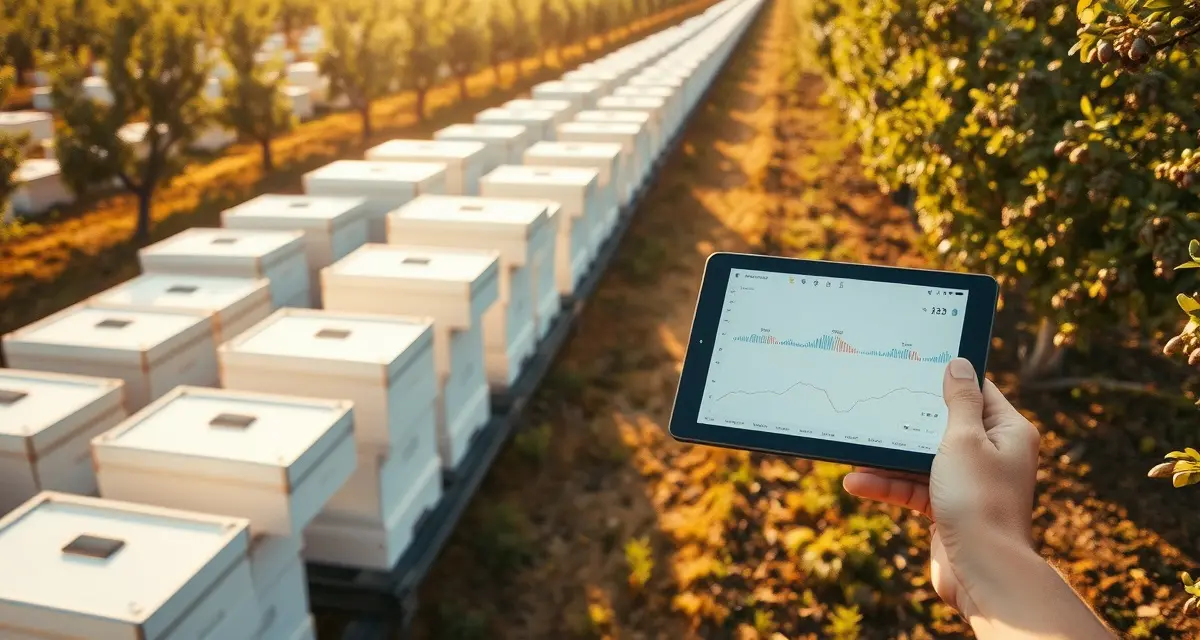
Pollination Management Software for Almond and Berry Growers
Growers who use digital contract tracking report 50% fewer seasonal disputes with their beekeepers. That's not just about having records. It's about both parties having access to the same information in real time, which eliminates the "he said, she said" dynamic that drives most pollination disputes.
Most pollination software is designed for beekeepers. PollenOps offers something different: a grower-facing portal that lets you monitor your beekeeper contracts, verify hive delivery data, and track bloom timing placements from the orchard owner's side.
TL;DR
- Commercial beekeeping operations that manage contracts on spreadsheets and phone calls spend 5-10 hours per week on administrative tasks that software handles automatically.
- Purpose-built beekeeping software centralizes contract lifecycle management, yard records, health documentation, and fleet logistics in one platform.
- The primary ROI drivers for operations software are fewer contract disputes, faster invoicing, and reduced time spent on administrative coordination.
- PollenOps is built specifically for commercial-scale pollination operations; it is not a hobbyist platform adapted for commercial use.
- Moving from spreadsheets to dedicated software typically pays for itself within one season in time savings and dispute prevention.
What Growers Actually Need to Track
If you're a commercial almond, cherry, or blueberry grower, your key questions during pollination season are:
- Did my beekeeper deliver the contracted number of hives?
- When did the hives arrive relative to bloom start?
- Are the hive strength scores at or above the contracted minimum?
- Where exactly are the hives placed within my orchard?
- When will the hives be picked up?
These seem like simple questions. In practice, without a shared data platform, answering them requires phone calls to your beekeeper, site visits to count hives manually, or taking their word for it.
A grower portal gives you direct access to the delivery data your beekeeper has already entered in their management system. You're looking at the same GPS-verified records, hive counts, and timestamps that your beekeeper is looking at.
How Can I as a Grower Track My Beekeeper's Hive Placements?
Through the PollenOps grower portal, you have read-only access to the contract records associated with your account. This includes:
Real-time hive count: How many hives are currently at your contracted yard location, according to the beekeeper's delivery record.
GPS location: The confirmed GPS coordinates of the yard, displayed on a satellite map showing your orchard.
Arrival date and time: The timestamp from the beekeeper's field check-in when hives were delivered.
Hive strength scores: The pre-move strength assessment results for the delivered hives, showing whether they meet the contracted minimum.
Contract status: Whether the current placement is within the contracted service period.
You can access this information from your phone, tablet, or computer without calling your beekeeper. If everything looks right, there's nothing to do. If there's a discrepancy, you have the documentation to have a specific, fact-based conversation.
Does PollenOps Have a Portal for Growers to Log In?
Yes. When your beekeeper uses PollenOps to manage contracts, they can invite you to access a read-only grower portal for your specific contracts. The portal shows only the information associated with your account, not other growers' data.
You don't need to subscribe to PollenOps or pay anything to access the portal. Your beekeeper's account enables the portal, and you receive an invitation link to set up your access credentials.
Access is intentionally read-only. You can view your contract data, but you can't modify records or access any of your beekeeper's other contract data. The data belongs to the beekeeper; you're seeing a grower-specific view of the information relevant to your contract.
How Do I Verify My Beekeeper Delivered the Contracted Number of Hives?
Through the grower portal, the delivery record shows the hive count confirmed at check-in, with the GPS timestamp. This is the same record your beekeeper uses for their own documentation and invoicing.
If the delivered count matches your contracted count, great. If it doesn't, you have a specific, time-stamped record to reference in your conversation with the beekeeper. Most count discrepancies are legitimate: hives damaged in transit, colonies that didn't meet strength minimums and were left off the truck, or a promised supplemental load that's coming the next day.
The portal converts what would otherwise be an adversarial dispute into a data conversation. You're not accusing your beekeeper of short-changing you. You're asking about a specific count on a specific date, which they can address specifically.
Using Grower Portal Data for Contract Compliance
For large commercial operations, the grower portal provides the documentation basis for a contract compliance review at the end of the service period.
You can pull the full delivery history for the contract: each hive count entry, each delivery timestamp, and the strength scores associated with each delivery. If the contract specified 200 hives at 7 frames of bees minimum, the portal shows whether every delivery met that spec.
This data is particularly useful when disputes arise over final payment. A beekeeper who presents an invoice for 200 hives delivered at contract spec can point to the portal records as corroborating documentation. A grower who questions whether the strength spec was consistently met can check the assessment records for every delivery.
Benefits for Long-Term Grower-Beekeeper Relationships
The growers who report the fewest disputes with their beekeepers typically have the most transparency into what's actually happening with their contracted hives. Visibility reduces suspicion. When you know your beekeeper's operation well, because you've seen their delivery records and strength assessments across multiple seasons, you trust their numbers.
The portal also reduces the burden on your beekeeper to manually update you on every delivery. Instead of fielding "did the bees arrive?" phone calls at 6 AM, your beekeeper can focus on the work, and you check the portal when you need an update.
Over time, this kind of operational transparency builds the working relationship that leads to multi-year contracts at reasonable rates. Beekeepers who work with growers who have portal access report shorter dispute cycles and faster payment when the season ends.
What Growers Should Look for in a Beekeeper
The existence of a grower portal is itself a signal about how professionally your beekeeper runs their operation. A beekeeper who uses PollenOps has made a commitment to documentation, GPS verification, and transparent record-keeping that isn't present in operations running on spreadsheets and handshake agreements.
When evaluating potential beekeeper partners, asking whether they use a platform that provides grower portal access is a reasonable due diligence question. The answer tells you something about how disputes will be handled if they arise, and how likely disputes are to arise in the first place.
Frequently Asked Questions
How can I as a grower track my beekeeper's hive placements?
Through the PollenOps grower portal, you have read-only access to the delivery records associated with your contracts. This includes real-time hive count, GPS yard location on a satellite map, arrival timestamp, and hive strength scores from the pre-move assessment. You access the portal through a web browser or mobile device without needing your beekeeper to send you updates manually.
Does PollenOps have a portal for growers to log in?
Yes. When your beekeeper manages contracts through PollenOps, they can invite you to a read-only grower portal for your specific contracts. There's no additional cost for grower portal access. You receive an invitation link to set up your credentials. The portal shows only the data associated with your account, and you cannot modify records or access any other grower's information.
How do I verify my beekeeper delivered the contracted number of hives?
The grower portal shows the delivery record from your beekeeper's GPS field check-in, including the hive count confirmed at delivery, the arrival timestamp, and the strength assessment scores. This is the same timestamped record your beekeeper uses for their own documentation and invoicing. If the delivered count matches your contracted count, the portal confirms it automatically. If there's a discrepancy, you have a specific date, time, and count to reference in your conversation with the beekeeper.
What does purpose-built commercial beekeeping software do that a spreadsheet cannot?
Dedicated software connects data across your operation in ways spreadsheets cannot: a contract record links to the specific hives assigned to it, which links to the yard location, which links to health inspection records and treatment logs. When a grower calls to dispute a hive count, you can pull the delivery record, timestamped photos, and GPS-confirmed location in 30 seconds rather than searching three spreadsheets and an email thread. This integration is where the time savings and dispute-prevention value comes from.
How long does it take to migrate from spreadsheets to beekeeping software?
Most commercial operators complete the core migration in 2-4 weeks, starting with current contract records and active yard locations. Historical data (past seasons' inspection records, old contracts) can be migrated over time rather than all at once. The practical recommendation is to start with the current season's live data and add historical records as time allows. The operational improvement from having current data in the system is immediate; the historical data adds analytical depth over subsequent seasons.
Is there a free trial available for PollenOps?
Contact PollenOps directly to confirm current trial and demo options. Most commercial operators benefit from a walkthrough of the contract management and yard tracking modules against their own operation's data before committing, since the fit between the platform and your specific circuit and crop mix is the most important evaluation factor.
Try These Free Tools
Sources
- USDA Agricultural Research Service
- Bee Informed Partnership
- American Beekeeping Federation (ABF)
- American Honey Producers Association
- Project Apis m.
Get Started with PollenOps
Commercial beekeeping operations that move from spreadsheets to purpose-built software consistently report fewer disputes, faster invoicing, and less time on administrative work during peak season. PollenOps is built specifically for commercial-scale pollination operations. See how the platform fits your operation.