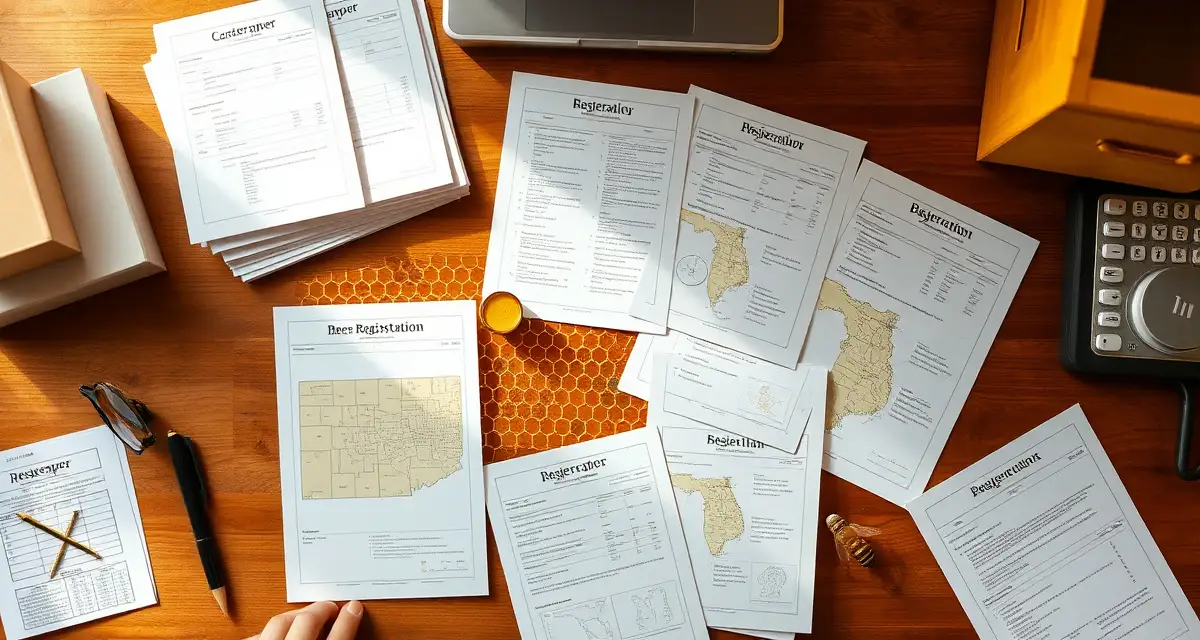
State Apiary Registration Requirements: All 50 States
Migratory beekeepers may need apiary registrations in 5-10 states per season. Every state in the US requires some form of apiary registration, but the timing, fees, reporting requirements, and enforcement vary dramatically. A California almond operation also running summer honey in North Dakota and wintering in Louisiana is juggling three separate registration systems simultaneously.
All 50 states require some form of apiary registration with varying fees and reporting requirements. Missing a registration doesn't just create a compliance risk. It complicates interstate movement permits, limits your ability to file pesticide kill claims, and can disqualify you from USDA emergency assistance programs that require registered apiary status.
TL;DR
- Most states require a Certificate of Health or Certificate of Veterinary Inspection issued by the origin state before out-of-state colonies can enter.
- A California-to-Florida-to-Pacific-Northwest-to-Northern-Plains circuit is the most common full-year migratory route for large commercial operations.
- Interstate permit coordination requires lead time; certificates typically need to be obtained 7-30 days before entry depending on the destination state.
- Moving 1,000 hives requires 2-3 truck loads per move, with fuel, driver wages, and DOT compliance as the primary variable costs.
- Operations that plan their annual circuit 6-8 months in advance can sequence pollination contracts and honey production to maximize annual revenue per hive.
How to Use This Guide
This guide covers the registration type, fee range, annual renewal requirements, and key compliance notes for each state. Requirements change; always verify current requirements with the state department of agriculture before moving or registering in a new state. Phone numbers and online portals shift; the state ag department's apiary or plant health program is your source.
Pacific States
California
Administering agency: CDFA (California Department of Food and Agriculture)
Registration type: State registration plus county agricultural commissioner registration at each placement county
Fee: Scaled by colony count. Typically $10-50 for the state registration; county fees vary
Renewal: Annual
Notes: County-level registration is separate from state registration and must be maintained in each county where hives are located. Commercial operators (50+ colonies) are subject to state apiary inspections. Interstate entry also requires a CDFA entry permit and Certificate of Veterinary Inspection.
Oregon
Administering agency: Oregon Department of Agriculture
Fee: $25-75 depending on colony count
Renewal: Annual (January 1 deadline)
Notes: Out-of-state operators must register if keeping bees in Oregon for 30+ days. CVI required for entry from out of state.
Washington
Administering agency: Washington State Department of Agriculture
Fee: $10 base plus per-colony fees for large operations
Renewal: Annual
Notes: Non-resident registration available for out-of-state operators. WSDA conducts apiary inspections and can require varroa treatment if mite levels exceed threshold.
Idaho
Administering agency: Idaho State Department of Agriculture
Fee: $10-30
Renewal: Annual
Notes: CVI required for entry. Alfalfa seed pollination circuit operators are common registrants.
Montana
Administering agency: Montana Department of Agriculture
Fee: $10-25
Renewal: Annual
Notes: Popular summer honey state; registration required for all colony locations.
Nevada
Administering agency: Nevada Department of Agriculture
Fee: $10-20
Renewal: Annual
Notes: Transit state for many California-bound operations; check if unloading triggers registration requirements.
Utah
Administering agency: Utah Department of Agriculture and Food
Fee: $10-30
Renewal: Annual
Colorado
Administering agency: Colorado Department of Agriculture
Fee: $10-30
Renewal: Annual
Wyoming
Administering agency: Wyoming Department of Agriculture
Fee: $10-25
Renewal: Annual
Arizona
Administering agency: Arizona Department of Agriculture
Fee: $10-35
Renewal: Annual
Notes: AHB-positive state. Additional inspection protocols for incoming colonies. Citrus and melon pollination circuit.
Midwest and Great Plains States
North Dakota
Administering agency: North Dakota Department of Agriculture
Fee: $25-50 depending on colony count
Renewal: Annual
Notes: Major summer honey state. Entry permit required. CVI required. High commercial beekeeper traffic July-August.
South Dakota
Administering agency: South Dakota Department of Agriculture
Fee: $10-30
Renewal: Annual
Minnesota
Administering agency: Minnesota Department of Agriculture
Fee: $25-60 for commercial operations
Renewal: Annual
Notes: Active state inspection program. Canola and clover honey state.
Wisconsin
Administering agency: Wisconsin Department of Agriculture, Trade, and Consumer Protection
Fee: $10-35
Renewal: Annual
Michigan
Administering agency: Michigan Department of Agriculture and Rural Development
Fee: $10-40
Renewal: Annual
Notes: Major blueberry and cherry pollination state. High out-of-state operator traffic May-June.
Nebraska
Administering agency: Nebraska Department of Agriculture
Fee: $10-25
Renewal: Annual
Kansas
Administering agency: Kansas Department of Agriculture
Fee: $10-25
Renewal: Annual
Iowa
Administering agency: Iowa Department of Agriculture and Land Stewardship
Fee: $10-25
Renewal: Annual
Missouri
Administering agency: Missouri Department of Agriculture
Fee: $10-25
Renewal: Annual
Illinois
Administering agency: Illinois Department of Agriculture
Fee: $10-30
Renewal: Annual
Indiana
Administering agency: Indiana State Department of Agriculture
Fee: $10-25
Renewal: Annual
Ohio
Administering agency: Ohio Department of Agriculture
Fee: $10-30
Renewal: Annual
Southeast States
Florida
Administering agency: Florida Department of Agriculture and Consumer Services (FDACS)
Fee: $10-50 depending on colony count
Renewal: Annual
Notes: AHB-present state. Health certificate required for incoming colonies. Major wintering destination and early-season pollination state. FDACS conducts inspections for AHB and diseases.
Georgia
Administering agency: Georgia Department of Agriculture
Fee: $10-30
Renewal: Annual
Notes: Blueberry and peach pollination. Early spring buildup for California-bound operations.
Alabama
Administering agency: Alabama Department of Agriculture and Industries
Fee: $10-25
Renewal: Annual
Mississippi
Administering agency: Mississippi Department of Agriculture and Commerce
Fee: $10-25
Renewal: Annual
Louisiana
Administering agency: Louisiana Department of Agriculture and Forestry
Fee: $10-25
Renewal: Annual
Notes: Common wintering state for operations that move to California.
Arkansas
Administering agency: Arkansas Department of Agriculture
Fee: $10-25
Renewal: Annual
Tennessee
Administering agency: Tennessee Department of Agriculture
Fee: $10-30
Renewal: Annual
North Carolina
Administering agency: North Carolina Department of Agriculture and Consumer Services
Fee: $10-30
Renewal: Annual
Notes: Blueberry pollination, especially in the Sandhills region.
South Carolina
Administering agency: South Carolina Department of Agriculture
Fee: $10-25
Renewal: Annual
Virginia
Administering agency: Virginia Department of Agriculture and Consumer Services
Fee: $10-30
Renewal: Annual
West Virginia
Administering agency: West Virginia Department of Agriculture
Fee: $10-25
Renewal: Annual
Kentucky
Administering agency: Kentucky Department of Agriculture
Fee: $10-25
Renewal: Annual
Oklahoma
Administering agency: Oklahoma Department of Agriculture
Fee: $10-25
Renewal: Annual
Texas
Administering agency: Texas Department of Agriculture
Fee: $10-40
Renewal: Annual
Notes: AHB-positive state. Large state with significant citrus and diverse agricultural pollination needs.
New Mexico
Administering agency: New Mexico Department of Agriculture
Fee: $10-25
Renewal: Annual
Notes: AHB-present. Alfalfa seed and chile pollination circuit.
Northeast States
Pennsylvania
Administering agency: Pennsylvania Department of Agriculture
Fee: $10-35
Renewal: Annual
Notes: Active apple and blueberry pollination circuit.
New York
Administering agency: New York State Department of Agriculture and Markets
Fee: $10-35
Renewal: Annual
Notes: Apple pollination in Hudson Valley and Western NY. CVI required for entry.
New Jersey
Administering agency: New Jersey Department of Agriculture
Fee: $10-25
Renewal: Annual
Notes: Major blueberry state (Pine Barrens). Out-of-state operators bring significant hive volume for May blueberry season.
Maryland
Administering agency: Maryland Department of Agriculture
Fee: $10-25
Renewal: Annual
Delaware
Administering agency: Delaware Department of Agriculture
Fee: $10-20
Renewal: Annual
Connecticut
Administering agency: Connecticut Department of Agriculture
Fee: $10-25
Renewal: Annual
Rhode Island
Administering agency: Rhode Island Department of Environmental Management
Fee: $10-20
Renewal: Annual
Massachusetts
Administering agency: Massachusetts Department of Agricultural Resources
Fee: $10-30
Renewal: Annual
Notes: Cranberry pollination is a significant commercial activity in southeastern Massachusetts.
New Hampshire
Administering agency: New Hampshire Department of Agriculture, Markets, and Food
Fee: $10-25
Renewal: Annual
Vermont
Administering agency: Vermont Agency of Agriculture, Food, and Markets
Fee: $10-25
Renewal: Annual
Maine
Administering agency: Maine Department of Agriculture, Conservation and Forestry
Fee: $10-30
Renewal: Annual
Notes: Major wild blueberry and cranberry pollination state. Out-of-state hive volume peaks June-July.
Non-Contiguous States
Alaska
Administering agency: Alaska Division of Agriculture
Fee: Minimal (limited commercial beekeeping)
Renewal: Annual
Notes: Very limited commercial migratory activity due to isolation and climate.
Hawaii
Administering agency: Hawaii Department of Agriculture
Fee: $10-30
Renewal: Annual
Notes: Strict biosecurity; importing colonies into Hawaii faces federal and state restrictions. Some tropical honey varieties produced commercially.
Managing Multi-State Registration
For a migratory operation active in 5-8 states simultaneously, the administrative burden is real. The typical commercial operator on the California-Pacific Northwest-Dakota circuit needs active registrations in California, Oregon or Washington, North Dakota or Montana, and their home state. Add a wintering state in the South and you're managing 4-6 registrations with different renewal dates, different fee structures, and different reporting requirements.
Interstate hive movement compliance requires matching your active registrations to your movement permits. States cross-reference these during inspections and at entry stations.
The cleanest system: maintain a registration calendar with each state's deadline, fee amount, and contact agency. PollenOps tracks regulatory compliance requirements alongside your fleet movement schedule, flagging states where your registration is expiring relative to your next planned movement.
FAQ
Which states require annual apiary registration renewal?
All 50 states require some form of annual renewal or re-registration. Most states tie registration to a calendar year (January 1 renewal) while some use the operator's registration anniversary date. California, Florida, Oregon, and Washington are the most actively enforced states for commercial migratory operators. Missing renewal in a high-traffic state like California or North Dakota creates complications with entry permits and inspections.
What information is required for apiary registration?
Standard requirements across most states include: beekeeper's legal name and address, business name if applicable, estimated or actual colony count, yard locations (county, GPS coordinates, or parcel number depending on state), and contact information. Some states require the name of the property owner where colonies are located. California requires county-level registration tied to specific placement addresses.
Are there registration fees for commercial-scale apiaries?
Yes, and fees generally scale with colony count, though most states keep fees modest, $10-75 for most commercial operations. California's combined state and county registration fees can reach $100-200 for large operations with placements in multiple counties. A few states (Maine, Oregon) have inspection fee components that add to the base registration cost. Total annual registration costs across all active states for a migratory operation typically run $200-600, a minor expense relative to the compliance protection it provides.
What is the most common full-year circuit for US migratory beekeepers?
The classic commercial circuit runs: winter buildup in Florida or southern Texas, California almonds in February, Pacific Northwest tree fruit (cherry, apple, pear) in April-May, Pacific Northwest or northern Midwest berry and clover crops in June-July, summer honey production in North Dakota, Montana, or Minnesota in July-August, and fall honey extraction and requeening before the cycle restarts. The exact circuit depends on contracted commitments, hive capacity, and the operator's regional relationships.
How do you coordinate state entry permits for a multi-state circuit?
State entry permits and health certificates require lead time: most states want certificates issued 7-30 days before entry. For a circuit that crosses 5-6 states, this means overlapping certificate applications where a certificate for the next state must be initiated before the current state's placement ends. Some operators use a permit tracking calendar that accounts for the lead time required for each destination state. PollenOps includes a permit tracking feature that alerts operators when certificates need to be initiated based on planned move dates.
What are the most common mistakes new migratory operators make?
The most common errors are underestimating transport costs, failing to secure contracts before building hive capacity, not accounting for state entry permit lead times, and neglecting varroa management during the compressed pre-almond preparation period. New operators often also underestimate the administrative load of managing 10-20 contracts across multiple states -- tracking payment status, compliance documentation, and crew scheduling simultaneously requires systems, not just a spreadsheet.
Try These Free Tools
Sources
- USDA Agricultural Research Service
- Bee Informed Partnership
- American Beekeeping Federation (ABF)
- American Honey Producers Association
- USDA Animal and Plant Health Inspection Service (APHIS)
Get Started with PollenOps
Migratory operations face the most complex coordination challenges in commercial beekeeping: permits across multiple states, staggered delivery windows, and fleet logistics that have to work precisely across hundreds of miles. PollenOps was built to handle multi-state, multi-grower, multi-crop operations at this level of complexity.