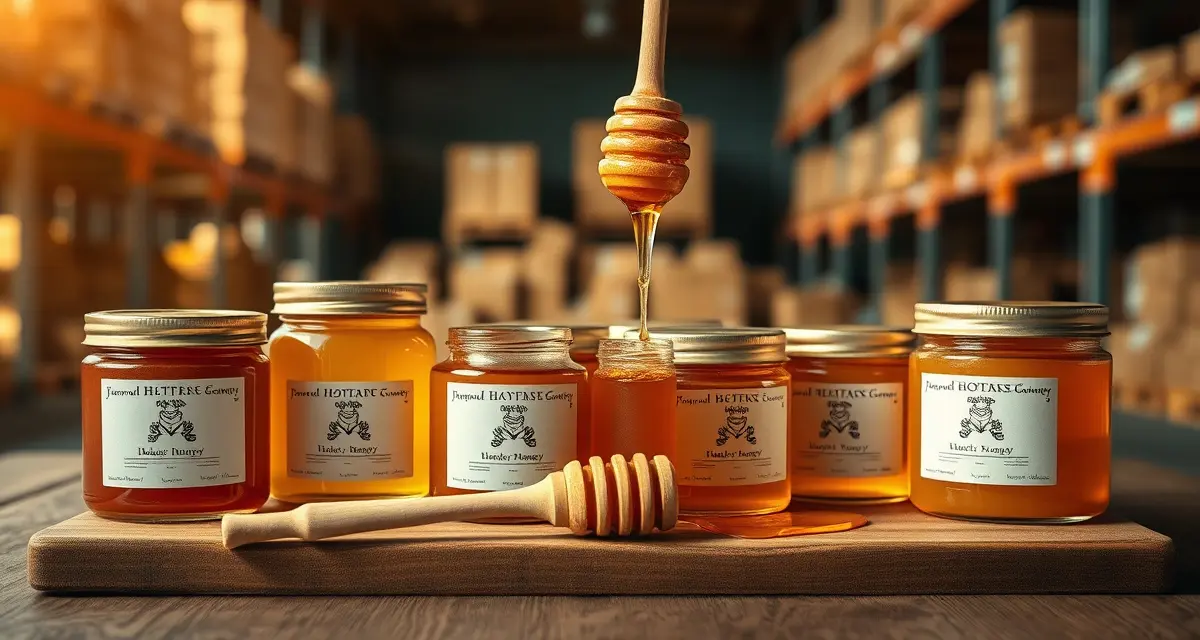
Commercial Honey Distribution: Wholesale Broker Co-op and Direct
The channel you choose to sell your honey through is a strategic business decision that affects both your revenue per pound and your cash flow timing. Honey co-ops offer price stability and reduced marketing effort; direct retail offers 3 to 5 times the per-pound margin but requires more capital investment and active sales effort. A 1,000-hive honey operation producing 50,000 to 100,000 lbs annually needs a distribution strategy before extraction begins, not after.
Most commercial operators use a mix of channels depending on volume, honey type, and bandwidth. Understanding the trade-offs of each channel helps you design a distribution approach that fits your operation's size, geography, and time availability.
TL;DR
- Wholesale honey prices for commercial producers have ranged from $1.50-2.50 per pound for bulk clover honey in recent seasons.
- Varietal honeys (buckwheat, tupelo, sourwood) command $3.00-5.00 per pound or more at wholesale.
- Summer honey production in North Dakota, Montana, and the Pacific Northwest is the primary source of bulk honey revenue for migratory operations.
- Honey production and pollination revenue streams can be combined on the same annual circuit, with most operations capturing both.
- Packing, storage, and distribution requirements for commercial honey production add cost and logistics complexity beyond the extraction stage.
Wholesale Bulk
Wholesale bulk is the simplest exit for large honey volumes. You sell to a packer or honey broker who buys in truckload quantities (typically 44,000 lbs per truckload) or smaller pallet-quantity purchases. The packer blends, packs, and retails or further distributes the honey.
Wholesale bulk prices are set by the commodity market and fluctuate based on global supply, domestic harvest conditions, and import volumes. Current conventional light amber wholesale prices have typically run $0.90 to $1.60 per pound. At 50,000 lbs, that's $45,000 to $80,000, before any packaging or processing costs.
Wholesale bulk advantages: simple, fast, no packaging infrastructure required, and buyers are consistent. Disadvantages: commodity pricing exposure, no brand control, and prices that can compress margins when global honey supply is high.
For a 1,000-hive operation, wholesale is often the baseline channel for the bulk of production, with better-margin channels used for whatever portion of the crop can be upgraded.
Honey Co-ops
Honey co-ops, like American Honey Producers Association affiliated co-ops and regional organizations, pool members' honey for collective marketing. Members contribute honey to the pool and receive payment based on the pool's average selling price minus co-op operating costs.
Co-ops offer price stability compared to spot wholesale, because the pool may include forward sales that lock in prices before harvest. Some co-ops also negotiate premiums for specific honey types (light amber, white, varietal) that individual operators couldn't negotiate alone.
The trade-off is that you lose individual pricing flexibility. In years when your honey quality exceeds the co-op average, you're pooled down. In years when your production timing or quality is below average, the pool protects you. Over time, most operators find the stability valuable.
Honey Brokers
Honey brokers work on commission, connecting your honey with buyers. A good broker knows buyers you don't, can move volumes you couldn't move through direct sales, and takes 2 to 5% of the sale price for their service.
Brokers are most useful for operators who don't want to do their own sales work and produce more honey than a single buyer relationship can absorb. A broker's market knowledge can also help you understand whether the price you've been offered is competitive.
The challenge with brokers is finding one who is active and trustworthy. Industry referrals are the best way to identify a quality broker. The honey packing and distribution landscape has a relatively small number of active brokers at commercial scale.
Direct Retail
Selling honey directly to retailers, restaurants, or end consumers captures the highest margin but requires the most infrastructure and effort. Direct retail margins typically run $2 to $5 per pound versus $1 to $1.50 for wholesale, a genuine 3x to 5x improvement.
Direct retail requirements include:
- Packing infrastructure (bottling line, labels, containers)
- Food-grade facility certification in many states
- Sales relationships with buyers
- Consistent supply to meet retail commitments
At 50,000 lbs of production, moving a meaningful fraction direct requires active sales work, relationship management with dozens of retail accounts, and reliable packing capacity. For operators with the bandwidth, the economics are compelling. For operators already stretched by pollination season management, it can dilute focus from the core operation.
A hybrid approach works for many commercial operators: wholesale bulk or co-op for 70 to 80% of production, direct retail for the remaining 20 to 30% as a margin booster.
Frequently Asked Questions
What honey distribution channels work best for 1000-hive operations?
A 1,000-hive operation producing 50,000 to 100,000 lbs of honey needs a base channel that can absorb the full volume without requiring constant sales activity. Wholesale bulk or a honey co-op is typically that base channel. Adding direct retail for a fraction of production, 10 to 20% of volume, can significantly improve overall revenue per pound without overwhelming the operator's time. The right distribution mix depends on your available time, geographic access to retail markets, packing infrastructure, and whether you produce any varietal honeys that command premium pricing.
What margins can commercial beekeepers expect from honey co-ops?
Honey co-op margins vary by co-op structure, the mix of honey types in the pool, and market conditions in a given season. Member returns have typically run 10 to 20% above commodity wholesale prices in cooperative years, and roughly comparable in commodity years. Co-ops add most value when they negotiate collective premiums or lock in forward prices at favorable rates before harvest. The stability benefit is often more valuable than any per-pound premium, particularly for operators who need predictable cash flow to manage seasonal expenses. Ask any co-op you're considering to share member returns over the past 5 years before joining.
How do you start selling honey directly to retailers?
Start by identifying the specific retail segment most accessible to your operation, whether that's local grocery chains, natural food stores, farmers markets, or specialty food retailers. Develop packaging that meets your state's food labeling requirements, which typically include net weight, producer information, and origin. Sample your honey with buyers in person. Local buyers are the most accessible starting point, and a few successful local retail relationships build the reference network for approaching regional chains. Consistency of supply is the most important commitment retailers need from you. If you can't reliably supply the same product every month, start with a smaller retailer that can tolerate more variability.
How do commercial beekeepers choose summer honey yard locations?
Summer honey yard selection focuses on forage quality, density, and landscape characteristics. North Dakota and Montana white clover and sweetclover flows typically produce 80-150 pounds per colony in good years. The Pacific Northwest offers diverse flows from clover, fireweed, and wildflowers. Proximity to other apiaries reduces forager competition; bee-friendly state lands or rented agricultural properties with forage diversity are preferred. Water availability within 1-2 miles of each yard is a basic requirement.
What is the difference between selling honey as bulk versus packaged retail?
Bulk honey sales to brokers or packers provide simple logistics (55-gallon drums or totes shipped directly from extraction) but yield lower per-pound prices ($1.50-2.50/pound for clover at wholesale). Packaged retail sales through direct channels (farmers markets, online, specialty retailers) yield $6-12 per pound but require labeling, packaging equipment, food safety compliance, and distribution relationships. Most commercial operations rely primarily on bulk sales and use retail as a supplementary channel for premium varieties.
Can honey production records be tracked alongside pollination contract records?
Yes. PollenOps tracks yard assignments and honey production data alongside pollination contracts so the full economic picture of each yard and each season is visible in one system. This matters for operations that use the same yards for honey production in summer and pollination staging in winter and spring, since the value of a yard location depends on both revenue streams.
Try These Free Tools
Sources
- USDA Agricultural Research Service
- Bee Informed Partnership
- American Beekeeping Federation (ABF)
- American Honey Producers Association
- National Honey Board
Get Started with PollenOps
Running honey production alongside pollination contracts requires coordinating two revenue streams on a single annual calendar. PollenOps tracks both in one platform so your circuit planning reflects reality rather than optimistic assumptions.