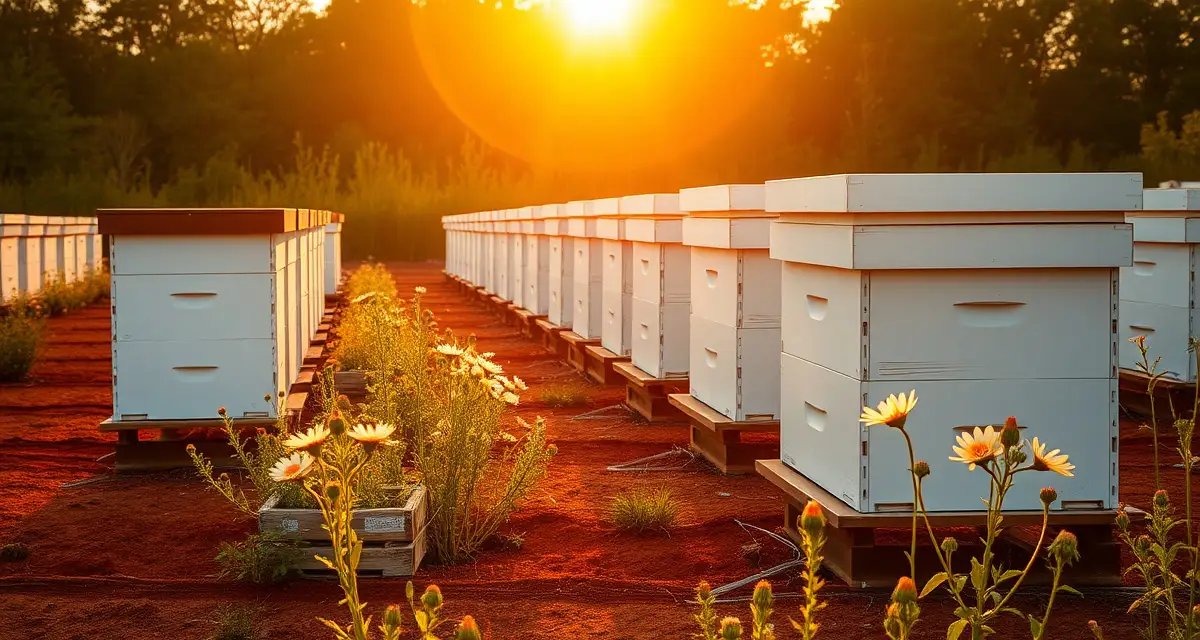
Commercial Beekeeping in Alabama: Regulations and Seasonal Opportunities
Alabama requires annual apiary registration and inspection for commercial operations. Alabama's mild climate allows extended beekeeping seasons compared to northern states, and its position in the Deep South makes it a viable winter management location for operations that don't want to go all the way to South Florida.
TL;DR
- Alabama's primary commercial beekeeping role is shaped by its crop mix, climate, and position on the national pollination circuit.
- Pollination rates in Alabama range $65-85/hive depending on crop and colony strength requirements.
- Out-of-state operators entering Alabama for pollination contracts must register with the state agricultural authority and obtain a Certificate of Health.
- Alabama functions as either a primary pollination destination, a seasonal honey production location, or a transitional stop depending on the circuit.
- Tracking permit status, registration documents, and yard records for Alabama operations requires organized record-keeping before the season opens.
Alabama Commercial Beekeeping Context
Alabama is not a primary commercial beekeeping destination on the national circuit. It functions primarily as:
- A wintering location for northern operations (milder than the Carolinas, not as far as Florida)
- A spring buildup stop with early pollen availability
- A corridor state for operations moving between Florida and the Northeast
The state's agricultural diversity (row crops, timber, vegetables, and fruit) supports commercial beekeeping activity at the state level, but large migratory operations from outside tend to pass through rather than commit significant fleet capacity.
Pollination Opportunities
Blueberries: Alabama has commercial blueberry production, primarily rabbiteye varieties in the southern counties (Baldwin, Monroe, Conecuh, Escambia). Bloom timing: late February to March, among the earliest commercial blueberry bloom in the US. Rates: $65-85/hive.
Vegetable crops: Commercial vegetable production in the Tennessee Valley and the Gulf Coastal Plain creates scattered pollination demand for cucurbits.
Fruit orchards: Limited commercial apple and peach in northern Alabama.
Alabama Honey Production
Sourwood: The Blue Ridge foothills of northeastern Alabama (Cleburne, Cherokee, Etowah counties) have sourwood at the southern extent of its range. Limited production.
Wildflower: Alabama's diverse flora (from the Tennessee Valley in the north to the Gulf Coastal Plain in the south) supports wildflower honey production. The Coastal Plain region has diverse native plants.
Tulip poplar: Mixed forests in northern and central Alabama have tulip poplar density supporting April-May flows.
Alabama Regulations
Administering agency: Alabama Department of Agriculture and Industries, Plant Protection and Weed Science Division
Registration: Annual registration required. Out-of-state operators must register.
CVI requirement: Health certificates required for colonies entering from out of state.
State inspection: Alabama has an apiary inspection program.
Alabama as a Wintering Location
Alabama's climate sits between Georgia (warmer, more typical wintering destination) and Tennessee (cooler, more northerly). Operations that need a southern winter location but don't want to drive all the way to Florida can consider south-central Alabama (roughly the Montgomery to Mobile corridor) for winter yards. Colony populations are maintained better than in Tennessee winters, and early spring pollen (from camellias, native trees, and early wildflowers) stimulates spring buildup earlier than northern states.
The trade-off: Alabama isn't as reliably warm as Florida, and some winters bring cold snaps that challenge overwintering colonies in the southern part of the state.
FAQ
What commercial beekeeping opportunities exist in Alabama?
Alabama's primary commercial opportunities are southern coastal plain blueberry pollination (February-March, $65-85/hive, among the earliest commercial blueberry in the US), limited vegetable crop pollination in the Tennessee Valley, and summer wildflower honey production in the mixed forest regions of northern Alabama. The state functions primarily as a wintering or transitional spring location for large migratory operations rather than a primary circuit destination.
Is Alabama a good wintering destination for hives?
Alabama's south-central and southern regions (Mobile Bay area, Montgomery) offer mild winter temperatures comparable to southern Georgia, making them viable alternatives to Florida for operations that don't want to travel as far south. The trade-off is less reliable warmth than South Florida and somewhat earlier spring buildup than ideal. For operations already positioned in the Southeast, Alabama's Gulf Coast region can work for winter management with reasonable results.
What are Alabama's apiary registration requirements?
Alabama requires annual registration with the Alabama Department of Agriculture and Industries Plant Protection and Weed Science Division. Out-of-state commercial operators must register before placing colonies. Health certificates are required for colonies entering from out of state. Alabama has an apiary inspection program. Contact the Alabama Department of Agriculture before your first Alabama season to confirm current registration requirements and entry documentation specifics.
What is the process for registering an out-of-state apiary in a new state?
Most states require out-of-state operators to register with the state department of agriculture apiary program before placing colonies. The process typically involves submitting a registration application (online or paper), paying a fee (usually $10-50 per location), and providing contact information for the operation. Some states also require the registration to be renewed annually. Contact the destination state's department of agriculture apiary program at least 60 days before your planned arrival to confirm current requirements.
What documentation do state apiary inspectors typically review?
State apiary inspectors review health certificates for out-of-state colonies, registration documentation, and colony inspection records during apiary visits. Inspectors check for signs of American foulbrood, European foulbrood, and other regulated pests and diseases. Operations with organized digital records that include treatment history and mite counts typically have faster, less complicated inspections than operations without documentation. Some state inspectors also verify that varroa mite loads are below state entry thresholds.
What triggers a state apiary inspection?
State apiary inspections can be triggered by routine inspection schedules (most states inspect a percentage of registered apiaries annually), neighbor or landowner complaints, disease reports from nearby operations, or inspection requirements tied to state entry permits. California, in particular, has the right to inspect incoming loads at port of entry for commercial beekeeping operations. Maintaining current registration and organized records makes required inspections faster and less disruptive.
Try These Free Tools
Sources
- USDA Agricultural Research Service
- Bee Informed Partnership
- American Beekeeping Federation (ABF)
- Alabama Department of Agriculture
- Project Apis m.
Get Started with PollenOps
Commercial operations working in Alabama face the same registration, permit, and documentation requirements as any state on the national circuit -- plus Alabama's specific regulatory requirements. PollenOps tracks your Alabama yard records, contract assignments, and permit documentation alongside your full operation, so entering a new state doesn't add a separate administrative burden. See how the platform fits operations working across multiple states.