Spring Buildup Management at Commercial Beekeeping Scale
Spring buildup timing is the most critical variable in meeting almond contract hive strength requirements. Get it wrong and you're delivering 4-frame colonies to a grower who contracted for 6-frame minimums, which means either losing payment, scrambling to replace understrength hives, or burning a grower relationship you spent years building.
Colonies need 60-90 days of buildup to reach 6-frame minimums from typical winter population levels. If your delivery date is February 5 and you want 6 frames of bees, your buildup needs to start in earnest by November, not January. Most operators who miss this window find out the hard way in their first California season.
TL;DR
- Commercial beekeeping operations face two primary management challenges: operational logistics (hive health, transport, placement) and administrative coordination (contracts, payments, documentation).
- Most disputes and revenue losses in commercial beekeeping are preventable with better documentation and clearer contract terms.
- The operations that run most profitably are those with disciplined systems for tracking hive health, contract status, and fleet logistics in one place.
- PollenOps is built specifically for the operational complexity of commercial-scale pollination services, not adapted from a hobbyist tool.
- The most important management decisions (treatment timing, contract renewal, hive allocation) require accurate current data to make well.
What "6 Frames of Bees" Actually Means
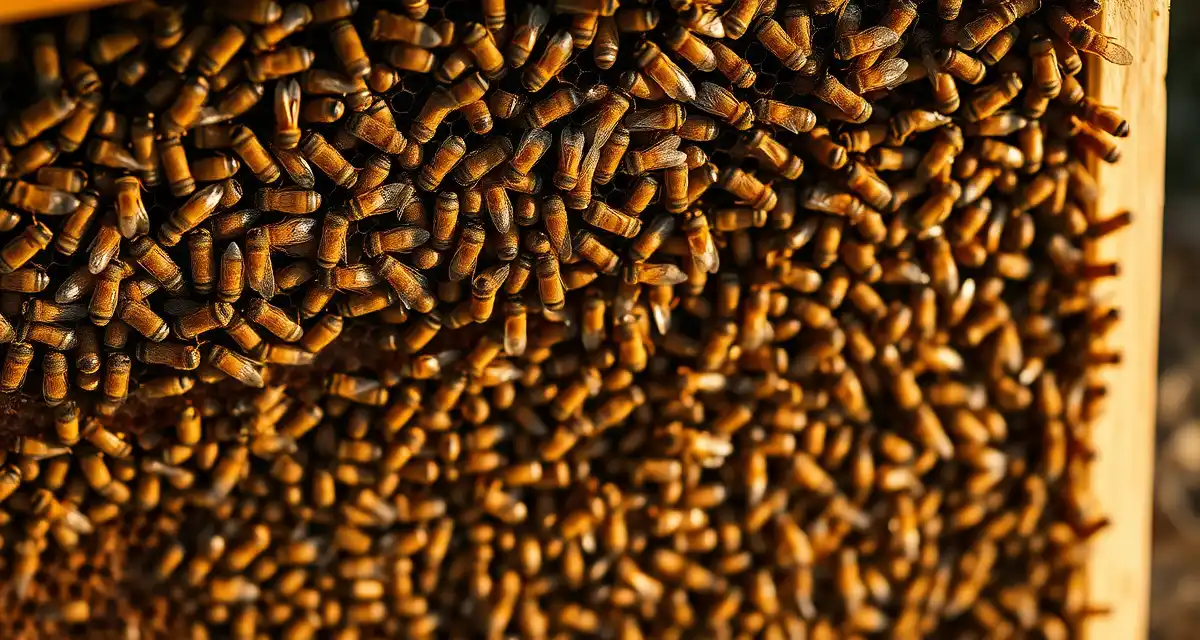
Almond contracts typically specify a minimum of 6 frames covered with bees at delivery. This is the industry standard, though some growers require 8 frames for premium contracts. A frame covered with bees means bees occupying both sides of a standard deep Langstroth frame, roughly 2,500-3,000 bees per frame face, or 5,000-6,000 bees per frame.
Six frames covered equals approximately 30,000-36,000 adult bees. A winter cluster might contain 8,000-15,000 bees. You're nearly doubling or tripling population in 60-90 days. That's not impossible, but it requires intentional management rather than hoping colonies expand on their own timeline.
Growers or their hired inspectors verify frame count at delivery. Some use video documentation, some pull frames, some do visual assessments through the entrance. The inspection happens after you unload and close up. If you're 20% of your hives short on delivery, you find out when you get a discrepancy notice and a reduced payment.
The Feeding Protocol for Maximum Buildup
At commercial scale, protein supplementation and carbohydrate feeding drive early buildup when natural forage isn't available. Winter colonies don't expand without protein stimulus. The queen won't lay at full capacity if the nurse bee workforce can't produce royal jelly.
Protein feeding starts in October-November in most climates, earlier if your colonies are in the South. Commercially produced pollen substitute patties (products like Megabee, Global Patties, or AP23) go directly on top of the frames. At 1,000 hives, you're going through several hundred pounds of pollen substitute per feeding round. Set up a bulk order with your supplier in September to avoid shortages.
Feeding rate: 1-pound patties every 2-3 weeks per colony during buildup. Colonies consume faster when they're building rapidly. Check consumption and don't let them go empty. A colony that starves out its protein patty for two weeks loses the buildup momentum and takes another 3-4 weeks to recover.
Sugar syrup or dry sugar for carbohydrates supports comb building and larval feeding when natural nectar isn't coming in. Heavy syrup (2:1 sugar:water) in fall for stores; light syrup (1:1) in late winter to stimulate foraging activity. At scale, a mixing and distribution system (a tank on a truck or trailer) is the only practical way to feed 500+ colonies on a schedule.
Queen Status and Replacement Timing
Buildup capacity is capped by queen performance. A 2-year-old queen lays 600-800 eggs per day under good conditions. A strong 1-year-old queen lays 1,200-1,500. If you want 6-frame colonies by February, you can't afford queens whose laying rate is declining.
Requeen colonies going into almond season. The best practice: identify and requeen any colony with a queen older than 18 months before the buildup period starts. September-October requeening gives the new queen time to establish full laying before the push for February delivery.
At 1,000 hives with a 30-40% annual requeen rate, that's 300-400 queens purchased or reared per year for fall requeening alone. Plan your queen sourcing 3-4 months ahead. Italian or Carniolan queens from suppliers who breed for high spring buildup perform measurably better in this application than unselected stock.
Managing Buildup in Northern Climates
Operators wintering colonies in northern states (North Dakota, Minnesota, Wisconsin) face a different problem than those wintering in the South. Northern winter kills population faster. A colony going into a North Dakota winter with 12 frames of bees might come out in March with 4. That's not a starting point for February almond delivery. That's a starting point for a different season.
Most northern operators who run California almond contracts move colonies to a southern state for winter and early buildup. Arkansas, Louisiana, Mississippi, and Georgia are common wintering locations. Colonies maintain population better in milder climates, buildup starts 4-6 weeks earlier with pollen availability, and you're already partway to California when February comes.
The logistics: trucks loaded in October-November for the southern move, colonies managed for buildup through January in the South, then reloaded and hauled west for California delivery. A 1,000-hive operation might make two loaded interstate moves in rapid succession: south for winter, then west for almonds. That's the commercial migratory circuit for a significant portion of the industry.
Monitoring Buildup Progress
You can't manage what you don't measure. At commercial scale, systematic buildup monitoring across hundreds of colonies requires a structured approach.
Visit schedule during buildup: every 10-14 days per yard. At each visit, record frame count by colony. Flag understrength colonies. Identify the bottom quartile of performers and make management decisions: are they requeening candidates, combine-out candidates, or just slow starters that need more protein?
Paper-based systems collapse at 1,000+ hives across multiple yards. By the time you've counted frames on 200 colonies and driven to the next yard, the data from the morning is already losing context. Digital colony records (entered on a phone or tablet during the yard visit) give you a real-time picture of buildup progress across your entire operation.
PollenOps tracks colony strength by yard and flags hives trending below contract minimums with enough lead time to intervene. Instead of discovering in early February that Yard 7 has 40% of colonies below 6 frames, you see it in December and have time to consolidate underperformers, add protein feeding, or source replacement colonies. This is what acoustic monitoring and yard-level management tools are built for.
Consolidation Strategy for Understrength Hives
No matter how well you manage buildup, you'll have understrength colonies. Plan for it. Your options:
Combine: Two weak colonies into one strong one. You lose hive count but gain a sellable pollination unit. At $200-220/hive for almonds, two 3-frame colonies that combine into one 6-frame colony recover one contract slot instead of generating two penalties.
Add shaker frames: Pull a frame of bees and brood from a strong colony and add to a weak one. Labor-intensive at scale but effective for bringing up colonies that are 1-2 frames short.
Newspaper combine: Slower but less resource-intensive. Works over 2-3 days.
Remove from contract: If you have more colonies than contracted for, you can simply exclude understrength hives from your delivery count. Bring 800 strong colonies for a 750-hive contract and you have slack. This only works if you have surplus capacity.
The Connection Between Varroa Management and Buildup
Varroa mite pressure in August-September directly determines winter population going into the buildup period. Fall colonies with mite levels above 2 per 100 bees produce fewer winter bees, have higher winter mortality, and start spring in weaker condition.
Treating varroa in August (when the summer honey flow is ending and before the winter bee production cycle begins) is not optional for operations targeting almond pollination. Varroa management at commercial scale requires a schedule, not reactive treatment. Apivar strips in August, oxalic acid treatment of mite-free colonies in winter: the specific protocol matters less than the consistency of execution.
An operation that skips fall varroa treatment because it's busy with honey extraction will spend twice as much money on protein supplement in January trying to compensate for poor colony condition. Treat in fall. It's the cheapest thing you do all year relative to the outcome it produces.
Final Pre-Move Inspection
The week before your California move, do a final frame count across all hives. This is your last chance to make decisions before the truck loads. Colonies that are still short can be:
- Combined with another short colony
- Left behind and replaced with a stronger colony from your reserve
- Sent to a lower-value contract that has less strict minimums
Don't load understrength colonies hoping they'll pass grower inspection. That's a self-defeating strategy. An experienced grower inspector has seen thousands of colonies. They know what 5 frames looks like versus 6. A rejected colony at the delivery point costs you the contract payment on that hive, your travel cost to deliver it, and your relationship credibility.
Load strong. Deliver strong. Your repeat contract rate depends on it.
FAQ
How do you accelerate spring buildup for almond pollination?
The fastest route to 6-frame colonies by February is starting protein patty feeding in October-November, pairing it with carbohydrate feed, and ensuring every colony has a young, productive queen. Colonies wintered in southern states with earlier pollen availability (Georgia, Louisiana, Florida) build up 4-6 weeks faster than colonies wintered in northern climates. Starting buildup management in fall, not January, is what separates operations that consistently deliver strong colonies from those that scramble.
What feed is used for commercial spring buildup?
Commercial pollen substitute patties are the primary protein source. Products like Megabee, Global Patties, or similar are fed at 1-pound patties per colony every 2-3 weeks. Sugar syrup provides carbohydrates to support comb building and larval feeding. At commercial scale (500+ hives), bulk ordering protein supplement and having a truck-mounted syrup distribution system are operational necessities. Some operators supplement with fresh natural pollen when available in late winter.
How do you manage 1000 colonies through spring buildup efficiently?
Systematically. Divide your operation into yard clusters of 50-150 hives with a rotation schedule that ensures every yard gets checked every 10-14 days. Assign crew members specific yards rather than having everyone work everywhere; accountability improves. Record frame counts electronically during yard visits so you have real-time buildup data across the entire fleet. Flag yards where the average frame count is tracking below target with enough lead time (6-8 weeks out) to intervene with additional feeding, requeening, or colony consolidation.
What is the difference between commercial and hobby beekeeping?
Commercial beekeeping is distinguished by scale (typically 100+ hives, often 500-5,000+), revenue source (pollination contracts and bulk honey sales rather than local honey retail), and management approach (systematic protocols applied across yards rather than individual colony attention). Commercial operators manage bees as an agricultural enterprise, with the administrative, regulatory, and logistical complexity that entails. Most commercial operators derive the majority of their income from pollination services; honey production is a supplementary revenue stream.
How many hives are needed to make commercial beekeeping a full-time income?
Most beekeeping economists put the full-time commercial threshold at 500-800 hives, assuming efficient operations management and a combination of pollination and honey revenue. At 500 hives and $200/hive for almond pollination, almond season alone generates $100,000 in gross revenue before expenses. Net margins depend on operational efficiency, but well-run operations can achieve 30-50% net margins on pollination revenue. Additional crops and honey production improve per-hive economics but require additional management capacity.
What is the annual revenue potential for a 1,000-hive commercial operation?
A 1,000-hive operation running an almond season ($200/hive) plus blueberry or apple contracts ($80-100/hive) plus summer honey production ($25-40/hive after extraction costs) can generate $300,000-360,000 in annual gross revenue. Net margins after transport, crew, equipment, and hive replacement costs typically run 25-40% for well-managed operations, putting net income at $75,000-145,000 annually. The specific number depends heavily on circuit efficiency, loss rates, and contract quality.
Try These Free Tools
Sources
- USDA Agricultural Research Service
- Bee Informed Partnership
- American Beekeeping Federation (ABF)
- American Honey Producers Association
- Project Apis m.
Get Started with PollenOps
Managing a commercial beekeeping operation involves more data, more deadlines, and more moving parts than any general-purpose tool was designed to handle. PollenOps brings contracts, yard records, health documentation, and fleet logistics together in one platform built for the realities of commercial-scale beekeeping.