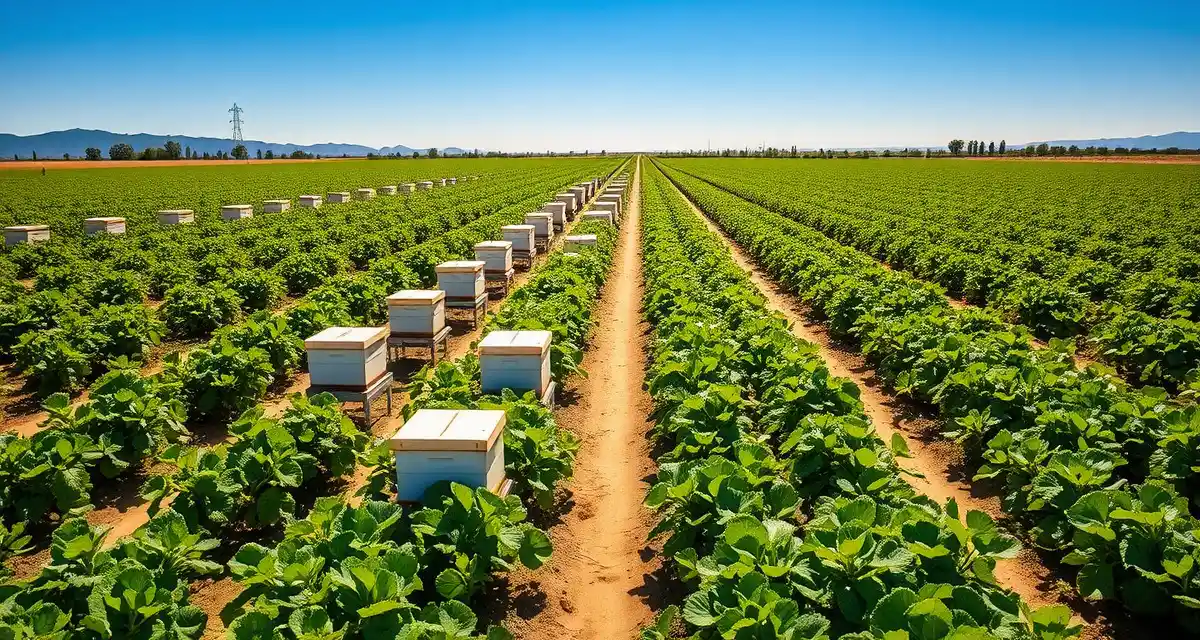
Melon Pollination in Arizona: Yuma and Maricopa Valley Opportunities
Arizona's warm winters enable February through April melon pollination, creating a pre-almond season income opportunity that few commercial beekeepers have tapped at scale. Yuma County is one of the top US winter vegetable and melon producing areas, with significant commercial watermelon and cantaloupe acreage that blooms before California's Central Valley season begins.
Arizona melon pollination runs February through April, offering income in the late-winter window after citrus season and before the main California almond push. For operators who winter colonies in Arizona for climate advantage, melon contracts provide revenue that offsets winter management costs and keeps your fleet productive before the heavy spring travel season begins.
TL;DR
- Arizona's primary commercial beekeeping role is shaped by its crop mix, climate, and position on the national pollination circuit.
- Pollination rates in Arizona range $65-220/hive depending on crop depending on crop and colony strength requirements.
- Out-of-state operators entering Arizona for pollination contracts must register with the state agricultural authority and obtain a Certificate of Health.
- Arizona functions as either a primary pollination destination, a seasonal honey production location, or a transitional stop depending on the circuit.
- Tracking permit status, registration documents, and yard records for Arizona operations requires organized record-keeping before the season opens.
Yuma County as a Melon Market
Yuma County's climate is uniquely suited to winter melon production. The region's year-round sunshine, warm winter temperatures, and Colorado River irrigation infrastructure support early-season cantaloupe and watermelon production that ships to markets nationwide before domestic competition from other states is available.
Commercial melon acreage in Yuma County is concentrated around Yuma, Wellton, and Gila Valley. The operations tend to be large-scale, professionally managed farms tied to major packing houses with established supply chain relationships. These large operations are the most viable pollination contract targets because they have agronomic management programs and contracted input budgets.
The February through April melon bloom window in Yuma partially overlaps with Arizona citrus season (November to January), creating a natural transition for operators who ran citrus contracts earlier in the winter. Your hives that wrapped up citrus in January can be positioned for February melon without a major repositioning move if you planned your yard locations with both crops in mind.
Maricopa County Opportunities
Maricopa County's agricultural production, concentrated in the Buckeye, Goodyear, and Tonopah areas to the west of Phoenix, includes commercial melon acreage that blooms in the March to April window. This market is somewhat less concentrated than Yuma County and includes more mid-size family operations alongside large commercial farms.
The Maricopa County Cooperative Extension and the Maricopa County Farm Bureau serve this production area. If you're already positioning colonies near Phoenix for spring buildup before the California almond push, Maricopa County melon contracts can generate income from that same location without requiring major additional logistics.
Melon Pollination Requirements
Arizona melon growers use the same pollination approaches as California growers. Watermelon requires cross-pollination between triploid seedless plants and diploid pollenizer varieties, requiring active bee movement across the planting. Cantaloupe requires bee visits to perfect flowers for adequate fruit set and seed development.
Hive density requirements run 1 to 1.5 hives per acre for most commercial melon operations. Some high-value seedless watermelon production may request higher density given the pollenizer ratio management involved. Confirm density requirements in your contract rather than assuming, since acreage can vary from field to field within a single grower's operation.
Getting Contracts in Arizona
The Arizona commercial beekeeping state guide covers the apiary registration requirements that apply to both in-state and out-of-state operators. Make sure your registration is current before approaching Arizona melon growers.
The Arizona Farm Bureau's Yuma County chapter and the Yuma County Agricultural Water Users Association are your best first contacts for grower introductions. The Yuma market is relationship-driven; a referral from a shared acquaintance in the agricultural community carries more weight than a cold email. If you're already running citrus contracts in Yuma County, those relationships are your path to melon pollination.
For direct outreach, target operations over 100 acres in the Yuma Valley and Gila Valley areas in November or December for February placements. Use PollenOps melon contract management to generate a professional proposal that references your colony strength certification and delivery documentation process.
Colony Strength and February Timing
February melon pollination happens at a time when your colonies are at low winter population. Planning your contracted hive count against realistic February colony strength is essential. If you overcommit based on fall colony size and arrive in February with winter-depleted colonies, you've created a compliance problem.
Arizona growers typically require 6 to 8 frames of bees at delivery for melon pollination. Arizona's warm winter climate helps colonies maintain better winter condition than northern operations, but February populations are still lower than spring or summer peaks.
Supplemental feeding in January before February placements can help bring colonies up faster. The warm Arizona climate means bees can fly on most winter days, so feeding stimulus triggers faster brood rearing than it would in cold northern climates.
Rates and Contract Terms
Arizona melon pollination rates run $70 to $100 per hive for February and March placements. The winter timing and lower competition from northern-based operators compared to summer melon markets supports reasonable rate negotiation. Sign contracts in October or November for February placements.
Net-30 payment after placement is standard. Include a deposit of 25 percent at signing to secure your commitment and recover positioning costs before the season begins.
Frequently Asked Questions
How do you get melon pollination contracts in Arizona?
Contact the Arizona Farm Bureau's Yuma County chapter and the Yuma County Agricultural Water Users Association for grower introductions. The Yuma market is relationship-driven, so referrals from existing agricultural contacts carry significant weight. If you're already running citrus contracts in Yuma County, use those relationships to access melon growers. For direct outreach, target operations over 100 acres in the Yuma Valley and Gila Valley in November or December for February placements. Ensure your Arizona apiary registration is current before making initial contact.
When is melon pollination season in Arizona?
Arizona melon pollination runs February through April, with Yuma County's warm winter climate supporting the earliest plantings in late January or February. Maricopa County's west Phoenix agricultural area runs slightly later, typically March through April. The February-to-April Arizona window predates California's main Central Valley melon season, which starts in May, creating a natural sequential opportunity for operators who can cover both markets. Your hives can run Arizona melon from February through April and then transition to California for May-through-August placements.
What colony strength do Arizona melon growers require?
Most Arizona melon growers require 6 to 8 frames of bees at delivery. February placements happen when colonies are at winter population levels, so contract your hive count based on realistic winter strength rather than fall or spring peaks. Arizona's warm winter climate helps colonies maintain better condition than northern operations, but population levels are still lower than in spring. Consider supplemental feeding in January before February melon placements to help colonies build faster in the warm Arizona winter before bloom.
What is the process for registering an out-of-state apiary in a new state?
Most states require out-of-state operators to register with the state department of agriculture apiary program before placing colonies. The process typically involves submitting a registration application (online or paper), paying a fee (usually $10-50 per location), and providing contact information for the operation. Some states also require the registration to be renewed annually. Contact the destination state's department of agriculture apiary program at least 60 days before your planned arrival to confirm current requirements.
What documentation do state apiary inspectors typically review?
State apiary inspectors review health certificates for out-of-state colonies, registration documentation, and colony inspection records during apiary visits. Inspectors check for signs of American foulbrood, European foulbrood, and other regulated pests and diseases. Operations with organized digital records that include treatment history and mite counts typically have faster, less complicated inspections than operations without documentation. Some state inspectors also verify that varroa mite loads are below state entry thresholds.
What triggers a state apiary inspection?
State apiary inspections can be triggered by routine inspection schedules (most states inspect a percentage of registered apiaries annually), neighbor or landowner complaints, disease reports from nearby operations, or inspection requirements tied to state entry permits. California, in particular, has the right to inspect incoming loads at port of entry for commercial beekeeping operations. Maintaining current registration and organized records makes required inspections faster and less disruptive.
Try These Free Tools
Sources
- USDA Agricultural Research Service
- Bee Informed Partnership
- American Beekeeping Federation (ABF)
- Arizona Department of Agriculture
- Project Apis m.
Get Started with PollenOps
Commercial operations working in Arizona face the same registration, permit, and documentation requirements as any state on the national circuit -- plus Arizona's specific regulatory requirements. PollenOps tracks your Arizona yard records, contract assignments, and permit documentation alongside your full operation, so entering a new state doesn't add a separate administrative burden. See how the platform fits operations working across multiple states.