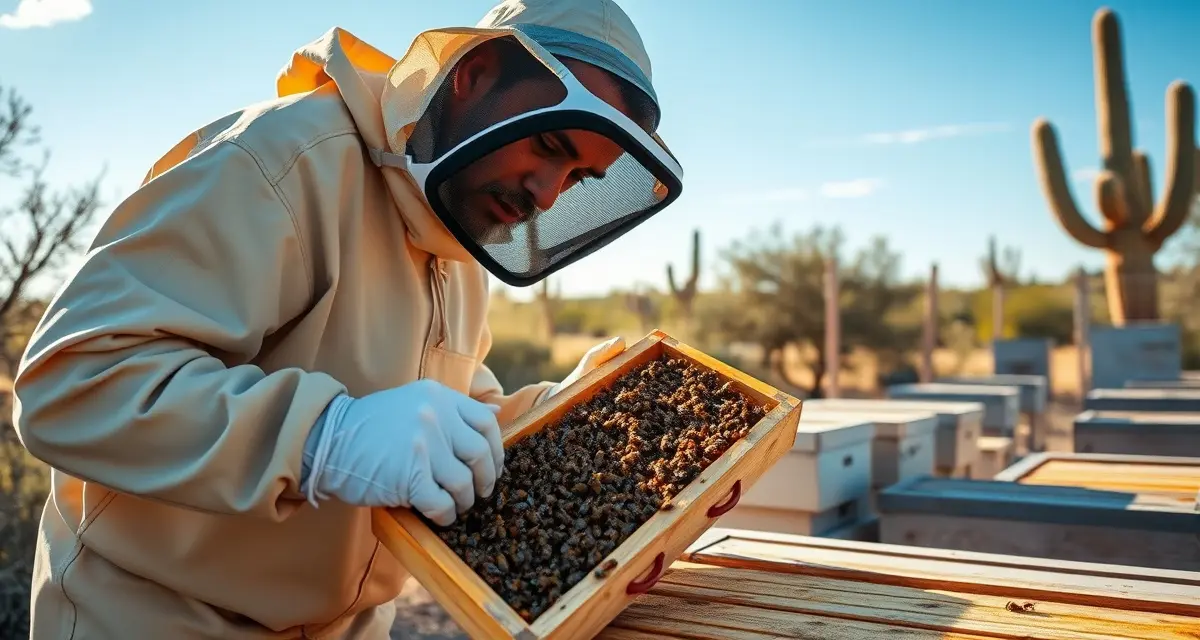
Commercial Beekeeping in Arizona: Desert Forage and Citrus
Arizona requires annual apiary registration and a permit for colonies from other states. It's also an AHB-positive state across most of its southern and central geography, which shapes every aspect of operating there, from which counties you can source colonies from to what documentation California will require when you move colonies out in January.
Arizona's mild winters attract migratory operators and citrus groves offer pollination income. For operations on the California circuit that are looking for a southwest alternative to Florida wintering, Arizona's Salt River Valley and Tucson Basin offer real options with different tradeoffs.
TL;DR
- Arizona's primary commercial beekeeping role is shaped by its crop mix, climate, and position on the national pollination circuit.
- Pollination rates in Arizona range $60-85/hive depending on crop and colony strength requirements.
- Out-of-state operators entering Arizona for pollination contracts must register with the state agricultural authority and obtain a Certificate of Health.
- Arizona functions as either a primary pollination destination, a seasonal honey production location, or a transitional stop depending on the circuit.
- Tracking permit status, registration documents, and yard records for Arizona operations requires organized record-keeping before the season opens.
Arizona Commercial Beekeeping Opportunities
Citrus pollination: The Phoenix Metro area (Maricopa County) and Yuma County have commercial citrus production, primarily navel oranges, grapefruit, and lemons. The scale of Arizona citrus has declined over decades as urban growth has converted farmland, but active commercial orchards still contract for bee placements. Bloom timing: January-March, earlier than Florida citrus. Rates: $60-85/hive.
Melons and vegetables: The Yuma Valley produces much of the US's winter lettuce and a significant portion of winter vegetable crops. Cucurbit crops (melons, squash) in the Yuma area run November through April, winter melon production that's unique to the warm desert climate. Contract rates: $55-75/hive.
Desert wildflower honey: Arizona's Sonoran Desert produces a distinctive honey from desert bloom species: palo verde, mesquite, catclaw acacia, desert willow, and others. Desert bloom honey is light, mild, and has a regional specialty identity. In wet years with early spring rains, the Sonoran Desert superblooms create extraordinary nectar flows. The timing is variable and hard to predict, but operations with yards positioned in southern Arizona can capture exceptional yields in good rain years.
Saguaro cactus honey: Saguaro cactus produces nectar in May-June. The resulting honey is distinctive but produced in small quantities. More of a specialty curiosity than a commercial crop, but worth noting for operations wanting premium varietal products.
Africanized Honey Bee Management in Arizona
AHB is established throughout southern Arizona (Pima, Santa Cruz, Cochise, Graham, Greenlee, and adjacent counties) and present in central Arizona including Maricopa County (Phoenix). As of 2026, AHB is essentially ubiquitous in any location below approximately 4,000 feet elevation in southern and central Arizona.
What this means for commercial operators:
Operations maintaining colonies in AHB-positive Arizona counties must manage actively for AHB genetic contamination. Colonies that were pure European genetics when they arrived can have AHB drone-fathered queens within one queen replacement cycle.
Requeen colonies with known European stock at least annually. Monitor defensive behavior, the clearest behavioral indicator of AHB genetics. Colonies showing disproportionately defensive behavior should be requeened immediately.
When moving colonies from AHB-positive Arizona counties to California, be prepared for CDFA additional inspection. CDFA takes AHB seriously and may hold or redirect loads from high-AHB-pressure origin areas.
Arizona Apiary Regulations
Administering agency: Arizona Department of Agriculture (AZDA), Plant Services Division
Registration: Annual apiary registration required for all Arizona beekeepers. Out-of-state commercial operators must register before placing colonies. Fees based on colony count.
Entry permit: Arizona requires a permit and health certificate for colonies entering from out of state. Contact AZDA before your first Arizona season.
AHB compliance: Arizona has specific AHB protocols. Operations in AHB-positive counties may face additional inspection requirements. AZDA actively monitors AHB spread and has authority to require management changes for AHB-suspect colonies.
State inspection: Arizona has an active apiary inspection program with particular focus on AHB identification and disease management.
Arizona as a Winter Location
Arizona offers some advantages over Florida for winter management:
- Lower humidity and drier conditions reduce Nosema pressure
- Milder daytime temperatures in Phoenix area allow winter foraging activity
- No significant frost events in low-elevation areas
- AHB pressure is the significant disadvantage compared to northern Florida
Operations wintering in Arizona typically concentrate in the Salt River Valley, the Safford area, and portions of the Tucson Basin. The Sonoran Desert bloom in March-April provides early-season pollen that supports spring buildup.
FAQ
What commercial beekeeping opportunities exist in Arizona?
Arizona offers citrus pollination (January-March, $60-85/hive) in the Phoenix/Yuma area, cucurbit and vegetable pollination in the Yuma Valley (October-April, $55-75/hive), and desert wildflower honey production from Sonoran Desert bloom species (spring and summer). The desert honey opportunity is highly weather-dependent. Wet years with strong blooms produce exceptional yields; dry years produce little. AHB presence in most of the state is a significant operational consideration for all commercial activities.
Is Arizona a good state to winter commercial hives?
Arizona can work for wintering if managed carefully for AHB. Low-elevation areas around Phoenix and Tucson have mild winter temperatures that allow colony maintenance and early spring buildup. The dry conditions are beneficial for some disease dynamics. The primary concern is AHB risk: genetic contamination of European colonies through drone flight with feral AHB populations. Operations that winter in AHB-free northern Arizona counties (Navajo, Apache) at higher elevations have lower AHB risk but also harsher winter conditions.
What are Arizona's apiary registration requirements?
Arizona requires annual registration with the Arizona Department of Agriculture Plant Services Division. Out-of-state operators need to register before placing colonies. An entry permit and health certificate are required for colonies entering from out of state. Arizona's AHB protocols add a layer beyond standard apiary regulation. Operations in AHB-positive counties may face specific inspection and management requirements. Contact AZDA directly before your first Arizona season to confirm current documentation requirements.
What is the process for registering an out-of-state apiary in a new state?
Most states require out-of-state operators to register with the state department of agriculture apiary program before placing colonies. The process typically involves submitting a registration application (online or paper), paying a fee (usually $10-50 per location), and providing contact information for the operation. Some states also require the registration to be renewed annually. Contact the destination state's department of agriculture apiary program at least 60 days before your planned arrival to confirm current requirements.
What documentation do state apiary inspectors typically review?
State apiary inspectors review health certificates for out-of-state colonies, registration documentation, and colony inspection records during apiary visits. Inspectors check for signs of American foulbrood, European foulbrood, and other regulated pests and diseases. Operations with organized digital records that include treatment history and mite counts typically have faster, less complicated inspections than operations without documentation. Some state inspectors also verify that varroa mite loads are below state entry thresholds.
What triggers a state apiary inspection?
State apiary inspections can be triggered by routine inspection schedules (most states inspect a percentage of registered apiaries annually), neighbor or landowner complaints, disease reports from nearby operations, or inspection requirements tied to state entry permits. California, in particular, has the right to inspect incoming loads at port of entry for commercial beekeeping operations. Maintaining current registration and organized records makes required inspections faster and less disruptive.
Try These Free Tools
Sources
- USDA Agricultural Research Service
- Bee Informed Partnership
- American Beekeeping Federation (ABF)
- Arizona Department of Agriculture
- Project Apis m.
Get Started with PollenOps
Commercial operations working in Arizona face the same registration, permit, and documentation requirements as any state on the national circuit -- plus Arizona's specific regulatory requirements. PollenOps tracks your Arizona yard records, contract assignments, and permit documentation alongside your full operation, so entering a new state doesn't add a separate administrative burden. See how the platform fits operations working across multiple states.