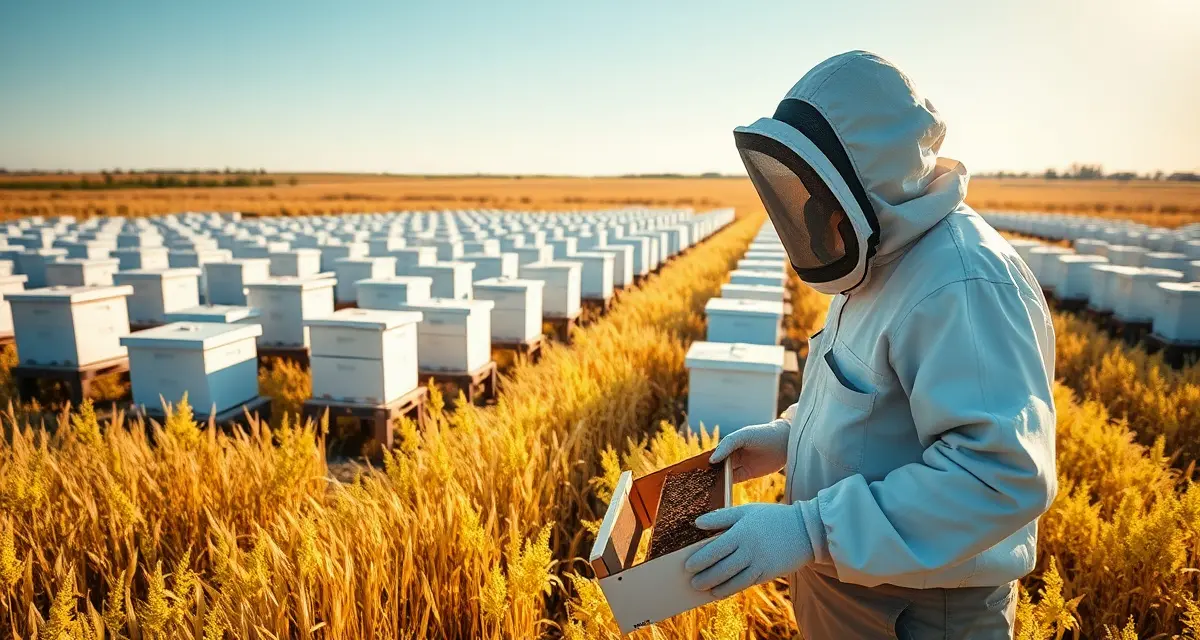
Kansas Apiary Regulations for Commercial Beekeeping Operations
Kansas is a transit state for many migratory operators moving between Texas winter yards and Northern Plains summer positions, and it also offers meaningful summer honey production opportunities from sweet clover and alfalfa. The state's central location on the I-70 and I-135 corridors makes it part of the routing reality for Plains circuit operators regardless of whether they stop to place hives.
Kansas requires annual apiary registration and periodic inspection for commercial operations. The Kansas Department of Agriculture oversees apiary regulation through its Division of Plant Health, and requirements apply to out-of-state operators placing hives in the state.
TL;DR
- Kansas's primary commercial beekeeping role is shaped by its crop mix, climate, and position on the national pollination circuit.
- Pollination rates in Kansas range $65-220/hive depending on crop depending on crop and colony strength requirements.
- Out-of-state operators entering Kansas for pollination contracts must register with the state agricultural authority and obtain a Certificate of Health.
- Kansas functions as either a primary pollination destination, a seasonal honey production location, or a transitional stop depending on the circuit.
- Tracking permit status, registration documents, and yard records for Kansas operations requires organized record-keeping before the season opens.
Registration Requirements
Kansas apiary registration is administered by the Kansas Department of Agriculture. Commercial operators, including out-of-state businesses that place hives in Kansas for any seasonal purpose, must register yard locations and colony counts. Annual renewal is required.
If Kansas is purely a transit stop with colonies in sealed trucks on the highway, registration requirements generally don't apply. Stopping to place hives, even briefly, triggers the registration requirement. For the state-by-state apiary compliance management that multi-state operators need, Kansas should be in your permit tracking system if you place hives there.
Entry Certificate Requirements
Kansas may require a health certificate for colonies entering from other states. Contact the Kansas Department of Agriculture's Division of Plant Health to confirm current entry documentation requirements before your planned movement. Have your origin state inspection scheduled in advance.
Kansas Honey Production
Kansas has good summer honey production potential from sweet clover in the eastern and central parts of the state, particularly in years with adequate spring moisture that supports clover development. Some operators use Kansas as a mid-season honey production stop between Texas and the Dakotas.
For commercial beekeeping in Kansas specifically, the state's agricultural landscape is primarily winter wheat, corn, and soybean country, with the most consistent honey forage in the eastern third of the state.
Africanized Bee Awareness
Kansas is on the northern edge of the documented Africanized honey bee (AHB) range. While AHB establishment in Kansas is not as extensive as in Texas or Oklahoma, operators moving colonies between Kansas and states with established AHB presence should understand destination state requirements for colonies with Texas or Southwest history.
Frequently Asked Questions
What registration is required for commercial beekeeping in Kansas?
All commercial beekeeping operations in Kansas, including out-of-state operators placing hives seasonally, must register with the Kansas Department of Agriculture's Division of Plant Health. Registration covers all yard locations and colony counts and requires annual renewal. Contact the Kansas Department of Agriculture for current registration forms, fees, and any updates. Out-of-state operators must complete registration before placing hives in the state.
What permits are needed for transit through Kansas with bee colonies?
Pure transit through Kansas on interstate highways with colonies in sealed trucks generally does not require Kansas apiary registration. The registration requirement applies when colonies are placed at a Kansas location. If you stop anywhere in Kansas to unload or temporarily place hives, register those locations with the Kansas Department of Agriculture. Contact the department before your season if you have any operations that could be interpreted as placement rather than transit.
How do you register apiary sites across Kansas counties?
Kansas apiary registration is state-level, covering all yard locations under a single operator registration. When registering, provide yard location information, county, and colony counts for each site. Multi-county operations register all sites together under one state registration. Update your registration if you add or change yard locations during the season. Kansas does not require separate county-level apiary registrations.
What is the process for registering an out-of-state apiary in a new state?
Most states require out-of-state operators to register with the state department of agriculture apiary program before placing colonies. The process typically involves submitting a registration application (online or paper), paying a fee (usually $10-50 per location), and providing contact information for the operation. Some states also require the registration to be renewed annually. Contact the destination state's department of agriculture apiary program at least 60 days before your planned arrival to confirm current requirements.
What documentation do state apiary inspectors typically review?
State apiary inspectors review health certificates for out-of-state colonies, registration documentation, and colony inspection records during apiary visits. Inspectors check for signs of American foulbrood, European foulbrood, and other regulated pests and diseases. Operations with organized digital records that include treatment history and mite counts typically have faster, less complicated inspections than operations without documentation. Some state inspectors also verify that varroa mite loads are below state entry thresholds.
What triggers a state apiary inspection?
State apiary inspections can be triggered by routine inspection schedules (most states inspect a percentage of registered apiaries annually), neighbor or landowner complaints, disease reports from nearby operations, or inspection requirements tied to state entry permits. California, in particular, has the right to inspect incoming loads at port of entry for commercial beekeeping operations. Maintaining current registration and organized records makes required inspections faster and less disruptive.
Try These Free Tools
Sources
- USDA Agricultural Research Service
- Bee Informed Partnership
- American Beekeeping Federation (ABF)
- Kansas Department of Agriculture
- Project Apis m.
Get Started with PollenOps
Commercial operations working in Kansas face the same registration, permit, and documentation requirements as any state on the national circuit -- plus Kansas's specific regulatory requirements. PollenOps tracks your Kansas yard records, contract assignments, and permit documentation alongside your full operation, so entering a new state doesn't add a separate administrative burden. See how the platform fits operations working across multiple states.