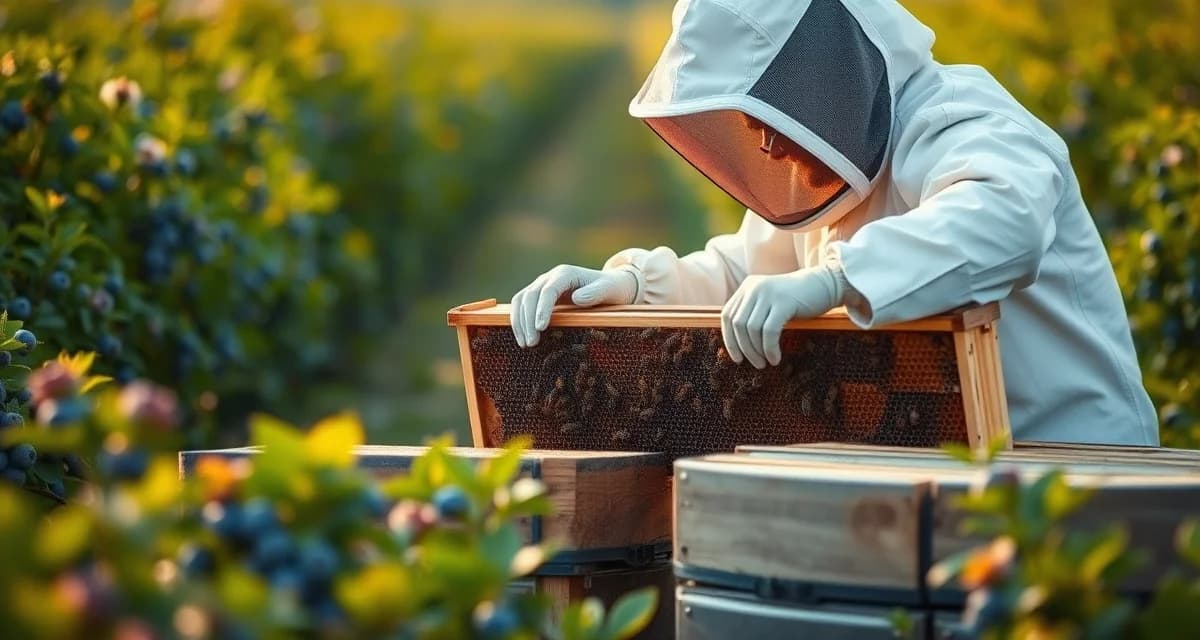
Commercial Beekeeping in Maine: Blueberry Pollination Guide
Maine blueberry pollination runs mid-May through June, a key spring income window that fits cleanly into the migratory circuit after California almonds and before summer honey flows in the Midwest. And the scale of the opportunity is real. Maine wild blueberry acreage requires 50,000 to 80,000 hives annually for pollination, making the state one of the largest single-crop pollination markets on the East Coast.
The market exists. The question is how to access it, what Maine growers require, and what regulations you'll need to comply with to operate there.
TL;DR
- Maine's primary commercial beekeeping role is shaped by its crop mix, climate, and position on the national pollination circuit.
- Pollination rates in Maine range $65-220/hive depending on crop depending on crop and colony strength requirements.
- Out-of-state operators entering Maine for pollination contracts must register with the state agricultural authority and obtain a Certificate of Health.
- Maine functions as either a primary pollination destination, a seasonal honey production location, or a transitional stop depending on the circuit.
- Tracking permit status, registration documents, and yard records for Maine operations requires organized record-keeping before the season opens.
Why Maine Wild Blueberries Are Different
Wild blueberry pollination in Maine is unlike any other pollination market you'll encounter. Maine's wild blueberry barrens are not planted orchards. They're managed wild stands: sprawling rocky landscapes covered with naturally occurring low-bush blueberry plants that have grown in Maine's coastal and inland regions for thousands of years.
The scale is massive. Maine produces roughly 60,000 to 80,000 acres of wild blueberries, concentrated in Hancock, Washington, Aroostook, and Oxford counties. This creates a pollination demand that Maine's domestic bee population can't meet, which is why out-of-state commercial operators are central to the state's blueberry harvest.
The barrens are also isolated. Many Maine blueberry yards are accessed by dirt roads, miles from the nearest town. Your trucks and equipment need to handle rough conditions.
Maine Blueberry Pollination Timing
The pollination window in Maine is compressed. Wild blueberry bloom runs roughly from late May through the third week of June, depending on the season and location. Coastal areas typically bloom earlier than inland barrens. Aroostook County in the north blooms later than Washington County on the coast.
You're working with a 3 to 4 week window, total. Most individual farm placements are active for 2 to 3 weeks. The colony delivery and retrieval logistics are intense.
This timing is ideal for operators coming off almond season. California almonds finish in March, and colonies have 6 to 8 weeks to recover and build before Maine placement.
How Do You Get Blueberry Pollination Contracts in Maine?
Maine's blueberry pollination market is relationship-driven. Most large processors (Wyman's, Jasper Wyman & Son, Cherryfield Foods) coordinate hive placement across their contracted grower networks. Getting into that network often means reaching out to processor procurement departments, grower cooperatives, or individual growers directly.
The University of Maine Cooperative Extension is a good starting point for understanding the Maine blueberry market and getting introductions to the right people. Maine's blueberry industry is concentrated enough that word-of-mouth referrals matter. Operators who have run Maine circuits for multiple years often have multi-year contracts with the same growers. New operators are typically filling capacity gaps rather than displacing established suppliers. Come in with good colony strength documentation, competitive pricing, and a professional approach to contracting.
Rates for Maine wild blueberry pollination typically run $70 to $130 per hive per placement, lower than almond rates but for shorter placements.
What Colony Strength Do Maine Blueberry Growers Require?
Maine growers typically require 4 to 8 frames of bees at delivery, with a laying queen. These requirements are lower than California almond standards but should not be underestimated. Growers in Maine have become more sophisticated about measuring colony strength and holding beekeepers accountable.
Many Maine contracts now specify:
- Minimum frame count at delivery
- Grower right to inspect upon delivery
- Penalties or reduced payment for colonies below specified strength
After almond season and spring honey flows, your colonies should have plenty of population to meet Maine requirements if they're well-managed. But colonies stressed during California or early spring circuit should be assessed before Maine placement.
Maine Apiary Registration Requirements
Maine requires registration of all apiaries, and this applies to out-of-state operators bringing hives into Maine.
Key Requirements
Apiary registration: All apiaries in Maine must be registered with the Maine Department of Agriculture, Conservation and Forestry. Out-of-state operators need to register each yard location.
Entry requirements: Colonies entering Maine from other states must be accompanied by a certificate of inspection from the state of origin, dated within 30 days of movement. The certificate must show the colony count and confirm freedom from American foulbrood and other regulated diseases.
Maine state inspection: Maine may inspect incoming colonies. Be prepared for inspectors to check hives at the yard.
Contact the Maine Department of Agriculture's Division of Animal & Plant Health for current requirements, as regulations can change. Permit applications and inspection certificate requirements should be confirmed before moving hives into the state.
Operational Logistics for Maine Blueberry Placement
Maine blueberry yards present logistical challenges that differ from California almonds.
Road and Access Conditions
Many Maine blueberry barrens are accessed by unpaved roads that can be problematic for loaded hive trucks in early spring, when ground is often still soft from winter thaw. Talk to growers about road conditions before scheduling deliveries in late May. Some yards may require smaller loads than you'd run on California paved roads.
Yard Configuration
Wild blueberry barrens are large, open landscapes. You'll often be placing hives on the edges of fields or in clustered groups spread across a large acreage. Coordinate with growers on exact placement locations. They understand where hive placement delivers the best coverage for their specific barrens.
Communication with Growers
Maine blueberry growers watch bloom carefully. They'll call you when they want hives in, and they'll call you when they want them out. Responsive communication is expected. If you're managing multiple grower contracts in multiple states, Maine requires the same attention as any other contract.
Maine in the Migratory Circuit
For operators building an East Coast migratory circuit, Maine typically fits like this:
- February: California almonds
- March to April: Move out of California, colonies recover and build
- May: Enter Maine (or Pennsylvania/New York apples, depending on your route)
- June: Maine blueberry pollination
- July to August: Move to summer honey yards in Maine, Vermont, or Midwest
- September to October: Begin fall management and winter prep
Maine has solid summer honey production opportunities beyond blueberry. Wildflower and clover forage in Maine's interior, combined with some remaining blueberry flow, can yield a good summer honey crop before moving to winter yards.
FAQ
How do you get blueberry pollination contracts in Maine?
Start by contacting Maine's major wild blueberry processors (Wyman's and Cherryfield Foods among others), whose procurement teams coordinate hive placement across their grower networks. Maine Cooperative Extension and the Wild Blueberry Commission of Maine can also provide industry contacts. Plan to visit Maine and meet growers in person in the off-season. Most successful Maine beekeeping relationships develop over multiple years.
What colony strength do Maine blueberry growers require?
Most Maine wild blueberry contracts specify a minimum of 4 to 8 frames of bees at delivery with an actively laying queen. Standards vary by grower and processor. Some larger operations have moved to requiring 6+ frames at delivery and reserve the right to inspect upon arrival. Bring colonies that are visibly strong. Growers notice the difference between a 4-frame and an 8-frame colony even without counting frames.
What are Maine's apiary registration requirements?
Maine requires registration of all apiaries with the Department of Agriculture, Conservation and Forestry. Out-of-state operators must register each yard location and accompany colonies with a state-of-origin inspection certificate dated within 30 days of movement. The certificate must confirm freedom from American foulbrood and other regulated diseases. Contact the Maine Division of Animal & Plant Health for current forms, fees, and submission requirements before your first season in the state.
What is the process for registering an out-of-state apiary in a new state?
Most states require out-of-state operators to register with the state department of agriculture apiary program before placing colonies. The process typically involves submitting a registration application (online or paper), paying a fee (usually $10-50 per location), and providing contact information for the operation. Some states also require the registration to be renewed annually. Contact the destination state's department of agriculture apiary program at least 60 days before your planned arrival to confirm current requirements.
What documentation do state apiary inspectors typically review?
State apiary inspectors review health certificates for out-of-state colonies, registration documentation, and colony inspection records during apiary visits. Inspectors check for signs of American foulbrood, European foulbrood, and other regulated pests and diseases. Operations with organized digital records that include treatment history and mite counts typically have faster, less complicated inspections than operations without documentation. Some state inspectors also verify that varroa mite loads are below state entry thresholds.
What triggers a state apiary inspection?
State apiary inspections can be triggered by routine inspection schedules (most states inspect a percentage of registered apiaries annually), neighbor or landowner complaints, disease reports from nearby operations, or inspection requirements tied to state entry permits. California, in particular, has the right to inspect incoming loads at port of entry for commercial beekeeping operations. Maintaining current registration and organized records makes required inspections faster and less disruptive.
Try These Free Tools
Sources
- USDA Agricultural Research Service
- Bee Informed Partnership
- American Beekeeping Federation (ABF)
- Maine Department of Agriculture
- Project Apis m.
Get Started with PollenOps
Commercial operations working in Maine face the same registration, permit, and documentation requirements as any state on the national circuit -- plus Maine's specific regulatory requirements. PollenOps tracks your Maine yard records, contract assignments, and permit documentation alongside your full operation, so entering a new state doesn't add a separate administrative burden. See how the platform fits operations working across multiple states.