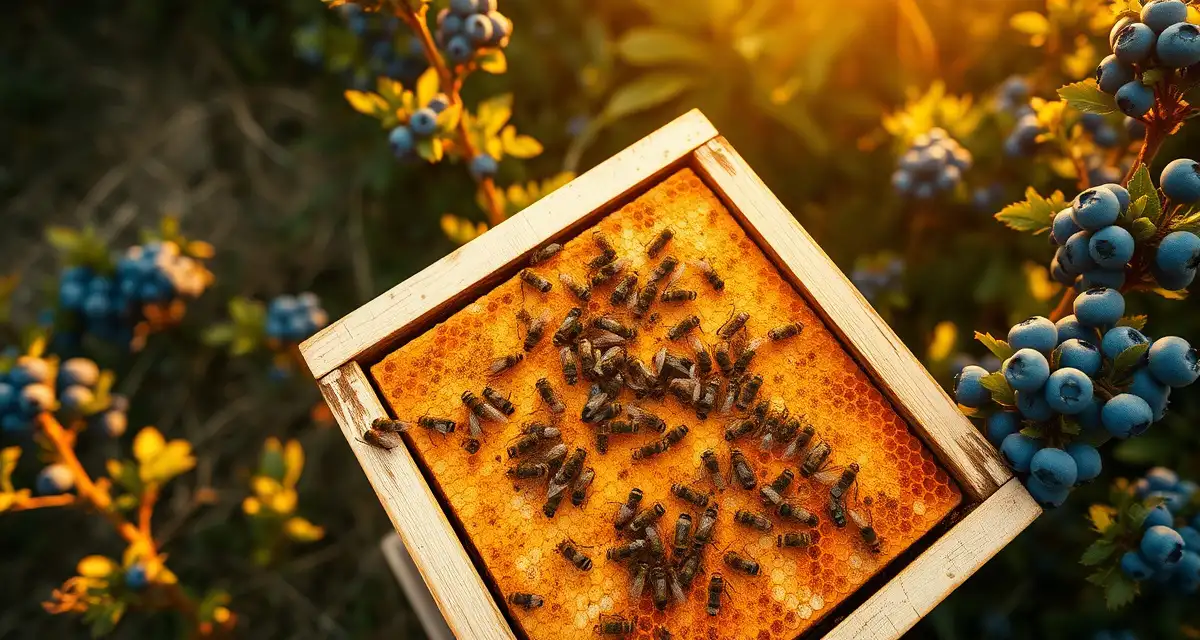
Blueberry Pollination Contracts: Timing Pricing and Hive Requirements
Blueberries are among the most bee-dependent commercial crops grown in the United States. Unlike almonds, which need cross-pollination between varieties, blueberries rely on bees for fruit set even in self-fertile varieties, and at 2–4 hives per acre, density requirements are higher than most tree fruit.
Maine and Michigan drive the bulk of commercial blueberry demand. The Pacific Northwest (Oregon and Washington) has growing highbush acreage. New Jersey and North Carolina are significant producers. And timing is everything: blueberry pollination windows are short and don't wait for logistics problems.
TL;DR
- Commercial blueberry pollination requires 2-4 hives per acre depending on variety and field density.
- Blueberry bloom windows are narrow (7-14 days) and vary by region from late February in Alabama to July in Maine.
- Lowbush blueberry in Maine operates under a different management model than highbush operations in Michigan, New Jersey, and the Pacific Northwest.
- Hive strength requirements for blueberry contracts typically range from 5-7 frames of bees depending on the grower.
- Coordinating delivery timing across multiple growers within a compressed bloom window is the primary logistics challenge in blueberry season.
Blueberry Species and Pollination Differences
Understanding which blueberry species you're working with changes how you manage hives.
Lowbush blueberries (Maine and eastern Canada): Native variety, harvested primarily in Maine's Washington County and parts of New Brunswick. Acreage is managed by burning or mowing on a 2-year cycle, not planted in rows. Lowbush blueberry bloom runs late May to mid-June in Maine. Hive requirements: 2–3 colonies per acre, with strong foraging populations.
Highbush blueberries (Michigan, New Jersey, Pacific Northwest, North Carolina): Commercial planted varieties. Bloom timing varies by region: April in North Carolina and parts of the Southeast, May in Michigan and New Jersey, May–June in Oregon and Washington. Standard contract requirement: 2–4 hives per acre depending on acreage and expected set.
Half-high varieties: Common in Minnesota and Wisconsin. Intermediate timing and requirements.
The species distinction matters for contract timing. A circuit that includes Maine lowbush (late May/June) fits differently than one targeting Michigan highbush (mid-May). Plan your post-almond routing to hit the right region at the right time.
Timing: When to Be Where
Pacific Northwest (Oregon/Washington): Highbush blueberry bloom starts mid-April in southwestern Oregon and runs through May in Washington's Yakima Valley and Puget Sound lowlands. Operators exiting California almonds in late March have enough time to move north if logistics are pre-planned.
Michigan: Peak highbush bloom is mid to late May. Michigan is the second-largest blueberry state, with major concentration in Van Buren, Berrien, and Allegan counties in the southwest. A truck running from California almond removal in late March has 6–8 weeks to stage for Michigan, enough time for colonies to recover and rebuild from almond stress.
New Jersey: New Jersey highbush runs late April–May. The state has significant acreage in Atlantic and Burlington counties.
Maine (lowbush): Wild blueberry bloom is late May through mid-June, with the season concentrated in Washington County (Downeast Maine). This is a remote and logistically challenging destination. The nearest large city with truck infrastructure is Bangor, 2+ hours from most blueberry yards. Plan the Maine circuit specifically; it doesn't fit neatly into a generic eastern seaboard route.
North Carolina: Southern highbush and rabbiteye blueberries bloom March–April. North Carolina is increasingly important and fits well post-almond for operators willing to route east instead of north.
Hive Requirements
Blueberry pollination requires genuinely strong colonies, close to almonds-level 6–8 frames. Standard contract requirements:
- Michigan and New Jersey highbush: 4–6 frames of bees per colony
- Maine lowbush: 3–4 frames per colony on delivery (season is earlier in the spring build)
- Pacific Northwest highbush: 4–6 frames
One difference from almonds: blueberry contracts less commonly specify exact frame counts in writing, particularly with smaller grower operations. Large berry cooperatives and processor-affiliated growers are more likely to have explicit strength requirements.
Colony performance on blueberries varies significantly with weather. Cold temperatures during bloom suppress foraging, and rain can push bees inside for days. Operators who get locked in a 3-day rain event in Maine need hives strong enough to resume effective foraging quickly when weather clears.
Pricing Benchmarks
Blueberry pollination rates are lower than almond rates but higher than most other crops:
- Michigan highbush: $100–130/hive
- Maine lowbush: $85–110/hive
- Pacific Northwest highbush: $95–125/hive
- New Jersey/mid-Atlantic: $90–115/hive
- North Carolina highbush: $80–100/hive
Rates vary year to year depending on hive supply from the almond season, winter losses, and regional demand. Strong years for growers (good pricing for berries) often translate to better rates for beekeepers.
Contract Terms to Negotiate
Placement density: Your contract should specify acres per hive or hives per acre (same thing, just different framing). Get this in writing. "Adequate hive supply" is not a contract term.
Timing: Delivery must align with bloom, not arbitrary calendar dates. Include a weather/bloom condition clause that allows adjustment if bloom is early or late.
Payment: Standard practice is 50% on delivery, 50% within 14 days of removal. Maine growers sometimes push for single payment on removal. Push back on this, as you're providing credit for the rental period.
Access: Maine and northern Michigan have significant infrastructure challenges. Get GPS coordinates, access road descriptions, and vehicle weight limits for any bridge crossings on your route into the yard.
Pesticide notification: Berry crops receive fungicide applications during bloom. Botrytis management in particular involves applications that can impact bees. Require advance notification (24 hours minimum) for any pesticide application within 2 miles of placed hives.
Maine-Specific Logistics
Maine's Washington County blueberry barrens are genuinely remote. The infrastructure is different from California's Central Valley:
- Many yard access roads are unpaved and wet in spring
- Cell coverage is spotty. Satellite communication for crew is important.
- Distance from major truck infrastructure: factor in added time for any equipment or parts needs
- Maine has cold springs. Colonies may look weak on arrival and need a week to rebound in warm weather.
Maine growers tend to have multi-year relationships with operators. Getting into the Maine circuit requires trust, and trust is built over seasons, not one phone call. If you're trying to break into Maine blueberries, target smaller grower operations first, build a track record, and expand from there.
Managing Multi-Region Blueberry Circuits
An operator running 2,000 hives might hit Michigan in May, Maine in late May/early June, and Pacific Northwest blueberries in late May or June. This requires splitting the fleet (some trucks heading east, some heading north) with separate contracts and compliance documents for each destination.
Multi-region blueberry management requires:
- Pre-arranged staging yards near each destination
- Certificate of Health for each receiving state
- Clear crew assignments for each regional leg
- Contract records that tie specific hive groups to specific grower accounts
This is where spreadsheet management breaks down completely. Operators tracking this on paper are running three simultaneous logistics operations without a shared information system. PollenOps' multi-yard management connects each hive group to its contract, certificate, crew assignment, and grower account, so the complexity of running multiple states at once becomes manageable. See how it works
FAQ
What hive density is needed for blueberry pollination?
Highbush blueberry contracts typically specify 2–4 hives per acre, with Michigan and New Jersey often requiring 3–4 hives per acre for commercial operations prioritizing high set rates. Maine lowbush operations typically run 2–3 hives per acre. The wild blueberry barrens cover large contiguous areas and density requirements reflect the acreage size more than individual plant needs. Colony strength at delivery matters as much as density: weak colonies placed at the required density underperform compared to strong colonies at a slightly lower density. Target 4–6 frames of covered bees for highbush contracts.
When is blueberry pollination season in Maine vs the Pacific Northwest?
Maine lowbush blueberry bloom runs late May through mid-June, peaking in early June in most areas of Washington County. The Pacific Northwest highbush season varies significantly by location. Southwestern Oregon sees bloom as early as late April, while Washington's Puget Sound and Yakima regions peak in May. Michigan highbush peaks in mid-to-late May. North Carolina's season is earliest, running late March through April for southern highbush varieties. For operators planning a multi-region circuit, Oregon/Washington can follow California almonds immediately (late March/April entry), while Michigan and Maine are May/June destinations that fit a slightly later circuit leg.
How do blueberry pollination rates compare to almond rates?
Blueberry rates are generally 40–60% of almond rates. Current Michigan highbush rates run $100–130/hive versus $185–220/hive for California almonds. Maine lowbush rates are $85–110/hive. The lower rates partly reflect shorter rental periods (10–14 days versus 3–5 weeks for almonds) and lower grower per-acre revenue compared to almonds. The economics still work for most commercial operators because blueberry placements follow almond season and use hives that would otherwise be in a spring buildup period with no pollination income. A 1,000-hive operation adding a Michigan blueberry leg at $115/hive generates $115,000 from hives that would otherwise be generating nothing.
What is the difference between lowbush and highbush blueberry pollination requirements?
Lowbush blueberry (Vaccinium angustifolium), grown primarily in Maine and eastern Canada, is managed as a wild crop in natural fields and requires 2-4 hives per acre. Highbush blueberry, grown commercially in Michigan, New Jersey, Oregon, and Washington, is a cultivated crop with different density requirements (typically 2-3 hives per acre). Lowbush bloom happens in late June to early July in Maine, while highbush bloom varies from May in the Mid-Atlantic to July in northern Michigan.
How long is the blueberry pollination placement period?
Blueberry pollination placements typically run 2-4 weeks, covering the full bloom window plus a few days before and after. Hives should be in position 1-2 days before peak bloom to allow forager orientation. Removal timing is typically negotiated in the contract and often coincides with petal fall or a set number of days after delivery. Most blueberry contracts specify 3-4 weeks of placement.
Can blueberry pollination contracts be combined with other crops in the same region?
Yes, and this is how experienced operators build efficient circuits. In the Pacific Northwest, blueberry season in June-July follows apple and cherry pollination in April-May. In New England, blueberry contracts in Maine (July) can follow apple pollination in Massachusetts and New York (May). Michigan blueberry in May-June can precede summer honey flows in the northern Midwest. Sequencing crops within a region reduces transport costs and maximizes revenue per hive per season.
Try These Free Tools
Sources
- USDA Agricultural Research Service
- Bee Informed Partnership
- American Beekeeping Federation (ABF)
- University of Maine Cooperative Extension
- Michigan State University Extension Apiculture Program
Get Started with PollenOps
Blueberry pollination across multiple growers and states requires tight coordination between delivery timing, hive inventory, and contract documentation. PollenOps tracks each grower's contract terms alongside your hive assignments and yard locations so your team executes on the schedule you planned, not the schedule you remember.