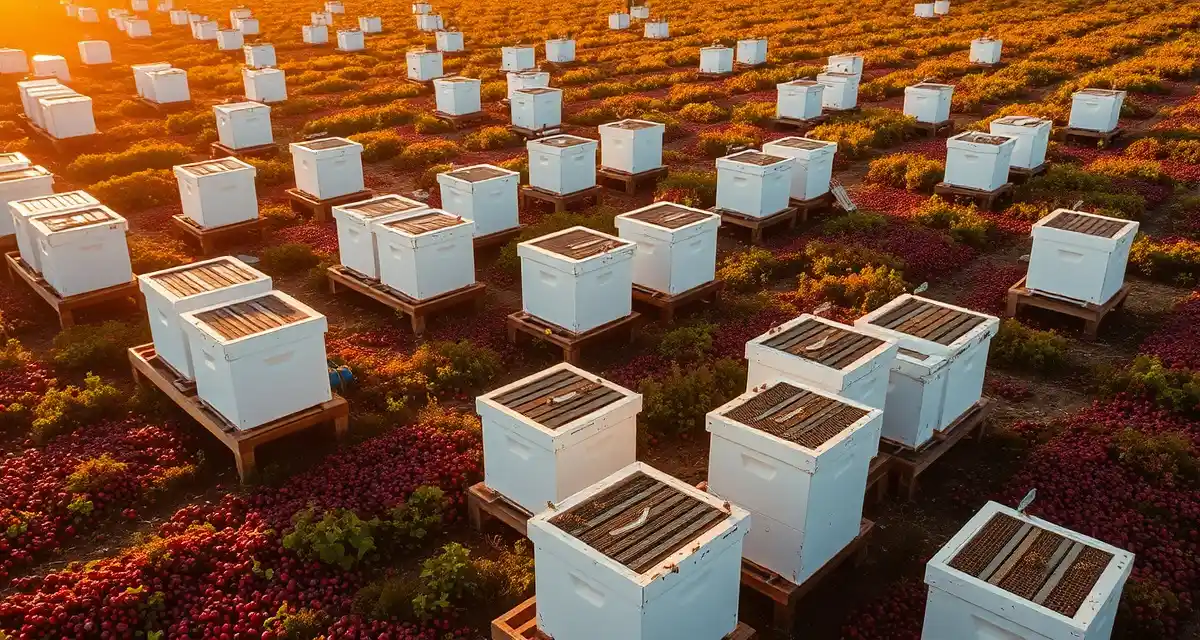
Cranberry Pollination in Maine and Massachusetts: A Beekeeper's Guide
Maine and Massachusetts produce the majority of Eastern US cranberries, and commercial hive placements are essential to their pollination. The two states handle the majority of the Eastern cranberry crop, with Massachusetts's Cape Cod bogs being the larger market and Maine's Washington County bogs being the more remote but equally active second market.
Cranberry pollination requires water-access yards near bogs, a specialized logistics challenge that filters out operators who aren't prepared for it. Bogs are wetland environments, and yard placement must account for saturated soils, limited road access during wet weather, and the need to position hives close enough to the bogs for effective pollination without putting equipment in flood-risk locations.
TL;DR
- Maine's primary commercial beekeeping role is shaped by its crop mix, climate, and position on the national pollination circuit.
- Pollination rates in Maine range $65-220/hive depending on crop depending on crop and colony strength requirements.
- Out-of-state operators entering Maine for pollination contracts must register with the state agricultural authority and obtain a Certificate of Health.
- Maine functions as either a primary pollination destination, a seasonal honey production location, or a transitional stop depending on the circuit.
- Tracking permit status, registration documents, and yard records for Maine operations requires organized record-keeping before the season opens.
The Cranberry Pollination Calendar
Maine wild lowbush cranberry and cultivated highbush cranberry bloom in late June, typically running from approximately June 20 through July 10 in Washington County and other eastern Maine production areas. Massachusetts cultivated cranberry boom follows a slightly different calendar based on variety, generally running mid-June through early July in the Plymouth and Barnstable County bog regions.
The timing of cranberry bloom relative to the broader migratory calendar is useful for operators on the Northeast circuit. By late June, most spring apple and blueberry work has finished, and colonies that performed spring pollination duty in Maine or Massachusetts can transition directly into cranberry work without a long repositioning move.
Cranberry pollination contracts in Maine and Massachusetts are typically arranged months in advance, with most growers having established beekeeper relationships. Breaking into this market requires outreach in the fall or early winter for the following June season.
Logistics: Getting to the Bogs
Cranberry bog placement logistics are unlike most other pollination work. The bogs are wetland systems, often surrounded by low, wet terrain that makes truck access unpredictable. Some yards are accessed by gravel roads that hold up well; others require driving through saturated areas that can bog down a loaded truck after rain.
Scout every proposed yard location before committing to a contract. Know exactly where you're setting hives, what the road access looks like, and whether you'll need a smaller vehicle to service the yard compared to your primary equipment hauler. Water-tolerant vehicle options and towing capability are genuine operational requirements in cranberry country.
Colonies placed for cranberry pollination should be positioned 1/4 to 1/2 mile from the bog on stable ground with a clear flight path to the bog. Hives placed too close to the bog edge risk flooding or high humidity issues during wet June weather.
Colony Requirements
Most cranberry growers require colonies at 5 to 6 frames of bees minimum. Unlike almond season where individual colony strength is paramount, cranberry growers want adequate stocking density per bog acre. Standard placement runs 1 to 1.5 hives per acre for cultivated cranberry.
Colony condition in late June reflects the spring's management quality. Colonies that came through spring pollination work with good mite management and adequate nutrition will be in better shape for cranberry than those that were run hard through multiple spring contracts without adequate recovery time.
For Maine beekeeping operations including cranberry season, the regulatory side includes Maine's health certificate requirements for out-of-state operators and the state's apiary registration.
Massachusetts Cranberry Compliance
Massachusetts requires health certificates for incoming colonies and annual apiary registration. Out-of-state operators arriving for June cranberry season should have all Massachusetts documentation in order before trucks are loaded. The Massachusetts apiary regulations guide covers the full compliance picture.
Massachusetts cranberry growers in Plymouth and Barnstable counties have a strong beekeeper network and know which operators deliver reliably. Building a Massachusetts cranberry contract relationship requires a track record that growers trust.
Pricing and Contract Structure
Eastern cranberry pollination rates have typically run $70 to $100 per hive in recent seasons. Maine rates may run slightly lower than Massachusetts due to smaller market scale. Contracts specify delivery date, colony strength at placement, number of hives per bog, pickup timing after bloom, and payment terms.
Some cranberry growers arrange multiple placements at multiple bogs, requiring operators to coordinate staggered delivery and pickup schedules across a geography of interconnected bog systems. Map all the bog locations and plan your logistics before committing to a contract.
Frequently Asked Questions
How do you access cranberry bogs for hive placement?
Cranberry bog access requires scouting every proposed location before committing to a contract. Bog yards are often reached by farm roads through low, wet terrain that can become impassable after rain. Walk every access route on foot if possible before driving in with a loaded truck. Confirm with the grower what road conditions are typical in June, whether any access points have known wet weather issues, and what to do if a road becomes impassable during your placement or pickup window. Some bog yards require smaller vehicles or tractor-assistance during wet conditions. Factor this into your logistics planning.
What colony strength do cranberry growers require?
Maine and Massachusetts cranberry growers typically require colonies at 5 to 6 frames of bees at time of placement. Stocking density runs approximately 1 to 1.5 hives per bog acre. Colony strength at late June reflects management quality through the preceding spring season. Operations that ran multiple spring pollination contracts need to ensure colonies have had adequate recovery time and mite management before June cranberry placement. Well-nourished, healthy colonies at the beginning of June are the starting point for meeting cranberry grower strength standards.
How is cranberry pollination priced in Maine vs Massachusetts?
Massachusetts cultivated cranberry pollination rates have typically run $80 to $100 per hive for contracted commercial placement. Maine rates for wild lowbush and cultivated bog pollination may run $70 to $90 per hive, reflecting the smaller market and fewer competing operators. Rates in both states vary based on colony strength requirements, the specific grower's location and bog accessibility, and overall demand in a given season. Operators with established multi-year relationships in both states sometimes negotiate package pricing across multiple bogs. Contact the cranberry grower associations in both states for current market rate information.
What is the process for registering an out-of-state apiary in a new state?
Most states require out-of-state operators to register with the state department of agriculture apiary program before placing colonies. The process typically involves submitting a registration application (online or paper), paying a fee (usually $10-50 per location), and providing contact information for the operation. Some states also require the registration to be renewed annually. Contact the destination state's department of agriculture apiary program at least 60 days before your planned arrival to confirm current requirements.
What documentation do state apiary inspectors typically review?
State apiary inspectors review health certificates for out-of-state colonies, registration documentation, and colony inspection records during apiary visits. Inspectors check for signs of American foulbrood, European foulbrood, and other regulated pests and diseases. Operations with organized digital records that include treatment history and mite counts typically have faster, less complicated inspections than operations without documentation. Some state inspectors also verify that varroa mite loads are below state entry thresholds.
What triggers a state apiary inspection?
State apiary inspections can be triggered by routine inspection schedules (most states inspect a percentage of registered apiaries annually), neighbor or landowner complaints, disease reports from nearby operations, or inspection requirements tied to state entry permits. California, in particular, has the right to inspect incoming loads at port of entry for commercial beekeeping operations. Maintaining current registration and organized records makes required inspections faster and less disruptive.
Try These Free Tools
Sources
- USDA Agricultural Research Service
- Bee Informed Partnership
- American Beekeeping Federation (ABF)
- Maine Department of Agriculture
- Project Apis m.
Get Started with PollenOps
Commercial operations working in Maine face the same registration, permit, and documentation requirements as any state on the national circuit -- plus Maine's specific regulatory requirements. PollenOps tracks your Maine yard records, contract assignments, and permit documentation alongside your full operation, so entering a new state doesn't add a separate administrative burden. See how the platform fits operations working across multiple states.