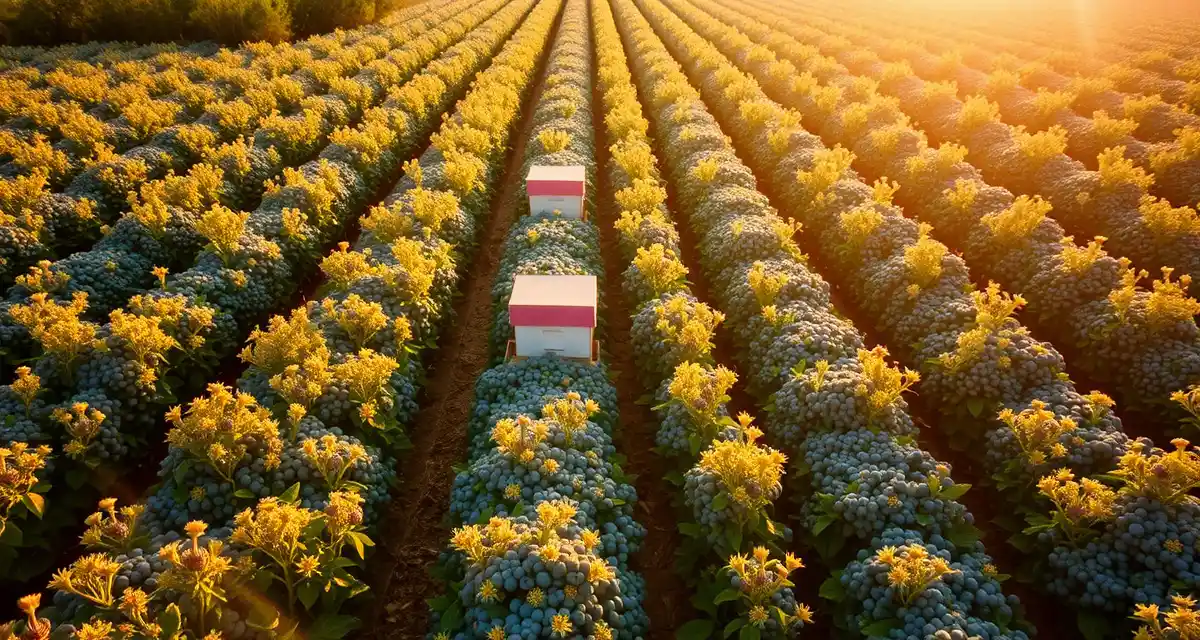
Building Your Maine Wild Blueberry Pollination Network
Wild Blueberry Association of North America events are the prime networking venue, and Maine blueberry growers tend to be loyal to trusted contractors. Relationship building is key. The Maine wild blueberry market is smaller and more geographically concentrated than California almonds or Washington apples, which makes it both more accessible for relationship-building and less forgiving of a bad first season.
TL;DR
- Maine's primary commercial beekeeping role is shaped by its crop mix, climate, and position on the national pollination circuit.
- Pollination rates in Maine range $65-220/hive depending on crop depending on crop and colony strength requirements.
- Out-of-state operators entering Maine for pollination contracts must register with the state agricultural authority and obtain a Certificate of Health.
- Maine functions as either a primary pollination destination, a seasonal honey production location, or a transitional stop depending on the circuit.
- Tracking permit status, registration documents, and yard records for Maine operations requires organized record-keeping before the season opens.
The Maine Wild Blueberry Market
Maine wild blueberry production is concentrated almost entirely in Washington County (Downeast Maine), with some production in Hancock County and other coastal areas. Wild blueberry barrens (the traditional term for managed wild blueberry land) cover approximately 60,000 acres in Maine.
Pollination for wild blueberry runs approximately 1.5-3 colonies per acre, creating demand for 90,000-180,000 colonies during the May-June bloom window. The market is significant but considerably smaller than the almond or apple markets.
Wild blueberry is fundamentally different from cultivated highbush blueberry. Wild blueberry barrens are managed landscapes of naturally occurring low-bush varieties. The production model involves burning or pruning every two years to manage plant age. Bee pollination substantially increases yields and seed set uniformity.
Wild Blueberry Association of North America
The Wild Blueberry Association of North America (WBANA) is the primary industry organization for wild blueberry producers. Membership includes Maine and Canadian (New Brunswick, Nova Scotia, Prince Edward Island, Quebec) producers.
WBANA Annual Conference: The WBANA annual meeting is the premier networking event for the wild blueberry industry. Held alternately in the US and Canada, it attracts growers, processors, and industry service providers including pollination contractors.
Attending the WBANA conference as a pollination contractor gives you access to the grower community in a structured environment. Bring documentation (colony count, delivery strength records, references) and prepare to have substantive conversations about pollination management.
WBANA industry publications and resources: WBANA publishes industry research and guidance documents that include pollination management. Familiarity with WBANA's published guidance on bee management for wild blueberry signals professional knowledge to growers.
Contact WBANA at their Orono, Maine offices to identify upcoming events and conference schedules.
University of Maine Cooperative Extension
The University of Maine Cooperative Extension serves Maine's agricultural community directly. Extension specialists in the wild blueberry program work with growers across Washington County.
UMaine Extension wild blueberry program: UMaine Extension has specific expertise in wild blueberry production and has conducted research on pollination management. Extension specialists are respected advisors in the grower community.
Extension specialists can provide warm introductions between operators seeking contracts and growers who need reliable pollination partners. Contact the UMaine Extension office in Machias (Washington County) to introduce yourself and express your interest in Maine wild blueberry relationships.
UMaine Wild Blueberry Research Station: The UMaine Wild Blueberry Research Station in Jonesboro conducts production research including pollination studies. Research station field days bring growers together around production topics that include bee management.
The Washington County Grower Community
Washington County, Maine is geographically remote: it's the easternmost county in the continental US, bordering New Brunswick, Canada. Blueberry barren operators are often multi-generational family operations with deep roots in the county.
This community character means:
Personal relationships matter: Washington County grower relationships are personal in a way that a large anonymous market isn't. Your reputation in the county's small professional community travels quickly, both positive and negative.
First impressions are amplified: How you handle your first season in Washington County affects how growers throughout the county perceive you. A reputation for reliable, professional delivery in year one opens doors that advertising never could.
Canadian cross-border network: Maine wild blueberry operations have close connections to Canadian blueberry growers across the New Brunswick border. Operators who build Maine relationships often find Canadian opportunities through those same networks.
Building Your Maine Presence
Timing your outreach: Maine blueberry boom season runs late May through early July. Reach out to growers in February-April for that year's season (late for first-year relationships), or in August-October for the following year (optimal timing for genuine relationship development).
Initial contact approach: A letter or email introducing yourself, with your operation details and references from existing pollination contracts, is a professional first approach for cold outreach; follow up with a phone call. If possible, visit Washington County in person. Face-to-face presence in remote communities has disproportionate impact.
Grower processor connections: Maine wild blueberry growers typically sell to one of a few processors (Jasper Wyman & Son, Cherryfield Foods, Stacy's). Processor-connected agricultural networks provide indirect access to the grower community.
How to get pollination contracts covers the full contract acquisition process including cold outreach approaches.
Maine blueberry pollination guide covers the operational and agronomic aspects of Maine wild blueberry pollination.
Frequently Asked Questions
How do you meet Maine wild blueberry growers?
The most effective venues are the Wild Blueberry Association of North America conference, UMaine Cooperative Extension wild blueberry program events, and in-person visits to Washington County. WBANA conference attendance brings you into direct contact with the grower community in a structured, professional environment. Attend with documentation of your operation and be prepared to discuss pollination management specifically. UMaine Extension specialists in Machias can facilitate introductions to growers who have expressed interest in new contractor relationships. Direct mail or email outreach to Washington County growers followed by phone follow-up works for cold outreach, though conversion is lower without a warm introduction.
What associations connect beekeepers with Maine blueberry contracts?
The Wild Blueberry Association of North America is the primary grower organization. The Maine State Beekeepers Association has members who work Maine blueberry and can provide local knowledge and referrals. The Maine Department of Agriculture, Conservation and Forestry's apiary program staff know the commercial operations active in the state and can provide context. UMaine Cooperative Extension is a respected neutral party that can facilitate introductions in the Washington County grower community. The PollenOps Grower Marketplace provides discovery access between operators with available capacity and growers seeking services, including in Maine's wild blueberry region.
How do you build long-term relationships with Maine blueberry producers?
First-season performance is everything in the small, tight-knit Washington County community. Deliver on time, deliver on spec, communicate proactively, send delivery documentation, and follow up with a professional season-end report. One exceptional first season creates word-of-mouth that's more valuable than any marketing effort in a small community. Initiate renewal conversations in August after the season ends, when growers making plans for next year prefer to confirm existing relationships before exploring new ones. Offer multi-year contract structures if your operation's capacity allows. Stable multi-year relationships are attractive to growers who want to reduce the search and evaluation cost of annual contractor selection.
What is the process for registering an out-of-state apiary in a new state?
Most states require out-of-state operators to register with the state department of agriculture apiary program before placing colonies. The process typically involves submitting a registration application (online or paper), paying a fee (usually $10-50 per location), and providing contact information for the operation. Some states also require the registration to be renewed annually. Contact the destination state's department of agriculture apiary program at least 60 days before your planned arrival to confirm current requirements.
What documentation do state apiary inspectors typically review?
State apiary inspectors review health certificates for out-of-state colonies, registration documentation, and colony inspection records during apiary visits. Inspectors check for signs of American foulbrood, European foulbrood, and other regulated pests and diseases. Operations with organized digital records that include treatment history and mite counts typically have faster, less complicated inspections than operations without documentation. Some state inspectors also verify that varroa mite loads are below state entry thresholds.
What triggers a state apiary inspection?
State apiary inspections can be triggered by routine inspection schedules (most states inspect a percentage of registered apiaries annually), neighbor or landowner complaints, disease reports from nearby operations, or inspection requirements tied to state entry permits. California, in particular, has the right to inspect incoming loads at port of entry for commercial beekeeping operations. Maintaining current registration and organized records makes required inspections faster and less disruptive.
Try These Free Tools
Sources
- USDA Agricultural Research Service
- Bee Informed Partnership
- American Beekeeping Federation (ABF)
- Maine Department of Agriculture
- Project Apis m.
Get Started with PollenOps
Commercial operations working in Maine face the same registration, permit, and documentation requirements as any state on the national circuit -- plus Maine's specific regulatory requirements. PollenOps tracks your Maine yard records, contract assignments, and permit documentation alongside your full operation, so entering a new state doesn't add a separate administrative burden. See how the platform fits operations working across multiple states.