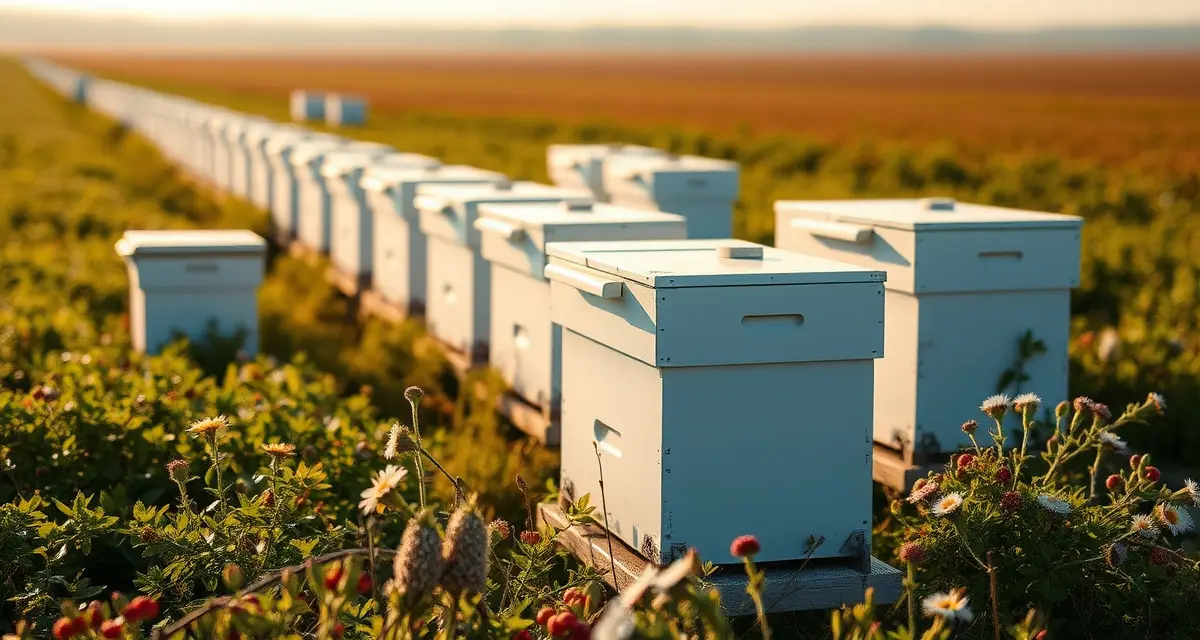
Massachusetts Apiary Regulations for Commercial Beekeeping
Massachusetts cranberry season attracts out-of-state hive movements in significant numbers each June. The state is a major cranberry producer, with commercial bogs concentrated in Plymouth, Barnstable, and Bristol counties on Cape Cod and Southeastern Massachusetts. This single crop creates a concentrated seasonal demand for commercial hives that draws operators from across the Northeast.
Massachusetts requires annual apiary registration and inspection for commercial beekeeping operations. The Massachusetts Department of Agricultural Resources (MDAR) Bureau of Plant and Animal Health oversees apiary regulation.
TL;DR
- Massachusetts's primary commercial beekeeping role is shaped by its crop mix, climate, and position on the national pollination circuit.
- Pollination rates in Massachusetts range $65-220/hive depending on crop depending on crop and colony strength requirements.
- Out-of-state operators entering Massachusetts for pollination contracts must register with the state agricultural authority and obtain a Certificate of Health.
- Massachusetts functions as either a primary pollination destination, a seasonal honey production location, or a transitional stop depending on the circuit.
- Tracking permit status, registration documents, and yard records for Massachusetts operations requires organized record-keeping before the season opens.
Registration Requirements
Massachusetts apiary registration is administered through the Massachusetts Department of Agricultural Resources. All commercial operators, including out-of-state businesses bringing hives for cranberry pollination or other seasonal work, must register yard locations and colony counts. Annual renewal is required.
Out-of-state operators arriving for the June cranberry season need to have Massachusetts registration in order before hives arrive. The cranberry grower community in Southeastern Massachusetts is well-coordinated, and operators who show up without documentation create problems for themselves quickly.
For operators managing multi-state New England compliance, Massachusetts registration should be on your spring checklist alongside Maine permits for operators working the cranberry circuit across both states.
Entry Documentation
Massachusetts requires health certificates for colonies entering from out of state. Contact the Massachusetts Department of Agricultural Resources before your planned June movement to confirm current entry requirements. Given the concentrated nature of cranberry season, inspection services in originating states can be busy in May and June.
Massachusetts Movement Permits for Cranberry Pollination
The cranberry season creates a specific permit coordination challenge because many operators are moving at the same time into a concentrated geographic area. Contact MDAR well in advance, ideally by April, to understand what's needed for your origin state certification to be accepted.
For detailed guidance on the cranberry pollination market, see the Maine and Massachusetts cranberry pollination guide which covers both states' seasonal requirements.
Colony Strength and Grower Requirements
Massachusetts cranberry growers typically specify colony strength requirements in their contracts. The concentrated bog environment and the timing of cranberry bloom in June mean that colony condition coming out of spring buildup is critical. Plan your May buildup management with June Massachusetts delivery requirements in mind.
Frequently Asked Questions
What registration is required for commercial beekeeping in Massachusetts?
All commercial beekeeping operations in Massachusetts, including out-of-state operators placing hives for cranberry pollination or other seasonal work, must register with the Massachusetts Department of Agricultural Resources Bureau of Plant and Animal Health. Registration requires listing all yard locations and colony counts and renews annually. Contact MDAR for current forms, fees, and any procedure updates. Out-of-state operators must register before placing hives.
What certificates are needed to bring hives into Massachusetts?
Massachusetts requires a health certificate or certificate of inspection from your origin state for colonies entering from out of state. Contact the Massachusetts Department of Agricultural Resources before your planned movement to confirm current entry documentation requirements. Given that many operators move to Massachusetts at the same time for cranberry season, plan your origin state inspection 4 to 6 weeks in advance to ensure documentation is ready.
How do you get Massachusetts movement permits for cranberry pollination?
Contact the Massachusetts Department of Agricultural Resources in April or May to understand the specific movement permit or documentation requirements for your origin state. Massachusetts's cranberry season is in June, and the regulatory staff are prepared for the seasonal influx of out-of-state operators. Having your Massachusetts registration current and your origin state health certificate in hand before your trucks are loaded is the right sequence. Growers may also have specific documentation requirements beyond state registration, so confirm with your grower contacts what paperwork they need at delivery.
What is the process for registering an out-of-state apiary in a new state?
Most states require out-of-state operators to register with the state department of agriculture apiary program before placing colonies. The process typically involves submitting a registration application (online or paper), paying a fee (usually $10-50 per location), and providing contact information for the operation. Some states also require the registration to be renewed annually. Contact the destination state's department of agriculture apiary program at least 60 days before your planned arrival to confirm current requirements.
What documentation do state apiary inspectors typically review?
State apiary inspectors review health certificates for out-of-state colonies, registration documentation, and colony inspection records during apiary visits. Inspectors check for signs of American foulbrood, European foulbrood, and other regulated pests and diseases. Operations with organized digital records that include treatment history and mite counts typically have faster, less complicated inspections than operations without documentation. Some state inspectors also verify that varroa mite loads are below state entry thresholds.
What triggers a state apiary inspection?
State apiary inspections can be triggered by routine inspection schedules (most states inspect a percentage of registered apiaries annually), neighbor or landowner complaints, disease reports from nearby operations, or inspection requirements tied to state entry permits. California, in particular, has the right to inspect incoming loads at port of entry for commercial beekeeping operations. Maintaining current registration and organized records makes required inspections faster and less disruptive.
Try These Free Tools
Sources
- USDA Agricultural Research Service
- Bee Informed Partnership
- American Beekeeping Federation (ABF)
- Massachusetts Department of Agriculture
- Project Apis m.
Get Started with PollenOps
Commercial operations working in Massachusetts face the same registration, permit, and documentation requirements as any state on the national circuit -- plus Massachusetts's specific regulatory requirements. PollenOps tracks your Massachusetts yard records, contract assignments, and permit documentation alongside your full operation, so entering a new state doesn't add a separate administrative burden. See how the platform fits operations working across multiple states.