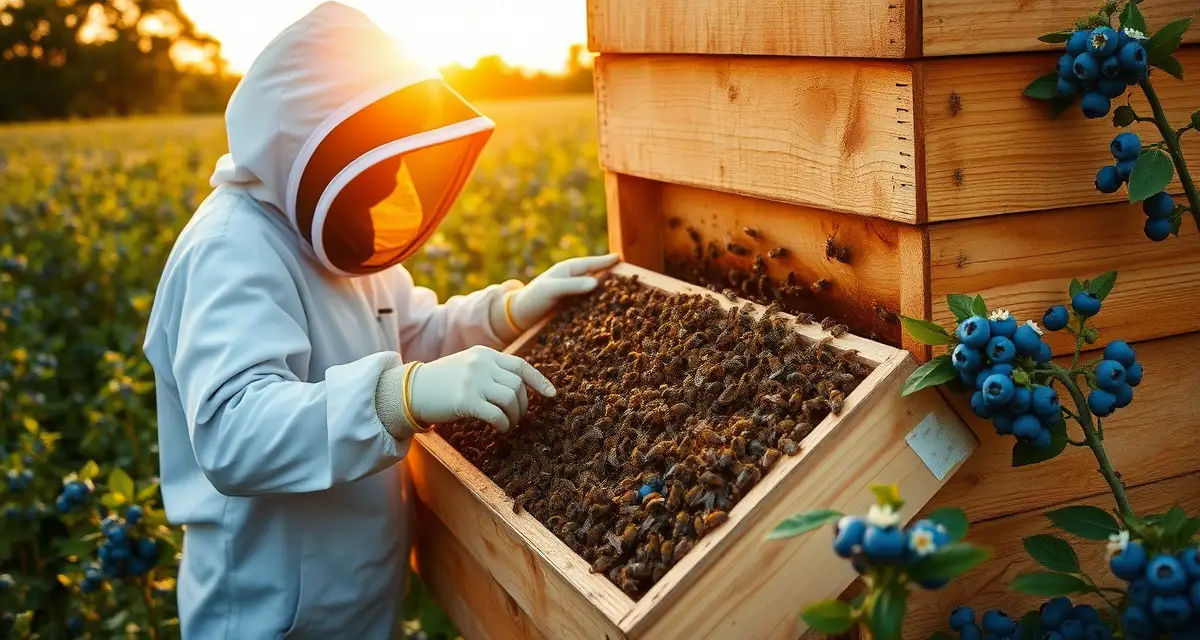
Commercial Beekeeping in Michigan: Blueberry, Fruit, and Vegetable Pollination
Michigan requires apiary registration and a permit for colonies brought in from out of state, and it's worth the paperwork. The state is the top blueberry-producing state east of the Mississippi, a significant cherry and apple producer, and has an active vegetable crop sector that generates additional pollination demand. A 1,000-hive operation that includes Michigan in its spring circuit can generate $80,000-100,000 in pollination contracts revenue from blueberries alone.
Michigan is a top blueberry state and significant apple and cherry production region. The concentration of high-value specialty fruit crops in a relatively compact geographic area (the "Fruit Belt" along Lake Michigan's eastern shore) makes Michigan one of the more efficient states for running multiple crop contracts in sequence.
TL;DR
- Michigan's primary commercial beekeeping role is shaped by its crop mix, climate, and position on the national pollination circuit.
- Pollination rates in Michigan range $85-110/hive depending on crop and colony strength requirements.
- Out-of-state operators entering Michigan for pollination contracts must register with the state agricultural authority and obtain a Certificate of Health.
- Michigan functions as either a primary pollination destination, a seasonal honey production location, or a transitional stop depending on the circuit.
- Tracking permit status, registration documents, and yard records for Michigan operations requires organized record-keeping before the season opens.
Michigan's Fruit Crop Geography
Michigan's most intensive fruit production is concentrated in the southwestern corner of the state and up the western shore of the Lower Peninsula:
Blueberries: Van Buren, Allegan, Cass, Berrien, and Kalamazoo counties. Michigan produces roughly 50% of US highbush blueberries in good years. The concentration of blueberry acreage in a 60-mile radius is extraordinary by national standards.
Cherries (tart and sweet): Grand Traverse, Leelanau, Benzie, and Antrim counties in the northern Lower Peninsula. The area around Traverse City is marketed as the "Cherry Capital of the World." Michigan produces the majority of US tart cherries.
Apples: Van Buren, Berrien, Allegan, Kent, and Ionia counties. Michigan is typically 3rd or 4th nationally in apple production. The Lake Michigan moderation effect (cool springs that delay bloom past frost risk) is why this area produces fruit.
Other specialty fruits: Peaches, plums, and grapes in Berrien and Van Buren counties. Strawberries statewide.
Blueberry Pollination in Michigan
Michigan highbush blueberry pollination is the primary commercial beekeeping opportunity in the state. The numbers:
Timing: Bloom begins in the Berrien County (southernmost) blueberry area in late April and progresses northward into Van Buren County through early May. Full bloom in the core Van Buren County area runs May 1-15 most years, with a standard bloom window of 10-14 days per location.
Contract rates: $85-110/hive for well-documented colonies meeting or exceeding 6-frame minimum. Operations with strong delivery track records and professional contract management can command the top of the range.
hive placement density: 2-4 hives per acre is the blueberry industry standard. A 200-acre blueberry operation places 400-800 colonies. Multiple growers in a county creates demand for 5,000-10,000 colonies across Van Buren County during peak blueberry season.
Out-of-state operators: Michigan blueberry demand draws operators from across the Midwest, Southeast, and even California. Florida winter operators move north through Georgia blueberries (late March-April) and into Michigan blueberries (late April-May) in a progression that maximizes contract income from a single spring migration.
Practical considerations: Michigan blueberry bloom in late April and early May often coincides with cold, wet, overcast conditions. Bees don't fly well in cold rain. Growers and beekeepers both understand this is weather-driven, not beekeeper failure, but contracts that specify minimum effective foraging days rather than just calendar placement periods protect both parties in bad weather years.
Cherry Pollination in Northern Michigan
The northern Michigan cherry circuit is a separate market from the blueberry circuit, operating approximately 3-4 weeks later and 150 miles north.
Tart cherries (Montmorency): The dominant Michigan cherry variety. Self-incompatible, requiring cross-pollination. Bloom timing in Traverse City area: late April to mid-May. Contract rates: $90-115/hive.
Sweet cherries: Smaller acreage than tart but higher per-unit value. Contract rates similar to tart cherries.
Operations that run Michigan blueberries in early May can often move a portion of their fleet north to the Traverse City area for cherry bloom in mid-May, creating a two-stop spring Michigan circuit. The timing requires precise management of the blueberry contract exit (negotiated release date rather than fixed end date) and confirmation of cherry bloom timing.
Apple Pollination in Michigan
Michigan apple pollination (May, primarily southwestern Michigan) can be sequenced before, during, or after blueberry depending on bloom timing in a given year. Apple bloom in southern Michigan often overlaps with or precedes blueberry bloom in the same area.
Contract rates: $75-95/hive for apple in Michigan. Lower per-hive return than blueberry, but useful for operations with excess capacity after cherry commitments are filled.
Michigan Apiary Registration Requirements
Administering agency: Michigan Department of Agriculture and Rural Development (MDARD), Plant Pest Section
State registration: Required for all beekeepers. Out-of-state commercial operators must register with MDARD if keeping colonies in Michigan. Registration includes a fee based on colony count.
Entry permit and health certificate: Michigan requires a health certificate (CVI) for colonies entering from out of state, issued by an accredited veterinarian in the home state within 30 days of movement. An entry permit from MDARD may also be required. Contact MDARD's apiary program directly for current requirements.
MDARD inspection program: Michigan has an active state apiarist program. Colonies may be inspected upon arrival or during the season. MDARD inspectors look for regulated diseases (AFB, EFB) and can require treatment or colony destruction if regulated diseases are found.
Honey Production in Michigan
Michigan offers some honey production opportunity, primarily from the fruit orchards themselves (apple and cherry honey is mild and marketable) and from summer wildflower flows.
Michigan wildflower honey: The fruit belt area has diverse forage including basswood (the primary summer flow in some areas), Dutch white clover, and wildflowers. Basswood (linden) honey is distinctive (light, minty-herbal character) and commands $2.80-3.80/lb bulk from specialty buyers.
Blueberry honey: Blueberry honey has a distinctive dark amber color and strong flavor. It's sought by specialty buyers but yields per hive are modest from standard blueberry placements. Operators running supers during blueberry season typically get 10-25 lbs/colony.
The timing challenge: Michigan's primary honey production opportunity (June-July basswood and wildflower flow) doesn't align perfectly with the blueberry and cherry contract window (May). Operations that stay in Michigan through June capture the basswood flow. Those that need to be in North Dakota by early July for clover flow need to depart earlier.
Logistics for a Michigan Season
Michigan is accessible from the South via I-75, I-69, and US-23, making it a logical northward stop for operations moving from Florida winter yards through Georgia and Tennessee. The standard route from central Florida to southwestern Michigan is 18-22 hours driving.
Timing the move: Leave Florida after the Florida blueberry contracts (Hillsborough/Alachua counties, late March-early April) if applicable, or head directly from winter yards with arrival targeted for April 25-May 1 in Van Buren County. The blueberry bloom waits for nothing.
Winter in Michigan? Michigan winters are not practical for maintaining colonies without significant loss. Most operations that work Michigan leave after the fruit season for summer honey or southern fall contracts, rather than attempting to winter colonies in the state.
FAQ
What are the best pollination opportunities in Michigan?
Michigan highbush blueberry (Van Buren, Allegan, Berrien, and Kalamazoo counties, late April-May, $85-110/hive) is the highest-value single contract in the state. Tart and sweet cherry pollination in the Traverse City area (late April-May, $90-115/hive) is a close second. Michigan apple provides additional volume at $75-95/hive. Operations that sequence blueberries in southwestern Michigan and cherries in northern Michigan in the same season can generate $170-220+ per hive from Michigan contracts alone over a 4-6 week window.
When is Michigan blueberry pollination season?
Michigan highbush blueberry bloom begins in late April in the southern production counties (Berrien, Cass) and progresses northward through Van Buren and Allegan counties in early May. The primary bloom window in the core Van Buren County area runs approximately May 1-15, with standard variation of a week or more depending on spring temperatures. Colony delivery should occur 3-5 days before full bloom opens to allow foragers to orient to the location before peak bloom.
What are Michigan's requirements for importing colonies?
Michigan requires a Certificate of Veterinary Inspection (CVI) from the home state, issued by an accredited veterinarian within 30 days of movement. An entry permit from the Michigan Department of Agriculture and Rural Development (MDARD) may also be required. Verify current requirements directly with MDARD's apiary program before your first Michigan season. MDARD inspects colonies for regulated diseases (American foulbrood, European foulbrood) and can require treatment if regulated diseases are found. Register as an out-of-state commercial operator before placing colonies.
What is the process for registering an out-of-state apiary in a new state?
Most states require out-of-state operators to register with the state department of agriculture apiary program before placing colonies. The process typically involves submitting a registration application (online or paper), paying a fee (usually $10-50 per location), and providing contact information for the operation. Some states also require the registration to be renewed annually. Contact the destination state's department of agriculture apiary program at least 60 days before your planned arrival to confirm current requirements.
What documentation do state apiary inspectors typically review?
State apiary inspectors review health certificates for out-of-state colonies, registration documentation, and colony inspection records during apiary visits. Inspectors check for signs of American foulbrood, European foulbrood, and other regulated pests and diseases. Operations with organized digital records that include treatment history and mite counts typically have faster, less complicated inspections than operations without documentation. Some state inspectors also verify that varroa mite loads are below state entry thresholds.
What triggers a state apiary inspection?
State apiary inspections can be triggered by routine inspection schedules (most states inspect a percentage of registered apiaries annually), neighbor or landowner complaints, disease reports from nearby operations, or inspection requirements tied to state entry permits. California, in particular, has the right to inspect incoming loads at port of entry for commercial beekeeping operations. Maintaining current registration and organized records makes required inspections faster and less disruptive.
Try These Free Tools
Sources
- USDA Agricultural Research Service
- Bee Informed Partnership
- American Beekeeping Federation (ABF)
- Michigan Department of Agriculture
- Project Apis m.
Get Started with PollenOps
Commercial operations working in Michigan face the same registration, permit, and documentation requirements as any state on the national circuit -- plus Michigan's specific regulatory requirements. PollenOps tracks your Michigan yard records, contract assignments, and permit documentation alongside your full operation, so entering a new state doesn't add a separate administrative burden. See how the platform fits operations working across multiple states.