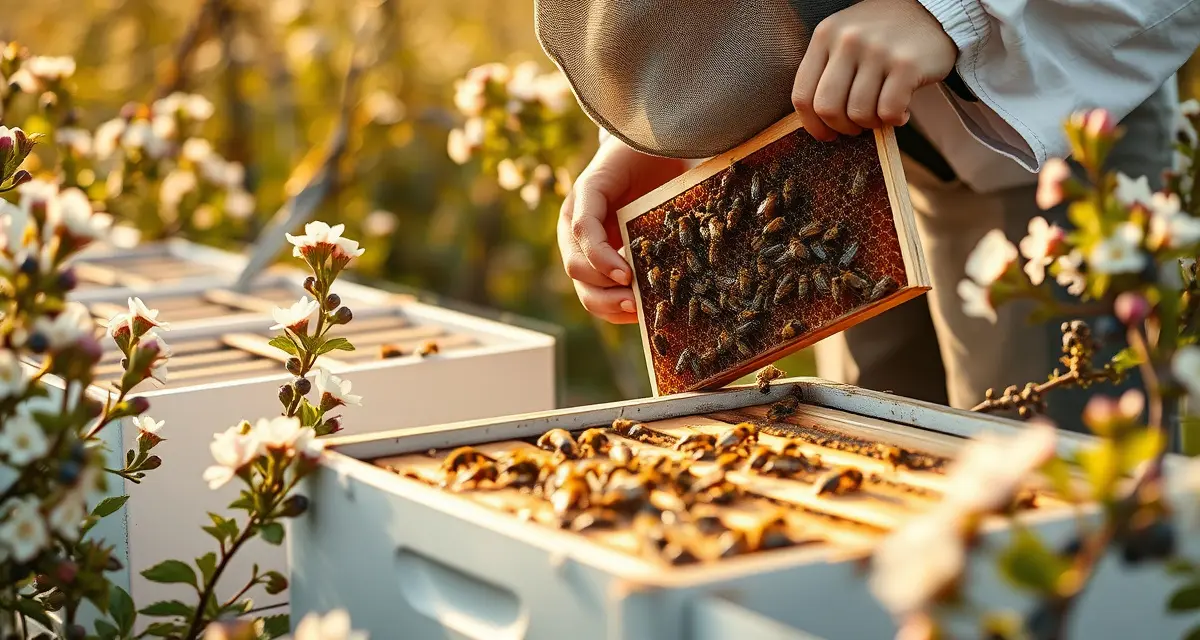
Commercial Beekeeping in Michigan's Lower Peninsula: Blueberry and Fruit Crops
Michigan is a top blueberry state requiring 50,000 or more hive placements annually in June. And Michigan's Lower Peninsula concentrates blueberry and tree fruit in the west side lake counties, a geographic concentration that makes it one of the most efficient spring pollination circuits in the country.
For operators running an East Coast or Midwest circuit, Michigan's Lower Peninsula blueberry season in June is a natural fit after Ohio or New York apples in May and before summer honey positioning. The west side lake counties (Van Buren, Allegan, Ottawa, Berrien) are where most of Michigan's blueberry demand is concentrated.
TL;DR
- Michigan's primary commercial beekeeping role is shaped by its crop mix, climate, and position on the national pollination circuit.
- Pollination rates in Michigan range $65-220/hive depending on crop depending on crop and colony strength requirements.
- Out-of-state operators entering Michigan for pollination contracts must register with the state agricultural authority and obtain a Certificate of Health.
- Michigan functions as either a primary pollination destination, a seasonal honey production location, or a transitional stop depending on the circuit.
- Tracking permit status, registration documents, and yard records for Michigan operations requires organized record-keeping before the season opens.
Michigan's Lower Peninsula Agricultural Geography
The key to understanding Michigan LP blueberry pollination is the Lake Michigan influence. The western counties of the Lower Peninsula (the "fruit belt" along Lake Michigan) have a moderating microclimate that makes them ideal for blueberries, cherries, apples, and other fruit crops.
Allegan County: The largest blueberry-producing county in Michigan, with tens of thousands of acres of highbush blueberry.
Van Buren County: Second major blueberry county, centered around Hartford and Lawrence.
Berrien County: Southernmost fruit belt county. Blueberry, peach, apple, and cherry. Border with Indiana makes it logistically accessible.
Ottawa County: Northern fruit belt. Blueberry and apple. Grand Haven and Holland area.
These four counties collectively account for the majority of Michigan's blueberry acreage and therefore the majority of its pollination demand.
How Do You Get Blueberry Contracts in Michigan's Lower Peninsula?
Michigan's blueberry pollination market is relationship-driven, like most agricultural pollination markets. But the sheer scale of Michigan blueberry production (tens of thousands of acres concentrated in a relatively small geographic area) means there are more growers to approach than in most other markets.
Contract Sources
Michigan Blueberry Growers Association: This is your first call. The association connects growers with service providers, and their network includes both large commercial operations and family-scale farms looking for reliable pollinators.
Direct grower outreach: In Van Buren and Allegan counties, blueberry farms are densely distributed. Direct outreach during the fall or early winter (visiting farms and introducing yourself) is effective because of the geographic concentration.
Michigan State University Extension: MSU Extension has strong presence in the blueberry industry. Extension educators have connections to grower networks and can facilitate introductions.
Referrals from Michigan-based operators: Michigan commercial beekeepers who are at capacity sometimes refer overflow contracts to operators from other states. Building relationships with Michigan-based beekeepers can open doors.
What Growers Look For
Michigan highbush blueberry growers are more sophisticated about pollination management than many producers in smaller markets. They know that colony strength matters, they often have experience with both strong and weak colonies, and they're increasingly expecting professional documentation.
Come prepared with:
- Colony strength documentation from previous seasons
- Insurance certificate
- Interstate movement compliance documentation
- A professional contract proposal
When Is Blueberry Pollination Season in Western Michigan?
Michigan highbush blueberry bloom runs from late May through mid-June in the west-side lake counties, with earlier bloom in Berrien County (southernmost) and later bloom in Ottawa County (northernmost).
Berrien County: Bloom can begin late May in warm years.
Van Buren and Allegan Counties: Peak bloom typically the first two weeks of June.
Ottawa County: Bloom runs mid-June in most years.
Total bloom window across the region is approximately 3 to 4 weeks, with individual farm placement windows of 2 to 3 weeks.
This timing puts Michigan blueberry directly after New York or Ohio apple pollination for operators running the Midwest-Northeast circuit. Moving from Ohio/New York in May to Michigan in June is a natural progression.
What Are Michigan's Entry Requirements for Out-of-State Colonies?
Michigan has historically been proactive about apiary regulations, and out-of-state operators need to comply with current entry requirements.
Basic Entry Requirements
- Certificate of inspection from the state of origin, confirming freedom from regulated diseases
- Certificate must be current at time of movement (Michigan has specified timeframes, so verify current requirements)
- Michigan may require specific disease certifications depending on current disease pressure
Michigan-Specific Concerns
Michigan has had specific concerns about small hive beetle introduction from southern states, and has at various times implemented enhanced inspection requirements for colonies coming from states where small hive beetle is established.
Contact the Michigan Department of Agriculture and Rural Development (MDARD) to get current entry requirements before moving colonies into the state. Requirements can change based on disease or pest pressure.
Apiary Registration in Michigan
Michigan requires registration of apiaries operating in the state, including temporary yards used by out-of-state operators for pollination placements.
Operating Logistics in Michigan's Lower Peninsula
Road and Access Conditions
Michigan's blueberry region has well-developed agricultural roads, generally in better condition than some Northeast markets. Loaded trucks can typically navigate the main county and farm access roads without the challenges you might face in Maine.
That said, some farm yards are off two-track access roads that require care with large trucks. Confirm access before arrival.
Yard Proximity and Logistics
The geographic concentration of Michigan LP blueberry means you can typically manage multiple grower placements from a single central staging yard. A yard near Hartford (Van Buren County) or Dowagiac (Cass County) puts you within an hour of most Allegan, Van Buren, and Berrien County placements.
Multiple Crop Opportunities
Michigan LP isn't just blueberry. The same region has tart and sweet cherry, apple, and peach production. If you're in the region for blueberry, there may be cherry or apple contracts available earlier in the season (May) that use your hives before blueberry bloom begins.
A Michigan LP circuit might look like:
- Late April to early May: Michigan cherry and apple (Leelanau, Grand Traverse for cherry; Berrien, Ottawa for apple)
- Late May to mid-June: Michigan blueberry (Van Buren, Allegan)
- Late June onward: Move to summer honey yards or additional pollination
Michigan Honey Production
Michigan LP also has good summer honey production opportunities, particularly after blueberry season. Clover, alsike clover, and wildflower sources are available throughout the region through late summer.
For operators who can keep colonies in western Michigan through July, a honey harvest before moving to fall positioning is feasible.
FAQ
How do you get blueberry contracts in Michigan's Lower Peninsula?
Start with the Michigan Blueberry Growers Association, whose network connects growers with pollinators. Direct outreach to farms in Van Buren and Allegan counties (the core blueberry belt) is effective because of geographic concentration. Michigan State University Extension has strong ties to the blueberry industry and can facilitate introductions. Plan to spend time in Michigan in the fall or early winter meeting growers before you need contracts. Cold outreach just before the season rarely results in first-year placements.
When is blueberry pollination season in western Michigan?
Michigan highbush blueberry bloom runs from late May to mid-June in the west-side lake counties. Berrien County in the south blooms earliest (late May in warm years). Van Buren and Allegan counties peak in the first two weeks of June. Ottawa County in the north runs mid-June. Individual farm placement windows are typically 2 to 3 weeks. The full regional season spans approximately 4 weeks, enabling operators to service multiple farms across the region sequentially.
What are Michigan's entry requirements for out-of-state colonies?
Michigan requires a current certificate of inspection from the state of origin confirming freedom from American foulbrood and other regulated diseases. Michigan has at times implemented enhanced inspection requirements for colonies from states with established small hive beetle populations. Contact MDARD's Pesticide and Plant Pest Management Division for current entry requirements, as they can change based on disease and pest pressure. Out-of-state operators must also register their temporary yard locations with the state.
What is the process for registering an out-of-state apiary in a new state?
Most states require out-of-state operators to register with the state department of agriculture apiary program before placing colonies. The process typically involves submitting a registration application (online or paper), paying a fee (usually $10-50 per location), and providing contact information for the operation. Some states also require the registration to be renewed annually. Contact the destination state's department of agriculture apiary program at least 60 days before your planned arrival to confirm current requirements.
What documentation do state apiary inspectors typically review?
State apiary inspectors review health certificates for out-of-state colonies, registration documentation, and colony inspection records during apiary visits. Inspectors check for signs of American foulbrood, European foulbrood, and other regulated pests and diseases. Operations with organized digital records that include treatment history and mite counts typically have faster, less complicated inspections than operations without documentation. Some state inspectors also verify that varroa mite loads are below state entry thresholds.
What triggers a state apiary inspection?
State apiary inspections can be triggered by routine inspection schedules (most states inspect a percentage of registered apiaries annually), neighbor or landowner complaints, disease reports from nearby operations, or inspection requirements tied to state entry permits. California, in particular, has the right to inspect incoming loads at port of entry for commercial beekeeping operations. Maintaining current registration and organized records makes required inspections faster and less disruptive.
Try These Free Tools
Sources
- USDA Agricultural Research Service
- Bee Informed Partnership
- American Beekeeping Federation (ABF)
- Michigan Department of Agriculture
- Project Apis m.
Get Started with PollenOps
Commercial operations working in Michigan face the same registration, permit, and documentation requirements as any state on the national circuit -- plus Michigan's specific regulatory requirements. PollenOps tracks your Michigan yard records, contract assignments, and permit documentation alongside your full operation, so entering a new state doesn't add a separate administrative burden. See how the platform fits operations working across multiple states.