Commercial Beekeeping in North Dakota: Sunflower, Clover, and Regulations
North Dakota produces more honey than any other US state: 30-40 million pounds annually. That number isn't an accident. The state has 40 million acres of agricultural land, massive plantings of clover and sweet clover along roadsides and as crop rotations, canola fields that provide spring flow, and sunflower acreage that creates one of the most significant dual pollination-and-honey opportunities in North American beekeeping.
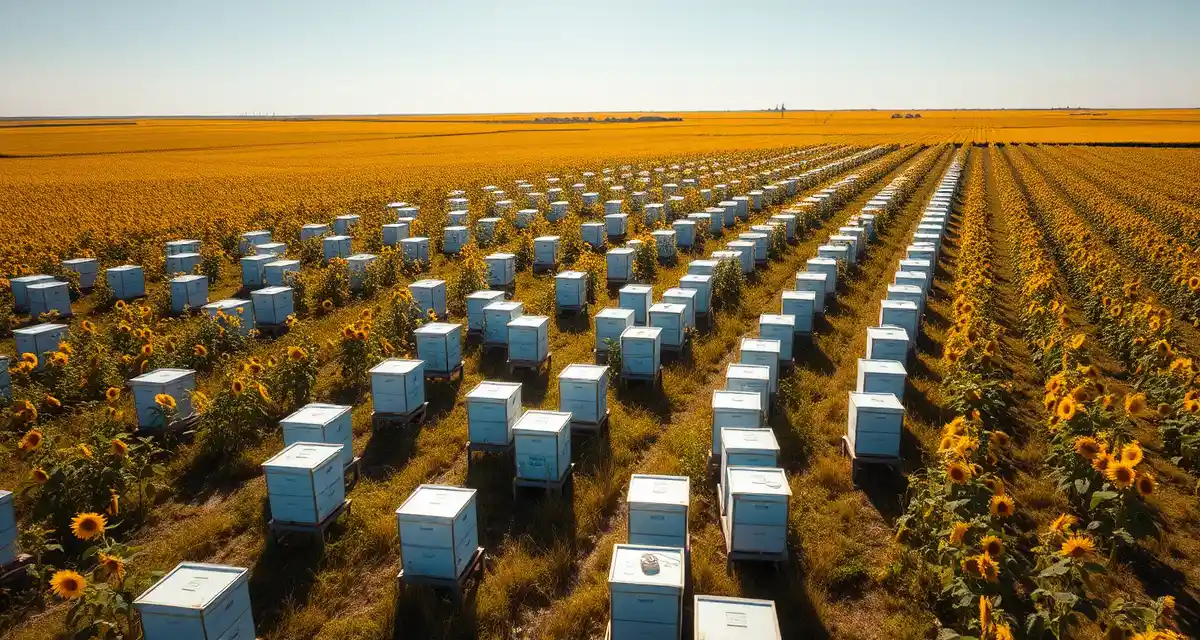
North Dakota's sunflower acreage creates major summer pollination income opportunities. For operations that arrive from California in June and position colonies well for July-August, North Dakota is where a significant portion of the year's honey income is made.
TL;DR
- North Dakota's primary commercial beekeeping role is shaped by its crop mix, climate, and position on the national pollination circuit.
- Pollination rates in North Dakota range $35-70/hive depending on crop and colony strength requirements.
- Out-of-state operators entering North Dakota for pollination contracts must register with the state agricultural authority and obtain a Certificate of Health.
- North Dakota functions as either a primary pollination destination, a seasonal honey production location, or a transitional stop depending on the circuit.
- Tracking permit status, registration documents, and yard records for North Dakota operations requires organized record-keeping before the season opens.
The North Dakota Honey Production Opportunity
Sweet clover (Melilotus alba and officinalis) and white clover (Trifolium repens) are the foundation of North Dakota honey production. Both species grow extensively along roadsides, in Conservation Reserve Program (CRP) acres, and as volunteer species in agricultural areas. In a good year with adequate moisture, a well-located North Dakota yard produces 80-150 lbs per colony from the clover flow alone. Some exceptional yards in good moisture years hit 200+ lbs.
The flow timing: clover begins in late June to early July in most of North Dakota, peaks in mid-July, and tapers in August as temperatures rise and rainfall decreases. A 30-40 day window of active nectar production in good years.
What makes a good North Dakota yard:
- Access to large blocks of sweet clover (roadsides, CRP land, field edges)
- Proximity to canola fields for early-season flow (June)
- Location away from intensive corn and soy production areas (limited forage, pesticide risk)
- Good road access for truck and extraction equipment
- Landowner permission and apiary registration
The best honey production areas in North Dakota are generally the west-central and southwestern parts of the state (Oliver, Morton, McLean, Burleigh, and surrounding counties), where large blocks of native and semi-native grassland and CRP land provide diverse forage. The eastern counties have more intensive row crop agriculture and somewhat less natural forage.
Sunflower Pollination Contracts
North Dakota and South Dakota together produce the majority of US confectionery and oil sunflower seed. Sunflower is technically self-compatible but significantly benefits from bee pollination, with research consistently showing 10-25% yield increases in plots with adequate bee density.
Pollination contract rates: $35-70/hive depending on grower, proximity, and whether the field is confectionery or oil sunflower. Confectionery sunflower (the big seeds for snacking) commands higher pollination rates than oil sunflower.
Timing: Sunflower bloom in North Dakota runs mid-July through mid-August. The bloom window for a specific field is 2-3 weeks, depending on maturity class and planting date. Operators on pollination contracts typically deliver colonies when 10-15% of heads are in bloom and remove them 2-3 weeks later.
The dual income play: Sunflower fields often sit near sweet clover and native forage. Colonies on sunflower contracts also forage on surrounding vegetation, producing honey from clover and wildflower sources alongside the pollination service. This is the most valuable single stop on the migratory circuit for many operations: pollination income ($35-70/hive) plus honey production (40-80 lbs/hive) from a 2-3 week placement.
Sunflower honey: Sunflower honey granulates rapidly (within days to weeks) and has a strong, distinctive flavor that some buyers seek specifically. Bulk sunflower honey sells at $1.60-2.10/lb, below clover rates because of the granulation issue. Operations that manage extraction timing carefully (pulling supers at the right moisture content) can slow granulation, but this remains a marketing challenge for sunflower honey.
Canola Pollination
Canola (Brassica napus) is grown extensively in North Dakota, particularly in the northern and northwestern parts of the state. Canola blooms in late May to early June, providing one of the earliest major honey flows in the state.
Canola honey is light, mild, and granulates very quickly. It's a significant honey crop for operations arriving from California in late May, as colonies coming off almonds can build population on canola flow before moving into position for the main clover flow. Canola pollination contracts are less common than almond or sunflower contracts because canola is generally considered self-compatible, but some growers seek colonies for yield optimization.
North Dakota Apiary Registration
Administering agency: North Dakota Department of Agriculture, Plant Industries Division
Registration requirements: All beekeepers in North Dakota must register their apiaries annually with the ND Department of Agriculture. Out-of-state beekeepers maintaining colonies in North Dakota must also register.
Entry requirements: North Dakota requires a health certificate (Certificate of Veterinary Inspection) for colonies entering from out of state. The ND Department of Agriculture also issues entry permits. Contact the ND Department of Agriculture's Plant Industries Division before your first North Dakota season to confirm current requirements.
Fees: Registration fees are modest, typically $10-25 for most commercial operations with annual renewal.
State apiarist program: North Dakota has an active state apiarist program and conducts apiary inspections. The state apiarist is a resource for disease reporting and can assist with CVI issuance if you're working with an ND-licensed veterinarian.
Operating Logistics in North Dakota
Distances are real. North Dakota is a large state. Driving from the Red River Valley in the east to Slope County in the southwest is nearly 300 miles. An operation with 15 yards spread across the western half of the state faces substantial driving time between yards. crew scheduling for a North Dakota summer requires careful geographic clustering to avoid excessive daily mileage.
Road conditions vary. Many of the best honey production areas are accessed via gravel county roads. Heavy rains (which often coincide with the sweet clover flow) can make these roads impassable for loaded trucks. Have alternatives and don't commit the extraction tanker to a remote yard on day 3 of a week-long rainstorm.
Weather windows matter. North Dakota has significant weather variability. Hailstorms can flatten colonies' forage areas overnight. Drought years with low July-August rainfall can cut honey yields in half. Experienced operators scout conditions in May-June before committing to North Dakota yards vs. adjacent South Dakota or Montana alternatives.
Extraction infrastructure: The summer extraction crush in North Dakota requires local infrastructure. Some operations own portable extractories or semi-trailer extraction setups they deploy to the state. Others use co-pack arrangements with established North Dakota honey packers. Know where your honey is being extracted before the supers fill up. Honey left in supers too long in summer heat degrades.
The Full North Dakota Circuit
For a 1,000-hive operation, a North Dakota summer looks like:
Late May-early June: Arrive from California or Pacific Northwest. Position colonies for canola flow.
June: Canola honey production plus spring buildup for summer.
Early July: Move colonies into position for sweet clover maximum flow.
Mid-July through early August: Peak honey production. Some colonies also on sunflower contracts.
Mid-August: Pull supers when flow tapers. Begin fall varroa treatment. Extract honey.
September: Complete extraction and fall treatments. Begin loading for southern move.
October: Depart for Florida, Louisiana, or other winter destination.
The North Dakota-Florida circuit, with California almonds in February, represents the full commercial migratory cycle for a large fraction of the US commercial industry.
FAQ
What honey production opportunities exist in North Dakota?
North Dakota's primary honey crops are sweet clover (the main July flow), canola (late May-June), and wildflower mixes from CRP and grassland areas. Average colony yields in good years run 80-150 lbs, with exceptional yards hitting 200+ lbs. The best production areas are generally west-central North Dakota with access to large blocks of natural and semi-natural forage. Operations with the right yard locations in good moisture years generate more honey income per hive from North Dakota than from any other stop on the typical migratory circuit.
How do you get sunflower pollination contracts in North Dakota?
Sunflower pollination contracts come through direct relationships with sunflower growers, through agricultural networks, and increasingly through online platforms that connect growers with beekeepers. Contact local grain elevators, Farm Bureau offices, and sunflower seed producers (particularly National Sunflower Association members) in your target area before the season. Rates run $35-70/hive depending on crop type and location. Operations with documented colony strength verification and professional contracts attract better grower relationships than those showing up informally.
What are North Dakota's apiary registration requirements?
All beekeepers operating in North Dakota must register their apiaries with the ND Department of Agriculture's Plant Industries Division. Out-of-state operators need to register as non-residents. Health certificates (CVIs) are required for colonies entering from other states. Entry permits may also be required. Contact the ND Department of Agriculture directly before your first season to confirm current requirements, as specifics can change. Registration fees are modest (typically $10-25) with annual renewal.
What is the process for registering an out-of-state apiary in a new state?
Most states require out-of-state operators to register with the state department of agriculture apiary program before placing colonies. The process typically involves submitting a registration application (online or paper), paying a fee (usually $10-50 per location), and providing contact information for the operation. Some states also require the registration to be renewed annually. Contact the destination state's department of agriculture apiary program at least 60 days before your planned arrival to confirm current requirements.
What documentation do state apiary inspectors typically review?
State apiary inspectors review health certificates for out-of-state colonies, registration documentation, and colony inspection records during apiary visits. Inspectors check for signs of American foulbrood, European foulbrood, and other regulated pests and diseases. Operations with organized digital records that include treatment history and mite counts typically have faster, less complicated inspections than operations without documentation. Some state inspectors also verify that varroa mite loads are below state entry thresholds.
What triggers a state apiary inspection?
State apiary inspections can be triggered by routine inspection schedules (most states inspect a percentage of registered apiaries annually), neighbor or landowner complaints, disease reports from nearby operations, or inspection requirements tied to state entry permits. California, in particular, has the right to inspect incoming loads at port of entry for commercial beekeeping operations. Maintaining current registration and organized records makes required inspections faster and less disruptive.
Try These Free Tools
Sources
- USDA Agricultural Research Service
- Bee Informed Partnership
- American Beekeeping Federation (ABF)
- North Dakota Department of Agriculture
- Project Apis m.
Get Started with PollenOps
Commercial operations working in North Dakota face the same registration, permit, and documentation requirements as any state on the national circuit -- plus North Dakota's specific regulatory requirements. PollenOps tracks your North Dakota yard records, contract assignments, and permit documentation alongside your full operation, so entering a new state doesn't add a separate administrative burden. See how the platform fits operations working across multiple states.