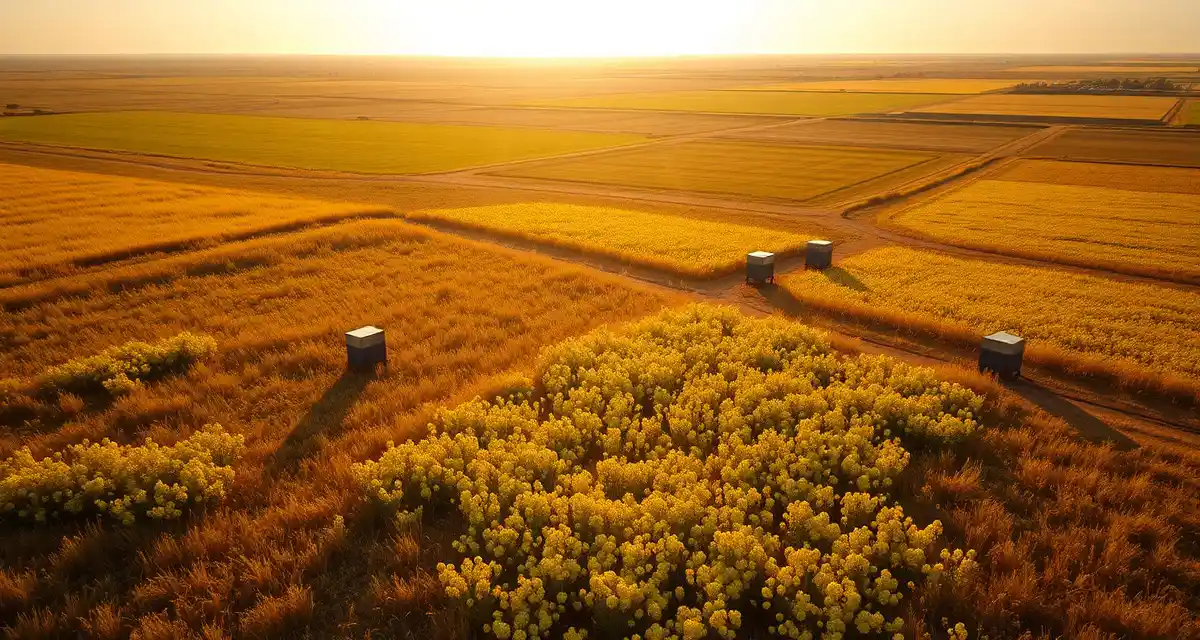
North Dakota Honey Production Guide: Routes Forage and Markets
North Dakota produces 30 to 45 million pounds of honey annually, more than any other state in the country by a significant margin. A single summer in the Northern Plains can make or break an operation's annual financials, and beekeepers who manage North Dakota honey operations well know that the difference between a profitable season and a marginal one comes down to forage positioning, colony health, and market access. This guide covers all three.
North Dakota honey operations often run 2,000 to 5,000 hives for summer production only, positioning colonies in the state from June through September before winterizing in warmer climates or selling colonies in fall. The operational model is fundamentally different from year-round beekeeping: North Dakota is a summer production platform, and every decision you make from February through May is aimed at arriving in the state with maximum-strength colonies ready to capture the July and August flows.
TL;DR
- North Dakota's primary commercial beekeeping role is shaped by its crop mix, climate, and position on the national pollination circuit.
- Pollination rates in North Dakota range $65-220/hive depending on crop depending on crop and colony strength requirements.
- Out-of-state operators entering North Dakota for pollination contracts must register with the state agricultural authority and obtain a Certificate of Health.
- North Dakota functions as either a primary pollination destination, a seasonal honey production location, or a transitional stop depending on the circuit.
- Tracking permit status, registration documents, and yard records for North Dakota operations requires organized record-keeping before the season opens.
Why North Dakota Produces So Much Honey
The northern Great Plains ecosystem, largely intact as a patchwork of native prairie, shelterbelts, wetlands, and agricultural land, supports nectar diversity that few other agricultural landscapes can match. Sweet clover, alfalfa, and canola in cultivation zones blend with native prairie wildflowers, thistle, and legume-rich grasslands in uncultivated areas. The combination produces honey with complex flavor profiles that vary significantly by location and year.
The long summer daylight hours of North Dakota's latitude drive intense nectar production. At 47 to 49 degrees north latitude, North Dakota summer days run 15 to 16 hours of daylight, giving foraging bees more flight time per day than anywhere in the lower 48 states. This daylight advantage, combined with abundant floral diversity and warm dry temperatures during peak flow, creates conditions for hive weight gains that eastern beekeepers working shorter days simply can't match.
North Dakota's low humidity during peak flow means nectar reduces to harvestable moisture content faster than in humid eastern climates. Ripening time is shorter, which means more supers can be extracted and returned faster, keeping colony space available for continued collection. The arid conditions also reduce the fungal and pathogen pressure that humid climates impose on stored honey frames.
Building Your North Dakota Operation
Colony Positioning: Arriving Strong
The colonies that arrive in North Dakota with the most foragers at the start of July flow win. Every pre-June decision (winter feeding, spring stimulation, requeening timing, splitting strategy) is aimed at this objective. Colonies arriving in North Dakota at 10 or more frames of bees and with young productive queens are capable of producing 150 to 250 pounds per hive in a good year. Colonies at 6 or 7 frames with old queens will produce a fraction of that.
For operators overwintering in California, Arizona, or the Southeast, the spring buildup period from February through May is your preparation runway. The California almond season in February provides both income and a biological stimulus that drives spring colony development. Operators who winter in southern states and run almond contracts before North Dakota see consistently stronger arriving colonies than those who overwinter further north without the almond nutrition and warmth.
If you're buying package bees or nucleus colonies to supplement your winter survivor colonies in spring, time the installation for late March or early April so they have 10 to 12 weeks to build before North Dakota positioning in mid-June. Packages installed later than early May rarely reach the population needed for peak summer production by the July flow.
Yard Selection and Forage Routing
North Dakota forage varies significantly by county and year. The southwestern counties (Slope, Bowman, Hettinger, and Adams) have substantial native prairie grasslands with strong wildflower honey production in good moisture years. The north-central counties (Bottineau, Renville, McHenry, and Ward) have large sweet clover acreage in fallow rotations alongside sunflower and canola production. The Red River Valley counties in the east have a different floral profile, heavier in alfalfa, clover, and basswood near river corridors.
Experienced North Dakota operators run multiple yard locations in different county zones to reduce weather risk. A drought year in the southwest that kills prairie wildflower yields doesn't necessarily affect the north-central sweet clover flow in the same way. Geographic diversification within North Dakota is as important as diversification between states.
Your yard site selection criteria should include proximity to established forage (within 2 miles of productive stands), water access, shade options for August heat, and property owner permission with a signed lease. Sunflower field margins are a common yard site, and some large sunflower growers actively welcome honey bee colonies for the dual-purpose benefit.
The Sunflower Connection
North Dakota sunflower acreage, primarily in the south-central and western counties, provides both a direct pollination income opportunity and a major honey production forage source. Sunflower honey has a distinctive flavor, heavier and more roasted-nut than clover or wildflower honey, and crystallizes quickly into a fine-grained paste.
Sunflower pollination contracts run $100 to $130 per hive for July through September placements, with the North Dakota sunflower pollination market representing one of the state's larger contracted pollination income streams. Combining sunflower pollination contracts with honey production from the same colonies during the same period maximizes revenue per hive location.
The crystallization issue with sunflower honey requires active management: extract promptly after removing from sunflower fields, and don't allow uncapped sunflower honey to sit in supers overnight without extraction. Crystallized sunflower honey in supers or frames is difficult to extract and can damage your equipment.
Super Management
Managing supers effectively during North Dakota's peak July and August flow is critical to production outcomes. Colonies that are super-bound stop producing at the potential rate. Some operators add supers preemptively every few days during peak flow regardless of how full existing supers are, a practice that seems wasteful but prevents the yield loss from colonies that reduce collection when storage space is limited.
Track super management by yard in PollenOps so you can schedule extraction runs and super returns based on actual yard-level needs rather than calendar estimates. Yards with lighter forage years will need fewer supers; yards near strong clover stands in warm July conditions will consume supers faster than you expect.
Bring at least 3 to 4 supers per hive to North Dakota. Running out of supers in July is one of the most expensive mistakes you can make, since replacing lost yield opportunity costs more than the supers themselves.
Forage Calendar
June: Colonies arrive, establish on early summer forage: dandelion decline, early sweet clover beginning, native wildflowers opening. Build time. Focus on colony condition and population assessment.
July (first half): Sweet clover peak. This is often North Dakota's most productive two weeks for clover honey. Position supers aggressively. Monitor weight gains daily at sentinel yards.
July (second half): Sweet clover continues. Sunflower beginning in south-central counties. Canola bloom overlapping in northwest counties.
August: Sunflower peak in south-central counties. Late sweet clover and goldenrod beginning in some areas. Native prairie wildflower late summer bloom. Begin planning extraction and fall colony preparation.
September: Forage declining. Begin fall varroa treatment and colony feeding for overwintering operators. Extraction and market preparation for full-time North Dakota operators.
Extraction and Processing
North Dakota's summer heat accelerates the honey processing timeline. Honey extracted from July frames in 90-degree weather flows faster and packs easier than spring honey extracted in cooler conditions. The challenge is moisture content: North Dakota's arid climate generally produces honey at 17 to 18 percent moisture, which is well within the safe range for long-term storage, but always sample before bulk storage to confirm.
A reliable extractor setup appropriate for your operation size is essential. Operations running 1,000 or more hives typically need high-volume radial extractors capable of processing multiple truck loads per day during peak season. Renting extraction space from an established North Dakota honey packer is common for operators who don't have the capital investment in their own processing facility.
The commercial honey market trends and honey packing and distribution articles cover marketing and sales channels in detail. For North Dakota honey, the main channels are wholesale to honey packers (the most common), regional specialty retail, and increasingly direct-to-consumer online sales for operators willing to build that channel.
Markets for North Dakota Honey
The primary wholesale buyers for North Dakota honey are the large honey packers who blend domestic and imported honey for national retail brands. Prices in the wholesale commodity market vary significantly by year based on domestic production levels and import competition. Operators who contract for forward prices rather than selling spot avoid the worst downside years.
Specialty market channels (co-ops, natural food retailers, farmers markets) pay significantly higher per-pound prices than commodity wholesale, but require more marketing work and volume limitations at individual outlets. Some North Dakota operators have built direct relationships with regional retail chains or with restaurants and food manufacturers who use honey as an ingredient.
The North Dakota Honey Producers Association provides market connection resources and industry information that every commercial North Dakota operator should access.
Financial Planning for North Dakota Operations
The annual cost structure for a North Dakota honey operation depends heavily on whether you winter in the state (low survival odds in most years for typical colony management) or migrate colonies south and return in summer. Most large commercial operators migrate south for winter, which adds transportation costs but dramatically improves colony survival and spring strength.
A typical cost structure for a 1,000-hive summer-only North Dakota operation includes: spring transportation north ($15,000 to $25,000), summer operating costs including yards, treatments, and labor ($50,000 to $80,000), fall transportation south ($15,000 to $25,000), and equipment depreciation and maintenance ($20,000 to $40,000). Against that, a good year with 150 pounds per hive at $2.00 per pound generates $300,000 gross. The margins are real but not generous, and a drought year with 60 pounds per hive at the same price compresses them severely.
Weather hedging through geographic diversification and conservative contracted cost structures for transportation and labor helps stabilize year-to-year financial outcomes.
Frequently Asked Questions
How do you build a commercial honey operation in North Dakota?
Start by securing adequate yard locations with good forage access, water, and landowner permission. Most successful North Dakota operators come in as part of a migratory circuit, overwintering colonies in warmer southern states and transporting north in June. Your colony strength at arrival is the single most important production variable. Build or buy colonies that arrive at 10-plus frames of bees with young queens. Establish relationships with reliable extraction facilities and honey buyers before your first season, since you'll need both in place to execute efficiently during July and August peak flow.
What forage is available for honey production in North Dakota?
North Dakota's summer forage calendar includes sweet clover (the primary July honey crop), sunflower (July through September, south-central counties), canola (July, northwest counties), native prairie wildflowers including purple coneflower and various native legumes, alfalfa, and goldenrod in late summer. Forage diversity varies significantly by county, with southwestern prairie counties offering different honey flavor profiles than north-central agricultural counties. Geographic diversification across multiple county zones reduces your risk from single-crop drought or weather failure years.
What markets access North Dakota commercial honey?
North Dakota honey markets include wholesale commodity honey packers (the largest volume buyers), regional specialty retailers and co-ops that pay premium prices for origin-identified honey, farmers markets in North Dakota cities and neighboring states, direct-to-consumer online channels, and food manufacturers who use honey as an ingredient. The North Dakota Honey Producers Association provides market connection resources and can facilitate introductions to regional and national buyers. Contract pricing with buyers before your season starts protects you from the worst spot-market downside in low-price years.
What is the process for registering an out-of-state apiary in a new state?
Most states require out-of-state operators to register with the state department of agriculture apiary program before placing colonies. The process typically involves submitting a registration application (online or paper), paying a fee (usually $10-50 per location), and providing contact information for the operation. Some states also require the registration to be renewed annually. Contact the destination state's department of agriculture apiary program at least 60 days before your planned arrival to confirm current requirements.
What documentation do state apiary inspectors typically review?
State apiary inspectors review health certificates for out-of-state colonies, registration documentation, and colony inspection records during apiary visits. Inspectors check for signs of American foulbrood, European foulbrood, and other regulated pests and diseases. Operations with organized digital records that include treatment history and mite counts typically have faster, less complicated inspections than operations without documentation. Some state inspectors also verify that varroa mite loads are below state entry thresholds.
What triggers a state apiary inspection?
State apiary inspections can be triggered by routine inspection schedules (most states inspect a percentage of registered apiaries annually), neighbor or landowner complaints, disease reports from nearby operations, or inspection requirements tied to state entry permits. California, in particular, has the right to inspect incoming loads at port of entry for commercial beekeeping operations. Maintaining current registration and organized records makes required inspections faster and less disruptive.
Try These Free Tools
Sources
- USDA Agricultural Research Service
- Bee Informed Partnership
- American Beekeeping Federation (ABF)
- North Dakota Department of Agriculture
- Project Apis m.
Get Started with PollenOps
Commercial operations working in North Dakota face the same registration, permit, and documentation requirements as any state on the national circuit -- plus North Dakota's specific regulatory requirements. PollenOps tracks your North Dakota yard records, contract assignments, and permit documentation alongside your full operation, so entering a new state doesn't add a separate administrative burden. See how the platform fits operations working across multiple states.